Hanfu For Extreme Climates 2026: Desert, Tropical & Cold
The Global Hanfu Renaissance: Adapting to Extreme Climates in 2026
As the traditional Chinese clothing movement continues its global expansion in 2026, Hanfu is no longer confined to temperate spring festivals or indoor photography sessions. Enthusiasts across the globe are integrating these historical garments into their daily lives, facing the challenges of extreme weather conditions ranging from the sweltering humidity of Southeast Asia to the arid heat of the Middle Eastern desert, and the biting sub-zero winds of Northern Europe and Northeast Asia. The beauty of Hanfu lies in its profound historical versatility. Over thousands of years, Chinese textile artisans and tailors developed sophisticated methods to regulate body temperature, manage moisture, and protect against harsh environmental elements.
Today, the intersection of historical authenticity and modern 2026 textile technology allows wearers to experience the elegance of traditional silhouettes without sacrificing comfort or safety in extreme environments. Whether you are navigating the tropical streets of Singapore, the sun-baked dunes of Dubai, or the freezing winters of Harbin, understanding the physics of traditional Chinese layering and fabric selection is essential. This comprehensive guide explores how to adapt Hanfu for the world's most demanding climates.
Tropical and Humid Climates: Breathability and Moisture Management
Wearing traditional garments in tropical regions—characterized by high heat and oppressive humidity—requires a strategic approach to fabric weight, weave structure, and silhouette. The primary goal in environments like Singapore, Florida, or coastal Southern China is to facilitate air circulation and rapid moisture evaporation.
The Supremacy of Song Dynasty Silhouettes
For tropical climates, the Song Dynasty (960–1279 CE) aesthetic is the undisputed champion. The Beizi (a long, open-front jacket) and Baidan (pleated skirts) offer a streamlined, column-like silhouette that avoids the heavy, restrictive layering of later eras. The open front of the Beizi acts as a natural ventilation shaft, allowing body heat to escape while the wide sleeves promote continuous airflow over the skin.
2026 Fabric Innovations: Xiangyunsha and Nano-Ramie
The most prized fabric for tropical Hanfu in 2026 remains Xiangyunsha (Gambiered Canton Gauze). This ancient silk is dyed with the juice of the dioscorea cirrhosa tuber and coated with iron-rich river mud. The resulting chemical reaction creates a fabric that is naturally antibacterial, highly resistant to sweat stains, and exceptionally cool to the touch. According to textile heritage experts, the unique production process of Xiangyunsha creates microscopic pores that enhance breathability far beyond standard mulberry silk. You can explore the deep historical roots of these advanced silk techniques through the UNESCO Intangible Cultural Heritage archives on Chinese sericulture.
For those seeking more affordable or vegan options, modern 2026 nano-treated ramie blends are highly recommended. Ramie, a traditional bast fiber, is naturally stiff and highly absorbent. Contemporary textile mills have developed enzyme-washed ramie-linen blends that drape beautifully like silk but retain the structural stiffness needed to keep the fabric away from the skin, creating a cooling microclimate.
Arid and Desert Climates: UV Protection and Temperature Regulation
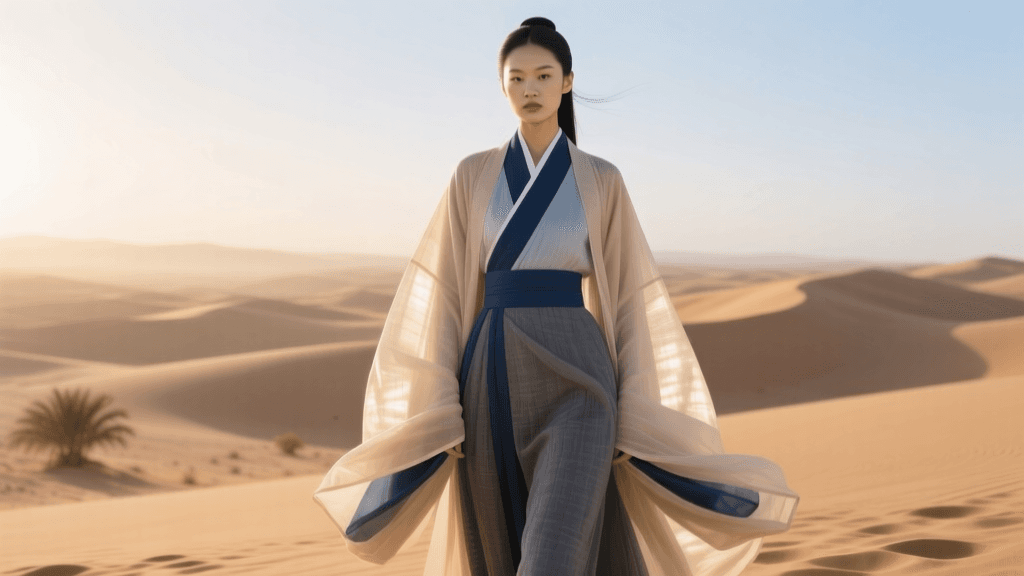
Desert environments present a paradox: extreme daytime heat, intense ultraviolet (UV) radiation, and surprisingly chilly nights. In regions like the American Southwest, North Africa, or the Arabian Peninsula, the objective shifts from maximum ventilation to strategic sun protection and thermal retention.
Wei-Jin and Tang Dynasty Wide Sleeves
Counterintuitively, exposing skin in a desert environment leads to rapid dehydration and severe sunburn. The Wei-Jin and Tang Dynasty styles, characterized by their sweeping Da Xiu Shan (large wide sleeves) and flowing Po (wrapping robes), are ideal for arid climates. The voluminous fabric creates a physical barrier against UV rays while trapping a layer of insulated air. As the wearer moves, the wide sleeves act as bellows, drawing in ambient air and flushing out trapped heat, effectively creating a wearable evaporative cooling system.
Color Theory and Inner Layers
In 2026, desert-adapted Hanfu heavily utilizes specific color palettes to reflect solar radiation. Moon white, pale celadon, and soft lotus pink are preferred over deep reds or blacks, which absorb heat. Beneath the outer robe, wearing a lightweight Zhongyi (inner shirt) made from bamboo-derived viscose is critical. Bamboo fiber possesses exceptional moisture-wicking properties, pulling sweat away from the skin to the outer layers of the Hanfu where it can safely evaporate without degrading the delicate outer silks.
Freezing and Cold Regions: Historical Layering Meets Modern Insulation
Adapting Hanfu for sub-zero temperatures requires looking to the Ming Dynasty (1368–1644 CE), an era marked by significant global cooling (the Little Ice Age) which necessitated the development of robust, insulated garments. The Ming aesthetic is structured, heavy, and inherently designed for layering, making it perfect for modern winters in places like Hokkaido, Scandinavia, or Canada.
The Mamianqun and Thermal Concealment
The Mamianqun (horse-face skirt) is a winter essential. Its overlapping wrap design and deep pleats provide a massive amount of hidden volume. In 2026, wearers utilize this space to layer high-tech thermal leggings, fleece-lined tights, and even heated smart-pants without disrupting the historical silhouette. The heavy, structured nature of the Mamianqun also prevents cold wind from whipping around the legs, a common flaw in lighter, single-layer skirts.
Pifeng, Diling, and Aerogel Linings
To protect the upper body, the Diling (standing collar) jacket is indispensable. The stiff, high collar blocks freezing wind from hitting the neck and chest. Over this, the Pifeng (a long, sleeveless or wide-sleeved cloak) serves as the ultimate outer layer. While historical Pifeng were lined with rabbit fur or heavy wool, the 2026 market offers historically accurate outer shells lined with ultra-thin aerogel insulation. Originally developed for space exploration, aerogel provides unparalleled thermal resistance without the bulk of traditional winter padding, allowing the Hanfu to maintain its elegant drape even in minus-twenty-degree weather. For a deeper understanding of how Ming Dynasty clothing evolved to combat historical cold snaps, the Metropolitan Museum of Art's Heilbrunn Timeline of Art History provides excellent context on the era's textile developments.
2026 Hanfu Climate Adaptation Comparison Chart
To help you plan your wardrobe, refer to this structured guide detailing the optimal configurations for various extreme environments.
| Climate Type | Recommended Era & Style | Ideal 2026 Fabric Choices | Key Accessories & Layering |
|---|---|---|---|
| Tropical / Humid | Song Dynasty (Beizi, Baidan) | Xiangyunsha silk, enzyme-washed ramie, sheer organza | Bamboo inner layers, woven rattan fans, open-toe traditional sandals |
| Arid / Desert | Tang / Wei-Jin (Da Xiu Shan, Po) | Lightweight linen-silk blends, UV-blocking treated cotton | Wide-brimmed straw hats (Weimao), bamboo viscose Zhongyi, light shawls for evening |
| Freezing / Cold | Ming Dynasty (Mamianqun, Pifeng, Diling) | Heavy brocade, wool-blend Ao, aerogel-lined cloaks | Thermal concealed leggings, faux-fur stoles, insulated cloud shoes |
Essential Care Tips for Extreme Weather
- Humidity Care: In tropical zones, never store worn Xiangyunsha or ramie in plastic. Hang them in a well-ventilated, climate-controlled room to prevent mildew, which can permanently stain natural dyes.
- Desert Dust: Arid environments bring fine sand and dust. Avoid sticky, heavily embroidered silks for daily desert wear; opt for tightly woven linen blends that can be shaken out and spot-cleaned easily.
- Winter Moisture: When transitioning from freezing outdoors to heated indoors, condensation can form on heavy outer cloaks. Always unlayer your Pifeng immediately upon entering a warm building to allow the inner thermal layers to breathe and dry.
Conclusion: Tradition Meets Environmental Mastery
The enduring appeal of Hanfu in 2026 is a testament to the ingenuity of ancient Chinese design. These garments were not merely decorative; they were highly engineered responses to the natural world. By understanding the historical purpose behind specific silhouettes, collar types, and fabric weaves, modern wearers can confidently step into any extreme climate. Whether you are utilizing the evaporative cooling of a Song Dynasty Beizi in the tropics or relying on the wind-breaking structure of a Ming Dynasty Diling in the snow, Hanfu offers a profound, beautiful, and highly functional connection to the past, perfectly tailored for the environmental realities of the present.