Hanfu for Extreme Climates in 2026: Tropical, Desert & Cold Guide
The Global Hanfu Movement of 2026
As we navigate through 2026, the traditional Chinese garment known as Hanfu has transcended its historical and geographical boundaries. No longer confined to the temperate, four-season climate of East Asia, Hanfu is now a global sartorial phenomenon. Enthusiasts from the sweltering humidity of Southeast Asia to the arid dunes of the Middle East, and even the freezing winters of Northern Europe, are actively integrating these ancient silhouettes into their daily wardrobes. However, wearing traditional garments in extreme climates requires more than just passion; it demands a deep understanding of historical textile engineering, modern fabric innovations, and strategic layering techniques.
The fundamental construction of Hanfu—characterized by flat-cutting, cross-collars, wide sleeves, and a lack of restrictive darts—actually lends itself remarkably well to climate adaptation when paired with the correct materials. In this comprehensive 2026 guide, we explore how to authentically and comfortably wear Hanfu in tropical, desert, and extreme cold environments, leveraging both ancient wisdom and cutting-edge 2026 textile technology.
Tropical and Humid Climates: Breathability and Moisture Management
Wearing Hanfu in tropical regions like Singapore, Malaysia, or the southern Chinese provinces during the summer presents a unique challenge: extreme heat combined with suffocating humidity. The goal here is to maximize airflow while maintaining the elegant drape characteristic of traditional dress.
Recommended Garments: Song Dynasty Beizi and Ruqun
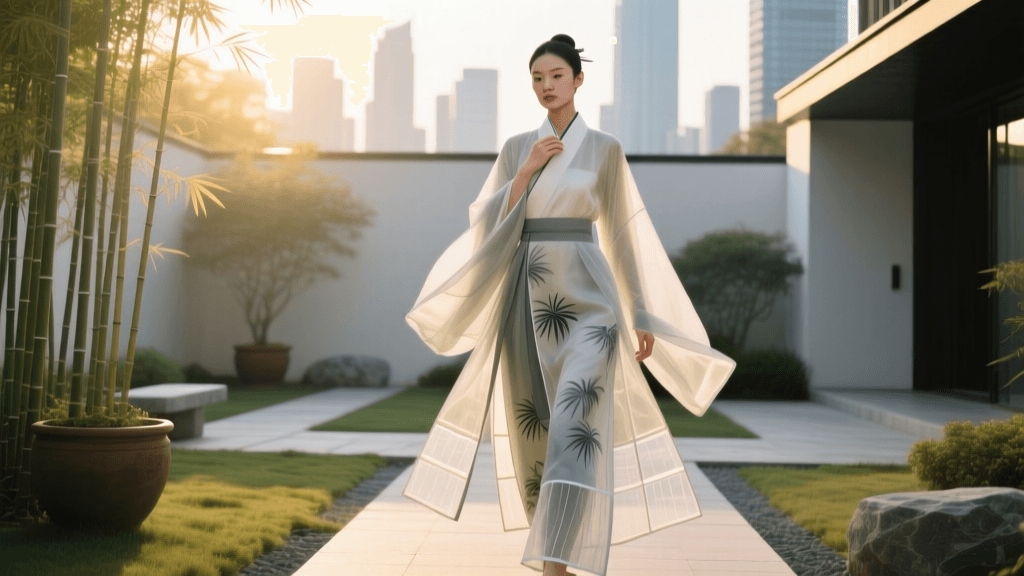
For tropical climates, the Song Dynasty Beizi (an open-front, long-sleeved jacket) paired with a lightweight Ruqun (a top and skirt ensemble) is the optimal choice. The open front of the Beizi acts as a natural ventilation system, allowing body heat to escape, while the wide sleeves promote continuous air circulation around the arms. Avoid the heavily layered Ming Dynasty styles or the restrictive wrap-around skirts of earlier eras, which can trap heat against the core.
The Magic of Luo Gauze and Xiangyunsha
The secret to surviving tropical humidity in Hanfu lies in the fabric. According to the Metropolitan Museum of Art, the mastery of Chinese silk gauze, known as Luo, dates back centuries. Luo is woven using a complex twisted-warp technique that creates microscopic, diamond-shaped pores in the fabric. These pores allow for unparalleled breathability while maintaining structural integrity, preventing the silk from clinging to sweaty skin.
In 2026, the ultimate luxury for tropical Hanfu is Xiangyunsha, or 'mud silk'. Originating from Guangdong, this fabric is dyed using the juice of the Dioscorea cirrhosa tuber and coated with iron-rich river mud. The result is a crisp, cool-to-the-touch textile that is naturally antimicrobial, water-resistant, and exceptionally breathable. While authentic Xiangyunsha commands a premium price in 2026—often ranging from $200 to $350 USD per meter—its natural cooling properties make it an indispensable investment for tropical Hanfu enthusiasts.
Desert and Arid Climates: Sun Protection and Sand Defense
Desert environments, such as those found in Dubai, the American Southwest, or Central Asia, require a completely different approach. The primary adversaries here are intense UV radiation, extreme diurnal temperature shifts, and fine, pervasive sand.
Recommended Garments: Yuanlingpao and Mili
The Tang and Ming Dynasty Yuanlingpao (round-collar robe) is highly effective for desert wear. Its high, closed collar protects the neck and chest from severe sunburn, while the long, sweeping hem protects the legs. When secured with a leather or woven belt, the robe creates a microclimate around the body, trapping a thin layer of insulating air that actually helps regulate body temperature against the external desert heat.
For headwear, the revival of the Mili (a wide-brimmed hat with a sheer, full-body veil) has become a massive trend in 2026 for desert-dwelling Hanfu wearers. Originally designed for modesty and wind protection in ancient times, the modern Mili utilizes sheer, UV-blocking organza that shields the face and shoulders from the harsh sun while allowing the wearer to see clearly and breathe easily.
Fabric Selection: Raw Silk and Dense Cottons
Unlike the tropics, where flimsy gauzes excel, desert Hanfu requires fabrics with a bit more 'body' to block wind and sand. Raw silk (such as Shengchou) and high-thread-count organic cottons are ideal. Raw silk retains the natural sericin protein of the silkworm, giving it a slightly textured, matte finish that is highly resistant to UV degradation. Furthermore, traditional sericulture and silk craftsmanship, as recognized by UNESCO, emphasize the natural thermoregulatory properties of silk, which keeps the wearer cool in the blazing daytime sun and warm during the freezing desert nights.
Cold and Freezing Climates: Insulation Without Silhouette Distortion
Wearing Hanfu in the freezing winters of places like Reykjavik, Montreal, or Harbin requires mastering the art of hidden insulation. The traditional flat-cutting method of Hanfu is actually a massive advantage here, as the lack of tailored darts and tight seams allows for extensive under-layering without distorting the garment's outward silhouette.
Recommended Garments: Mamianqun, Ao, and Doupeng
The Mamianqun (horse-face skirt) is the undisputed champion of winter Hanfu. Its unique construction features flat front and back panels with deeply pleated sides. In 2026, wearers utilize the voluminous pleats to conceal high-tech thermal leggings, fleece-lined tights, and even lightweight down pants. Because the pleats are designed to expand and contract with movement, the bulk of winter undergarments remains entirely hidden, preserving the crisp, A-line silhouette of the skirt.
For the upper body, the Ming Dynasty Ao (a lined, padded jacket with a stand-up collar and piped edges) provides excellent core warmth. Over this, the Doupeng (a sweeping, sleeveless cloak) serves as the ultimate outer layer. While historical Doupeng were lined with animal furs, the 2026 market has seen a surge in eco-friendly alternatives. Modern winter cloaks are now frequently lined with aerogel-infused textiles or recycled down, offering extreme sub-zero insulation while remaining lightweight enough to drape elegantly over the shoulders.
The Layering Strategy
The Victoria and Albert Museum highlights the historical use of layered textiles in Chinese dress to combat harsh northern winters. Today, this translates to a three-tier layering system:
- Base Layer: Merino wool or modern bio-synthetic thermal underwear that wicks moisture away from the skin.
- Mid Layer: A slim-fitting, quilted Bijia (vest) made of raw silk and cotton batting, which traps core heat without adding bulk to the sleeves.
- Outer Layer: A heavy wool-blend Ao or a windproof Doupeng treated with modern eco-friendly DWR (Durable Water Repellent) coatings to shed snow and sleet.
2026 Climate-Specific Hanfu Comparison Chart
| Climate Zone | Primary Garment | Recommended 2026 Fabric | Key Adaptation Feature |
|---|---|---|---|
| Tropical / Humid | Song Beizi & Ruqun | Luo Gauze, Xiangyunsha (Mud Silk) | Open-front ventilation, antimicrobial properties |
| Desert / Arid | Yuanlingpao & Mili | Raw Silk (Shengchou), UV-Organza | High collar for UV defense, sand-blocking weave |
| Cold / Freezing | Mamianqun & Doupeng | Wool-blends, Aerogel Linings | Hidden pleat volume for thermal under-layers |
Eco-Friendly Dyes and 2026 Textile Innovations
A major trend in the 2026 Hanfu market is the return to natural, eco-friendly dyeing methods, which surprisingly offer functional benefits for extreme climates. Plant-based dyes are no longer just an aesthetic or environmental choice; they are a functional upgrade.
For instance, garments dyed with Zicao (Lithospermum erythrorhizon, or gromwell root) yield a beautiful deep purple hue and possess natural anti-inflammatory and skin-soothing properties, making them ideal for desert wearers prone to sunburn and heat rashes. Similarly, indigo-dyed cottons, a staple in southern Chinese textile history, are naturally moth-repellent and offer superior UV protection compared to synthetic dyes. In tropical climates, where garments are washed frequently due to sweat, natural indigo and mud-silk dyes actually improve in color depth and fabric softness over time, unlike chemical dyes that degrade and fade.
Practical Advice for the Modern Hanfu Traveler
If you are planning to wear Hanfu in extreme climates this year, keep these actionable tips in mind:
- Invest in Custom Tailoring for Proportions: When wearing thick winter layers under a Mamianqun, the waistband will sit higher on your torso. Order your skirt with an adjustable side-tie or a slightly higher waistband to accommodate 2026 thermal wear.
- Utilize Modern Fasteners Discreetly: While traditional ties and knots are beautiful, they can come undone in high desert winds. Use hidden magnetic snaps or micro-velcro along the inner lapels of your Yuanlingpao to secure the garment against sandstorms.
- Footwear Adaptations: Traditional Yunxie (cloud shoes) are not suited for snow or sand. In 2026, several heritage brands have introduced waterproof, lug-soled boots designed with embroidered uppers that mimic the traditional cloud motif, providing the necessary traction for icy or uneven desert terrain without breaking the visual harmony of the outfit.
Conclusion
The adaptation of Hanfu for extreme climates in 2026 is a testament to the enduring versatility of traditional Chinese design. By understanding the historical purpose behind specific cuts, embracing the functional brilliance of ancient textiles like Luo gauze and Xiangyunsha, and thoughtfully integrating modern thermal technologies, enthusiasts can wear their heritage proudly—whether they are navigating the humid streets of Singapore, the scorching dunes of Dubai, or the snowy avenues of Helsinki. Hanfu is not merely a relic of the past; it is a living, breathing wardrobe capable of weathering any storm the modern world presents.