Hanfu Etiquette: Greeting Rituals and Dress Code Rules
Introduction to Hanfu Etiquette and the Modern Revival
The global resurgence of Hanfu, the traditional clothing of the Han Chinese, is more than just a fashion statement; it is a profound reconnection with millennia of cultural philosophy, social structure, and ritual propriety (Li). As millions of young people participate in this sartorial renaissance, understanding the etiquette of wearing and moving in these garments has become paramount. According to CNN Style's extensive coverage of the Hanfu movement, the modern revival is deeply intertwined with a desire to reclaim cultural identity, which inherently includes reviving the manners and greetings of ancient China.
Wearing Hanfu correctly requires an understanding of structural layering, fabric choices, and the sacred geometry of the garment's cut. However, the physical garment is only half of the equation. The way one moves, bows, and gre others while in Hanfu completes the cultural picture. This guide provides actionable, detailed instructions on Hanfu dress codes, collar alignment rules, and traditional greeting rituals (Xingli) for modern enthusiasts, cultural practitioners, and historians alike.
The Sacred Geometry of the Collar: Jiaoling Youren
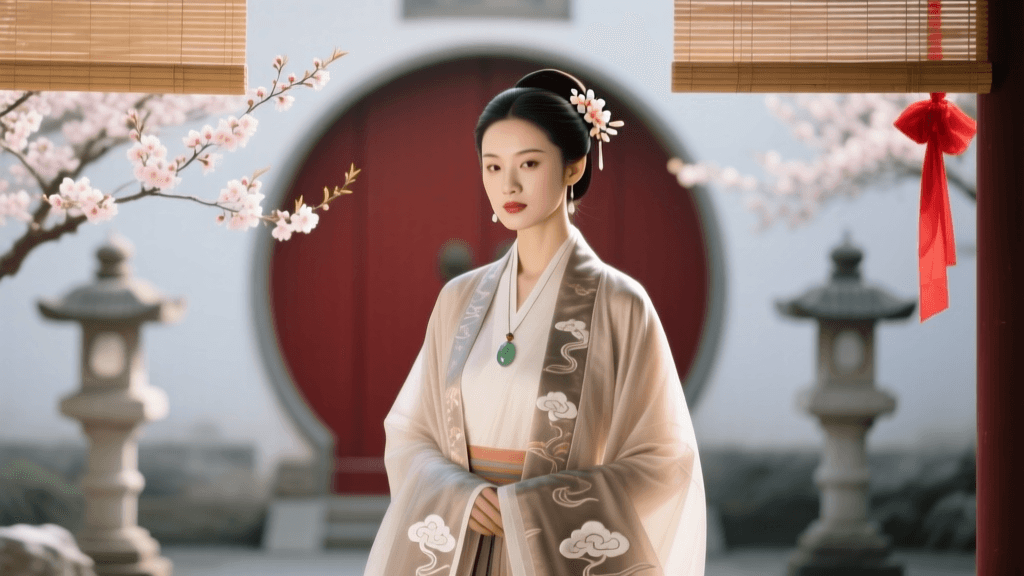
The most critical and non-negotiable rule of Hanfu etiquette is the collar alignment, known as Jiaoling Youren (交领右衽). This translates to 'intersecting collar, right lapel.' In practice, this means the left side of the collar must always cross over and cover the right side, wrapping around the body to tie at the right waist or hip.
The Philosophy of Yin and Yang
This rule is deeply rooted in traditional Chinese cosmology. The left side represents Yang (life, the sun, the east, and the living), while the right side represents Yin (death, the moon, the west, and the spiritual realm). By wrapping the left (Yang) over the right (Yin), the wearer symbolically honors life and suppresses the forces of death. As noted by The Metropolitan Museum of Art's Heilbrunn Timeline of Art History, the structural elements of Chinese dress have historically served as visual markers of civilization, social order, and philosophical belief.
Crucial Warning: Wrapping the right lapel over the left (Zuoren) is strictly reserved for dressing the deceased for burial or for certain historical nomadic tribes. Wearing a Hanfu collar right-over-left in daily life or at a festival is considered highly inauspicious and deeply offensive to traditional sensibilities.
Dress Codes: Matching Garments to Occasions
Hanfu is not a monolith; it encompasses a vast wardrobe suited for different seasons, social classes, and occasions. Selecting the correct style is a fundamental aspect of etiquette. Below is a practical guide to matching garments with their appropriate social settings.
- Formal Ceremonies (Weddings, Ancestral Worship, Coming-of-Age): Opt for Shenyi (deep robes that connect the top and bottom) or formal Ming Dynasty styles like the Mamianqun (horse-face skirt) paired with a Pifeng (cloak) or Yuanlingpao (round-collar robe). Fabrics should be heavy brocades, silk damasks, or embroidered jacquards. Sleeves must be Guangxiu (wide sleeves) extending at least 15 to 20 centimeters past the fingertips to allow for formal greeting drapes.
- Semi-Formal Events (Festivals, Tea Ceremonies, Cultural Exhibitions): Song Dynasty styles are highly appropriate here. A Beizi (long, open-front overcoat) worn over a MoXiong (tube top) and a pleated skirt offers elegance and mobility. Fabrics like linen, light silk, or high-quality cotton are ideal for spring and autumn.
- Casual and Daily Wear (Travel, Casual Meetups): Tang Dynasty Ruqun (blouse and high-waisted skirt) or Jin Dynasty Duanda (short jackets and trousers) provide maximum mobility. Sleeves should be narrow (Zhaixiu) or pip-shaped (Pipaxiu) to prevent dragging in modern environments.
According to Smithsonian Magazine's report on traditional clothing, modern Hanfu enthusiasts frequently adapt these historical dress codes to contemporary settings, blending historical accuracy with practical wearability for urban environments.
The Art of the Greeting: Traditional Xingli Rituals
In ancient China, physical contact like handshakes or hugs was rare in formal settings. Instead, greetings (Xingli) were performed through specific hand gestures and bows, which communicated respect, social hierarchy, and gender norms. When wearing Hanfu, performing these gestures correctly elevates the visual harmony of the garment.
Comparison of Traditional Hanfu Greetings
| Greeting Name | Translation / Meaning | Hand Placement & Gesture | Posture & Bow Angle | Appropriate Hanfu Style |
|---|---|---|---|---|
| Gongshou (拱手) | Cupped Hands / Yielding | Men: Left hand wraps over right fist. Women: Right hand wraps over left fist. Hands held at chest level. | Upright posture with a slight 15-degree nod of the head. No deep waist bend. | Casual daily wear, narrow sleeves, traveling clothes. |
| Zuoyi (作揖) | Pushing Hands / Deep Respect | Starting in Gongshou, hands are pushed forward and downward in an arc while bowing from the waist. | Waist bent at 45 degrees for peers, 90 degrees for elders or ancestors. Back must remain straight. | Formal robes, wide sleeves (Guangxiu), Shenyi, scholarly attire. |
| Wanfu (万福) | Ten Thousand Blessings | Women only. Hands clasped loosely and placed slightly to the right of the waist or hip. Knees bent slightly. | Slight curtsy-like dip (approx. 10-15 degrees). Head bowed gently. | Tang and Song dynasty women's Ruqun, Beizi, and festive skirts. |
| Chaoshou (叉手) | Crossed Hands / Deference | Hands crossed over the chest, left hand gripping the right thumb, right fingers resting on the left chest. | Standing at attention, often used by subordinates or servants in historical contexts. | Tang and Five Dynasties period male attire, round-collar robes. |
Gender Rules in Hand Placement
The rule of Yin and Yang also dictates hand placement during the Gongshou and Zuoyi greetings. Because men are associated with Yang (the left) and women with Yin (the right), a man must always wrap his left hand over his right fist. If a man wraps his right hand over his left, it implies he is attending a funeral or mourning. Conversely, women wrap their right hand over their left fist for standard greetings. This distinction is heavily emphasized in modern Hanfu etiquette workshops and cultural exams.
Sleeve Management and Posture (Lishou)
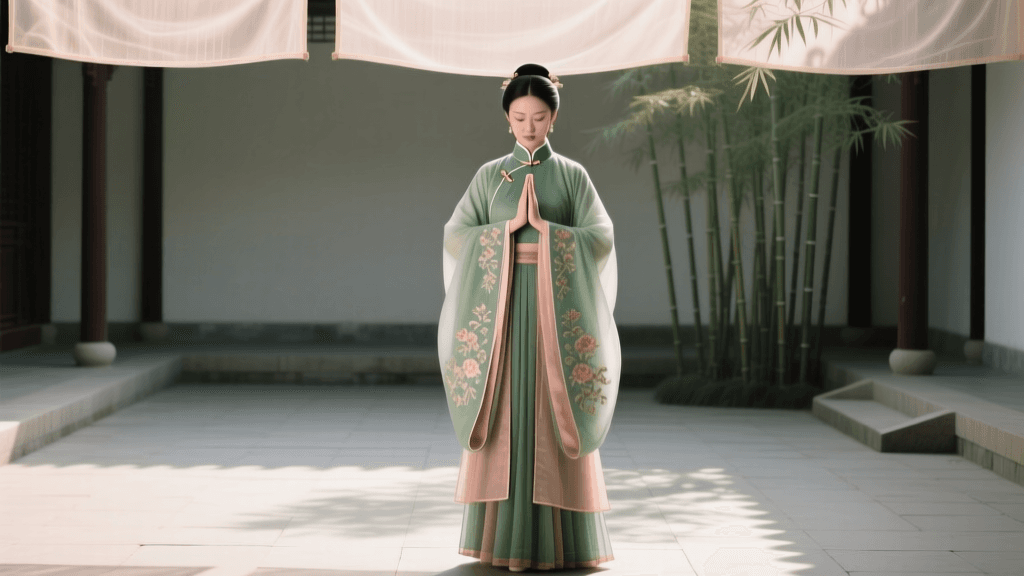
One of the most intimidating aspects of wearing formal Hanfu is managing the expansive Guangxiu (wide sleeves), which can measure up to 60 centimeters in width. Proper etiquette requires that the hands remain hidden or elegantly draped when not in use, a practice known as Lishou (standing hands).
How to Manage Wide Sleeves During Greetings
- The Fold: Before initiating a Zuoyi bow, allow the excess fabric of the sleeves to drape naturally over your forearms. Do not grip the fabric tightly; let it rest in the crook of your elbow.
- The Extension: As you push your hands forward during the bow, the sleeves should fall gracefully, creating a continuous, unbroken horizontal line of fabric across your body. This hides the hands completely, symbolizing humility and the concealment of one's ego.
- The Return: When rising from the bow, draw your hands back to your center of gravity (the Dantian, just below the navel). The sleeves will naturally fold back over your wrists.
For modern practitioners attending crowded events, it is acceptable to use hidden sleeve clips or magnetic ties inside the cuffs to prevent the fabric from dipping into food or catching on doors, though this should be done discreetly to maintain the garment's natural silhouette.
Modern Application and Final Thoughts
Integrating Hanfu etiquette into the modern world requires a balance of historical reverence and practical awareness. When attending a traditional Chinese wedding as a guest, performing a formal Zuoyi to the bride and groom while wearing a respectful, modestly colored Shenyi demonstrates a profound level of cultural literacy. Conversely, when navigating a modern subway or a busy street market, switching to a casual Duanda with narrow sleeves and a simple Gongshou nod ensures safety and convenience without breaking cultural protocol.
Ultimately, Hanfu is not merely a costume to be worn, but a living tradition to be inhabited. The etiquette, from the sacred left-over-right collar to the precise angle of a respectful bow, transforms the act of getting dressed into a mindful practice of honoring the past. By mastering these greeting rituals and dress codes, modern wearers ensure that the elegance and philosophical depth of traditional Chinese clothing continue to thrive in the contemporary era.