The Hanfu E-Commerce Boom: Buying Traditional Garments Online
The Evolution of Hanfu Retail: From Silk Alleys to Digital Storefronts
The renaissance of traditional Chinese clothing, commonly known as the Hanfu movement, has fundamentally rewritten the retail landscape for cultural garments. What began in the early 2000s as a grassroots effort by history enthusiasts to revive pre-Qing dynasty attire has blossomed into a booming multi-billion-dollar industry. For modern consumers, the journey of acquiring these garments has shifted dramatically from navigating labyrinthine physical silk markets to clicking through highly curated e-commerce storefronts.
Historically, procuring high-quality traditional Chinese garments required physical visits to specialized textile hubs. Markets like the Hangzhou Silk City or Beijing’s historic Muxiyuan textile district were the epicenters of fabric trade. Buyers would select raw silks, brocades, and linens, then take them to local tailors who understood traditional flat-cutting techniques. However, this process was largely inaccessible to international buyers and those outside major Chinese metropolises.
The advent of the 2010s brought a digital revolution. Platforms like Taobao and Tmall became the breeding ground for the first generation of online Hanfu merchants. According to industry analyses covered by Jing Daily, the Hanfu market has experienced exponential year-over-year growth, driven heavily by Gen Z consumers and social media platforms like Douyin. E-commerce democratized access, allowing rural artisans and specialized heritage brands to reach a global audience without the overhead of physical storefronts.
Offline Markets vs. Online E-Commerce: A Buyer’s Comparison
To understand where to invest your money, it is crucial to compare the traditional offline market experience with modern online channels. Each avenue offers distinct advantages depending on your budget, timeline, and need for historical accuracy.
| Feature | Offline Silk Markets | Taobao / Tmall | WeChat Bespoke Boutiques |
|---|---|---|---|
| Price Range | $50 - $500+ (Fabric + Tailoring) | $30 - $800 (Ready-to-wear) | $200 - $2,000+ (Custom) |
| Lead Time | 1 - 3 Weeks | 3 - 7 Days (In-stock) | 30 - 60 Days |
| Sizing Options | Fully Customizable | Standard S/M/L/XL | Made-to-Measure |
| Variety | Raw Fabrics Only | Massive Variety of Styles | Niche, High-End Heritage |
| Authenticity | Relies on Tailor's Knowledge | Requires Buyer Vigilance | Guaranteed Historical Accuracy |
Navigating Taobao and Tmall for Authentic Hanfu
Buying Hanfu online requires a specific vocabulary to avoid mass-produced, historically inaccurate costumes. When searching on Taobao, always append specific terminology to your searches to filter out low-quality theatrical wear.
Actionable Search Keywords
- 汉服正品 (Hanfu Zhengpin): Authentic, original-design Hanfu.
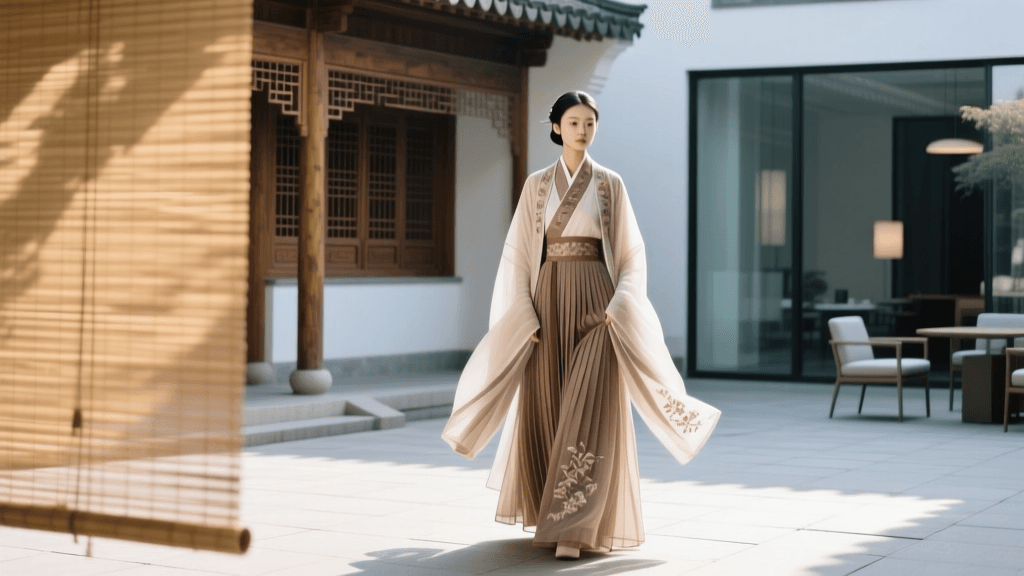
- 明制 (Ming Zhi): Ming Dynasty style, known for pleated horse-face skirts and standing collars.
- 宋制 (Song Zhi): Song Dynasty style, characterized by minimalist, slender silhouettes and narrow sleeves.
- 来料定制 (Lailai Dingzhi): Custom tailoring using customer-supplied fabric.
Brand Tiers and Costs
Entry-Level ($30 - $80): Brands like Shisan Yu offer highly stylized, romanticized Hanfu perfect for beginners, daily wear, and photography. They often use polyester blends for easy maintenance.
Mid-Tier ($80 - $250): Brands like Zhongling focus on better fabric blends, stricter historical silhouettes, and intricate embroidery. This is the sweet spot for serious enthusiasts.
High-End / Heritage ($300 - $2,000+): Minghuatang is the gold standard for museum-quality Ming dynasty reproductions, utilizing authentic weaving techniques, real gold threads, and premium silks.
Identifying Red Flags in Online Listings
When shopping online, the line between authentic Hanfu and Gu Zhuang (ancient-style costume used in film and television) can blur. Gu Zhuang typically utilizes modern darts, zippers, and shiny synthetic fabrics. Avoid listings that use zippers instead of traditional ties and buttons, feature overly glossy and stiff polyester, or ignore historical terminology by using vague terms like “fairy dress” instead of specific garment names like Ruqun or Aoqun.
Practical Sizing and Measurement Guides for Online Orders
Unlike Western clothing, traditional Hanfu is flat-cut. It lacks darts, shoulder seams, and complex tailoring, relying instead on the drape of the fabric and the tying of sashes. This makes sizing more forgiving but requires specific measurements for a proper fit.
- Bust (胸围): Because Hanfu is worn in layers (the inner garment, or zhongyi, and the outer garment), always add 5 to 10 centimeters to your actual bust measurement to ensure the outer robe crosses over comfortably without pulling.
- Arm Span / Tongxiu (通袖): This is the most critical Hanfu-specific measurement. It is measured from wrist to wrist with arms outstretched. Traditional Ming dynasty robes often feature sleeves that extend past the fingertips, requiring a Tongxiu measurement 20-30cm longer than your actual wingspan.
- Waist and Hip: Essential for the mamianqun (horse-face skirt), which wraps around the waist and relies on precise pleat alignment to sit correctly without gaping.
The Customization Process: Bespoke Hanfu in the Digital Age
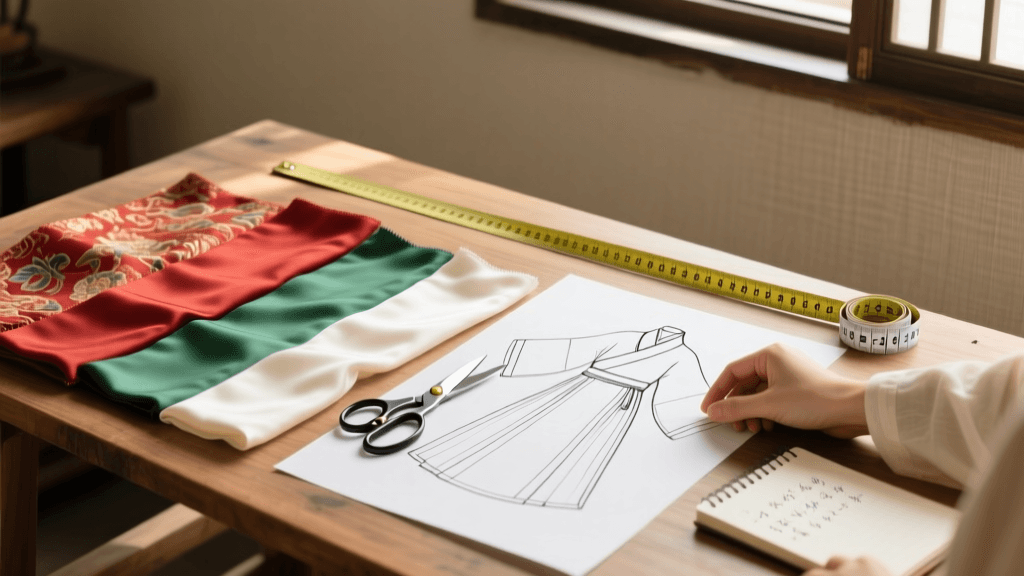
For those seeking perfection, the digital era has streamlined the bespoke process, known as lai liang ding zhi (made-to-measure). Many specialized WeChat mini-programs and Taobao stores offer this service.
The Process: You submit a detailed measurement form via a provided PDF template. You then select your fabric from digital swatches or mail physical fabric directly to the workshop in China. Many buyers purchase rare vintage silks from antique markets and mail them to digital tailors for construction.
Timing and Costs: Custom Hanfu requires immense hand-finishing, particularly for hemming and pleat-setting. Expect a lead time of 30 to 60 days. Costs typically start at $150 for labor, excluding the fabric. During peak seasons like the months leading up to the Spring Festival, lead times can easily double.
Supporting Intangible Heritage Through E-Commerce
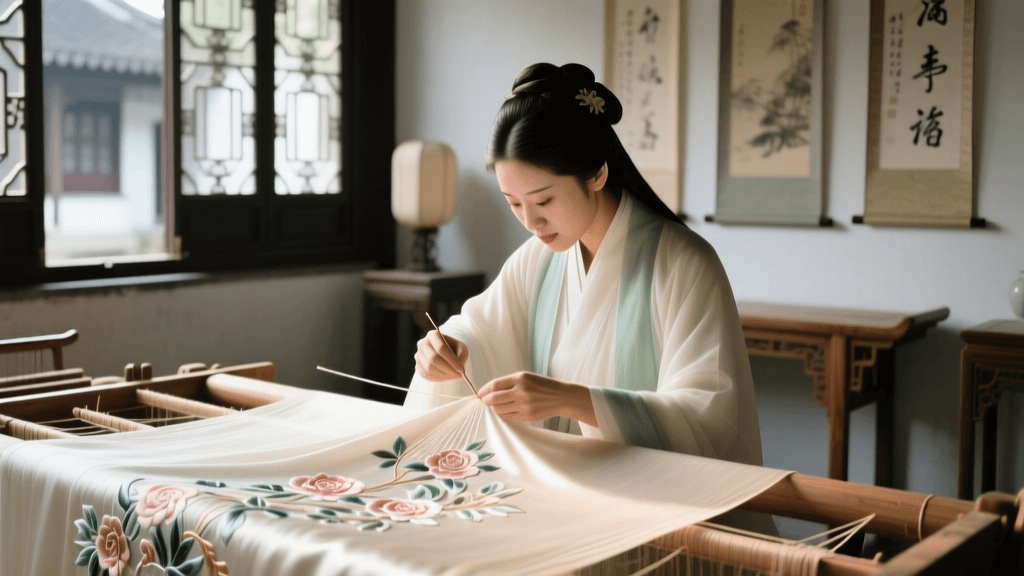
One of the most profound impacts of the Hanfu e-commerce boom is the revitalization of China’s Intangible Cultural Heritage textiles. Techniques that were on the brink of extinction are now highly sought after by online Hanfu consumers.
Xiangyunsha (Gambiered Canton Gauze): A complex silk dyeing process using river mud and yam juice, recognized by UNESCO under the broader umbrella of Chinese sericulture and silk craftsmanship. E-commerce allows buyers to purchase authentic Xiangyunsha directly from workshops in Shunde, Guangdong, supporting local artisans and keeping the craft financially viable.
Song Brocade and Luo Weaving: The intricate, breathable gauze weaves (Luo) of the Song dynasty have been reverse-engineered by modern digital looms combined with hand-finishing. The Metropolitan Museum of Art notes the historical significance of these complex silk weaves in Chinese art history, and today’s online market allows consumers to wear these living artifacts.
Final Thoughts on the Digital Silk Road
The transition from physical silk markets to global e-commerce has not diluted the cultural significance of traditional Chinese garments; rather, it has preserved and propagated it. By understanding the digital landscape, utilizing precise traditional measurements, and seeking out heritage-focused merchants, buyers can participate in a living history. Whether you are purchasing an entry-level Song dynasty blouse for a summer festival or commissioning a bespoke Ming dynasty robe woven with real gold threads, the modern digital marketplace places centuries of sartorial mastery directly at your fingertips.