Hanfu E-Commerce Boom: Buying Traditional Chinese Garments Online
The Evolution of Hanfu: From Alleyway Tailors to Digital Storefronts
The revival of Hanfu—traditional Chinese clothing worn by the Han ethnic group—has transformed from a niche subculture into a multi-billion-dollar retail phenomenon. Two decades ago, acquiring authentic Hanfu was a labor-intensive process. Enthusiasts had to navigate sprawling physical textile hubs, such as Beijing’s Muxiyuan or Guangzhou’s Zhongda fabric markets, to source appropriate materials like raw silk or linen. After securing the fabric, buyers would seek out specialized alleyway tailors who understood the complex, flat-pattern cutting techniques of historical Chinese garments. There were no standardized sizes, no ready-to-wear collections, and certainly no digital checkout buttons.
The transition from physical markets to digital forums in the mid-2000s marked the first wave of the Hanfu e-commerce evolution. Early adopters congregated on BBS (Bulletin Board System) forums to share historical research, exchange sewing patterns, and organize group buys. This grassroots digital collaboration laid the groundwork for the first dedicated Taobao storefronts. Today, the landscape is unrecognizable from its humble beginnings. The Hanfu market has exploded into a mainstream e-commerce powerhouse, driven by sophisticated supply chains, dedicated live-streaming channels, and a massive Gen Z consumer base eager to reconnect with their cultural heritage.
The Modern Hanfu E-Commerce Ecosystem
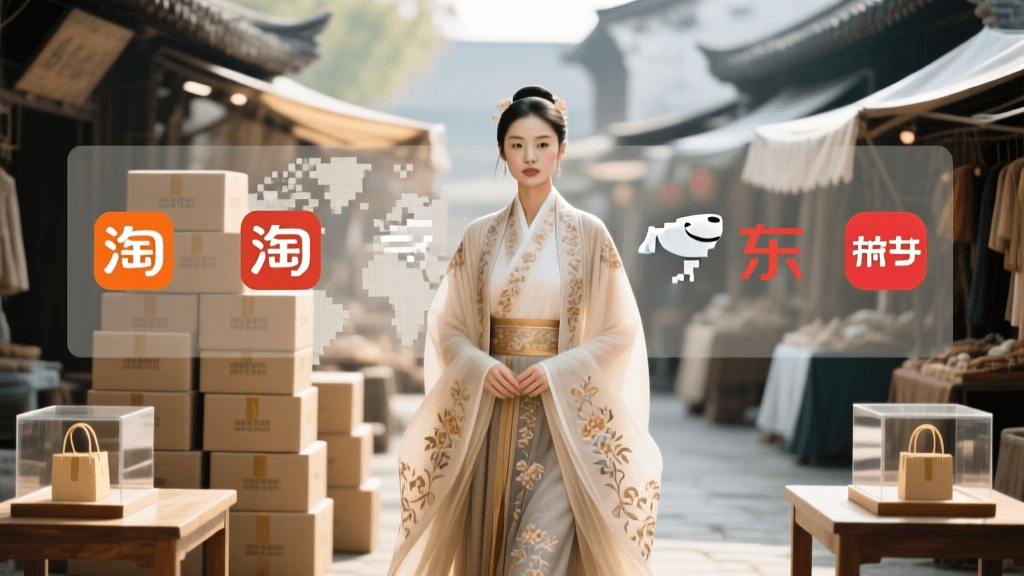
Today, the epicenter of the Hanfu trade is Alibaba’s Taobao and Tmall platforms, which host thousands of specialized brands ranging from budget-friendly manufacturers to high-end luxury ateliers. Brands like Shisanyu, Zhongling, and Hanshang Hualian have built massive digital empires, releasing seasonal collections that rival modern fashion houses in both marketing and production scale.
However, the true catalyst for the recent Hanfu e-commerce boom has been the integration of short-video and live-streaming platforms like Douyin (the Chinese version of TikTok). Traditional e-commerce product photos often fail to capture the essence of Hanfu, which relies heavily on the drape, movement, and layering of the fabric. Live-streaming solves this problem elegantly. Streamers demonstrate the flow of a Mamianqun (horse-face skirt) as they walk, showcase the intricate embroidery of a Beizi (open-front jacket) under studio lighting, and explain the historical context of the garments in real-time. This immersive shopping experience has drastically reduced return rates and increased consumer confidence in purchasing complex, multi-layered traditional outfits online.
"The digital shift in cultural apparel aligns with broader retail trends; as noted in McKinsey's reports on China's consumer market, younger demographics are heavily driving the e-commerce and cultural consumption boom, seeking both identity and convenience in their digital purchases."
Practical Guide: Buying Hanfu Online (Costs, Timing, and Platforms)
For international buyers and newcomers, navigating the Hanfu e-commerce space can be overwhelming. Understanding the retail calendar and pricing tiers is essential for making informed purchases.
Timing Your Purchase: The best times to buy Hanfu online are during China’s major e-commerce festivals. The 6.18 Shopping Festival (mid-June) and Singles’ Day (11.11) offer the steepest discounts, often featuring cross-store coupons and brand-specific giveaways. Additionally, purchasing a month before the Spring Festival (Lunar New Year) is ideal for securing festive, winter-weight Hanfu, though shipping delays are common during this peak season.
Hanfu Pricing Tiers and What to Expect
| Tier | Price Range (RMB / USD) | Materials & Construction | Best For |
|---|---|---|---|
| Budget | ¥100 - ¥300 / $15 - $45 | Polyester blends, machine embroidery, glued trims. Mass-produced. | Cosplay, casual wear, first-time buyers, photography props. |
| Mid-Tier | ¥300 - ¥800 / $45 - $115 | Cotton, linen, viscose, jacquard weaves. Detailed machine or hand-finished embroidery. | Daily wear, festivals, cultural events, travel. |
| Premium | ¥800 - ¥2,500+ / $115 - $350+ | Mulberry silk, Xiangyunsha (mud-silk), Song brocade. Hand-embroidery, orthodox historical patterns. | Collectors, formal ceremonies, tea ceremonies, heritage enthusiasts. |
Sizing and Measurements for Traditional Chinese Garments
One of the most common hurdles in buying Hanfu online is sizing. Unlike Western clothing, which relies on complex, curved darts to contour the body, traditional Chinese garments utilize flat-pattern cutting. This means the fabric is cut in straight lines and folded, relying on the natural drape of the textile and the wrapping of the garment (such as the iconic jiaoling youren, or cross-collar right-over-left style) to fit the wearer.
Because of this, Hanfu sizing is generally more forgiving, but it requires a different approach to measuring. Brands typically offer sizes based on height and weight ranges rather than strict bust/waist/hip ratios. However, for custom or high-end pieces, precise measurements are mandatory.
Essential Measurements for Online Hanfu Shopping
- Chest (Xiongwei): Measure around the fullest part of the chest. For cross-collar tops, ensure the wrap will lie flat without gaping.
- Waist (Yaowei): Measure at the natural waistline. This is crucial for Mamianqun (horse-face skirts), which sit higher on the waist than modern skirts.
- Height (Shengao): Your total height dictates the length of the skirt and the drop of the sleeves. Most brands offer skirt lengths in 95cm, 100cm, and 105cm increments.
- Sleeve Length (Xiuchang): Traditional Hanfu sleeves often extend past the hands. Measure from the base of the neck, across the shoulder, and down to the desired wrist or knuckle point.
- Arm Span: For garments with extended Pipa or wide sleeves, arm span ensures the fabric drapes correctly without pulling at the shoulders.
Navigating Quality: Fabrics, "Mountains," and "Orthodox" Designs
When shopping on platforms like Taobao, buyers must navigate the community's strict distinction between Zheng (orthodox/original) and Shan (mountain/counterfeit). "Shan" refers to unauthorized factories that steal the original digital patterns and embroidery files of independent designers, producing low-quality knockoffs. The Hanfu community heavily boycotts "Shan" sellers to protect the intellectual property of traditional pattern-makers. Always check a brand's official flagship store credentials on Tmall or Taobao to ensure you are buying "Zheng."
Fabric choice is equally critical. While budget sets rely on polyester, authentic traditional garments utilize historically accurate textiles. Traditional textile creation remains deeply rooted in historical craftsmanship, such as the sericulture and silk craftsmanship recognized by UNESCO, which ensures the preservation of ancient weaving techniques. For summer garments, look for Xiangyunsha (a breathable, mud-dyed silk from Guangdong) or high-grade ramie. For winter, brocades and heavy silks provide both insulation and historical accuracy. The historical foundation of these garments relies heavily on ancient weaving techniques, extensively documented by institutions like the Metropolitan Museum of Art in their archives on Chinese silk, highlighting the importance of material authenticity in garment reconstruction.
The Global Reach of Chinese Garment E-Commerce
While Taobao remains the undisputed king of Hanfu retail, the e-commerce boom has inevitably spilled across borders. International buyers can now access traditional Chinese garments through global platforms like AliExpress, Amazon, and specialized proxy shopping services like Superbuy or Wegobuy. These services bridge the gap between domestic Chinese sellers and global enthusiasts, handling the complex logistics of international shipping and customs.
Furthermore, independent Hanfu brands are increasingly launching dedicated English-language websites and Instagram storefronts, catering directly to the diaspora and global sinophiles. This globalization of the Hanfu supply chain means that whether you are attending a lantern festival in Singapore, a tea ceremony in London, or a cultural exhibition in New York, the perfect traditional garment is only a few clicks away. The journey from dusty alleyway tailors to a borderless digital marketplace represents not just a retail triumph, but a profound cultural renaissance woven into the fabric of the modern internet.