2026 Hanfu Fabric Drape Analysis: Silk, Ramie, and Tencel
The Evolution of Hanfu Textiles in 2026
As we navigate the fashion landscape of 2026, the Xin Zhongshi (new Chinese style) movement has firmly transitioned from a niche cultural revival to a staple of global daily wardrobes. Modern enthusiasts and designers are no longer satisfied with garments that merely mimic historical silhouettes; the contemporary wearer demands authenticity, comfort, and practicality. At the heart of this evolution is a rigorous focus on textile engineering—specifically, the drape, texture, and thermoregulatory comfort of Hanfu fabrics. Whether you are investing in a high-end mamianqun (horse-face skirt) or a lightweight beizi (traditional jacket) for summer, understanding how different fibers behave under gravity and against the skin is essential for making informed purchasing decisions in today's market.
Understanding Fabric Drape and Flexural Rigidity
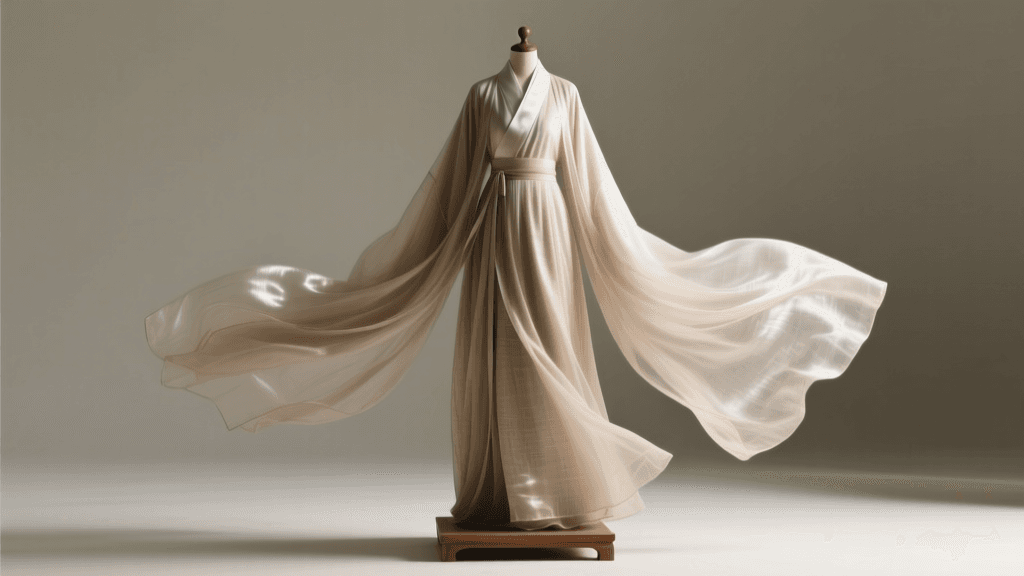
In textile science, "drape" refers to the degree to which a fabric deforms when it is hung or supported over a surface. It is the defining characteristic that gives traditional Chinese garments their celebrated xianqi (ethereal, flowing) aesthetic. The drape coefficient is a standardized metric used to quantify this behavior; a lower percentage indicates a stiffer fabric that holds its shape, while a higher percentage denotes a fluid fabric that clings and flows gracefully.
Flexural rigidity, closely related to drape, measures the fabric's resistance to bending. In 2026, advanced textile mills utilize AI-assisted loom tensioning to precisely control the warp and weft density, allowing manufacturers to engineer exact flexural rigidity levels tailored to specific Hanfu components. A collar requires high rigidity to stand elegantly, while a sleeve requires low rigidity to cascade beautifully. Balancing these physical properties is the hallmark of premium Xin Zhongshi design.
Mulberry Silk: The Timeless Benchmark
Mulberry silk remains the undisputed gold standard for luxury Hanfu. In 2026, the market is dominated by two primary weaves for daily wear: Charmeuse and Crepe de Chine. Charmeuse offers a high-sheen face and a dull back, providing a heavy, luxurious drape that is ideal for formal outerwear. However, its smooth surface can sometimes cause garments to slide off the shoulders if not properly tailored with inner ties.
Crepe de Chine, with its slightly pebbled texture and matte finish, has seen a massive surge in popularity for everyday Xin Zhongshi. It boasts a superior drape coefficient compared to charmeuse and is less prone to snagging. Modern 2026 advancements in "washable silk" technology—utiling eco-friendly sericin-retaining degumming processes—mean that a 19-momme or 22-momme silk Hanfu can now withstand gentle machine washing without losing its structural integrity or natural luster. Silk's natural protein structure also provides excellent thermoregulation, keeping the wearer cool in the summer and insulated in the winter.
Ramie (Xia Bu): Breathability Meets Structure
Historically known as Xia Bu (summer cloth), ramie is a bast fiber that has been used in Chinese textiles for millennia. While traditional ramie was notoriously stiff and prone to wrinkling, the 2026 textile industry has revolutionized ramie fiber processing through bio-enzyme softening and micro-sanding techniques. The result is a fabric that retains the crisp, structured drape necessary for sharp collars and pleated skirts, but with a hand-feel that approaches the softness of cotton.
Ramie's greatest advantage is its unparalleled breathability and moisture-wicking capability. It dries significantly faster than cotton or silk, making it the ultimate choice for Hanfu worn in humid, tropical climates. Furthermore, ramie possesses natural antibacterial properties, which is a major selling point for modern consumers seeking sustainable, low-impact garment care. While its drape coefficient is lower than silk—meaning it does not "flow" as fluidly—its ability to hold architectural shapes makes it indispensable for structured Ming Dynasty-style garments.
Tencel and Lyocell: The 2026 Xin Zhongshi Innovators
Perhaps the most significant disruption in the 2026 Hanfu market is the widespread adoption of botanic cellulosic fibers, particularly Tencel. Produced by the Austrian company Lenzing, Tencel lyocell fibers are derived from sustainably sourced wood pulp using a closed-loop solvent system. For the modern Hanfu enthusiast, Tencel offers a compelling alternative to silk: it provides a heavy, liquid-like drape that mimics high-momme silk, but at a fraction of the cost and with superior moisture management.
Tencel's fibrillation process allows it to absorb moisture 50% more effectively than cotton, pulling sweat away from the skin and releasing it into the air. This makes Tencel-blend ruqun (skirts) incredibly comfortable for all-day wear during busy urban commutes. Additionally, Tencel takes to natural plant dyes—such as indigo, madder, and gardenia—with remarkable vibrancy, allowing designers to achieve rich, historical color palettes without relying on harsh synthetic mordants.
Comparative Analysis: Silk vs. Ramie vs. Tencel
To help you select the right material for your next garment, we have compiled a comparative data table based on 2026 textile testing standards for mid-weight Hanfu fabrics.
| Fabric Type | Drape Coefficient (Approx. %) | Moisture Regain (%) | Typical Weight (GSM) | Best Hanfu Application |
|---|---|---|---|---|
| Mulberry Silk (Crepe de Chine) | 75% - 85% (High Fluidity) | 11% | 75 - 90 GSM | Flowing Sleeves, Qixiong Ruqun |
| Ramie (Bio-Enzyme Washed) | 45% - 55% (Structured) | 12% - 14% | 120 - 150 GSM | Standing Collars, Summer Beizi |
| Tencel Lyocell (100%) | 80% - 90% (Liquid Drape) | 11.5% | 110 - 140 GSM | Mamianqun, Everyday Outerwear |
| Silk-Tencel Blend (50/50) | 70% - 80% (Balanced) | 11.2% | 90 - 110 GSM | Versatile Daily Xin Zhongshi |
Matching Fabric to Hanfu Silhouettes
Choosing the correct fabric is not just about personal comfort; it is about respecting the structural requirements of historical silhouettes. A fabric that drapes beautifully for one garment may completely ruin the aesthetic of another.
Mamianqun (Horse-Face Skirt)
The mamianqun relies on flat panels and deep, knife-pleated sides. If you use a highly fluid fabric like lightweight silk, the pleats will collapse, and the skirt will lose its voluminous, bell-like shape when walking. For 2026, the best choices are mid-weight Tencel, silk-cotton blends, or structured jacquard weaves (typically 250+ GSM). These fabrics possess enough flexural rigidity to hold the pleats sharply while still allowing the flat front panels to drape cleanly over the hips.
Beizi (Traditional Jacket)
The beizi, characterized by its straight cut and side slits, is designed to create a long, elegant, and unbroken vertical line. This garment demands a fabric with a high drape coefficient and low stiffness. A 19-momme silk charmeuse or a lightweight bamboo-viscose blend will cascade beautifully down the body, emphasizing the slender silhouette. Stiff fabrics like raw ramie will cause the beizi to flare out awkwardly at the hips, disrupting the intended aesthetic.
Qixiong Ruqun (Chest-High Skirt)
Because the qixiong ruqun is tied high above the bust, the skirt portion must be exceptionally lightweight and fluid to avoid adding excessive bulk to the upper body. Furthermore, the fabric directly touches the skin around the chest and underarms, making breathability paramount. Washed silk, Tencel, or fine cotton-linen blends are ideal here, providing a soft hand-feel, excellent moisture-wicking, and a romantic, sweeping drape that moves gracefully with the wind.
Maintenance: Preserving the Drape and Texture
Even the finest 2026 textiles will lose their structural integrity if improperly maintained. To preserve the drape and comfort of your Hanfu collection, adhere to the following care protocols:
- Steaming over Ironing: Never use a traditional flat iron on silk or Tencel, as the direct pressure can crush the fibers and create permanent, unwanted shine. Invest in a high-quality vertical garment steamer. The gentle heat and moisture will relax the fibers, allowing them to return to their natural drape coefficient.
- Enzyme Detergents: For ramie and linen blends, use pH-neutral, enzyme-based detergents. These break down organic stains without degrading the natural pectins that give bast fibers their strength and structure.
- Storage Solutions: Do not hang heavy mamianqun on standard wire hangers; the concentrated weight will distort the waistband and warp the drape of the pleats. Instead, fold them along the pleat lines using acid-free tissue paper, or use specialized wide-clip skirt hangers designed for heavy historical garments.
Conclusion
The 2026 Hanfu and Xin Zhongshi market offers an unprecedented variety of textile options, blending ancient weaving philosophies with modern material science. By understanding the physics of drape, the thermoregulatory properties of fibers, and the specific structural needs of different silhouettes, you can curate a traditional wardrobe that is not only visually stunning but profoundly comfortable for modern, everyday life.