2026 Hanfu Fabric Drape Analysis: Silk vs Modern Tech Blends
Introduction to Hanfu Fabric Evolution in 2026
The Hanfu movement has matured significantly as we navigate through 2026. What began as a passionate revival of historical garments has evolved into a sophisticated integration of traditional aesthetics with modern daily life. For contemporary enthusiasts, the visual accuracy of a garment's cut is only half the equation; the other half lies in the physics of the fabric itself. The way a Mamianqun (horse-face skirt) swings during a commute, or how a Beizi (parallel-collar jacket) rests on the shoulders, is entirely dictated by textile drape, weight, and structural memory.
In 2026, the market is distinctly divided between heritage textiles—like authentic mulberry silk and gambiered gauze—and advanced tech-blends utilizing regenerated cellulose fibers. This comprehensive analysis breaks down the drape coefficients, comfort profiles, and practical applications of these fabrics, helping you make informed decisions for your modern Hanfu wardrobe.
The Science of Drape: Measuring Flow and Structure
Drape is the ability of a fabric to hang under its own weight and conform to three-dimensional forms. In textile engineering, this is often measured using the cantilever test to determine bending length and flexural rigidity. A fabric with a low bending length is highly fluid, creating soft, pooling folds. Conversely, a high bending length indicates stiffness, yielding structured, architectural silhouettes.
Drape Coefficients Explained
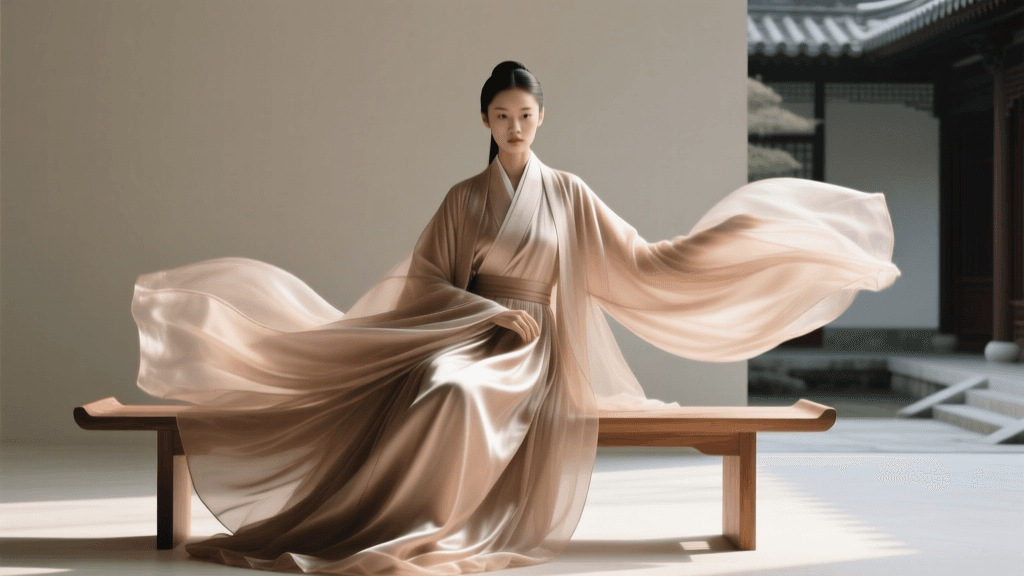
The drape coefficient is expressed as a percentage. A lower percentage means the fabric clings and flows easily, while a higher percentage means it holds its shape away from the body. For Hanfu, different garments demand vastly different drape coefficients. A flowing Qixiong Ruqun (chest-high skirt) requires a low drape coefficient to achieve that ethereal, wind-swept look depicted in Tang dynasty art. In contrast, a Ming dynasty-style stand-collar Ao requires a higher drape coefficient to maintain its dignified, structured neckline without collapsing.
Traditional Silks: Xiangyunsha and Mulberry Silk
Silk has been the cornerstone of Chinese sartorial history for millennia. As noted by the Metropolitan Museum of Art, the cultivation of silkworms and the weaving of silk fabrics have been central to Chinese culture, economy, and global trade since antiquity. Today, heritage silks remain the gold standard for ceremonial and high-end Hanfu.
Mulberry Silk (Sang Can Si)
Standard mulberry silk, particularly in 19 to 22 momme weights, offers a luxurious hand-feel and a natural, subtle luster. Its drape is exceptionally fluid, making it ideal for inner garments, lightweight summer skirts, and wide-sleeved dancewear. However, pure silk lacks structural memory; it crushes easily and requires meticulous steaming to maintain the sharp pleats of a Mamianqun.
Xiangyunsha (Gambiered Canton Gauze)
Xiangyunsha is a masterpiece of intangible cultural heritage. Dyed with薯莨 (shuliang) yam juice and coated with iron-rich river mud, this fabric undergoes a complex oxidation process. The result is a textile that is water-resistant, antimicrobial, and uniquely structured. In 2026, authentic Xiangyunsha commands a premium price, often exceeding $120 per meter. Its drape is notably stiffer than standard silk, producing a distinct, crisp rustling sound—often poetically referred to as 'the music of silk'—and holding heavy pleats flawlessly.
Modern Innovations: Cupro and Tencel-Silk Blends
While traditional silks are breathtaking, their high maintenance and vulnerability to humidity have driven the 2026 market toward regenerated cellulose fibers. These 'tech-blends' offer the aesthetic of silk with the resilience of modern engineering.
Tencel Lyocell
Tencel, a brand of lyocell fiber, has revolutionized summer Hanfu. According to the fiber specifications provided by Lenzing AG, Tencel fibers are derived from sustainably sourced wood pulp and feature exceptional moisture management. For Hanfu wearers in humid climates, a Tencel-silk blend (typically 70% Tencel, 30% silk) provides a cool, breathable touch that pure silk struggles to match in peak summer heat. Tencel's drape is heavy and fluid, allowing skirts to swing with a beautiful, weighted momentum that resists wind-blown mishaps.
Cupro (Bemberg)
Cupro, often known by its premier brand name Bemberg, is a regenerated cellulose fiber made from cotton linter. As detailed by Asahi Kasei's Bemberg, this fabric mimics the smooth, rounded cross-section of silk fibers, resulting in an incredibly soft glide against the skin. Crucially for Hanfu, Cupro is naturally anti-static. In dry winter months, synthetic-lined or pure synthetic Hanfu tends to cling awkwardly to the legs; Cupro linings and outer layers eliminate this issue entirely, ensuring the skirt's pleats fall perfectly straight.
Comprehensive Fabric Comparison Chart
| Fabric Type | Drape Profile | Breathability | 2026 Avg. Price (USD/m) | Best Hanfu Application |
|---|---|---|---|---|
| 100% Mulberry Silk (19mm) | Highly Fluid, Soft | Excellent | $45 - $65 | Summer Ruqun, Inner Garments, Dancewear |
| Xiangyunsha (Gambiered Gauze) | Structured, Crisp | Very Good | $120 - $180 | Mamianqun, Formal Outerwear, Autumn Ao |
| Tencel-Silk Blend (70/30) | Heavy Fluid, Weighted | Superior | $35 - $50 | Daily Summer Skirts, Wide-Leg Songku |
| 100% Cupro (Bemberg) | Fluid, Anti-Static | Excellent | $25 - $40 | Winter Linings, Beizi, Spring Jackets |
| Polyester Chiffon (High-Twist) | Bouncy, Stiff-Fluid | Poor | $8 - $15 | Budget Cosplay, Stage Performance |
Practical Guide: Choosing the Right Fabric for Your Hanfu
Selecting the correct fabric requires matching the textile's physical properties to the garment's historical and functional requirements.
Summer Ruqun and Songku
For lightweight summer wear, breathability and moisture-wicking are paramount. A Tencel-silk blend is the undisputed champion for 2026. The Tencel draws sweat away from the body, while the silk content provides a gentle, luxurious sheen. Avoid heavy brocades or pure polyester, which trap heat and cause discomfort during outdoor festivals.
The Mamianqun (Horse-Face Skirt)
The Mamianqun relies on sharp, knife-edge pleats and a flat front panel (Qunmen). If the fabric is too fluid (like lightweight mulberry silk), the pleats will blur, and the skirt will lack the iconic architectural swing. Xiangyunsha is the historical ideal, but for a more budget-friendly and vegan alternative, a heavy-weight Cupro or a high-density cotton-linen blend provides the necessary flexural rigidity to keep pleats razor-sharp while walking.
Winter Aoqun and Outerwear
Winter garments require structure to support heavy embroidery and lining. A medium-weight silk satin or a Cupro-blend jacquard offers a smooth surface for metallic thread embroidery while providing enough body to prevent the garment from sagging under its own weight.
Care and Maintenance for Optimal Drape Retention
The drape of a garment can be permanently altered by improper care. Heritage silks like Xiangyunsha should never be machine washed; the agitation breaks the delicate sericin bonds and ruins the mud-dye finish. Spot cleaning and professional dry cleaning are mandatory.
Conversely, the beauty of Tencel and Cupro blends lies in their modern resilience. Most 2026 tech-blend Hanfu can be gently machine-washed on a delicate cycle using a neutral pH detergent. To maintain the drape coefficient, always hang tech-blends to dry rather than tumble drying, which can cause micro-fibrillation (pilling) on Tencel fibers. For pleated skirts, storing them hung by the waistband with padded clips ensures gravity naturally maintains the pleat structure between wears.
Conclusion
The Hanfu landscape in 2026 is a beautiful synthesis of ancient reverence and modern material science. While traditional silks like Xiangyunsha remain unparalleled for their historical authenticity and crisp, acoustic drape, innovations in Tencel and Cupro have democratized comfort, offering anti-static, breathable, and beautifully fluid alternatives for daily wear. By understanding the science of drape and matching the textile to the specific garment architecture, enthusiasts can curate a wardrobe that is not only visually stunning but profoundly comfortable for the modern world.