Hanfu Travel Wardrobe 2026: Packing Essentials & Destination Styles
The Renaissance of Hanfu Tourism in 2026
As global cultural immersion tourism reaches new heights in 2026, traveling with traditional garments has evolved from a niche hobby into a mainstream lifestyle. The Hanfu movement has transcended local festivals, with enthusiasts now curating destination-specific wardrobes for international travel, historical photography tours, and cultural exchange programs. However, packing centuries-old silhouettes—featuring intricate pleats, delicate silks, and voluminous sleeves—requires a strategic approach that balances historical accuracy with modern transit realities.
Whether you are preparing for a photoshoot amidst the cherry blossoms of Kyoto, attending a cultural symposium in Europe, or exploring the tropical heritage sites of Southeast Asia, your packing strategy must adapt to the climate, the terrain, and the specific garment dynamics. This comprehensive 2026 guide will walk you through the essential gear, destination-specific style pairings, and advanced wrinkle-prevention techniques necessary to maintain your Hanfu wardrobe in pristine condition on the road.
Curating Your Destination-Specific Hanfu Wardrobe
Selecting the right Hanfu for your destination is the first critical step in travel preparation. Not all traditional garments are suited for extensive walking, high humidity, or cold transit hubs. According to the Metropolitan Museum of Art's Heilbrunn Timeline of Art History, the evolution of Chinese dress has always been deeply intertwined with climate, geography, and social function. By understanding these historical contexts, modern travelers can make practical yet authentic wardrobe choices for 2026's top cultural destinations.
| Destination Type | Recommended Hanfu Style | Optimal Fabric (2026) | Travel Practicality |
|---|---|---|---|
| Historical Temples (e.g., Kyoto, Nara) | Ming Dynasty Mamianqun (Horse-face skirt) | Crepe-backed satin / Tencel blends | High (Structured pleats hold well during transit) |
| Tropical Resorts (e.g., Bali, Phuket) | Song Dynasty Beizi & Baidi | Organic Ramie / Bamboo linen | Medium (Highly breathable but prone to wrinkling) |
| Winter City Breaks (e.g., Prague, Vienna) | Tang Dynasty Banbi & Pibo | Heavy brocade with thermal lining | High (Excellent for layering over modern thermals) |
| Desert Landscapes (e.g., Dubai, Morocco) | Wei-Jin Cross-Collar Ruqun | Lightweight Cotton / Chiffon | Medium (Flowy but requires wind management) |
The Ming Dynasty Mamianqun for Structured Travel
The Mamianqun remains the undisputed champion of travel wardrobes. Its flat, unpleated front and back panels make it remarkably easy to sit in during long flights or train rides, while the side pleats offer dramatic movement for destination photography. For 2026 travelers, opting for Tencel-blend or high-density polyester-satin Mamianquns is highly recommended. These modern, eco-conscious textiles resist deep-set wrinkles far better than traditional pure silks and can survive being rolled in a suitcase without losing their sharp, knife-pleated structure.
Song Dynasty Elegance for Tropical Climates
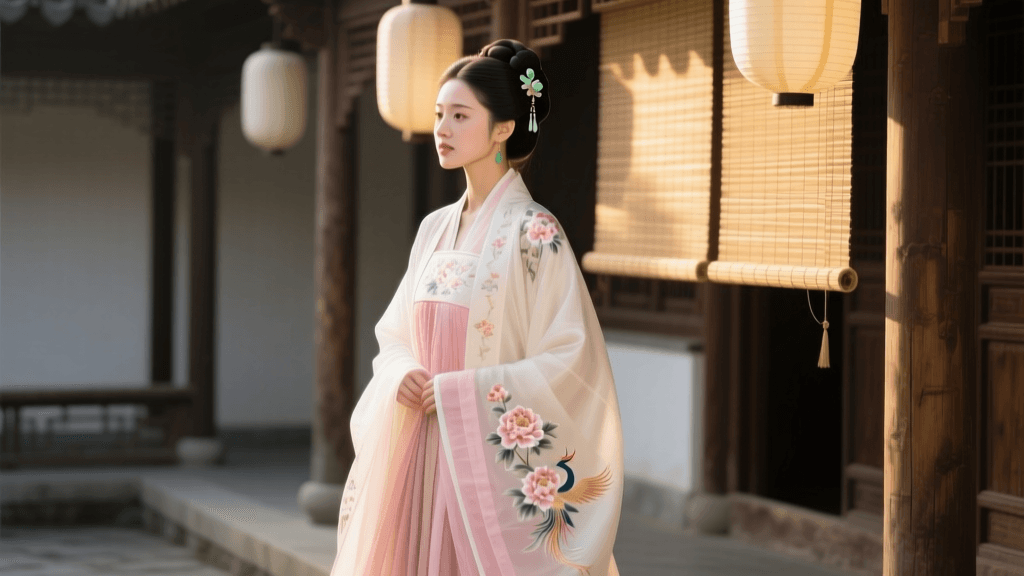
When traveling to humid, tropical destinations, the Song Dynasty Beizi (a long, open-front coat) paired with a lightweight Baidi (pleated skirt) offers unparalleled breathability. The 2026 market has seen a surge in enzyme-washed bamboo linens that mimic the drape of historical ramie but offer superior moisture-wicking properties, essential for surviving the heat of Southeast Asian temple tours.
Essential 2026 Packing Gear for Traditional Garments
The days of stuffing delicate garments into standard packing cubes are over. The 2026 travel gear market has introduced specialized solutions tailored specifically for traditional and voluminous clothing.
1. Compression Silk Garment Folders
Invest in a dedicated, breathable silk-lined garment folder. Unlike standard plastic dry-cleaning bags which trap moisture and cause mildew in humid cargo holds, silk-lined folders allow the fabric to breathe while preventing the friction that causes silk fibers to pill or tear. Look for models with integrated velvet hangers that grip the wide, slippery waistbands of Mamianquns without leaving clamp marks.
2. Portable Handheld Steamers
A high-quality, dual-voltage handheld steamer is non-negotiable for the Hanfu traveler. The latest 2026 models, such as the compact Philips STH3020 series, feature foldable heads and rapid 30-second heat-up times. Steam is vastly superior to ironing for Hanfu; direct heat from an iron can easily scorch delicate brocades or melt the metallic threads used in modern Ming-style weaving. A quick steam in the hotel bathroom will release transit wrinkles and revive the drape of your Ruqun.
3. Eco-Friendly Enzymatic Wrinkle Release Sprays
For destinations where steaming isn't immediately possible, botanical-based wrinkle release sprays are a lifesaver. By lightly misting the garment and gently pulling the fabric taut, you can relax the fibers of cotton and linen Hanfu without the need for electricity. Ensure the spray is free of harsh alcohols that could strip the natural dyes often used in artisanal Hanfu pieces.
Mastering the Art of Packing Pleats and Silk
Packing traditional garments requires an understanding of textile architecture. The way a garment is folded dictates how it will look upon arrival.
The Accordion Tissue Method for Mamianqun
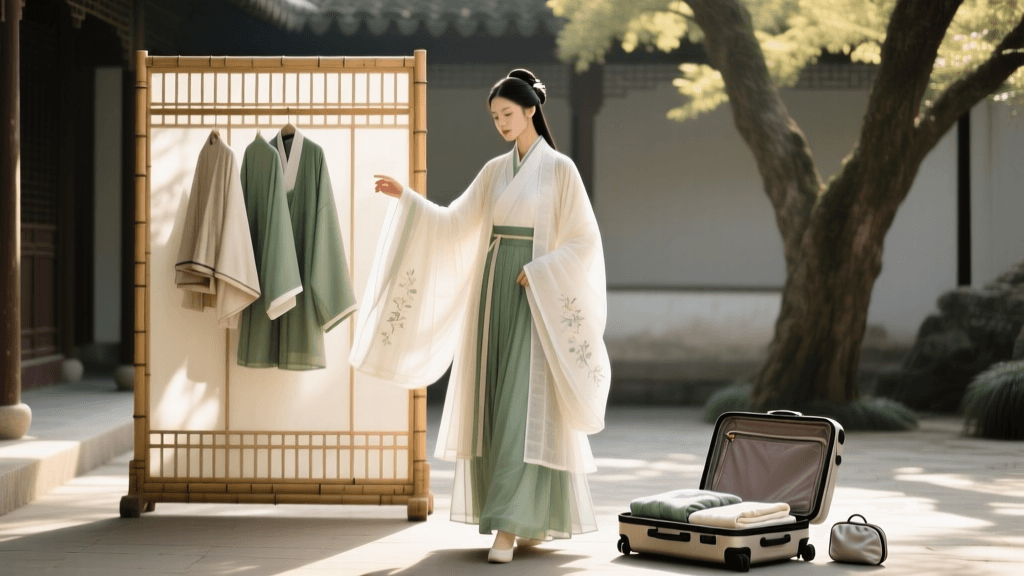
To preserve the razor-sharp pleats of a Mamianqun during transit, never fold it in half. Instead, lay the skirt flat and insert acid-free tissue paper into each individual pleat. This prevents the pleats from crushing into one another. Once the tissue is inserted, roll the skirt gently from the hem upward toward the waistband. Rolling, rather than folding, prevents hard crease lines across the width of the fabric. Secure the rolled skirt with a soft, reusable silk ribbon before placing it in your luggage.
Bundle Wrapping for Delicate Ruqun
For delicate, thin-silk Ruqun and Pibo (shawls), the 'bundle wrapping' technique is ideal. Lay your heaviest item (like a winter Banbi) flat as the base. Layer your softer silk tops, skirts, and sashes in a cross pattern over the center. Place a soft core—such as a pair of rolled socks or undergarments—in the center, and then wrap the garments around the core to form a sphere. This method eliminates hard folds entirely and utilizes the natural curve of the bundle to protect fragile silk weaves from snapping under the pressure of a closed suitcase.
Navigating Airport Security and Transit
Traveling in full Hanfu through modern airports presents unique logistical challenges. Voluminous sleeves (such as the Tang Dynasty Daxiushan) can easily catch on escalator handrails, turnstile gates, and conveyor belts. When flying in traditional dress, it is advisable to wear a 'travel-modified' Hanfu set featuring narrower sleeves or to use a decorative sash to bind the sleeves securely to your wrists during transit.
Furthermore, be prepared for airport security screenings. Traditional metal hairpins (Zanzi), ornate metal waist chains, and heavy brocade belts will trigger metal detectors. Pack a dedicated, easily accessible 'transit pouch' for your metallic accessories so you can swiftly remove them and place them in the security bins without risking the loss of a cherished, hand-forged heirloom piece in the chaos of a busy terminal.
Footwear: Bridging History and Comfort
Historically accurate footwear, such as flat silk embroidered shoes or wooden clogs, is notoriously unsupportive for the 15,000-plus steps a modern cultural tourist takes in a single day. In 2026, the Hanfu footwear market has brilliantly adapted to this need. Look for 'hidden wedge' embroidered boots or sneakers featuring traditional cloud-motif (Yuntou) toe caps but built with modern memory-foam insoles and arch support. These hybrid shoes maintain the historical silhouette under the hem of your skirt while providing the ergonomic support necessary for cobblestone streets and sprawling heritage sites.
Responsible Cultural Tourism and Etiquette
As you travel the globe in traditional Asian attire, you become an ambassador of the culture. The UNESCO World Heritage Sustainable Tourism Programme emphasizes the importance of respecting local customs and heritage sites while engaging in cultural tourism. When visiting sacred temples, shrines, or historical monuments abroad, ensure your Hanfu is worn modestly and appropriately. Avoid dragging long, trailing skirts across sacred thresholds or fragile ancient mosaics.
Furthermore, preserving the intangible cultural heritage associated with these garments is paramount. As outlined by UNESCO's Intangible Cultural Heritage guidelines, the transmission of knowledge—such as the proper way to tie a sash, the historical significance of a specific collar crossing (always left over right for the living), and the context of the garments—is just as important as the physical preservation of the textiles. Take the time to educate curious onlookers and share the rich history of your attire with respect and accuracy.
Conclusion: Your Journey Awaits
Building a Hanfu travel wardrobe in 2026 is a beautiful synthesis of historical reverence and modern innovation. By carefully selecting destination-appropriate styles, investing in specialized packing technology, and mastering the art of pleat preservation, you ensure that your traditional garments arrive as flawlessly as you do. Whether you are capturing the morning mist in a Ming-style Mamianqun or navigating a bustling European market in a breathable Song Dynasty Beizi, your wardrobe is now equipped to handle the rigors of global travel while honoring the timeless elegance of Asian traditions.