Hanfu on Global Runways: 2026 International Fashion Trends
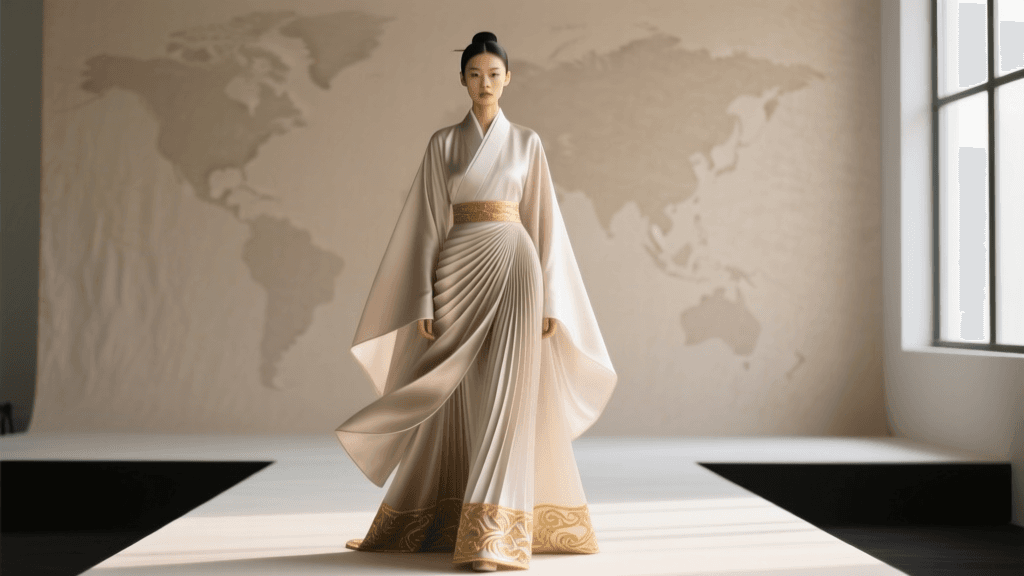
The 2026 Runway Revolution: A New Era of Asian Couture
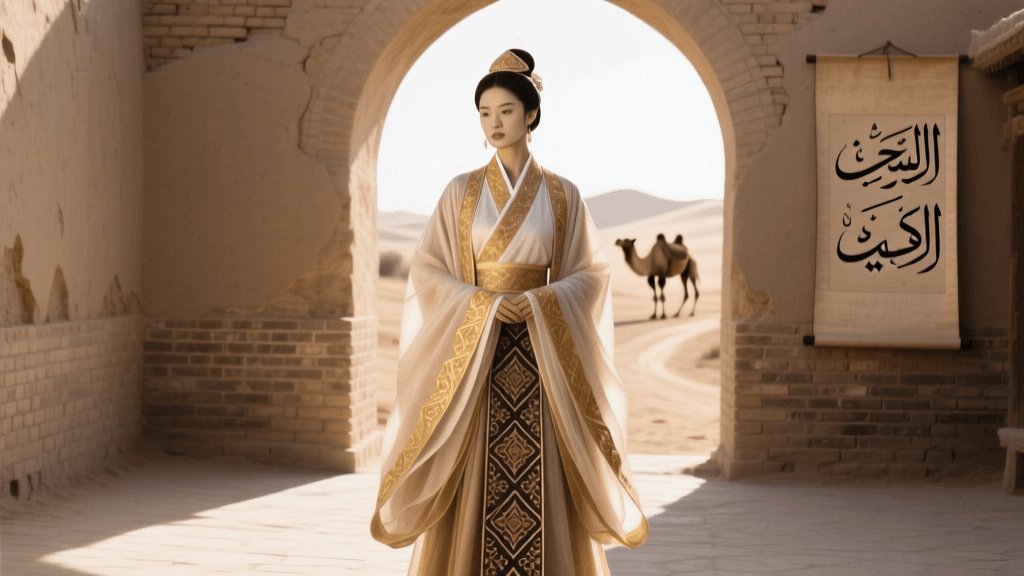
The intersection of ancient sartorial heritage and modern haute couture has reached a breathtaking zenith in the Spring and Summer 2026 collections. Across Paris, Milan, and New York, the global fashion elite are no longer merely borrowing from Asian traditions; they are deeply integrating the structural brilliance of historical Chinese garments into contemporary luxury. At the forefront of this movement is the Hanfu, a garment system with millennia of history that is now dictating the silhouette of modern evening wear and high-end streetwear. As we navigate the 2026 fashion calendar, it is evident that traditional Chinese clothing has transcended niche cultural appreciation to become a dominant force on international runways.
Historically rooted in the Hanfu tradition, these garments were once reserved for ceremonial use or historical reenactments in the West. However, the 2026 runway season has shattered this paradigm. Leading design houses and avant-garde ateliers are deconstructing the classical lines of the Ming and Song dynasties, reimagining them with sustainable textiles and modern tailoring techniques. According to market analysts covering the Asian luxury sector, the demand for heritage-inspired couture has surged by over forty percent this year, driven by a global consumer base that values artisanal craftsmanship and cultural storytelling.
Key Silhouettes Dominating 2026 Runways
To understand the current landscape, one must examine the specific garments that have captured the imagination of global creative directors. The 2026 collections highlight three distinct silhouettes that bridge the gap between ancient elegance and modern functionality.
The Mamianqun (Horse-Face Skirt)
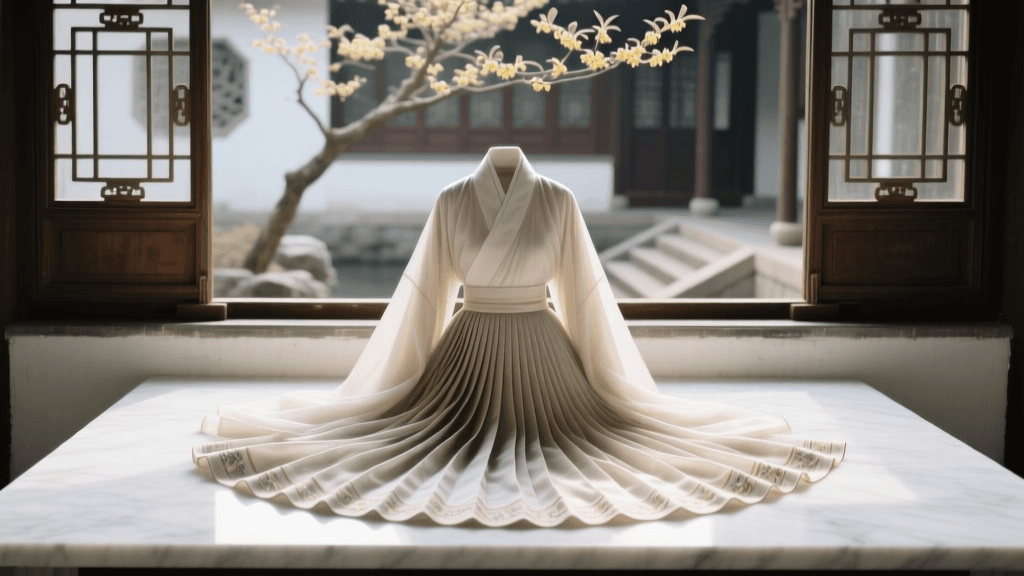
Undoubtedly the star of the Parisian shows this season, the Mamianqun is a wrap-around pleated skirt characterized by its flat front and back panels, flanked by intricate, knife-pleated sides. In 2026, designers are moving away from heavy, traditional brocades and instead utilizing lightweight, recycled silk organza and metallic jacquard weaves. The flat panels are being embellished with subtle, tonal embroidery rather than overt dragon or phoenix motifs, making the skirt highly versatile for contemporary black-tie events. The structural integrity of the pleats provides a dramatic, sweeping movement that has been a favorite on the catwalk, often paired with minimalist, structured bodices to balance the volume.
The Beizi (Long Coat)
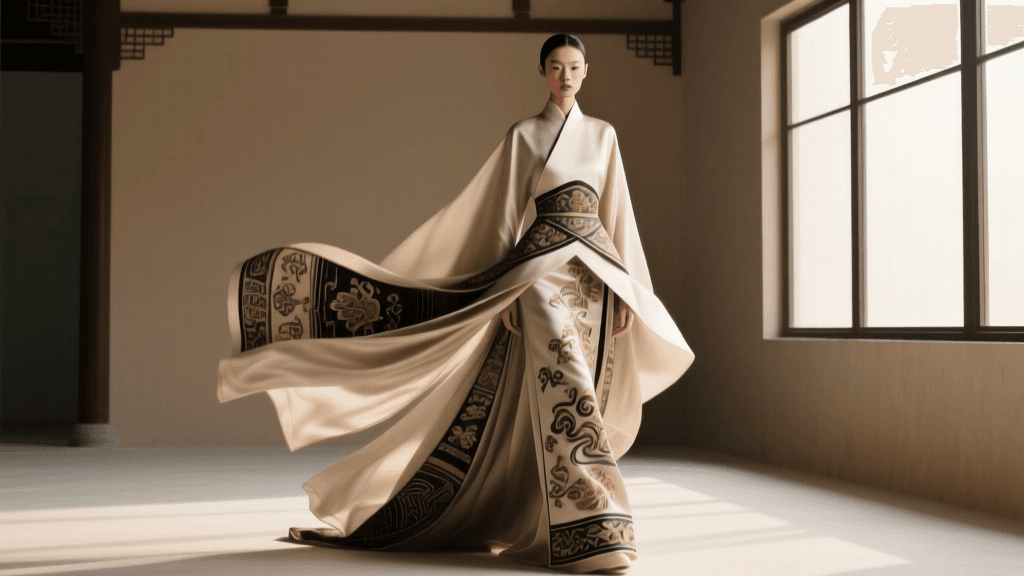
Originating from the Song dynasty, the Beizi is a long, open-front coat with side slits that extend up to the armpit. On the Milan runways, the Beizi has been reinterpreted as the ultimate luxury duster. Designers are elongating the hemline to the floor and utilizing stiff, architectural wools and vegan leathers. The straight collar and side slits allow for effortless layering over wide-leg trousers or sleek slip dresses. The 2026 adaptations often feature hidden magnetic closures instead of traditional knotted buttons, offering a seamless, minimalist exterior that appeals to the modern luxury consumer.
The Dahu (Cross-Collar Vest)
The Dahu, a sleeveless or short-sleeved cross-collar vest, has emerged as the essential layering piece for the Fall and Winter 2026 transition. Worn over high-necked silk blouses or tailored turtlenecks, the Dahu provides a striking geometric neckline. Runway stylists are utilizing rich, textured velvets and sustainable hemp blends for the Dahu, emphasizing its role as a sophisticated alternative to the traditional Western waistcoat or blazer.
Orthodox vs. Haute Couture: A Comparative Guide
For collectors and fashion enthusiasts, distinguishing between orthodox historical reproductions and runway-ready haute couture is essential. The table below outlines the primary differences in construction, materials, and styling applications for the 2026 market.
| Traditional Element | 2026 Runway Adaptation | Styling Application |
|---|---|---|
| Mamianqun (Heavy Brocade) | Recycled Silk Organza Pleats | Black-tie galas, evening wear |
| Beizi (Silk Gauze) | Architectural Wool Duster | Transitional outerwear, layering |
| Dahu (Cotton/Linen) | Sculptural Velvet Waistcoat | Smart casual, office-to-dinner |
| Knot Buttons (Pankou) | Hidden Magnetic Closures | Minimalist, seamless silhouettes |
Sourcing and Pricing in 2026
Acquiring runway-grade Hanfu requires navigating a specialized market. In 2026, the most sought-after pieces are not found in standard retail boutiques but are commissioned directly from master ateliers in Suzhou and Hangzhou, or through exclusive international stockists in Paris and London. For a bespoke Mamianqun featuring hand-woven zhuanghua (silk tapestry) techniques, buyers should expect a starting price of approximately two thousand eight hundred dollars, with lead times of up to six months. Ready-to-wear runway adaptations from contemporary Asian designers are more accessible, typically ranging from six hundred to one thousand five hundred dollars.
When sourcing these garments, it is crucial to verify the textile composition. The 2026 standard for luxury Hanfu demands natural, breathable fibers such as mulberry silk, peace silk, and high-grade linen, eschewing the synthetic polyesters that plagued the market in previous decades. Furthermore, the rise of digital fashion passports in 2026 has revolutionized the authentication of these bespoke pieces. Buyers now receive a blockchain-verified certificate detailing the artisan lineage, the origin of the silk, and the specific loom techniques employed, ensuring complete transparency and ethical sourcing.
Styling for International Galas and Events
Integrating Hanfu into a modern, international wardrobe requires a nuanced approach to styling. The goal for 2026 is harmonious juxtaposition. When wearing a voluminous Mamianqun to a gala, anchor the look with a modern, architectural corset or a sharply tailored tuxedo jacket. Footwear should remain decidedly contemporary; pointed-toe leather boots or minimalist stiletto mules complement the sweeping hemlines without resorting to historical costuming. Accessories should be kept sparse and sculptural. A single, oversized jade or sculptural metal ear cuff provides the necessary focal point.
Hair should be styled in sleek, modern silhouettes, such as a low, architectural chignon or a sharp, wet-look bob, to contrast with the intricate folds of the traditional garments. As highlighted by critics covering the global runway shows, the most successful styling moments occur when the wearer treats the Hanfu not as a costume, but as a masterwork of textile art that converses with modern luxury staples. For daytime events or fashion week street style, the Beizi can be effortlessly layered over a simple white t-shirt and vintage denim, cinched at the waist with a contemporary leather belt. This high-low styling approach demonstrates the incredible versatility of traditional Asian garments when freed from the constraints of strict historical orthodoxy.
The Cultural Impact and Future of Asian Traditions
The elevation of Hanfu on the global stage represents a profound shift in the fashion hierarchy. For centuries, Western silhouettes dictated the terms of global luxury. The 2026 collections signal a definitive decentralization of this narrative, placing Asian craftsmanship and philosophical approaches to clothing at the center of the design discourse. This movement is not merely about aesthetics; it is a reclamation of cultural heritage, executed with a level of technical mastery that demands global respect. As we look toward the latter half of the decade, the integration of Hanfu elements into everyday luxury wear will only deepen, solidifying its place in the permanent lexicon of global fashion.