Hanfu in Kunqu & Peking Opera: 2026 Stage Costume Guide
The Intersection of Hanfu and Chinese Theater (Xiqu)
The revival of traditional Chinese clothing has profoundly influenced the performing arts, creating a renaissance in theatrical wardrobes. As we navigate the 2026 theatrical season, the intersection of historical Hanfu and traditional Chinese opera (Xiqu) has never been more vibrant. While everyday Hanfu enthusiasts focus on historical accuracy for streetwear and ceremonies, stage costumes—known as Xifu—require a delicate balance of historical inspiration, visual exaggeration, and extreme physical functionality. For modern performers and theater scholars, understanding how traditional garments are adapted for the stage is essential to appreciating both the textile arts and the performing arts.
Unlike daily historical clothing, which shifted dramatically across the Tang, Song, Ming, and Qing dynasties, traditional Chinese opera costumes are predominantly frozen in time. The foundational silhouettes for both Kunqu and Peking Opera are heavily based on Ming Dynasty Hanfu, specifically the round-collar robes, cross-collar garments, and intricate headwear of the 14th to 17th centuries. This standardization allows audiences to instantly recognize a character's social status, profession, and moral alignment, regardless of the play's actual historical setting.
Historical Accuracy vs. Theatrical Exaggeration
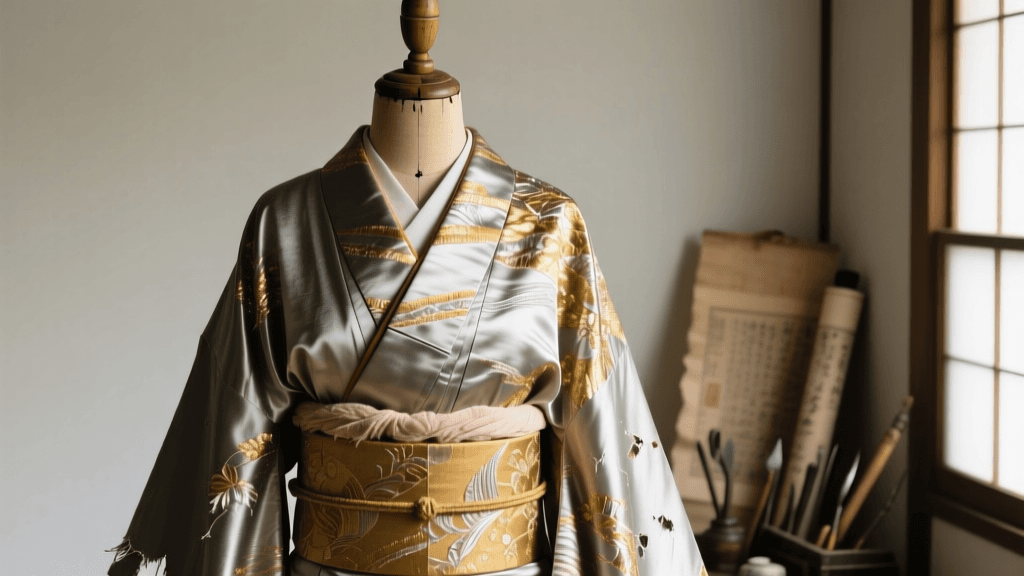
In 2026, top-tier theatrical tailors are blending authentic Hanfu construction techniques with modern stage requirements. A traditional Ming Dynasty Mangpao (python robe) was a heavy, stiff garment woven with metallic threads, meant for slow, deliberate court movements. On stage, however, performers execute acrobatic leaps, rapid spins, and intense martial arts sequences. Therefore, modern theatrical Mangpao utilize advanced 2026 textile blends. These fabrics mimic the lustrous sheen of heavy silk satin but incorporate micro-stretch weaves and moisture-wicking linings, allowing performers to move with unrestricted agility while remaining cool under high-intensity LED stage lighting.
Furthermore, the color palettes of Xifu are strictly codified. While historical Hanfu colors were dictated by sumptuary laws and seasonal trends, stage colors dictate character archetypes. Yellow is reserved exclusively for emperors, red for high-ranking officials or loyal generals, and black for characters with bold, straightforward, or fierce personalities. This visual shorthand remains a cornerstone of Chinese theatrical arts today.
Kunqu vs. Peking Opera: A 2026 Costume Comparison
While both forms share the same foundational Xifu wardrobe, the aesthetic execution differs significantly. Kunqu Opera, recognized by UNESCO for its refined elegance, favors subtlety. In contrast, Peking Opera (Jingju) is known for its bold, high-contrast visual impact designed to captivate large, noisy crowds. Below is a structured comparison of how these two art forms approach Hanfu-inspired stage wear in 2026.
| Feature | Kunqu Opera (The Elegant Melody) | Peking Opera (Jingju) |
|---|---|---|
| Base Silhouette | Flowing, relaxed Ming-style robes with softer draping. | Structured, padded garments to create imposing, heroic silhouettes. |
| Color Palette | Muted, pastel, and intermediate tones (jade, soft pink, powder blue). | Highly saturated, contrasting primary colors (crimson, bright yellow, emerald). |
| Embroidery Density | Sparse to moderate. Features delicate Su Xiu (Suzhou embroidery) with floral and avian motifs. | Dense and heavy. Features dragons, tigers, and geometric patterns using metallic threads. |
| Water Sleeves | Longer, wider, and made of ultra-fine, lightweight silk for fluid, poetic movements. | Slightly shorter and stiffer to allow for sharp, percussive snaps and martial maneuvers. |
| Headwear | Minimalist crowns, soft scholar hats, and subtle pearl hairpins. | Elaborate, towering headdresses with trembling pheasant feathers (Lingzi) and large pompoms. |
The Art and Engineering of Water Sleeves (Shuixiu)
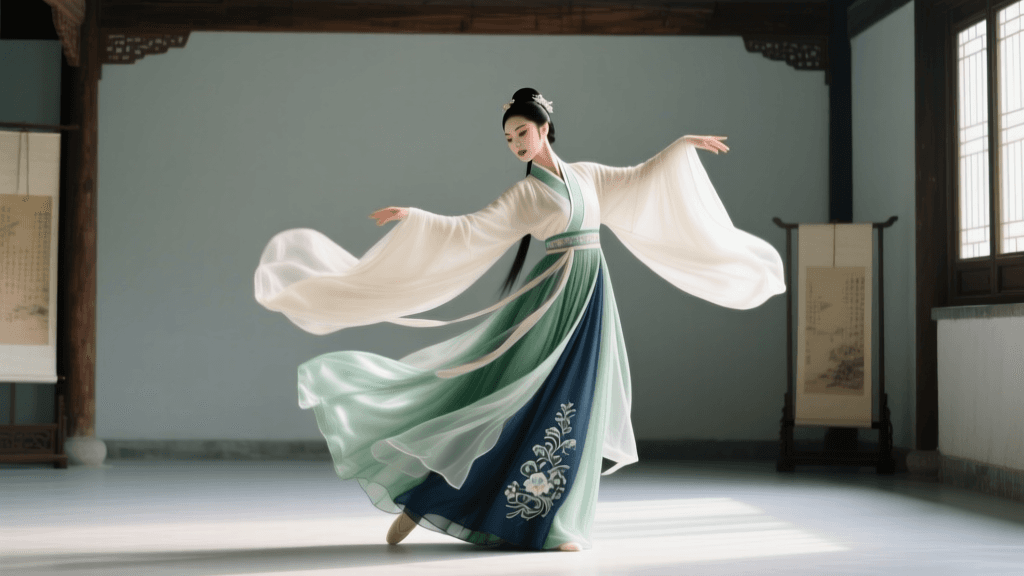
No discussion of Hanfu in traditional performing arts is complete without analyzing the Shuixiu, or water sleeves. These are the elongated white silk extensions attached to the cuffs of the Xuezi (informal robe) or Pei (cape). In historical Hanfu, sleeves were wide and long, but the theatrical water sleeve is a deliberate exaggeration designed to extend the actor's emotional reach. When a character weeps, the sleeves tremble; when they are enraged, the sleeves are thrown violently to the floor.
In 2026, the engineering of water sleeves has reached new heights of precision. Standard practice sleeves for students measure exactly 60 centimeters in length. However, master performers in leading roles commission custom sleeves ranging from 80 to 110 centimeters. The silk used is no longer standard mulberry silk; it is a specialized, tightly woven crepe de chine that resists wrinkling and holds a crisp edge when folded over the wrist.
Core Water Sleeve Techniques
Mastery of the water sleeves requires years of rigorous physical conditioning. The primary movements include:
- Tou Xiu (Throwing): Flinging the sleeve outward to express anger, dismissal, or sudden realization.
- Fan Xiu (Flipping): A rapid upward flick of the wrist that catches the fabric on the forearm, often used to signal a transition in thought or a coy reaction.
- Dou Xiu (Shaking): A high-frequency trembling of the wrist that makes the silk ripple like water on a windy lake, representing deep sorrow or fear.
- Yun Xiu (Cloud Hands): A continuous, circular motion that creates a figure-eight pattern in the air, symbolizing grace, magic, or the passage of time.
To achieve the perfect centrifugal force during these movements, 2026 theatrical tailors have begun inserting microscopic, flexible silicone weights into the very hem of the water sleeves. This innovation prevents the lightweight silk from clinging to the performer's sweaty arms during the third act of a grueling performance, ensuring the visual poetry remains unbroken.
Sourcing and Commissioning Theatrical Hanfu in 2026
For theater companies, university Xiqu programs, and serious independent practitioners, sourcing authentic stage costumes requires navigating a highly specialized artisan network. The two undisputed capitals of theatrical tailoring remain Suzhou and Beijing, each catering to different stylistic needs.
Suzhou: The Hub of Kunqu Elegance
Suzhou is the birthplace of Kunqu and the epicenter of Su Xiu (Suzhou embroidery). Tailors here specialize in the delicate, intricate needlework required for scholar and female lead (Dan) roles. Commissioning a fully embroidered Pei (cape) from a master artisan in Suzhou in 2026 takes approximately four to six months. The cost reflects the immense labor: a basic machine-embroidered practice piece starts around $350, while a hand-embroidered, master-crafted performance garment utilizing genuine silk and gold-leaf threads easily exceeds $3,500.
Beijing: The Fortress of Peking Opera Grandeur
Beijing's theatrical workshops focus on the structural integrity and bold aesthetics of Peking Opera. This is where you source Kao (armor) and Mangpao (python robes). The armor pieces, featuring the iconic four pennants on the back, require complex leatherwork, heavy canvas base layers, and metallic bullion embroidery. A complete, custom-fitted armor set for a martial general (Wusheng) in 2026 costs between $1,800 and $4,000, depending on the complexity of the tiger or dragon motifs and the inclusion of genuine pheasant feathers for the headdress.
Maintenance and Care for Theatrical Silks
Theatrical Hanfu represents a massive financial and artistic investment. Proper maintenance is critical to ensuring these garments survive decades of use. Unlike daily Hanfu, which can often be gently hand-washed or dry-cleaned, stage costumes require specialized care due to their mixed media construction (silk, metallic threads, glue, cardboard stiffeners, and leather).
- Never Wash Embroidered Armor or Robes: Water will dissolve the natural glues used to stiffen the collars and hems, and it will tarnish the metallic embroidery threads. Spot clean only with specialized theatrical fabric foams.
- Aeration over Sunlight: After a performance, garments must be hung in a well-ventilated, climate-controlled room to dry out sweat. Direct sunlight will rapidly fade the delicate aniline dyes used in Kunqu pastels and brittle the silk fibers.
- Water Sleeve Care: Water sleeves are the only part of the costume that are routinely detached and washed. They must be hand-washed in cold water with a pH-neutral silk detergent, laid flat to dry, and ironed on the lowest steam setting to maintain their crisp, glass-like finish.
- Storage: Garments should be folded with acid-free tissue paper to prevent permanent creasing in the embroidery. Store them in traditional cedar chests or breathable canvas garment bags to protect against moths and humidity.
Conclusion
The presence of Hanfu in Kunqu and Peking Opera is a living, breathing testament to the adaptability of traditional Chinese culture. As we move through 2026, the dedication of performers, tailors, and scholars ensures that these magnificent garments continue to evolve. By respecting the historical roots of Ming Dynasty silhouettes while embracing modern textile innovations, the theatrical wardrobe remains a vital, dynamic art form that bridges the ancient stage with the contemporary world.