Best Traditional Chinese Footwear 2026: Cloud Shoes & Boots
The Resurgence of Traditional Chinese Footwear in 2026
The “Xin Zhongshi” (New Chinese Style) movement has completely transformed how we integrate traditional garments into daily life. By 2026, it is no longer just about the clothing; the focus has shifted downward to the foundation of the outfit: traditional Chinese footwear. While Hanfu enthusiasts once struggled to find historically accurate shoes that were also comfortable for modern commuting, the 2026 market offers a brilliant synthesis of ancient aesthetics and contemporary ergonomics. From the elegant, upturned toes of Cloud Shoes to the commanding presence of Xue boots, traditional Chinese footwear is experiencing a golden age of craftsmanship and accessibility. This comprehensive guide explores the history, construction, and modern styling of these iconic shoes, helping you step confidently into the New Chinese Style.
The Anatomy of Traditional Chinese Footwear
Cloud Shoes (Yuntoulu)
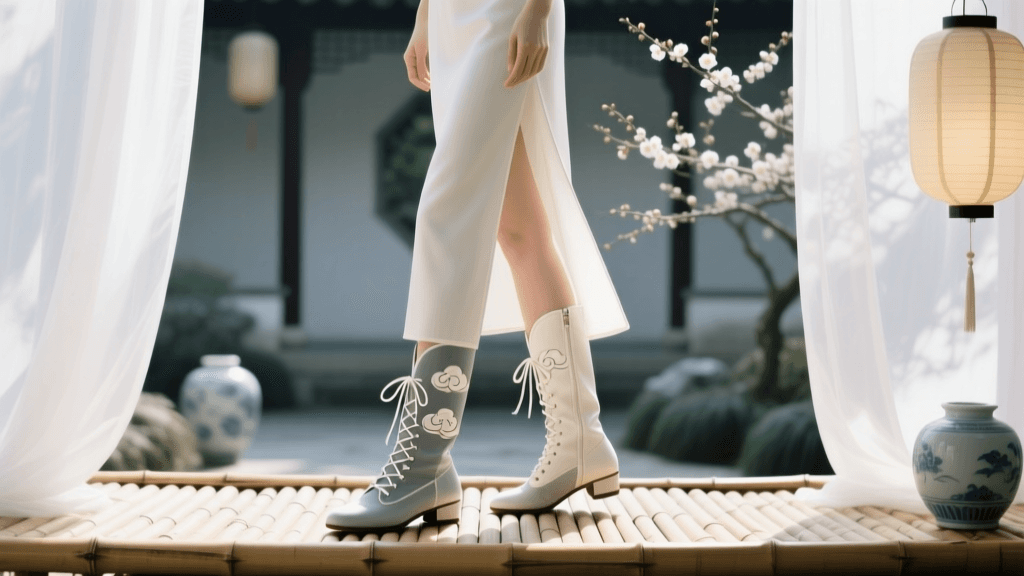
Known as Yuntoulu (云头履) or cloud-head shoes, this style is characterized by its distinctive upturned toe, which resembles the auspicious ruyi cloud motif. Historically popular during the Ming and Qing dynasties, cloud shoes were worn by both men and women, though the embroidery and color palettes often denoted social status and gender. According to historical textile archives at The Metropolitan Museum of Art, the Ming dynasty saw a flourishing of intricate silk weaving and embroidery techniques that heavily influenced footwear design and court aesthetics.
In 2026, modern artisans have revived these techniques, utilizing sustainable peace silk and vegan brocades to cater to eco-conscious consumers. The upturned toe is not merely decorative; historically, it prevented the wearer from tripping over the long, flowing hems of traditional robes and skirts. Today, the toe box is reinforced with lightweight, memory-foam-lined thermoplastics, providing the structural integrity of historical wooden or layered-cotton soles but with the shock absorption required for walking on modern concrete and asphalt.
Scholar and Official Boots (Xue)
Xue (靴), or traditional Chinese boots, present a stark contrast to the delicate nature of cloud shoes. Originating from nomadic riding cultures and fully integrated into Han Chinese official dress by the Ming and Qing eras, Xue boots are characterized by their thick, multi-layered white cotton soles and black satin or leather uppers. The most iconic version is the Chaofang Xue (court boots), featuring a thick, elevated sole that commanded respect and slowed the wearer’s gait to a dignified, measured pace.
In the 2026 Xin Zhongshi revival, Xue boots have been adapted for winter wear and avant-garde street fashion. Contemporary cobblers are replacing the traditional heavy cotton soles with lightweight EVA foam and rubber composites, reducing the weight of the boot by nearly half while maintaining the iconic thick-soled silhouette. Furthermore, the use of ethically sourced matte leathers and water-resistant recycled satins ensures these boots can withstand the rigors of modern urban winters. The cultural significance of silk and textile crafting, which extends to the uppers of these boots, is deeply rooted in practices recognized by UNESCO’s Intangible Cultural Heritage lists, ensuring that the materials used in premium 2026 replicas honor centuries of sericulture tradition.
2026 Market Comparison: Cloud Shoes vs. Xue Boots
When building a traditional or fusion wardrobe, understanding the functional differences between these two primary footwear styles is essential. Below is a comparison chart based on the 2026 market offerings from leading Hanfu and Xin Zhongshi brands.
| Feature | Cloud Shoes (Yuntoulu) | Xue Boots |
|---|---|---|
| Primary Use Case | Spring/Summer daily wear, formal events, indoor gatherings | Autumn/Winter wear, street style, outerwear pairing |
| Standard Materials | Silk brocade, vegan satin, embroidered cotton | Matte leather, recycled satin, velvet |
| Sole Construction | Thin rubber with faux-layered cotton edge | Thick EVA foam with rubber tread base |
| Average Price (USD) | $45 - $150 | $85 - $250 |
| Maintenance Level | High (requires delicate spot cleaning) | Medium (standard leather/satin care) |
Sizing, Fit, and Material Care
Navigating the 2026 Sizing Standard
Chinese footwear sizing in 2026 strictly follows the millimeter standard, which measures the exact length of the foot. For international buyers, this requires a slight adjustment in shopping habits. A standard US Men’s 8 or Women’s 9.5 typically translates to a 260mm size in Chinese footwear. Because traditional shoes were historically crafted with a narrow, tapered toe box, many modern buyers find them restrictive. However, leading 2026 brands now offer “wide-fit” (宽楦) options specifically designed to accommodate wider feet without sacrificing the elegant, tapered exterior silhouette. Always measure your foot in millimeters from heel to the longest toe while standing, and consult the brand’s specific size chart, as embroidery thickness can reduce interior volume by up to 5mm.
Maintenance and Storage
Caring for traditional footwear requires specific attention to detail. For silk and brocade cloud shoes, avoid machine washing entirely. Use a soft-bristled dry brush to remove surface dust, and treat stains with a specialized silk detergent applied via a microfiber cloth. Store them in breathable cotton dust bags with cedar blocks to prevent moisture buildup and moth damage. For Xue boots, the care routine mirrors that of modern winter boots. Leather uppers should be conditioned bi-monthly, while satin variants benefit from a hydrophobic waterproofing spray applied before the first winter wear. Always use shoe trees to maintain the structural integrity of the tall boot shaft.
How to Style Traditional Footwear in 2026
The beauty of the Xin Zhongshi movement lies in its versatility. Traditional footwear is no longer confined to cosplay or historical reenactments; it is a staple of high fashion and daily streetwear. Here are three actionable styling formulas for 2026.
Formula 1: The Modern Ming Dynasty (Cloud Shoes)
Pair a pleated Mamianqun (horse-face skirt) with a tailored, structured Western blazer. The cloud shoes act as the bridge between the traditional skirt and the modern top. Opt for cloud shoes in a muted, metallic brocade (such as champagne or soft silver) that picks up the subtle threads in the skirt’s weave. This look is perfect for office environments, gallery openings, or upscale dinners, proving that traditional footwear can be both professional and profoundly elegant.
Formula 2: The Winter Scholar (Xue Boots)
For colder months, combine a heavy wool Hanfu-inspired wrap coat with a sleek, high-neck merino turtleneck and wide-leg trousers. The Xue boots provide the necessary visual weight at the bottom of the outfit to balance the voluminous coat. Black matte leather Xue boots with a subtle 3-inch thick sole offer a commanding, avant-garde silhouette that pairs exceptionally well with minimalist, monochromatic winter palettes.
Formula 3: Casual Fusion (Everyday Cloud Shoes)
For a relaxed weekend look, swap out traditional skirts for high-waisted, wide-leg denim or linen trousers. Choose a pair of flat, cotton-embroidered cloud shoes in a vibrant color like azure or crimson. The upturned toe will subtly peek out from under the hem of the trousers, adding a surprising and delightful cultural touch to an otherwise casual, contemporary outfit.
Conclusion
As we move through 2026, traditional Chinese footwear has firmly established itself as a vital component of the global fashion lexicon. Whether you are drawn to the delicate, auspicious curves of the Yuntoulu cloud shoes or the grounded, historical authority of the Xue boots, investing in these pieces is an investment in wearable art. By understanding their history, caring for their unique materials, and styling them with modern confidence, you honor centuries of craftsmanship while forging a distinctly contemporary aesthetic.