Yukata vs Jinbei: 2026 Guide to Japanese Summer Casual Wear
Surviving the 2026 Japanese Summer in Style
As the summer of 2026 brings record-breaking humidity and vibrant outdoor festivities across Japan, choosing the right traditional garment is no longer just a matter of aesthetics—it is a necessity for comfort and cultural immersion. For locals and travelers alike, the Japanese summer wardrobe revolves around two iconic garments: the yukata and the jinbei. While both are deeply rooted in Japanese history and designed to combat the sweltering heat, they serve vastly different purposes, carry distinct levels of formality, and require unique styling approaches.
Whether you are planning to attend the legendary Sumidagawa Fireworks Festival, lounging at a traditional Kyoto ryokan, or simply taking a casual evening stroll to the local convenience store, understanding the nuances between these two garments will elevate your 2026 travel experience. In this comprehensive guide, we break down the history, modern adaptations, and practical etiquette of the yukata and jinbei.
The Yukata: Elegance Meets Breathability
The yukata (浴衣) translates literally to 'bathing cloth.' Originally worn by the nobility during the Heian period (794-1185) as a linen garment to dry off after bathing, it evolved during the Edo period into the unlined, cotton summer kimono we recognize today. According to Japan Guide's overview of traditional garments, the yukata remains the most accessible and widely worn form of traditional Japanese clothing in the modern era.
2026 Fabric Innovations
While traditional shoji-ori (seersucker-like cotton) remains popular for its ability to trap air and keep sweat off the skin, 2026 has seen a massive surge in sustainable, tech-infused fabrics. Many contemporary Japanese brands are now weaving recycled cellulose fibers and cooling hemp blends into yukata textiles. These modern weaves offer the drape and aesthetic of vintage cotton but provide enhanced moisture-wicking properties essential for surviving the intense urban heat islands of Tokyo and Osaka.
Construction and Styling
A yukata is a single, T-shaped robe wrapped left over right (always left over right for the living) and secured with a obi (sash). The styling is intricate, often requiring koshihimo (tying cords), an obi-ita (stiffener), and an obi-jime (decorative cord). The hem should fall precisely at the ankle bone, creating a sleek, column-like silhouette that restricts the stride, naturally enforcing a graceful, measured walk.
The Jinbei: Ultimate Casual Comfort
If the yukata is the elegant evening gown of summer, the jinbei (甚平) is the ultimate comfortable sundress or casual lounge set. Originating from the jinbaori (a sleeveless surcoat worn by samurai), the jinbei evolved into a two-piece garment consisting of a short-sleeved, wrap-style top and matching shorts or cropped pants.
The Modern Jinbei Renaissance
In 2026, the jinbei has experienced a renaissance among young adults and fashion-forward travelers. No longer relegated to children's wear or middle-aged men drinking beer on their porches, modern jinbei sets feature minimalist geometric prints, rich indigo Shibori dyeing techniques, and premium linen blends. High-end boutique brands in Harajuku and Daikanyama are now releasing matching couples' sets and gender-neutral silhouettes that blur the lines between traditional homewear and street-ready festival attire.
Construction and Ease of Wear
The beauty of the jinbei lies in its simplicity. The top is secured with two simple ties—one inside and one outside—while the shorts feature an elastic or drawstring waist. There is no need for an obi, no complex folding techniques, and no risk of the garment coming undone in a summer breeze. It is the epitome of functional, effortless Japanese design.
Head-to-Head: 2026 Comparison Chart
To help you decide which garment to pack or purchase for your summer itinerary, here is a direct comparison of the yukata and jinbei based on current 2026 standards.
| Feature | Yukata | Jinbei |
|---|---|---|
| Formality | Semi-formal to Smart Casual | Strictly Casual / Loungewear |
| Components | One-piece robe, Obi, Koshihimo | Two-piece (Top and Shorts/Pants) |
| Heat Management | Good (open neck, breathable cotton) | Excellent (exposed legs, loose fit) |
| Average 2026 Price | $40 - $250+ USD (Full set) | $25 - $120 USD (Full set) |
| Time to Dress | 15 - 30 minutes | 2 - 3 minutes |
| Ideal Occasions | Fireworks, Bon Odori, Ryokans, Dates | Local errands, home wear, casual matsuri |
Occasion and Etiquette: Where to Wear What
Understanding the cultural context of these garments is crucial to avoiding sartorial faux pas during your travels. The Japan National Tourism Organization (JNTO) frequently highlights the importance of dressing appropriately for regional festivals, noting that while Japan is highly accommodating to tourists, respecting local dress codes enhances mutual cultural appreciation.
Fireworks Festivals (Hanabi Taikai) and Bon Odori
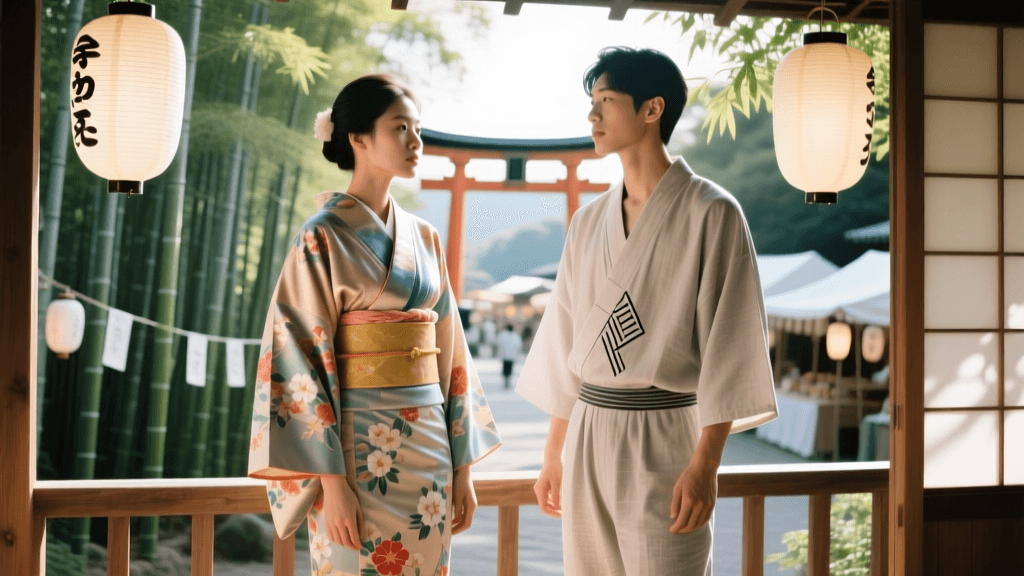
For major summer events like the Nagaoka or Sumidagawa fireworks festivals, the yukata is the undisputed champion. It is considered a romantic, festive, and highly photogenic garment. Wearing a jinbei to a major Hanabi event is not strictly forbidden, but it may make you feel underdressed, akin to wearing gym shorts to a nice outdoor wedding. However, for neighborhood Bon Odori (traditional summer dances) or local shrine clean-up festivals, a clean, well-fitted jinbei is perfectly acceptable and highly practical for moving around in the heat.
Ryokan and Onsen Stays
When staying at a traditional inn, you will almost always be provided with a plain, often indigo or patterned yukata to wear as loungewear, sleepwear, and even as outerwear when walking to the communal baths or the inn's private gardens. In 2026, many modern boutique ryokans have begun offering premium jinbei sets as an alternative, particularly for male guests or those who find wrapping a robe uncomfortable while sleeping.
'The golden rule of Japanese summer wear is intentionality. A yukata shows you have prepared for the occasion and respect the festive atmosphere. A jinbei shows you are at home, relaxed, and part of the local neighborhood rhythm.'
Essential Accessories and Undergarments
Neither garment is truly complete without the proper foundational layers and accessories, especially when navigating the extreme humidity of a Japanese July.
Yukata Undergarments and Footwear
- Hadajuban and Koshimaki: Never wear a yukata directly against your bare skin. In 2026, moisture-wicking, ultra-thin mesh hadajuban (undershirts) and koshimaki (waist wraps) are essential. They absorb sweat, protect the expensive cotton from body oils, and prevent embarrassing transparency when standing in bright sunlight.
- Geta and Zori: Traditional wooden geta clogs are the standard footwear. They elevate your feet above hot pavement and puddles. Ensure the hanao (thongs) are not too tight to avoid blisters during long festival walks.
- Kago Bags: A woven bamboo or rattan basket bag complements the vintage aesthetic of the yukata far better than a modern leather handbag or nylon backpack.
Jinbei Styling
- Footwear: The jinbei is highly versatile. While traditional setta (leather-soled sandals) work well, it is entirely acceptable in 2026 to pair a stylish, dark-hemp jinbei with clean, minimalist sneakers or modern sport sandals for a contemporary streetwear look.
- Accessories: Keep it minimal. A simple folding fan (sensu) tucked into the waistband or a modern crossbody canvas bag is all you need.
2026 Sizing, Pricing, and Purchasing Tips
Buying traditional garments can be intimidating due to the unique sizing systems, but modern retailers have made it easier than ever.
Sizing Guidelines
Yukata: Sizing is primarily based on height, not width, as the garment is wrapped and tied to fit the torso. The most critical measurement is the mitake (back length). When held up to your shoulder, the hem should hit exactly at your ankle bone. If it is too long, you will trip; if it is too short, it will look like a modern dress, which breaks the traditional aesthetic. Standard sizes usually range from 'S' (approx. 155cm) to 'L' (approx. 175cm), with custom tailoring available for taller individuals.
Jinbei: Sizing follows standard Western conventions (S, M, L, XL) but tends to run slightly smaller and shorter in the inseam. Always check the waist measurement, as traditional drawstrings offer less stretch than modern elastic waistbands.
Where to Buy in 2026
For authentic, high-quality garments, skip the airport souvenir shops. In Tokyo, head to the Oriental Bazaar in Harajuku for a massive selection of entry-level and mid-tier options. For artisan-crafted, premium cotton and Shibori-dyed pieces, the boutiques in Tokyo's Yanaka district or Kyoto's Shijo-dori offer unparalleled craftsmanship. Online, platforms like Rakuten and specialized kimono exporters now offer AI-driven virtual fitting rooms, allowing international buyers to input their exact measurements and receive perfectly sized garments shipped directly to their home countries before their trip.
Conclusion
The choice between a yukata and a jinbei ultimately comes down to your itinerary and your personal comfort threshold. If your 2026 summer trip involves romantic evenings at fireworks displays, elegant dinners at traditional restaurants, and immersive cultural festivals, investing the time and money into a properly fitted yukata is an unforgettable experience. Conversely, if your trip is focused on relaxed neighborhood exploration, beating the heat with maximum airflow, and embracing the everyday life of a Japanese local, the humble jinbei will become your most cherished travel companion. By understanding the distinct roles these garments play, you can navigate the Japanese summer with both grace and comfort.