Hanfu For Extreme Climates 2026: Desert Tropical Cold
The Global Expansion of Hanfu in 2026
The Hanfu renaissance has evolved dramatically over the last decade, transitioning from a niche historical appreciation movement into a global, everyday fashion staple. As we navigate 2026, traditional Chinese garments are no longer confined to temperate spring festivals or autumn photography shoots. Enthusiasts, expats, and cultural ambassadors are now wearing Hanfu across the globe's most unforgiving environments. From the sweltering humidity of Southeast Asian metropolises to the sun-baked dunes of the Middle Eastern deserts, and the biting sub-zero winds of Northern Europe and Harbin, the demand for climate-specific traditional wear has never been higher.
Adapting Hanfu for extreme weather requires a deep understanding of historical textile engineering combined with modern 2026 fabric innovations. The ancient Chinese were masters of environmental dressing, utilizing specific weaves, layering techniques, and natural fibers to survive and thrive in diverse topographies. Today, we explore how to authentically and comfortably style Hanfu for tropical, desert, and extreme cold climates, ensuring both historical elegance and practical survivability.
Tropical Climates: Breathability and Song Dynasty Elegance
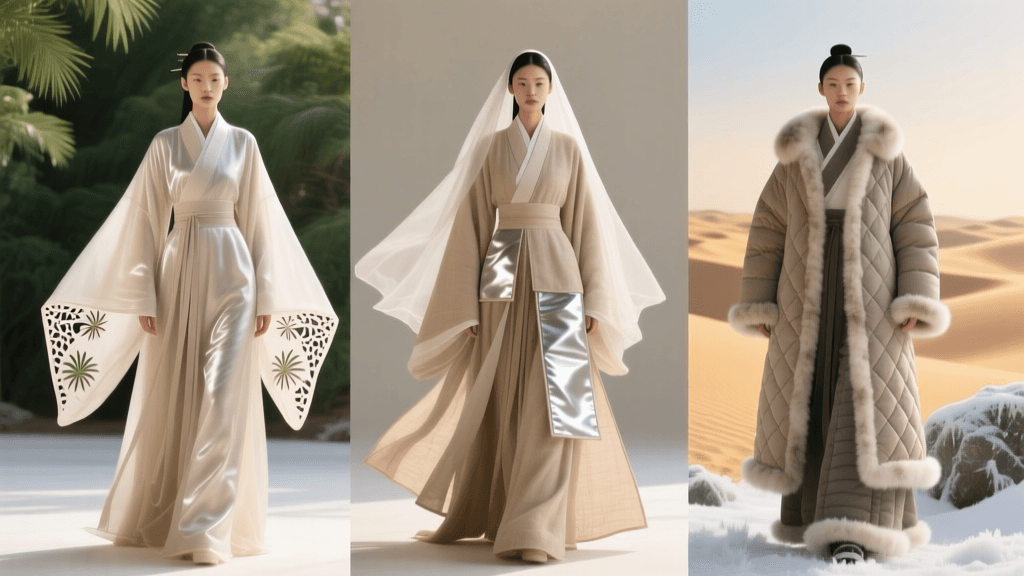
Wearing traditional garments in tropical regions like Singapore, Kuala Lumpur, or Hainan presents a unique challenge: intense heat paired with suffocating humidity. The key to tropical Hanfu in 2026 lies in maximizing airflow and utilizing moisture-wicking natural fibers. The Song Dynasty (960–1279) offers the most practical silhouettes for these conditions, characterized by slender, unlined, and breathable designs.
The Magic of Luo and Sha Weaves
Historically, summer Hanfu relied heavily on Luo (gauze) and Sha (leno weave) silks. According to the Metropolitan Museum of Art, Chinese silk weaving techniques reached unparalleled heights in creating lightweight, porous fabrics that allowed the skin to breathe while maintaining a luxurious drape. In 2026, modern textile mills have revived these ancient leno weaves, creating ultra-lightweight silk and ramie blends that resist clinging to sweat-dampened skin.
Xiangyunsha: The Ultimate Tropical Luxury
For those seeking premium tropical wear, Xiangyunsha (gambiered Canton gauze) remains the gold standard. Recognized by UNESCO Intangible Cultural Heritage lists for its complex sericulture and dyeing processes, this fabric is dyed with the juice of the薯莨 (Dioscorea cirrhosa) tuber and coated with iron-rich river mud. The result is a crisp, rustling fabric that is naturally antibacterial, quick-drying, and incredibly cool against the skin. A sleeveless Song-style Beizi (open-front jacket) crafted from Xiangyunsha, paired with wide-legged linen trousers, is the ultimate 2026 tropical uniform.
Desert Environments: Sun Protection and Sand Resistance
Desert climates demand a completely different approach. Whether you are traveling through the Gobi Desert, the dunes of Dubai, or the arid landscapes of Central Asia, the primary concerns are extreme UV exposure, abrasive sandstorms, and drastic temperature drops at night. The Tang Dynasty (618–907) provides the best historical blueprint for desert adaptation, heavily influenced by Silk Road cultural exchanges.
Yuanlingpao and Tightly Woven Hemp
The Yuanlingpao (round-collar robe) is ideal for desert wear. Its high neckline and long sleeves provide full-coverage sun protection without the need for synthetic UV garments. In 2026, leading Hanfu brands are releasing desert-specific lines using tightly woven hemp-cotton blends. Unlike the porous gauzes used in the tropics, these dense weaves prevent fine desert sand from penetrating the garment while offering excellent durability against abrasive winds.
The Revival of the Weimao and Mili
To protect the face and neck from harsh sun and blowing sand, the Tang-era Weimao (a wide-brimmed hat with a hanging veil) and the Mili (a full-body hooded veil) have seen a massive resurgence in desert-travel Hanfu styling. Modern 2026 iterations feature veils made from ultra-fine, UPF 50+ treated raw silk mesh, offering clear visibility while blocking 98% of harmful UV rays. Layering a lightweight cotton Banbi (half-sleeve jacket) over a long robe also allows wearers to easily adapt to the freezing desert nights by simply removing the outer layer when the sun is high.
Cold Regions: Ming Dynasty Warmth and Modern Layering
Winter Hanfu has exploded in popularity across cold-weather cities like Harbin, Seoul, and Montreal. The Ming Dynasty (1368–1644) is the undisputed champion of cold-weather traditional dress, featuring structured, layered, and heavily insulated garments that trap body heat effectively.
Aoqun and the Standing Collar
The Aoqun (a lined jacket paired with a pleated skirt) is the foundation of winter Hanfu. The Ming-style Liling (standing collar) fastened with metal or jade buttons at the neck prevents cold drafts from entering the garment. In 2026, the inner lining of these jackets is no longer limited to traditional cotton wadding. Innovators are integrating sustainable, ultra-thin aerogel insulation and ethically sourced faux-mink linings that provide immense warmth without adding the bulky silhouette of historical cotton padding.
Pifeng and Diaoqun
For extreme sub-zero temperatures, the Pifeng (a long, sleeveless cloak) is essential. Draped over the shoulders and fastened at the chest with an ornate clasp, it acts as a windbreaker. Beneath the skirt, the Diaoqun (fur-lined skirt) or modern equivalents utilizing high-density thermal fleece provide crucial lower-body insulation. The Victoria and Albert Museum notes that historical Chinese winter dress relied heavily on strategic layering and the use of animal pelts for wind resistance; today, advanced vegan leathers and thermal-reflective linings achieve the same historical aesthetic with modern ethical standards and superior heat retention.
2026 Climate-Specific Hanfu Comparison Chart
| Climate Zone | Ideal Dynasty Style | Primary Fabric | Key Accessory | Temp Range |
|---|---|---|---|---|
| Tropical / Humid | Song Dynasty (Beizi, Ku) | Xiangyunsha, Ramie, Luo (Gauze) | Bamboo folding fan, woven straw hat | 25°C to 38°C (77°F - 100°F) |
| Arid / Desert | Tang Dynasty (Yuanlingpao) | Dense Hemp-Cotton, Raw Silk | Weimao (Veiled Hat), Leather boots | 10°C to 45°C (50°F - 113°F) |
| Extreme Cold | Ming Dynasty (Aoqun, Pifeng) | Wool Brocade, Aerogel-lined Silk | Fur-lined cloak, Muff (Shoulong) | -30°C to 5°C (-22°F - 41°F) |
Sourcing and Caring for Extreme Weather Hanfu
Investing in climate-specific Hanfu requires proper maintenance to ensure longevity, especially when dealing with extreme environmental stressors. For tropical Xiangyunsha, avoid harsh chemical detergents; the mud-and-plant-dye patina actually strengthens with age and should only be gently hand-washed in cool water. Desert hemp-cotton blends are highly durable but should be air-dried in the shade to prevent the intense UV rays from degrading the natural fibers over time.
For winter Ming-style garments, the integration of modern thermal undergarments in 2026 has revolutionized care. Because wearers now use ultra-thin merino wool or graphene-infused base layers beneath their Aoqun, the heavy outer brocades do not absorb body sweat and oils, meaning they only require professional dry cleaning once at the end of the winter season. By respecting the historical wisdom of Asian textile traditions and embracing modern material science, the global Hanfu community continues to prove that traditional elegance knows no climatic boundaries.