Hanfu for Extreme Climates 2026: Tropical, Desert & Cold
Mastering Hanfu in Extreme Climates: The 2026 Adaptation Guide
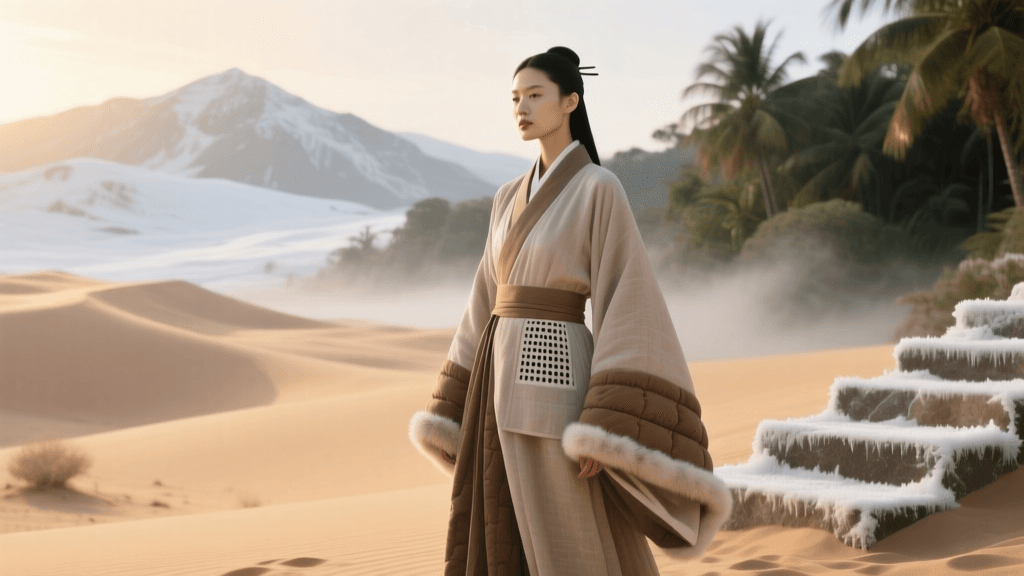
The global Hanfu renaissance has reached unprecedented heights in 2026, with enthusiasts proudly wearing traditional Chinese garments across every conceivable environment. From the sweltering, humid streets of Singapore to the arid, sun-baked dunes of Dubai, and the sub-zero, wind-swept avenues of Harbin, the demand for climate-specific Hanfu has driven a remarkable evolution in traditional textile engineering. Wearing Hanfu is no longer confined to mild spring days or climate-controlled studios. Today, we explore how to authentically and comfortably wear Hanfu in extreme climates, leveraging both ancient dynastic wisdom and cutting-edge 2026 fabric innovations.
Navigating Tropical Climates: High Heat and Crushing Humidity
Tropical environments pose a unique challenge for traditional garments: intense heat combined with suffocating humidity. The key to wearing Hanfu in regions like Southeast Asia or the American South during summer is prioritizing airflow, moisture management, and lightweight structural integrity.
The Song Dynasty Aesthetic: Minimalism and Breathability
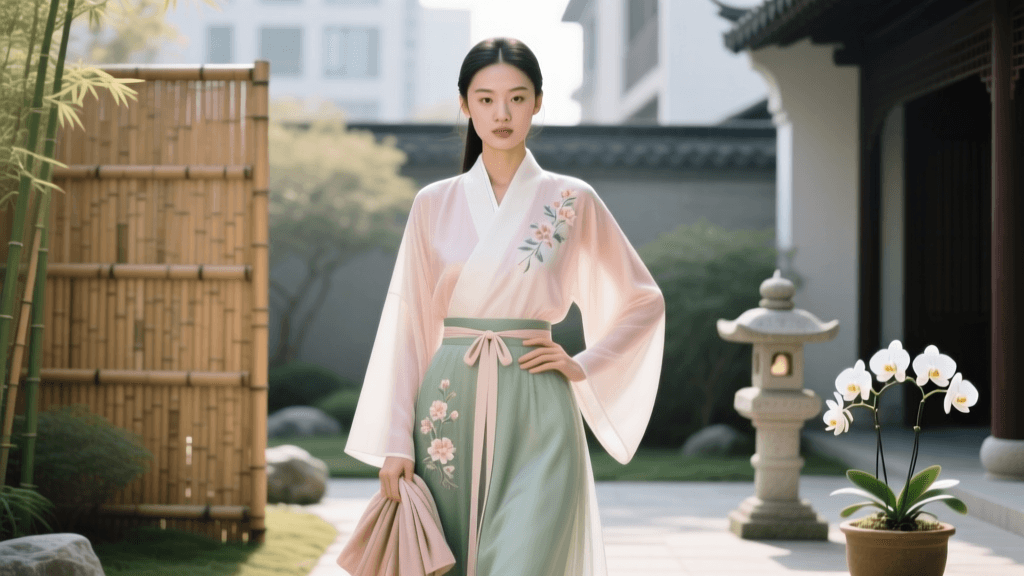
For tropical wear, the Song Dynasty (960–1279 AD) offers the most practical silhouettes. The Beizi (an open-front, long-sleeved jacket) paired with a lightweight Baiduan (pleated skirt) or Qixiong Ruqun (chest-high skirt) allows for maximum ventilation. Unlike heavily structured garments, the Song aesthetic relies on drape rather than rigid tailoring, preventing the fabric from clinging to the skin.
2026 Fabric Innovations: Xiangyunsha and Bamboo-Silk Blends
In 2026, the gold standard for tropical Hanfu is authentic Xiangyunsha (Gambiered Canton Gauze). This heritage fabric, dyed with river mud and the juice of the Dioscorea cirrhosa tuber, is naturally antimicrobial, quick-drying, and exceptionally cool to the touch. According to heritage textile archives preserved at the Victoria and Albert Museum, traditional Chinese gauze weaves were specifically engineered to create micro-channels for air circulation. Modern 2026 iterations of Xiangyunsha are woven at a delicate 12 to 14 momme weight, offering a sheer, breathable barrier against the sun. Additionally, modern bamboo-silk blends have entered the luxury Hanfu market, offering the luster of mulberry silk with the moisture-wicking properties of bamboo viscose, typically retailing between $180 and $250 USD for a complete set.
Surviving Desert Extremes: Scorching Days, Freezing Nights, and Sand
Desert climates require a dual-purpose wardrobe. Daytime temperatures can exceed 40°C (104°F) with intense UV radiation and abrasive sandstorms, while nighttime temperatures can plummet drastically. The Hanfu must protect against the elements while remaining adaptable.
Tang Dynasty Versatility: The Round-Collar Robe
The Tang Dynasty (618–907 AD) was a cosmopolitan era heavily influenced by Silk Road trade, making its garments perfectly suited for desert travel. The Yuanlingpao (round-collar robe) is the ideal desert garment. Its overlapping collar can be buttoned tightly to the neck to keep out blowing sand, or unfastened to the chest for rapid cooling. Wide, flowing sleeves act as natural bellows, pumping cool air against the body as the wearer moves.
Sun Protection and Thermal Layering
To combat UV exposure, 2026 desert Hanfu collections feature mid-weight linen and raw silk blends treated with natural, plant-based UV-blocking dyes. The traditional Weimao (a wide-brimmed hat with a sheer, full-body veil) has seen a massive resurgence in 2026 among desert-dwelling enthusiasts. Originally designed for modesty and wind protection, the modern Weimao uses ultra-fine, tear-resistant organza that shields the skin from harsh desert sun without trapping heat. For the sudden nighttime temperature drops, layering a thin, quilted Banjian (sleeveless vest) lined with 2026 thermal-reflective silk beneath the Yuanlingpao provides essential core warmth without adding restrictive bulk.
Conquering Cold Regions: Sub-Zero Temperatures and Biting Winds
Wearing Hanfu in freezing climates like Northern China, Russia, or the American Midwest requires abandoning the sheer, flowing layers of summer in favor of structured insulation, windproof exteriors, and advanced thermal trapping techniques.
Ming Dynasty Structure: The Aoqun and Pifeng
The Ming Dynasty (1368–1644 AD) experienced a period of global cooling, which heavily influenced its fashion toward structured, insulated garments. The Aoqun (a lined, high-collared jacket paired with a heavy horse-face skirt, or Mamianqun) is the foundational winter Hanfu. The high collar, often fastened with intricate metal buttons, seals in body heat and protects the neck from freezing winds. The Mamianqun's flat front and pleated sides allow for the wearing of thick thermal leggings underneath without distorting the garment's silhouette.
Brocade, Velvet, and 2026 Graphene Tech
Winter Hanfu in 2026 utilizes heavy Zhuanghua (brocade) and silk-velvet blends. However, the true revolution lies in the linings. Traditional rabbit or fox fur has been largely replaced by high-end, cruelty-free faux-fur trims and advanced synthetic insulators. Many premium 2026 winter Hanfu cloaks (Pifeng) feature graphene-infused silk linings. Graphene, a highly conductive nanomaterial, distributes body heat evenly across the garment, eliminating cold spots. A premium, graphene-lined winter Pifeng with heavy brocade exteriors typically costs between $450 and $800 USD in the current market, representing a significant investment in both heritage aesthetics and extreme-weather survival.
Climate-Specific Hanfu Selection Matrix
To help you choose the right garments for your environment, refer to the 2026 adaptation matrix below:
| Climate Zone | Historical Era Inspiration | Core Garment | 2026 Fabric & Tech Innovation |
|---|---|---|---|
| Tropical (Hot/Humid) | Song Dynasty | Beizi & Baiduan | 12-Momme Xiangyunsha, Bamboo-Silk Blends |
| Desert (Arid/Variable) | Tang Dynasty | Yuanlingpao & Weimao | UV-Blocking Linen-Silk, Thermal-Reflective Vests |
| Cold (Freezing/Windy) | Ming Dynasty | Aoqun & Pifeng | Graphene-Lined Brocade, Insulated Mamianqun |
Sourcing, Care, and Maintenance in Extreme Conditions
Purchasing and maintaining climate-specific Hanfu requires specialized knowledge. When sourcing Xiangyunsha for tropical wear, always verify the origin. As noted by UNESCO's Intangible Cultural Heritage registries, authentic Gambiered Canton Gauze requires specific iron-rich river mud from the Pearl River Delta. Counterfeit fabrics dyed with synthetic chemicals will trap heat and cause severe skin irritation in humid climates. Always hand-wash Xiangyunsha in cool, filtered water; the high mineral content of hard tap water can degrade the natural mud-silk bond over time.
For desert garments, sand accumulation is the primary enemy of silk longevity. Never machine-wash a linen-silk Yuanlingpao. Instead, use a soft-bristled garment brush to remove abrasive silica dust after every wear, and store the garment in a breathable cotton canvas bag to prevent dry-rot in arid environments. For heavy winter brocades, avoid folding the Mamianqun sharply, as the metallic threads used in 2026 Zhuanghua brocade can snap under prolonged pressure. Hang winter Hanfu on wide, padded wooden hangers in a climate-controlled closet with a humidity level maintained around 45% to prevent the velvet linings from drying out and cracking.
The Future of Traditional Adaptability
The integration of Hanfu into extreme climates is a testament to the enduring versatility of traditional Chinese design. By studying historical precedents and embracing the material sciences of 2026, modern wearers are proving that Hanfu is not a relic of the past, but a living, breathing wardrobe capable of adapting to any corner of the globe. For a deeper understanding of how historical Chinese dress evolved in response to regional geography and trade, the Encyclopedia Britannica's guide to Chinese dress provides excellent foundational context on the intersection of environment and sartorial evolution. Whether you are braving a monsoon or a blizzard, there is a historically grounded, technologically advanced Hanfu ensemble ready to meet the challenge.