Hanfu in Chinese Scroll Art: A Historical Fashion Guide
The Intersection of Art and Historical Fashion
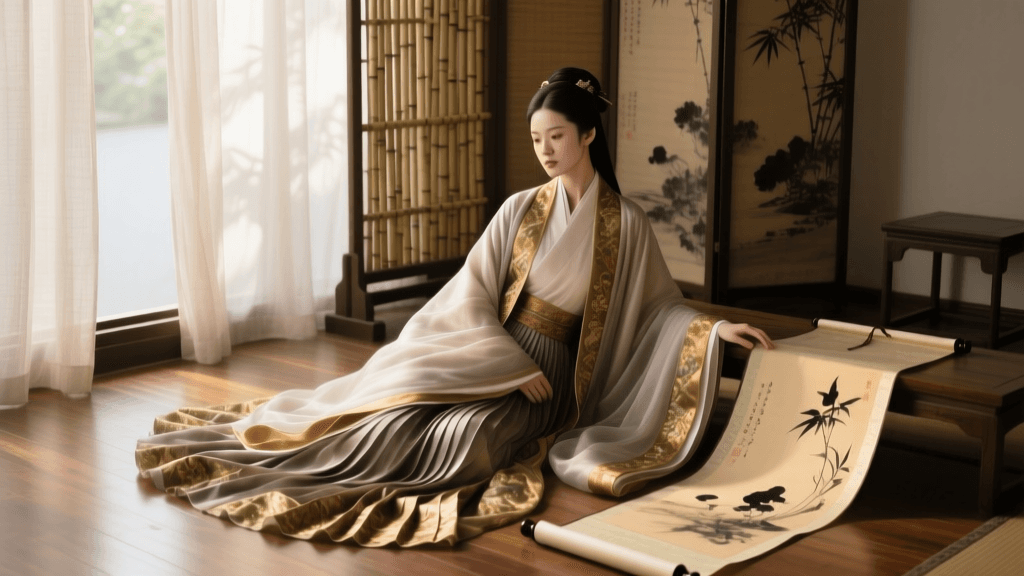
Classical Chinese scroll paintings are celebrated globally for their masterful brushwork, profound philosophical undertones, and sweeping landscapes. However, for historians, textile enthusiasts, and modern Hanfu practitioners, these scrolls serve an entirely different, deeply practical purpose: they are meticulous, high-fidelity archives of historical Asian fashion. Long before the invention of photography, court painters and literati artists documented the precise drape, layering, and textile patterns of their eras. By studying these masterpieces, we can decode the structural realities of traditional Chinese clothing and translate painted illusions into tangible, wearable garments.
For the modern Hanfu enthusiast or historical costumer, scroll art provides critical data on how fabrics behaved in motion, how garments were layered for different seasons, and how social status was communicated through sleeve width and skirt volume. This guide explores the sartorial secrets hidden within China's most famous scroll paintings and provides actionable advice for recreating these historical silhouettes today.
Iconic Scrolls and Their Sartorial Secrets
Tang Dynasty Opulence: Court Ladies Adorning Their Hair with Flowers
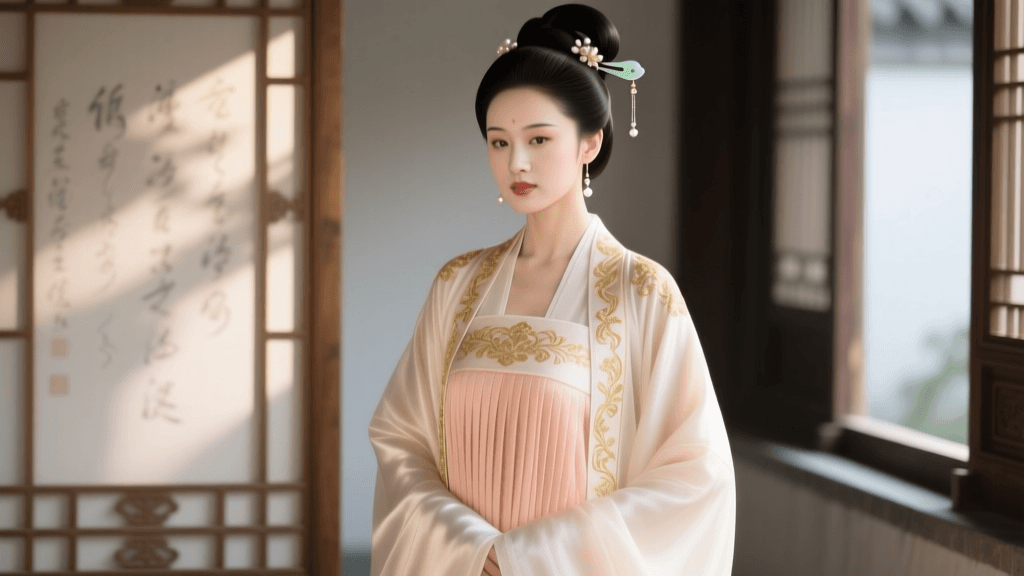
Attributed to Zhou Fang, this 8th-century masterpiece is the definitive visual record of Tang Dynasty aristocratic women's fashion. The painting depicts court ladies with elaborate floral headdresses, wearing high-waisted qun (skirts) and sheer, sweeping pibo (stoles). The artist's use of pale, translucent washes brilliantly captures the lightweight silk gauze (luo) that was highly prized during the Tang era. According to the Metropolitan Museum of Art's Heilbrunn Timeline of Art History, the Tang dynasty was characterized by cosmopolitan wealth and a relaxation of strict Confucian dress codes, allowing for the bold, voluminous, and revealing silhouettes seen in this scroll.
Actionable Recreation Advice: To replicate the translucent drape of the Tang pibo, avoid heavy modern satins. Instead, source 8mm to 10mm silk habotai or authentic leno-weave silk gauze. The stole should measure exactly 3.5 meters in length and 60 centimeters in width to achieve the cascading, floor-pooling effect depicted in Zhou Fang's brushstrokes. Pair this with a high-waisted pleated skirt made from 16mm silk crepe de chine, utilizing 3.5 meters of fabric to create the dense, heavy pleats that anchor the ethereal top layer.
Five Dynasties Elegance: Night Revels of Han Xizai
Painted by Gu Hongzhong in the 10th century, this horizontal handscroll offers an intimate, voyeuristic glimpse into the private life of a court official. The garments depicted here mark a transition from the exaggerated volume of the High Tang to the more refined, structured layers of the late Tang and Five Dynasties periods. The women in the scroll wear beizi (long, open-front jackets) over intricate, multi-layered skirts, with collars that cross neatly and sleeves that taper slightly at the wrist.
Actionable Recreation Advice: The beizi requires a fabric with enough body to hold its straight, vertical lines without clinging. Opt for a medium-weight silk taffeta or a crisp linen-cotton blend (around 150gsm). When drafting the pattern, ensure the side slits (kaicha) begin precisely at the hip bone (approximately 25cm below the natural waist) to allow for fluid movement while maintaining the structured, columnar silhouette visible in the painting. The sleeves should be cut to a width of 45cm at the bicep, tapering to 25cm at the cuff.
Song Dynasty Realism: Along the River During the Qingming Festival
Zhang Zeduan's 12th-century panoramic scroll is a treasure trove of commoner and merchant-class fashion. While court paintings focus on silk and leisure, the Qingming scroll documents the practical, hard-wearing garments of everyday Song Dynasty life. Here, we see laborers, shopkeepers, and scholars wearing shorter ru (jackets), practical aprons, and trousers, primarily crafted from hemp, ramie, and coarse linen. The transition to more restrained, practical silhouettes during the Song era is well-documented in scholarly analyses of Song Dynasty art, reflecting a cultural shift toward neo-Confucian modesty and pragmatism.
Actionable Recreation Advice: For an authentic Song-era commoner ruqun, abandon silk entirely. Source 100% slub linen or a ramie-cotton blend in natural, undyed tones (ecru, pale ochre, or soft indigo). The jacket should be cut short, ending exactly at the hip bone (approx. 65cm from the nape of the neck), with narrow sleeves (30cm width) to prevent interference with daily tasks. Bind the collar and cuffs with a contrasting cotton bias tape to mimic the durable, reinforced edges seen on working-class garments in the scroll.
Translating Painted Textures into Modern Hanfu
One of the greatest challenges in historical recreation is translating the two-dimensional illusion of brush and ink into three-dimensional textiles. The table below provides a structured guide for sourcing modern fabrics that accurately mimic the historical textiles depicted in classical scroll art.
| Artwork / Era | Painted Garment | Modern Fabric Equivalent | Weight / Measurement | Sourcing & Budget Tip |
|---|---|---|---|---|
| Tang Court Ladies | Sheer Pibo (Stole) | Leno-weave Silk Gauze or 8mm Habotai | 8-12 momme; 3.5m x 60cm | Authentic hand-woven gauze costs $80+ per yard; printed habotai is $25/yard. |
| Night Revels (Five Dynasties) | Structured Beizi (Jacket) | Silk Taffeta or Crisp Linen-Cotton | 150-180gsm; 105cm length | Look for 'paper taffeta' for historical stiffness; budget approx. $40 per yard. |
| Qingming (Song Dynasty) | Commoner Ru (Short Jacket) | Slub Linen or Ramie Blend | 120-150gsm; 65cm length | Pre-wash linen twice to achieve the softened, lived-in drape seen in the scroll. |
| Ming Dynasty Portraits | Mamian Qun (Horse-face Skirt) | Jacquard Brocade or Heavy Crepe | 250gsm+; 4.5m circumference | Custom woven brocade takes 3-6 months and $150+/yard; use printed jacquard for speed. |
Achieving the 'Painted Drape': Layering and Proportions
Scroll paintings reveal that historical Hanfu was rarely a single layer; the magic of the silhouette lies in the interplay of overlapping garments. To achieve the 'painted drape'—the specific way fabric folds and cascades as depicted by master painters—modern wearers must pay strict attention to proportional ratios.
- The Skirt-to-Jacket Ratio: In Tang and Song scrolls, the skirt volume vastly outweighs the top half. A standard modern Hanfu skirt often uses 3 meters of fabric. To match the voluminous, sweeping pools of fabric seen in court paintings, you must increase the skirt circumference to at least 4.5 to 5 meters, utilizing knife pleats that are 4cm wide at the waistband and spaced 2cm apart.
- Sleeve Proportions: The 'pipa sleeve' (pipa xiu) frequently seen in Ming dynasty portraits curves outward and tapers at the wrist. To draft this, the sleeve pattern must be cut on a curve, with a maximum width of 70cm at the elbow, tapering sharply to a 20cm cuff. This specific cut creates the distinctive folded drape resting on the forearm that is a hallmark of classical portraiture.
- The Art of the Sash: In traditional Chinese painting, sashes and waist ties are rarely hidden; they are painted with deliberate, flowing tails. Use silk satin ribbons cut to a minimum of 2.5 meters in length and 8cm in width. Tie the knot slightly off-center at the front, allowing the tails to hang asymmetrically to mimic the dynamic, wind-swept lines favored by literati painters.
Where to Study Authentic Scroll Art for Hanfu Research
To refine your eye for historical accuracy, it is essential to study high-resolution scans of original scrolls. Relying on modern illustrations or television dramas often leads to anachronistic designs. The following institutions offer world-class, free digital archives for sartorial research:
- The Metropolitan Museum of Art (Open Access Collection): The Met provides high-resolution, zoomable images of pivotal works like the Night Revels of Han Xizai (later copies) and various Ming dynasty ancestor portraits, allowing you to zoom in on woven patterns and collar constructions.
- The Palace Museum, Beijing (Digital Archive): Offering unparalleled access to Qing and Ming court paintings, their digital repository is invaluable for studying the evolution of the mamian qun (horse-face skirt) and formal court robes.
- The National Palace Museum, Taipei: Their 'Open Data' platform features exquisite Song dynasty album leaves and handscrolls, perfect for studying the minute details of hairpins, jade pendants, and the subtle layering of scholar's robes.
True historical recreation is not about copying a costume; it is about understanding the physics of the fabric and the cultural context of the wearer. The scroll painters of antiquity did not just paint clothes; they painted the weight of silk, the stiffness of hemp, and the dignity of the drape.
Conclusion
Classical Chinese scroll paintings are far more than aesthetic masterpieces; they are vital, instructional blueprints for the traditional garment community. By closely analyzing the brushwork, textile representations, and proportional layering found in these historical archives, modern Hanfu enthusiasts can elevate their craft from simple costuming to authentic historical revival. Whether you are sourcing sheer silk gauze for a Tang dynasty court ensemble or cutting practical ramie for a Song dynasty merchant look, the scrolls remain our most reliable, elegant guides to the sartorial soul of ancient China.