Decoding Hanfu Styles in Classic Chinese Scroll Art
The Intersection of Brushwork and Fashion History
Chinese scroll paintings are not merely masterpieces of ink and mineral pigments; they are meticulous visual archives of historical fashion. For modern Hanfu enthusiasts and traditional garment researchers, these artworks serve as primary source material, offering unparalleled insights into the drape, layering, and textile choices of ancient China. Unlike written historical records, which often describe garments in abstract or poetic terms, scroll paintings capture the physical reality of how fabrics interacted with the human body, how they moved, and how they were styled for different social classes and seasons.
By analyzing the brushstrokes of master painters, we can decode the structural engineering of traditional Chinese clothing. From the sheer, floating silk gauzes of the Tang Dynasty to the practical, structured linens of the Song Dynasty, these paintings provide a blueprint for authentic recreation. This guide explores the sartorial secrets hidden within China's most famous scroll paintings and provides actionable, practical advice for translating these two-dimensional masterpieces into three-dimensional, wearable garments.
Decoding the Sartorial Secrets of Three Masterpieces
Court Ladies Adorning Their Hair with Flowers (Tang Dynasty)
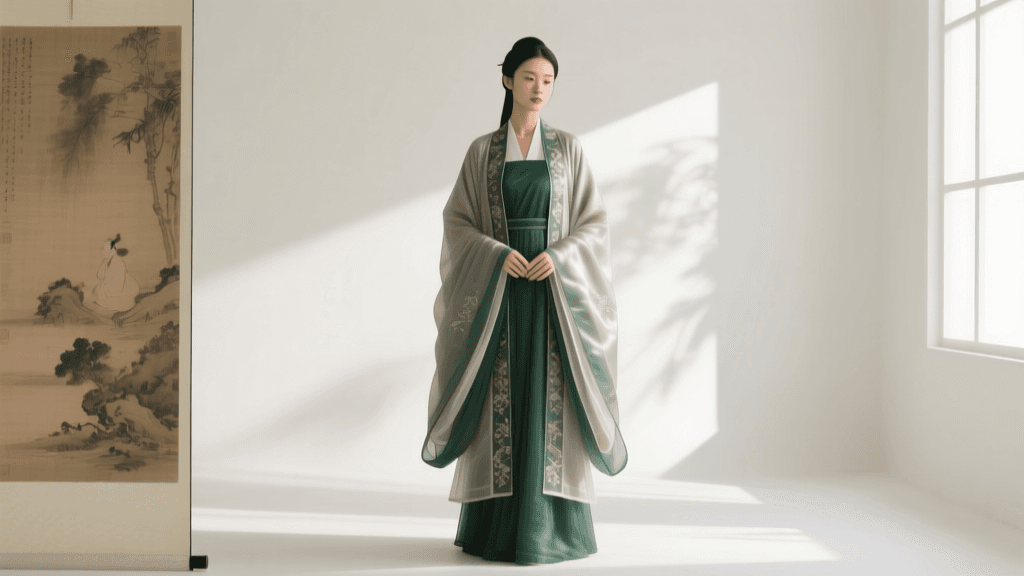
Attributed to Zhou Fang, this iconic Tang Dynasty scroll is a masterclass in depicting textile transparency and drape. The painting features elite women wearing the qixiong ruqun (chest-high skirt) paired with a pibo (a long, flowing shoulder shawl). The artist's use of faint, sweeping ink lines to outline the women's arms beneath their shawls explicitly illustrates the use of luo (silk gauze) or sha (thin silk). The garments are painted with a high-waisted, columnar silhouette, heavily pleated at the chest and pooling slightly at the feet, indicating immense fabric width and heavy, weighted hems.
Night Revels of Han Xizai (Five Dynasties Period)
Gu Hongzhong's masterpiece offers an intimate look at indoor, elite leisurewear. The figures are depicted in layered ruqun (skirt and jacket) ensembles, often featuring the banbi (a half-sleeve jacket worn over the inner shirt). The painting is renowned for its vivid use of mineral pigments—malachite green, cinnabar red, and azurite blue. The opaque, stiff rendering of the outer jackets suggests the use of zhijin (silk brocade) or heavily starched damasks, which hold their shape and reflect light differently than the soft silks worn underneath. The color-blocking techniques seen here—pairing a deep red skirt with a vibrant green jacket—remain a hallmark of traditional Chinese color theory.
Along the River During the Qingming Festival (Song Dynasty)
Zhang Zeduan's sprawling panoramic scroll shifts the focus from the imperial court to the bustling streets of the capital, Bianjing. Here, we see the practical realities of everyday traditional clothing. The working-class figures wear shorter hemlines, trousers, and wrapped jackets made of hemp (ma) and linen (bu). The brushwork captures the stiffer, more textured drape of plant-based fibers compared to the fluid silk of the elite. The scroll also documents the beizi (a long, side-slit jacket), showing how it was worn open over inner layers for ease of movement during labor and trade.
Translating 2D Art into 3D Garments: A Practical Guide
Recreating the silhouettes seen in these scrolls requires more than just copying a pattern; it requires understanding the physics of the fabrics and the specific measurements used by historical tailors. Here is actionable advice for achieving scroll-accurate drape and structure.
Mastering the Tang Dynasty Drape: Measurements and Pleating
The voluminous, columnar skirts seen in Tang Dynasty paintings cannot be achieved with standard modern skirt patterns. To replicate the qixiong ruqun silhouette:
- Fabric Width: Purchase at least 4 meters of 140cm-wide fabric. Cut the fabric into two 2-meter panels and sew them together along the selvedge to create a massive 4-meter circumference.
- Pleating Technique: Use knife pleats rather than box pleats. Start pleating 15 cm down from the top edge. Pleat the 4-meter width down to your exact underbust measurement plus 4 cm for overlap.
- Hem Weighting: Tang skirts in scrolls often show a distinct, heavy swing at the bottom. Sew a 50-gram cotton or silk bias tape into the hem to add weight, ensuring the skirt hangs straight and mimics the painted vertical lines.
Color Matching: Replicating Mineral Pigments with Natural Dyes
The vibrant colors in scrolls like the Night Revels were derived from minerals and plants. To achieve these historically accurate shades on modern silk:
- Cinnabar Red: Use madder root (Rubia tinctorum) mordanted with alum. For the deeper, oxidized reds seen in older scrolls, add a tannin-rich pomegranate rind bath.
- Malachite Green: Achieve this by over-dyeing. First, dye the silk with weld or pagoda tree buds for a bright yellow, then dip it briefly in a light indigo vat. The combination creates the complex, slightly yellowish-green seen in Five Dynasties paintings.
- Azurite Blue: Use deep indigo fermentation vats, dipping the fabric 10 to 12 times to build a dark, navy-blue base with a slight reddish undertone.
Comparison Chart: Painted Silhouettes vs. Modern Reconstructions
When sourcing materials for your Hanfu projects, it is crucial to match the fabric weight and weave to the era and garment type depicted in the art. The table below breaks down how to translate painted characteristics into modern purchasing decisions.
| Garment Type | Historical Era / Scroll Reference | Painted Fabric Characteristics | Modern Fabric Equivalent | Sourcing Tip & Estimated Cost |
|---|---|---|---|---|
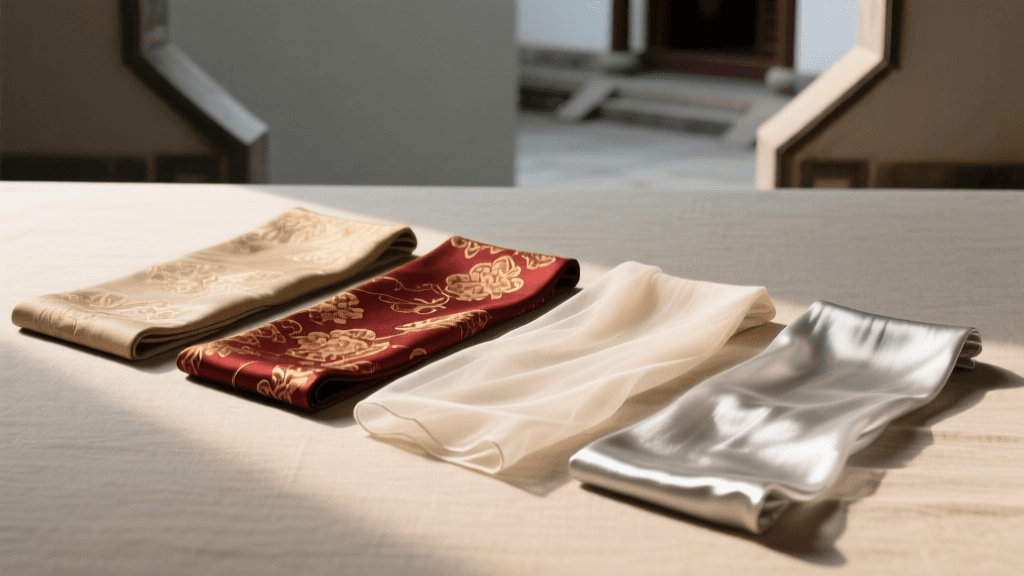
| Pibo (Shawl) | Tang Dynasty / Court Ladies | Highly transparent, fluid, floats on air | 8mm-12mm Silk Chiffon or genuine Hua Luo (patterned gauze) | $25-$60 per meter. Avoid polyester; it lacks the matte finish of painted silk. |
| Banbi (Half-sleeve) | Five Dynasties / Night Revels | Stiff, opaque, holds geometric shape, light-reflective | Song Brocade or 19mm+ Silk Damask | $40-$90 per meter. Look for 'Jacquard woven silk' with metallic thread accents. |
| Beizi (Long Jacket) | Song Dynasty / Qingming | Matte, structured, slight texture, breathable | Ramie, Linen-cotton blends, or raw Silk Noil | $15-$35 per meter. Search for 'Song-style ramie' for authentic slub texture. |
| Qixiong Skirt | Tang Dynasty / Court Ladies | Heavy drape, deep pleats, slight sheen | 16mm Silk Crepe de Chine or heavy Mulberry Silk Twill | $30-$70 per meter. Requires 4+ meters for proper scroll-accurate volume. |
Sourcing Authentic Materials for Scroll-Inspired Hanfu
The global revival of traditional Chinese clothing has led to a surge in accessible, historically accurate textiles. However, navigating the market requires specific terminology and an understanding of intangible heritage crafts. According to UNESCO's Intangible Cultural Heritage list, Chinese sericulture and silk craftsmanship involve highly specialized regional techniques that directly impact the drape and finish of the fabric.
For enthusiasts looking to recreate the luxurious, dark, textured silks often seen in later imperial portraits and scrolls, seek out Xiangyunsha (gambiered Guangdong silk). This fabric is dyed with the juice of the gambier plant and coated with iron-rich river mud, resulting in a dual-toned, rustling silk that is water-resistant and incredibly durable. Authentic Xiangyunsha typically costs between $50 and $120 per meter and is available through specialized heritage textile vendors.
For the sheer, patterned gauzes depicted in Tang art, search for Hua Luo. Unlike modern synthetic chiffon, traditional Luo is woven with a complex twisting technique that creates permanent, breathable mesh patterns. Institutions like the Victoria and Albert Museum's Asian collections frequently highlight the technical mastery of historical Chinese gauze weaves, noting how the twisted warp threads create a fabric that is both structurally sound and optically transparent. When buying Hua Luo, ensure the vendor specifies 'mulberry silk leno weave' to avoid cheap, printed polyester imitations.
Finally, to study the actual garments and textile fragments that corroborate these paintings, researchers and designers should consult the Metropolitan Museum of Art's Asian Art department online archives. Cross-referencing high-resolution scroll paintings with surviving textile fragments from museum collections ensures that your modern reconstructions are grounded in historical reality.
Conclusion
Chinese scroll paintings are far more than decorative art; they are vital, detailed manuals for the reconstruction of traditional Hanfu. By paying close attention to the brushwork that defines fabric transparency, the mineral pigments that dictate historical color palettes, and the silhouettes that reveal structural tailoring, modern makers can bridge the gap between ancient art and living fashion. Whether you are pleating a four-meter Tang skirt or dyeing silk with madder root to match a Five Dynasties jacket, the scrolls provide an enduring, beautiful roadmap for keeping Asian sartorial traditions alive.