The Ultimate Guide to Hanfu Fabrics: Linen, Brocade, Gauze & Organza
Introduction to Hanfu Textiles
The modern Hanfu movement is not merely about recreating historical silhouettes; it is deeply rooted in the tactile experience of traditional Chinese textiles. The fabric you choose dictates the drape, the historical accuracy, the seasonal appropriateness, and the overall comfort of your garment. According to the Metropolitan Museum of Art's Heilbrunn Timeline of Art History, China's mastery over textile production, particularly silk, fundamentally shaped global trade and cultural exchange along the Silk Road. However, silk was not the only fabric used in traditional Chinese clothing. From the breathable linen worn by scholars in the sweltering summer to the heavy, opulent brocades reserved for winter court ceremonies, understanding Hanfu fabrics is essential for any enthusiast or collector.
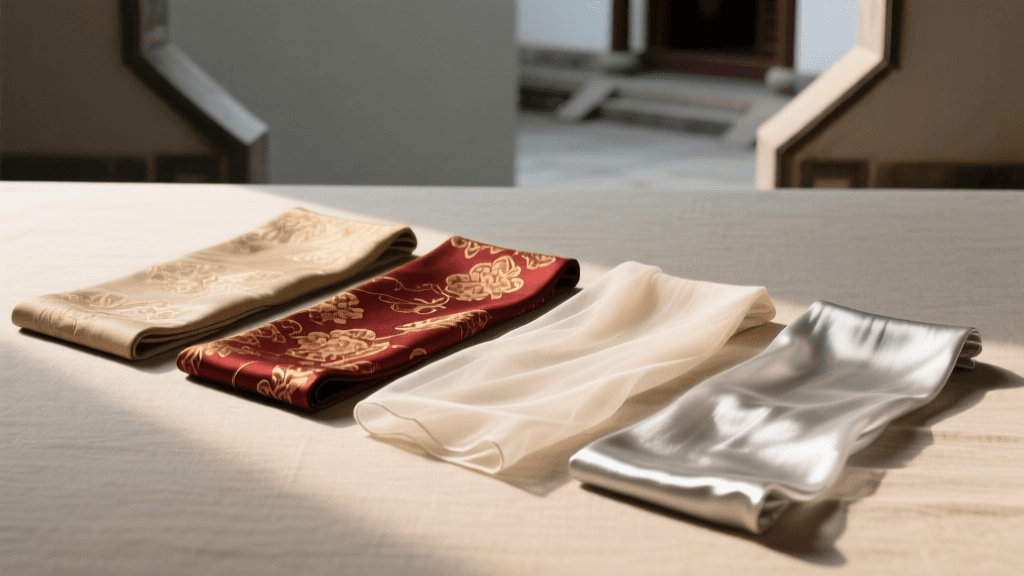
This comprehensive guide breaks down four foundational and modern fabrics used in Hanfu construction: Linen (Ma), Brocade (Zhi Jin), Gauze (Luo and Sha), and Organza (Ou Gen Sha). We will explore their historical contexts, practical applications, cost expectations, and care requirements to help you make informed decisions for your next traditional garment.
Linen (Ma): The Breathable Foundation
When discussing linen in the context of Hanfu, we are primarily referring to Zhu Ma (ramie) and traditional hemp, rather than Western flax linen. Ramie has been cultivated in China for thousands of years and was the primary fabric for commoners, as well as the preferred summer wear for scholars and officials who valued its cooling properties and understated elegance.
Characteristics and Drape
Hanfu linen is characterized by its natural slubs (thick and thin variations in the yarn), crisp initial texture, and exceptional breathability. Unlike silk, which clings and flows, linen holds its shape slightly, giving garments like the Jiaoling Ruqun (cross-collared top and skirt) a structured yet relaxed silhouette. Over time and with repeated washing, high-quality ramie softens beautifully, developing a lived-in patina that is highly prized in traditional aesthetics.
Practical Buying Advice
- Cost: Authentic Chinese ramie or high-quality linen blends typically range from $10 to $22 per meter.
- Yardage: A standard cross-collared Ruqun set requires approximately 3.5 to 4.5 meters, depending on the sleeve width and skirt pleating.
- Shrinkage: Linen is notorious for shrinking. Expect a 5% to 8% shrinkage rate. Always pre-wash your fabric in cold water before cutting or commissioning a tailor.
Brocade (Zhi Jin): The Weight of Luxury
Brocade represents the pinnacle of traditional Chinese weaving technology. The term encompasses various complex weaves, including Shu Jin (Sichuan brocade), Song Jin (Song brocade), and Yun Jin (Nanjing cloud brocade). The craftsmanship involved in creating these intricate, multi-colored, and often metallic-threaded fabrics is so significant that it is recognized on UNESCO's Intangible Cultural Heritage list for Chinese sericulture and silk craftsmanship.
Characteristics and Drape
Brocade is heavy, dense, and features a raised, embossed appearance due to the supplementary weft threads used to create the patterns. The drape is stiff and voluminous, making it unsuitable for flowing summer garments but absolutely perfect for the structured, pleated Mamianqun (horse-face skirt) popularized during the Ming Dynasty. The weight of the brocade ensures that the pleats of a Mamianqun fall perfectly and swing with a regal, pendulum-like motion when walking.
Practical Buying Advice
- Cost: Genuine silk brocade is an investment. Machine-woven synthetic blends start around $25 per meter, while authentic, hand-loomed silk and gold-thread brocades can easily exceed $120 to $300 per meter.
- Yardage: A traditional Ming-style Mamianqun requires a massive amount of fabric to achieve the deep, overlapping pleats. Expect to purchase 4.5 to 6 meters of fabric for a single skirt.
- Care: Brocade should never be machine washed. The metallic threads can tarnish, and the dense weave can warp. Dry cleaning or gentle spot cleaning with a pH-neutral silk detergent is mandatory.
Gauze (Luo and Sha): Ethereal Summer Layering
Gauze fabrics are the epitome of ancient Chinese summer fashion. Historical texts and archaeological finds from the Tang and Song dynasties reveal a fascination with sheer, translucent layering. There are two primary types of traditional gauze: Sha (a plain or twill weave sheer fabric) and Luo (a highly complex weave where warp threads are twisted and interlocked in a chain-like pattern, creating stable, breathable holes).
Characteristics and Drape
Luo gauze is incredibly delicate, lightweight, and possesses a fluid, watery drape. It was historically used for Banbi (half-sleeve vests) in the Tang Dynasty and the long, flowing Beizi (open-front coats) in the Song Dynasty. Because it is sheer, it is almost always worn as an outer layer over a solid silk or linen undergarment, creating a sophisticated interplay of colors and textures.
Practical Buying Advice
- Cost: Authentic silk Luo is rare and expensive, often costing between $40 and $80 per meter due to the slow, specialized weaving process required. Modern silk Sha is more accessible, ranging from $15 to $30 per meter.
- Yardage: A floor-length Song Dynasty Beizi requires about 3 to 4 meters, depending on the desired sleeve length and side-slit height.
- Durability: While Luo is surprisingly strong for its weight due to the twisted warps, it can easily snag on jewelry or rough surfaces. Handle with extreme care when dressing.
Organza (Ou Gen Sha): Modern Structure and Accessibility
While not a traditional historical fabric, organza has become a staple in the modern Hanfu market. Originally a silk fabric, modern organza is frequently made from polyester or nylon. It is characterized by its high-twist yarns, which give it a crisp, stiff hand and a translucent, slightly shimmering appearance.
Characteristics and Drape
Organza does not drape; it stands away from the body. This makes it an excellent choice for modern Hanfu designers who want to create voluminous, gravity-defying silhouettes without the heavy weight of brocade. It is frequently used for Pibo (draped shawls), structured outer collars, and modern interpretations of Tang Dynasty court dresses where a stiff, flared skirt is desired.
Practical Buying Advice
- Cost: Synthetic organza is highly affordable, usually costing between $3 and $8 per meter. Silk organza is pricier, ranging from $15 to $25 per meter.
- Comfort: Synthetic organza is not breathable and can feel scratchy against the skin. Always ensure that organza garments are fully lined with cotton, rayon, or soft silk.
- Finishing: Organza frays aggressively when cut. If you are sewing your own Hanfu, you must use French seams or finish the raw edges with a serger and bias tape to prevent the garment from unraveling.
Hanfu Fabric Comparison Chart
Use the table below to quickly compare the core characteristics of these four fabrics when planning your next Hanfu project or purchase.
| Fabric Type | Historical Era Prominence | Best Season | Drape & Structure | Est. Cost (USD/m) | Shrinkage Rate |
|---|---|---|---|---|---|
| Linen (Ramie/Ma) | Pre-Qin to Ming | Summer | Crisp, relaxed, breathable | $10 - $22 | 5% - 8% |
| Brocade (Zhi Jin) | Song, Yuan, Ming | Winter / Formal | Heavy, stiff, voluminous | $25 - $300+ | 1% - 3% |
| Gauze (Luo/Sha) | Tang, Song | Summer / Layering | Fluid, sheer, delicate | $15 - $80 | 3% - 5% |
| Organza (Ou Gen Sha) | Modern Adaptation | All (with lining) | Stiff, structural, flared | $3 - $25 | 0% (Synthetic) |
Practical Guide: Sourcing, Measuring, and Care
Sourcing Authentic Textiles
When purchasing Hanfu fabrics online, terminology is crucial. If you are looking for traditional brocade, search for Zhi Jin (woven gold) or Zhuanghua (妆花), a specific Ming dynasty tapestry weave technique. For summer gauze, look for Hua Luo (patterned gauze). Be wary of listings that simply say 'vintage silk'; always ask the vendor for the specific weave structure and fiber content (100% mulberry silk vs. synthetic blends).
Measuring for Hanfu Yardage
Traditional Chinese garments are cut from rectangular pieces of fabric to minimize waste and preserve the integrity of the woven patterns, especially in brocade. Because Hanfu relies on flat-pattern cutting rather than Western tailored darts, the width of the fabric bolt is critical. Most traditional silk bolts are woven to a narrow width of 70cm to 90cm (approx. 27 to 35 inches), unlike modern Western fabrics which are typically 115cm to 150cm wide. If you are buying narrow-loom traditional brocade, you will need to double your yardage calculations to accommodate the narrower width and the necessary panel splicing.
Washing and Ironing Protocols
- Linen: Machine washable on a gentle, cold cycle. Iron on a high heat setting with steam while the fabric is still slightly damp to remove stubborn wrinkles.
- Brocade: Dry clean only. If ironing is necessary to set pleats, use a low heat setting and always place a damp pressing cloth between the iron and the metallic threads to prevent scorching and melting.
- Gauze: Hand wash in cool water with a specialized silk wash. Do not wring or twist the fabric; instead, roll it in a clean towel to absorb excess water and lay it flat to dry in the shade. Iron on the lowest silk setting.
- Organza: Synthetic organza can be machine washed but is prone to static. Iron on a very low synthetic setting; high heat will instantly melt and fuse the plastic fibers.
Conclusion
Selecting the right fabric is the most critical step in bringing a Hanfu garment to life. Whether you are seeking the historical authenticity and breezy comfort of ramie linen for a summer retreat, the opulent weight of Ming-style brocade for a winter festival, the ethereal layering of Song-style gauze, or the modern structural flair of organza, understanding the properties of these textiles will elevate your appreciation of traditional Chinese clothing. By respecting the unique care requirements and historical contexts of these materials, you ensure that your Hanfu not only looks beautiful but also honors the centuries of artisanal craftsmanship that inspired it.