Hanfu for Family Ceremonies 2026: Weddings & Rites Guide
The 2026 Landscape of Ceremonial Hanfu
As we navigate through 2026, the Hanfu movement has fully matured from a niche internet subculture into a standard, deeply respected choice for major family milestones across Asia and the global diaspora. No longer confined to historical reenactments or street fashion, traditional Chinese garments are now the focal point of life’s most sacred transitions. According to BBC Culture, the revival of these garments represents a profound reconnection with ancestral heritage, a trend that has only deepened as modern weaving technologies and sustainable dyeing practices have made authentic pieces more accessible than ever.
For families planning weddings, first-month birth celebrations (Manyue), or solemn ancestral rites (Jisi), selecting the appropriate Hanfu requires an understanding of historical silhouettes, color symbolism, and modern tailoring. This comprehensive guide outlines exactly how to dress for these pivotal moments in 2026, balancing historical accuracy with contemporary comfort.
Weddings: The Majesty of Ming Dynasty Silhouettes
When it comes to traditional Chinese weddings in 2026, the Ming Dynasty aesthetic remains the undisputed pinnacle of ceremonial grandeur. The most sought-after ensemble for brides is the Fengguan Xiapei (Phoenix Crown and Cape) paired with a heavily embroidered Mamianqun (horse-face skirt). The Metropolitan Museum of Art notes in its Heilbrunn Timeline of Art History that Ming court and ceremonial dress was characterized by its voluminous silhouettes, intricate rank badges, and profound symbolic motifs, elements that modern designers have meticulously adapted for today’s brides.
In 2026, the trend has shifted away from the heavy, stiff synthetic brocades of the past decade toward lightweight, breathable mulberry silk woven with genuine gold-leaf threads. A custom-made, museum-grade Ming wedding set now typically costs between $1,800 and $4,500 USD, depending on the complexity of the panjin (gold couching) embroidery. Grooms traditionally wear the Yishu (a formal round-collar robe with a pleated lower hem) in deep crimson or navy, accented with a formal Liangmao hat. For outdoor or summer weddings, couples are increasingly opting for Song-dynasty inspired Beizi (outer jackets) over lighter silk gauze, prioritizing elegance and climate comfort without sacrificing formality.
Birth and "Manyue" (First Month) Celebrations
The Manyue (full moon) or "Hundred Days" celebration marks a child’s safe passage through their most vulnerable early weeks. In 2026, parents are highly conscious of infant skin safety, driving a massive demand for organically dyed, chemical-free Hanfu for babies. Infants are traditionally dressed in Hupo (tiger-head hats) and silk-lined cotton Doukou jackets. The tiger motif is believed to ward off evil spirits and protect the child’s health.
For the parents hosting the banquet, the dress code leans toward understated elegance and warmth. Mothers often wear a Song-dynasty Beizi in soft, nurturing colors like lotus pink, celadon green, or warm ivory. The Victoria and Albert Museum’s extensive Chinese textile collections highlight the historical use of natural plant dyes—such as madder root for soft reds and indigo for blues—which are experiencing a massive resurgence in 2026 infant and maternal wear due to their hypoallergenic properties. Fathers typically wear a relaxed Jiaoling Pao (cross-collar robe) in earthy tones, projecting an image of stability and familial grounding.
Ancestral Rites: Respect Through Restraint
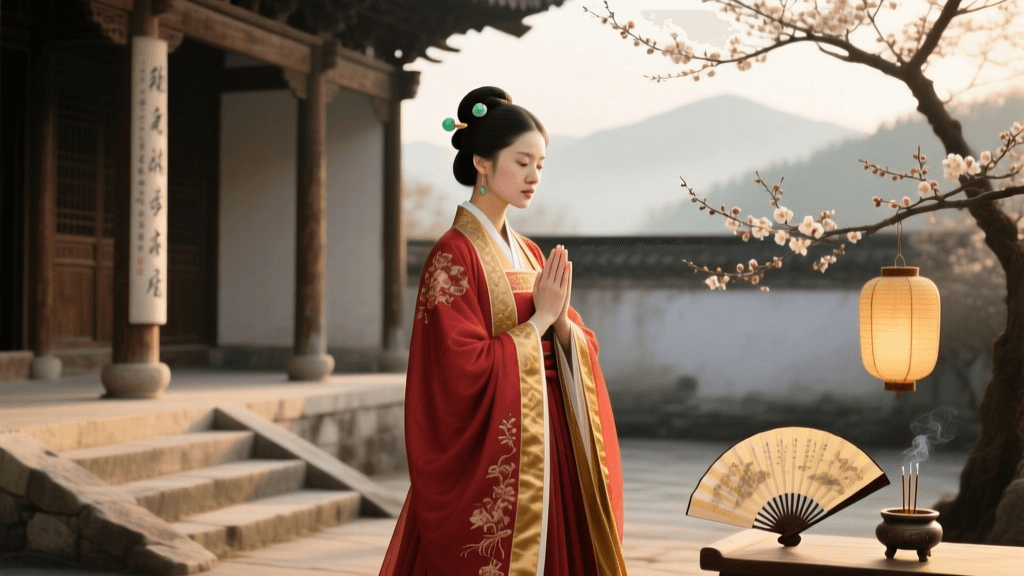
Ancestral worship, particularly during the Qingming (Tomb-Sweeping) and Zhongyuan (Ghost) festivals, demands a completely different sartorial approach. The core principles for Jisi (sacrificial rites) are modesty, restraint, and solemnity. Flashy embroidery, bright reds, and excessive jewelry are strictly taboo.
In 2026, the preferred garments for these rites are rooted in the Tang and Song dynasties, which favored structured, modest, and flowing lines. Men and women alike opt for the Yuanlingpao (round-collar robe) or the Shenyi (deep robe, which connects the upper and lower garments into one piece). The color palette is restricted to charcoal, deep navy, muted plum, and sage green. The fabric of choice is often Xiangyunsha (gambiered Guangdong gauze), a heritage silk dyed with river mud and vegetable tannins. Its dark, muted sheen and rustling sound convey a deep, grounded respect for the ancestors. A high-quality Xiangyunsha robe requires an investment of around $600 to $1,200 USD but is considered a lifelong ceremonial staple.
Ceremonial Hanfu Quick-Reference Guide
| Ceremony | Primary Garment Style | 2026 Color Palette | Est. Custom Cost (USD) |
|---|---|---|---|
| Wedding (Bride) | Ming Fengguan Xiapei & Mamianqun | Crimson, Gold, Sapphire | $1,800 - $4,500 |
| Wedding (Groom) | Ming Yishu & Liangmao Hat | Deep Red, Navy, Black | $900 - $2,200 |
| Birth (Manyue) | Song Beizi & Organic Cotton Doukou | Celadon, Lotus Pink, Ivory | $300 - $800 |
| Ancestral Rites | Tang/Song Shenyi or Yuanlingpao | Charcoal, Navy, Muted Plum | $600 - $1,200 |
Sizing, Tailoring, and 2026 Market Tech
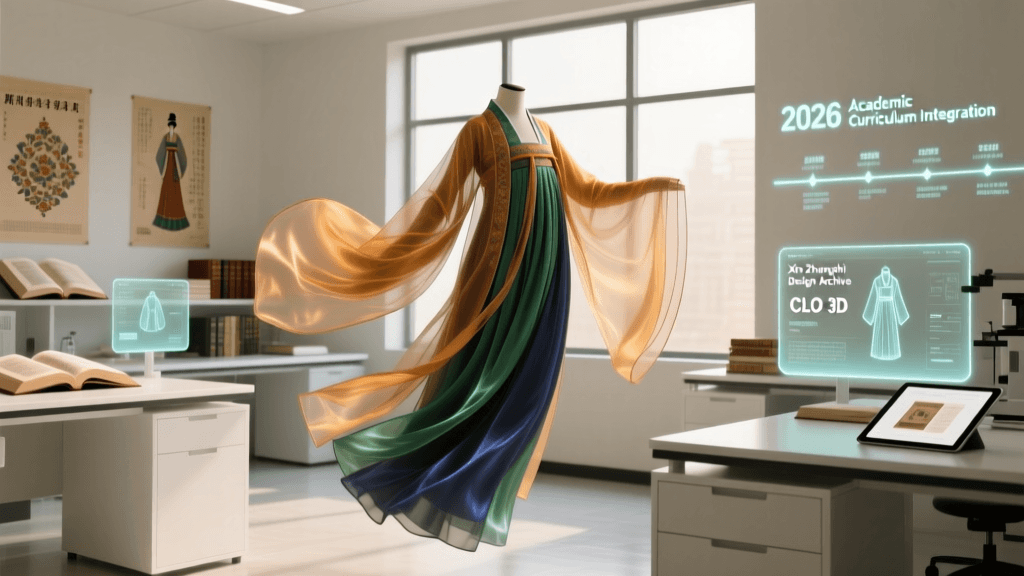
One of the most significant shifts in the 2026 Hanfu market is the integration of AI-driven 3D body scanning. Because traditional garments rely heavily on precise drape and shoulder placement rather than tight tailoring, getting the measurements right is crucial. Most premier Hanfu ateliers now utilize WeChat mini-programs where users can upload a quick smartphone video to generate a precise 3D avatar. This ensures the Tongxiu (sleeve length) and Yichang (garment length) are perfectly calibrated to the wearer's height and arm span.
When ordering off-the-rack or made-to-measure, you must provide five critical measurements: chest circumference, natural waist, hip circumference, shoulder width, and the distance from the nape of the neck to the ankle bone. Remember that Hanfu is designed with a "flat-cut" structure; the fabric is meant to fold and drape over the body's natural curves rather than cling to them. Always allow for a 2-inch ease in the chest and waist measurements to maintain the structural integrity of the cross-collar wrap.
Essential Dressing Etiquette for Ceremonies
- Jiaoling Youren (Left over Right): The left lapel must always cross over the right lapel. This is the fundamental rule of Hanfu for the living. Reversing this (right over left) is strictly reserved for dressing the deceased and is a severe faux pas at any joyous family ceremony.
- Layering and Modesty: For weddings and ancestral rites, a visible middle layer (such as a white or cream Zhongyi under-robe) at the collar and cuffs is mandatory. It represents inner purity and structural completeness.
- Footwear: In 2026, traditional Yuntou (cloud-head) silk shoes remain the standard for indoor ceremonies, but for outdoor ancestral rites, modern artisans have developed ergonomic leather-soled Hanfu boots that provide arch support while maintaining the historical silhouette.
- Hair and Accessories: Hair must be neatly tied up or secured with traditional hairpins (Zan or Chai). For weddings, jade and pearl hairpins are preferred; for funerals and ancestral rites, hair should be secured with simple, unadorned wooden or dark metal pins.
Conclusion
Dressing in Hanfu for family ceremonies in 2026 is a profound act of cultural continuity. Whether you are welcoming a new life into the world, uniting two families in marriage, or honoring the ancestors who paved your way, the garments you choose serve as a bridge between the past and the future. By prioritizing historical accuracy, ethical fabric sourcing, and precise tailoring, you ensure that these sacred milestones are wrapped in the dignity and beauty they deserve.