Hanfu Family Ceremonies 2026: Birth, Wedding & Rite Guide
The 2026 Hanfu Revival: Dressing for Life's Milestones
As we navigate through 2026, the global appreciation for traditional Chinese clothing has evolved from a niche historical interest into a vibrant, living practice. Families across the diaspora and within Asia are increasingly turning to Hanfu to mark their most significant life events. Unlike the fast-fashion interpretations of the early 2020s, the 2026 market emphasizes historical accuracy, sustainable textile production, and deep cultural resonance. From the joyous celebrations of a newborn's first 100 days to the solemnity of ancestral worship, selecting the correct ceremonial Hanfu requires an understanding of dynasty-specific silhouettes, auspicious motifs, and modern fabric innovations.
According to the Victoria and Albert Museum's archive on Chinese textiles, the symbolism woven into traditional garments is not merely decorative; it is a language of blessings, protection, and social harmony. Today, modern families are reclaiming this language, integrating centuries-old sartorial rules into contemporary ceremonies.
Birth and Naming Ceremonies: San Chao and Man Yue
The birth of a child is accompanied by a series of rituals designed to protect the infant and introduce them to the community. The most prominent is the Man Yue, or 100-day celebration. In 2026, parents are moving away from mass-produced, synthetic baby clothes in favor of organic, historically inspired garments.
Infant Attire: Protection and Blessings
For the infant, the primary garment is the Hudou (a diamond-shaped belly cover) and the Bijia (a sleeveless vest). In 2026, top-tier artisans are crafting these from undyed, organic mulberry silk or GOTS-certified organic cotton to protect the baby's sensitive skin. The iconic tiger-head shoes (Hutou Xie) and hats remain a staple. The tiger motif is believed to ward off evil spirits and grant the child courage. Modern 2026 iterations often feature natural plant-based dyes, such as madder root for reds and gardenia for yellows, ensuring the garments are completely non-toxic.
Parental Attire: Coordinated Elegance
Parents hosting the 100-day banquet typically opt for Song Dynasty-inspired attire, known for its slender, elegant silhouettes and understated luxury. Mothers often wear a Beizi (a long, open-front coat) over a pleated skirt, featuring subtle embroidery of pomegranates (symbolizing fertility and numerous offspring) or lotus flowers. Fathers may wear a Lanshan (a scholar's robe) in muted, auspicious tones like celadon or soft ivory. The average cost for a high-quality, custom-fitted parent-and-child Hanfu set in 2026 ranges from $400 to $850, reflecting the premium placed on natural dyes and hand-embroidery.
Traditional Hanfu Weddings: A Return to Dynasty Elegance
The Western white wedding gown has increasingly shared the stage, and sometimes been entirely replaced, by traditional Hanfu wedding ensembles. In 2026, the Ming Dynasty wedding style remains the undisputed favorite for its regal grandeur, though Zhou and Tang dynasty styles are gaining traction for couples seeking distinct aesthetic variations.
The Ming-Style Wedding: Crimson and Gold
The quintessential Ming wedding ensemble for the bride includes the Fengguan (phoenix crown) and the Xiapei (embroidered sash), paired with a rich crimson Mang (python) robe or a red Yuanlingpao (round-collar robe). The color red is paramount, symbolizing joy, prosperity, and the warding off of negative energy. The groom typically wears a dark blue or black Yuanlingpao with a Wusha hat and a leather belt adorned with jade.
A major trend in 2026 is the use of Xiangyunsha (gambiered canton gauze) for wedding attire. This luxurious, eco-friendly silk is dyed using the juice of the gambier plant and river mud, resulting in a fabric that is naturally water-resistant, breathable, and possesses a distinctive, rich luster. As highlighted by UNESCO's recognition of Chinese sericulture and traditional silk craftsmanship, the preservation of these complex, eco-friendly dyeing methods is a cornerstone of the modern Hanfu movement. A bespoke Ming-style wedding set using authentic Xiangyunsha and hand-woven Song brocade accents can command prices between $2,500 and $6,000 in 2026, representing a significant investment in wearable heritage.
Tang and Zhou Alternatives
For couples desiring a lighter, more ethereal aesthetic, Tang Dynasty styles offer sweeping, high-waisted skirts and wide-sleeved Daxiushan (large-sleeved shirts) in vibrant hues like peony pink and saffron. Conversely, the Zhou Dynasty style is favored for its solemnity and strict adherence to ancient ritual codes, featuring deep black and vermilion color blocks with minimal embroidery, focusing entirely on the drape and cut of the fabric.
Ancestral Rites and Coming-of-Age Ceremonies
Hanfu is not solely reserved for joyous celebrations; it plays a critical role in rites of passage and ancestral veneration. The year 2026 has seen a resurgence in families formally observing the Ji Li (female coming-of-age) and Guan Li (male coming-of-age) ceremonies, as well as dressing appropriately for the Qingming Festival (Tomb-Sweeping Day).
Ji Li and Guan Li: The Transition to Adulthood
The Ji Li ceremony, traditionally held when a girl turns 15 (or 20 in some modern adaptations), involves three distinct changes of clothing, each representing a new stage of maturity and responsibility. The first outfit is a simple, pastel-colored Ruqun (jacket and skirt), symbolizing childhood innocence. The second is a more structured Beizi in deeper tones, representing the transition into young adulthood. The final outfit is a formal, heavily embroidered court-style gown, complete with a Ji (hairpin), signifying her readiness to take on adult societal roles. For young men, the Guan Li involves the capping of the hair and the donning of the Shenyi (deep robe), emphasizing moral rectitude and scholarly pursuit.
Qingming and Ancestral Worship
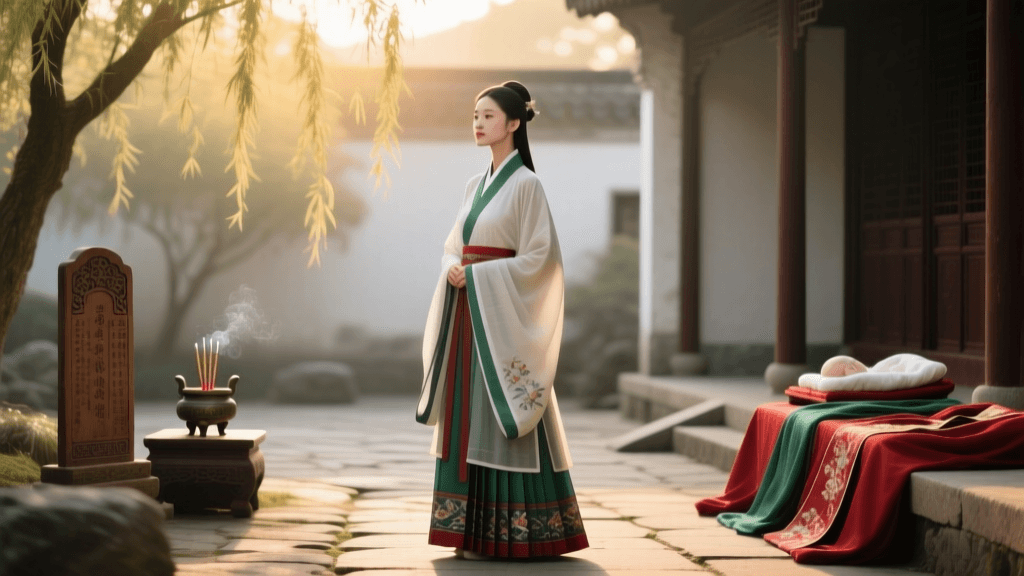
When visiting ancestral graves or participating in family altar rites during Qingming, the dress code shifts dramatically from the vibrant reds of weddings to subdued, respectful tones. In 2026, practitioners strictly avoid bright colors, favoring muted blues, sage greens, grays, and crisp whites. The Jiaoling Youren (cross-collar, right-lapel robe) is the standard choice. The right-lapel rule (youren) is a fundamental tenet of Hanfu; wearing the left lapel over the right is historically reserved for the deceased or certain non-Han ethnic groups, making the correct wrapping of the robe a vital sign of respect for the ancestors being honored.
2026 Ceremonial Hanfu Comparison Guide
To help families navigate the specific requirements and market expectations for 2026, the following table outlines the primary garments, color palettes, and estimated costs for major family ceremonies.
| Ceremony Type | Primary Garments | Auspicious Colors | 2026 Estimated Cost (USD) |
|---|---|---|---|
| Man Yue (100 Days) | Hudou, Tiger Shoes, Bijia | Crimson, Saffron, Soft Pink | $150 - $400 |
| Ming-Style Wedding | Mang Robe, Fengguan, Xiapei | Deep Red, Navy, Gold | $2,500 - $6,000 |
| Ji Li (Coming of Age) | Ruqun, Beizi, Court Gown | Jade, Celadon, Ivory | $600 - $1,200 (for 3 sets) |
| Qingming Ancestral | Jiaoling Youren, Shenyi | Muted Blue, Sage, Charcoal | $180 - $350 |
Sourcing and Caring for Ceremonial Hanfu in 2026
The Hanfu market in 2026 is highly segmented. For everyday wear, machine-washable polyester blends dominate. However, for family ceremonies, families are investing in natural fibers. Brands like Ming Huatang and Shisanyu continue to lead the premium market, offering historically accurate patterns and natural silk brocades. For those seeking bespoke pieces, independent tailors on platforms like Taobao and Etsy offer custom measurements, which are crucial for the precise drape of a Mamianqun (horse-face skirt) or the structured shoulders of a Ming robe.
Caring for these garments requires diligence. Authentic silks and plant-dyed fabrics must be dry-cleaned or hand-washed in cold water with pH-neutral detergents. Storing them in breathable cotton garment bags with natural cedar blocks prevents moisture damage and moth infestations without the use of harsh chemical mothballs that could degrade the delicate silk proteins.
Conclusion
Dressing in Hanfu for family ceremonies in 2026 is a profound act of cultural continuity. Whether wrapping a newborn in tiger-head shoes, exchanging vows in sweeping Ming dynasty silks, or bowing to ancestors in subdued, respectful robes, these garments serve as a tangible link to the past. By prioritizing historical accuracy, sustainable materials, and deep symbolic meaning, modern families are ensuring that the rich tapestry of Asian sartorial traditions continues to thrive for generations to come.