Hanbok & Qipao in 2026 Fashion Media: Editorial Styling Guide
The 2026 Editorial Shift: From Costume to Couture
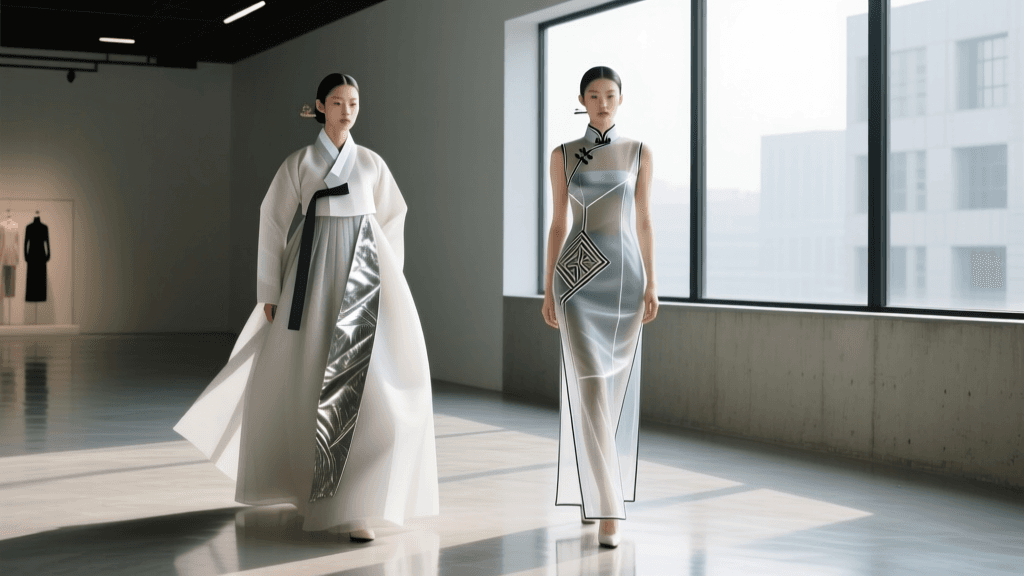
In 2026, the global fashion media landscape has undergone a profound transformation regarding the representation of Asian traditional garments. No longer relegated to thematic costumes or stereotypical tropes, the Korean Hanbok and the Chinese Qipao (Cheongsam) are being celebrated for their intricate construction, historical significance, and architectural silhouettes. Leading publications like Vogue, Harper's Bazaar, and Elle are now collaborating with cultural consultants and heritage artisans to feature these garments in high-fashion editorials. For stylists, art directors, and fashion journalists, understanding the nuanced evolution of these garments is essential for producing culturally respectful and visually striking editorial content this year.
Deconstructing the Modern Hanbok in Global Media
The Hanbok, characterized by its vibrant colors and simple lines without pockets, has seen a massive resurgence in Western fashion media. In 2026, editorial stylists are moving away from the overly simplified 'fusion' Hanbok of the early 2020s and returning to the structural integrity of the traditional silhouette, albeit with contemporary styling techniques. The defining elements of the Hanbok—the jeogori (jacket) and the chima (wrap-around skirt) for women, or baji (trousers) for men—are being highlighted for their unique proportions.
Key Styling Elements for 2026 Editorials
- The Goreum (Ties): Instead of hiding the traditional ribbon ties, 2026 editorials are exaggerating them. Stylists are using extended, weighted silk goreum that trail dramatically across the floor, creating dynamic movement in wind-machine shots.
- The Dongjeong (White Collar): The crisp white paper-like collar of the jeogori is being used as a framing device for avant-garde facial jewelry and minimalist makeup looks, drawing the viewer's eye directly to the model's face.
- Volume and Proportion: The traditional bell-shape of the chima is being achieved using modern structural petticoats rather than heavy layering, allowing the skirt to maintain its iconic 360-degree volume while weighing significantly less for the model during long shoot days.
According to historical archives preserved by institutions like the Victoria and Albert Museum's Asian collections, the Hanbok's distinct lack of tailoring darts and seams was originally designed to accommodate the body's natural movements while preserving modesty. Modern fashion media is finally recognizing this zero-waste, flat-pattern construction as a masterclass in sustainable design.
The Qipao (Cheongsam) Reclaimed by High Fashion
The Qipao has historically been subjected to exoticization in Western cinema and media. However, the 2026 editorial season marks a definitive reclamation of the garment. Fashion houses and independent editors are focusing on the Qipao's origins in 1920s Shanghai as a symbol of female emancipation and modernity, while honoring its deeper roots in Manchu clothing. The focus this year is heavily on textile authenticity and the meticulous hand-craftsmanship of the garment's closures.
Fabric Sourcing and Construction Details
In 2026, the most sought-after textile for high-end Qipao editorials is Xiangyunsha (mud-dyed silk). This intangible cultural heritage fabric, recognized by UNESCO's Intangible Cultural Heritage lists, is dyed using river mud and the juice of the Dioscorea cirrhosa plant, resulting in a dark, lustrous finish that sounds like rustling leaves when the model moves. Priced at approximately $600 to $900 per yard in 2026, Xiangyunsha requires specialized lighting to capture its subtle, dual-toned sheen on camera.
Furthermore, the pankou (knotted buttons) are no longer treated as mere functional closures. Editorial macro-photography in 2026 is dedicating entire spreads to the intricate, hand-woven floral and geometric pankou designs, highlighting the dozens of hours of artisanal labor required to craft a single set. The side slits (kaiqiang), historically designed for ease of movement, are being styled with contrasting silk linings that flash brilliantly during motion-capture and video editorials.
Comparative Analysis: Traditional vs. Media Styling
To help stylists and art directors navigate the balance between historical accuracy and editorial drama, the following table outlines the key adaptations seen in 2026 global fashion media.
| Garment Element | Traditional / Historical Standard | 2026 Editorial Adaptation |
|---|---|---|
| Hanbok Chima (Skirt) | Ankle-length, layered cotton/ramie petticoats for volume. | Single-layer silk organza over structured wire cages; hemlines occasionally cropped to mid-calf for footwear focus. |
| Hanbok Jeogori (Jacket) | Loose fit, covering the waist, with curved baerae (sleeves). | Tailored slightly closer to the ribcage for defined silhouettes; sleeves elongated past the knuckles for dramatic hand gestures. |
| Qipao Collar | Stiff, high mandarin collar (up to 5cm) restricting neck movement. | Lowered to 2-3cm or constructed with flexible, breathable buckram to allow for dynamic posing and neck extension. |
| Qipao Length & Slit | Calf to ankle length; slits ending just above the knee. | Floor-sweeping lengths with thigh-high slits lined with contrasting, heavily embroidered silk crepe. |
Sourcing and Budgeting for Editorial Shoots in 2026
Sourcing authentic, high-quality Hanbok and Qipao for editorial shoots requires navigating a specialized market. In 2026, pulling from standard contemporary rental houses is often insufficient for top-tier publications demanding historical accuracy and luxury textiles.
Bespoke and Archival Sourcing
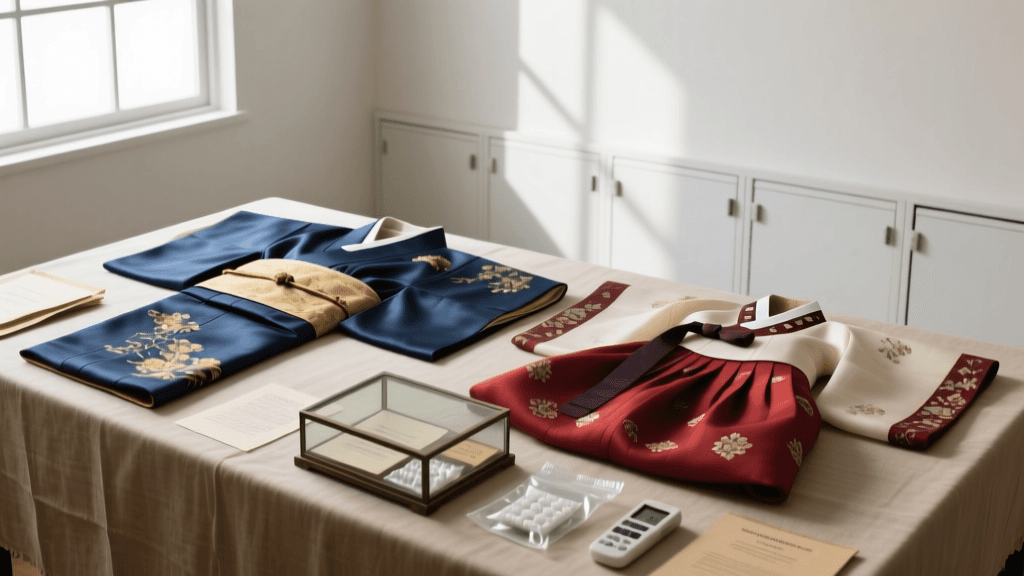
- Archival Rentals (New York / London / Paris): Sourcing museum-quality vintage Qipao from the 1930s or authentic ceremonial Hanbok from the late Joseon reproduction archives typically costs between $800 and $1,500 per day in 2026. These pieces require strict handling protocols, including the use of cotton gloves and climate-controlled transport.
- Contemporary Couture Commissions: Working with modern heritage designers (such as Seoul-based Danha or Shanghai-based Samuel Gui Yang) for bespoke editorial pieces requires a lead time of 8 to 12 weeks. Budgets for a fully bespoke, hand-embroidered editorial Qipao or Hanbok set range from $4,500 to $12,000, depending on the complexity of the jangdan (embroidery) and the rarity of the silk.
- Artisan Direct Sourcing: For publications focusing on craft, stylists are increasingly bypassing fashion houses to source directly from weaving cooperatives in Suzhou (for Song brocade) and Jeonju (for traditional Hanji paper and ramie weaving), budgeting around $2,000 for raw, uncut textile spreads.
Lighting and Photography Techniques for Traditional Textiles
Capturing the essence of Asian traditional garments in 2026 requires specialized photographic techniques. The heavy use of gold thread (geumseon) in Hanbok embroidery and the light-absorbing properties of mud-dyed Qipao silk present unique challenges on set.
Photographers are increasingly utilizing cross-polarization lighting setups to eliminate the harsh glare off metallic threads while preserving the rich, deep saturation of the underlying dyes. Furthermore, continuous LED lighting with a high CRI (Color Rendering Index) of 98+ is mandatory in 2026 to accurately capture the subtle, natural indigo and madder root dyes used in authentic heritage garments, which often shift in color temperature under standard strobe flashes.
Navigating Cultural Authenticity in Fashion Journalism
The most significant shift in 2026 fashion media is the institutionalization of cultural consultancy. Publications are no longer relying solely on the aesthetic intuition of Western stylists when featuring Asian traditional dress. Instead, it is now industry standard to hire cultural historians and heritage consultants during the pre-production phase.
These consultants ensure that garments are not mixed inappropriately (e.g., pairing a mourning-era white Hanbok with festive, celebratory styling) and that the historical context of the Qipao's evolution is accurately represented in the accompanying editorial copy. Resources such as The Metropolitan Museum of Art's Asian Art collection are frequently utilized by editorial teams to verify the historical accuracy of motifs, ensuring that symbols of longevity, royalty, or marital bliss are used in their proper context.
Ultimately, the 2026 approach to styling the Hanbok and Qipao in global fashion media is one of deep reverence and meticulous research. By prioritizing structural authenticity, investing in heritage textiles, and embracing culturally informed styling, the fashion industry is finally giving these magnificent garments the prestigious platform they have always deserved.