Modern Hanbok Jeogori Layering: 2026 Fashion Guide
The Renaissance of the Jeogori in 2026 Streetwear
The intersection of heritage and hyper-modernity has never been more vibrant than in the 2026 global fashion landscape. At the forefront of this movement is the modern hanbok, specifically the jeogori (the traditional Korean jacket). Once reserved for holidays, weddings, and formal ceremonies, the jeogori has been radically reimagined by contemporary designers and streetwear enthusiasts. Today, the concept of saenghwal hanbok (daily hanbok) has evolved beyond simple cotton dresses into a sophisticated layering piece that bridges the gap between ancestral craftsmanship and futuristic urban utility.
For the modern wardrobe, the jeogori offers a unique silhouette characterized by its straight lines, subtle curves, and structural collar. When mixed with 2026 techwear, tailored streetwear, and minimalist office attire, it creates a striking visual contrast that honors Asian traditions while pushing the boundaries of contemporary styling. This guide explores actionable techniques, fabric innovations, and proportion rules for integrating the modern jeogori into your daily rotation this year.
Deconstructing the Modern Jeogori
To effectively style the jeogori, one must first understand its architectural components. According to Britannica's comprehensive guide to the hanbok, the traditional jacket is defined by its git (the collar band), the dongjeong (the removable white paper or fabric collar strip), and the goreum (the long, flowing chest ties). In 2026, avant-garde and streetwear brands have adapted these elements for urban functionality.
- The Git (Collar): Modern iterations often feature a reinforced, stand-up git that mimics the structure of a contemporary mandarin or Nehru collar, providing a sharp framing for the neck.
- The Dongjeong (White Band): While traditionalists still use removable white cotton strips, 2026 streetwear adaptations often integrate the dongjeong directly into the garment using contrasting white grosgrain ribbon or reflective piping for a subtle cyber-traditional aesthetic.
- The Goreum (Ties): The most significant modernization is seen in the ties. Designers are now replacing lengthy silk ribbons with magnetic snap closures, hidden toggle cords, and asymmetrical buckle straps, allowing the jacket to be secured in seconds without sacrificing the iconic V-shaped chest drape.
Core Layering Techniques for Urban Environments
Mixing the jeogori with modern garments requires a deliberate approach to volume and texture. Here are two primary styling frameworks dominating the 2026 streetwear and smart-casual scenes.
1. The Techwear Overlay (Cyber-Traditional)
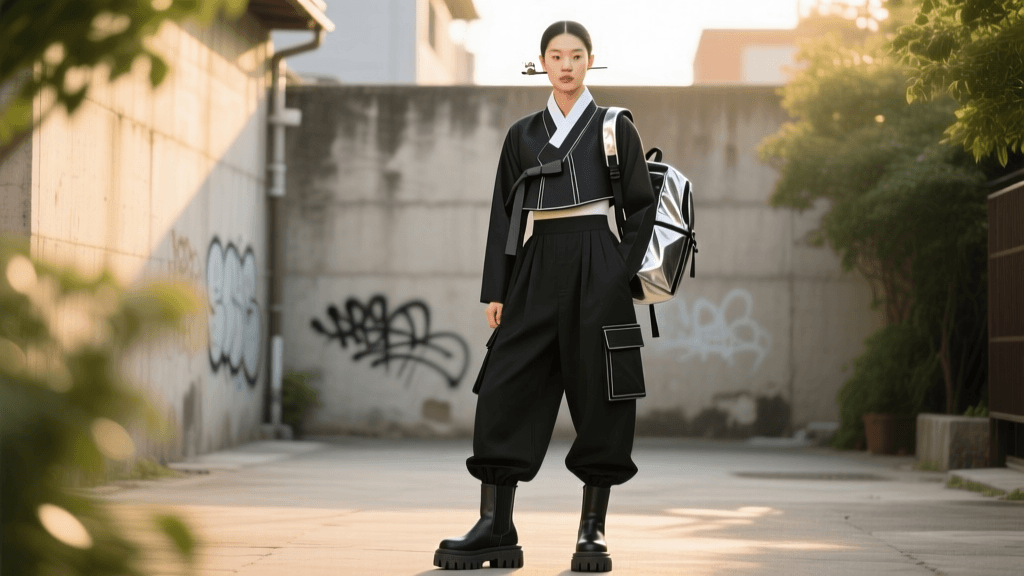
Techwear relies on modularity, weather resistance, and utilitarian silhouettes. The cropped nature of the jeogori makes it an ideal outer-mid layer over technical base layers. For this look, select a jeogori crafted from water-resistant nylon-spandex blends or matte GORE-TEX laminates.
How to Style: Layer a cropped, dark-toned techwear jeogori over a fitted, high-neck merino wool base layer. Pair this with articulated cargo trousers featuring adjustable hem toggles and chunky, aggressive-tread derby boots. The key is to let the baerae (the traditional curved underarm seam of the sleeve) provide a relaxed, ergonomic fit that accommodates the bulk of a tactical vest worn underneath. The juxtaposition of the jeogori's flowing chest ties against the rigid, pocket-heavy cargo pants creates a striking, futuristic silhouette.
2. The Minimalist Office Core
For professional or smart-casual environments, the jeogori serves as an elegant alternative to the standard blazer. The 2026 office aesthetic favors drape, breathability, and soft tailoring.
How to Style: Choose a mid-length jeogori tailored from a Tencel-linen blend in muted tones like slate, sage, or charcoal. Wear it open over a crisp, oversized poplin button-down shirt, leaving the shirt untucked but neatly pressed. Pair with wide-leg, high-waisted pleated trousers that pool slightly over minimalist leather loafers. By leaving the modern goreum ties loosely knotted at the side rather than the center chest, you maintain a relaxed, approachable posture suitable for creative workspaces.
2026 Fabric Innovation: Traditional vs. Modern Blends
The evolution of the daily hanbok is deeply tied to textile innovation. While traditional silk (myeongju) and ramie (mosi) remain culturally significant, they are often impractical for dynamic urban lifestyles. Below is a comparison of the primary fabrics used in 2026 modern jeogori production.
| Fabric Type | Composition | Cost (Approx. per Yard) | Care & Maintenance | Best Modern Application |
|---|---|---|---|---|
| Traditional Silk (Myeongju) | 100% Woven Silk | $85 - $140 | Dry clean only; prone to water spotting. | Formal events, editorial fashion, ceremonial layering. |
| Recycled Tech-Nylon | 100% Recycled Nylon with DWR coating | $35 - $55 | Machine wash cold; quick-dry; wrinkle-resistant. | Techwear overlays, rainy-day streetwear, travel. |
| Tencel-Linen Blend | 60% Tencel, 40% European Linen | $45 - $70 | Hand wash or gentle cycle; steam to remove wrinkles. | Smart-casual office wear, summer minimalism. |
| Structured Cotton Twill | Heavyweight 10oz Cotton Twill | $25 - $40 | Machine wash warm; holds structural shape well. | Winter layering, workwear-inspired street style. |
Mastering Proportions: The Baerae and Hemline
The most common mistake when integrating traditional Asian garments into Western-style wardrobes is ignoring proportional geometry. The jeogori relies on the baerae—the gentle curve of the sleeve's bottom edge—and the precise drop of the hemline.
For a modern streetwear look, the hemline of the jeogori should ideally hit exactly at the waistband of your trousers or slightly above it (approximately 1 to 2 inches above the navel). This cropped proportion elongates the legs and prevents the outfit from looking like a costume. If you are having a modern jeogori custom-tailored in 2026, request a cuff width of exactly 14 centimeters. This specific measurement allows the sleeve to sit cleanly over the wrist without swallowing the hand, making it compatible with modern smartwatches and stacked bracelets.
Accessorizing the Hybrid Wardrobe
Accessories anchor the traditional-meets-modern aesthetic. Avoid traditional floral hairpins or embroidered fabric shoes, which can push the outfit into costume territory. Instead, lean into contemporary hardware.
- Footwear: Chunky, lug-sole loafers or sleek, sock-style knit sneakers complement the flowing lines of the jeogori by adding a grounded, industrial base.
- Headwear: A structured, brimless felt hat or a minimalist nylon bucket hat echoes the clean lines of the git (collar) without competing for visual attention.
- Bags: Opt for geometric, hard-shell crossbody bags or sleek leather slings worn high on the chest. This mimics the traditional placement of the goreum knot while providing modern utility.
Care and Maintenance for 2026 Blends
As the official Korean cultural archives note, the preservation of the hanbok's silhouette is paramount. Modern blended fabrics require specific care to maintain their structural integrity. For Tencel-linen and cotton twill jeogori, always use a cool steam iron on the git (collar) to ensure it remains rigid and upright. Never hang a wet or damp jeogori on a wire hanger; the weight of the water will distort the shoulder seams and ruin the traditional drop-shoulder drape. Instead, lay the garment flat on a mesh drying rack. For tech-nylon variants, avoid fabric softeners entirely, as they will strip the DWR (Durable Water Repellent) coating that makes the garment viable for urban weather.
Stylist's Note for 2026: The beauty of the modern jeogori lies in its versatility. It is not a relic to be kept in a closet, but a dynamic architectural piece that breathes new life into the standard t-shirt and trouser combination. Embrace the volume, respect the proportions, and let the heritage of the garment speak through modern styling.