Complete 2026 Hanfu Storage Rotation & Maintenance Guide
The Evolution of Hanfu Preservation in 2026
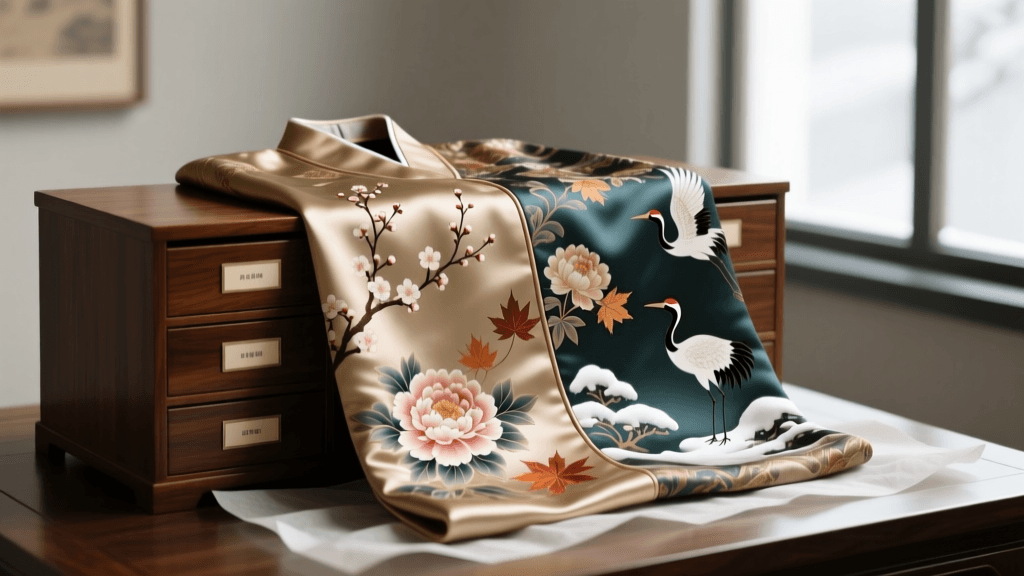
As the global appreciation for traditional Chinese clothing continues to surge in 2026, the modern Hanfu enthusiast's wardrobe has evolved from a few ceremonial pieces to a comprehensive, multi-seasonal collection. Whether you are collecting Ming Dynasty-style mamianqun (horse-face skirts) or lightweight Tang Dynasty-style banbi, preserving these garments requires more than simply hanging them in a closet. The intersection of traditional textile craftsmanship and modern conservation science has established new benchmarks for at-home garment care. This comprehensive guide outlines the definitive 2026 protocols for Hanfu storage rotation, seasonal maintenance, and museum-grade preservation, ensuring your investment in cultural heritage remains pristine for generations.Understanding Your Hanfu Textiles and Their Vulnerabilities
Before implementing a storage rotation schedule, it is critical to understand the material science behind your garments. Different fibers react uniquely to environmental stressors, and treating them uniformly can lead to irreversible damage.Mulberry Silk and Crepe de Chine
Silk is a protein-based fiber. While it possesses remarkable tensile strength, it is highly susceptible to UV degradation, acidity, and prolonged moisture. In 2026, conservation standards strictly advise against storing silk in direct contact with wood or standard cardboard, as the off-gassing of lignins and acidic compounds will cause the silk to yellow and become brittle over time.Xiangyunsha (Gambiered Canton Gauze)
This luxurious, mud-coated silk is a hallmark of high-end Hanfu. The iron-rich mud and tannin from gambiered juice create a unique, leather-like patina. However, Xiangyunsha is notoriously stiff. If folded sharply and left in storage for months, the coated fibers will micro-fracture and crack along the crease lines. This fabric demands specialized rolling or heavily padded folding techniques.Song and Zhuanghua Brocades
Woven with complex, multi-layered structures and often incorporating metallic threads, brocades are heavy and prone to structural distortion. The metallic threads, typically made of silver or gold alloys wrapped around a silk core, will tarnish rapidly if exposed to high humidity or sulfur compounds found in certain atmospheric pollutants and cheap elastic bands.Ramie and Linen Blends
Often used for summer Hanfu, these plant-based (cellulose) fibers are highly breathable but remarkably prone to mildew if stored with even trace amounts of ambient moisture or perspiration salts.The 2026 Seasonal Rotation Schedule
A proactive rotation schedule prevents garments from sitting stagnant in unfavorable conditions for extended periods. Below is the recommended 2026 rotation matrix tailored to the four distinct seasons.| Season | Action Protocol | Target Fabrics | Ideal Humidity (RH) |
|---|---|---|---|
| Spring (March) | Air out winter brocades in shaded, well-ventilated rooms. Pack away heavy velvets and fur-lined bianda. | Zhuanghua Brocade, Velvet, Wool blends | 45% - 55% |
| Summer (June) | Rotate to lightweight silks. Inspect storage boxes for early signs of mold or pest activity due to rising ambient moisture. | Xiangyunsha, Ramie, Chiffon, Organza | 50% - 60% |
| Autumn (Sept) | Professionally clean summer garments to remove invisible perspiration salts. Prep layering pieces (dahu, beizi) for use. | Mulberry Silk, Linen blends, Medium-weight crepes | 45% - 55% |
| Winter (Dec) | Store delicate summer silks in sealed archival environments. Deploy natural pest deterrents before deep winter sets in. | Thin Crepe, Gauze, Summer-weight Xiangyunsha | 40% - 50% |
Museum-Grade Storage Materials
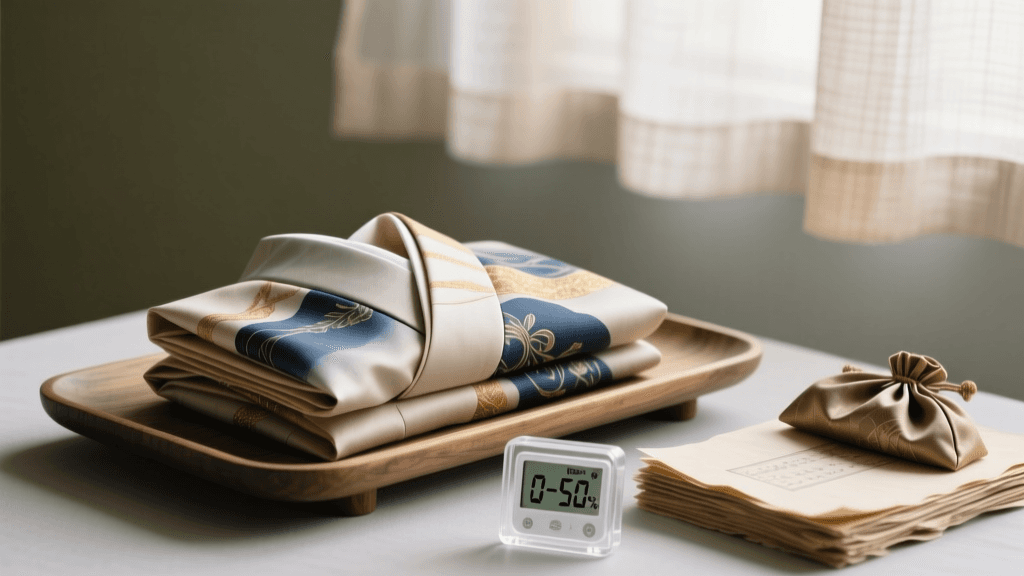
The year 2026 has seen a democratization of archival supplies, making museum-grade storage accessible to private collectors. The golden rule of textile conservation is: never let the garment touch the storage container directly.For protein fibers like silk, you must use unbuffered, acid-free tissue paper. Buffered tissue contains calcium carbonate, which is excellent for cotton and ramie (cellulose fibers) but will chemically damage silk over decades. When purchasing archival boxes, look for brands like Gaylord Archival or Hollinger Metal Edge, which manufacture lignin-free, buffered/unbuffered specific enclosures. According to the Victoria and Albert Museum's textile conservation guidelines, all storage enclosures should be opaque to prevent cumulative light damage, which causes irreversible dye fading and fiber embrittlement.
The Art of Folding and Rolling
How you manipulate the fabric before storage dictates its longevity. The traditional sharp fold is the enemy of historic and modern Hanfu alike.The Tissue 'Sausage' Padding Method
When folding a mamianqun or a wide-sleeved dahu, sharp creases will eventually sever the silk fibers. To prevent this, conservationists use the padding method:- Take sheets of acid-free tissue paper and gently roll them into loose tubes (resembling sausages).
- Place these tissue tubes into the valleys of every fold you make in the garment.
- This creates a soft, rounded curve at the crease point rather than a hard, damaging edge.
- Wrap the entire folded garment in a final, large sheet of acid-free tissue before placing it in the archival box.
When to Roll Instead of Fold
As noted by the Canadian Conservation Institute, rolling is preferable for heavy or highly decorated textiles. For heavily embroidered Ming-style jackets or stiff Xiangyunsha skirts, roll the garment around an acid-free cardboard tube (wrapped in washed, unbleached cotton muslin). Always roll with the embroidery or decorative side facing outward to prevent the metallic threads or raised embroidery from being crushed against the core.Environmental Controls and Smart Monitoring
Temperature and relative humidity (RH) fluctuations cause fibers to expand and contract, leading to mechanical fatigue. In 2026, smart home integration makes monitoring these metrics effortless.Deploy Bluetooth or Wi-Fi-enabled smart hygrometers (such as the latest Govee or SwitchBot environmental sensors) directly inside your storage cabinets or archival boxes. The ideal target for a mixed Hanfu wardrobe is a stable 65°F (18°C) and 50% RH. If the RH drops below 40%, silk becomes brittle; if it rises above 65%, you risk catastrophic mold blooms, particularly on ramie and mud-coated Xiangyunsha. For collectors in highly humid coastal regions, investing in a dedicated closet dehumidifier with an auto-drain hose is no longer optional—it is a necessity for preserving structural integrity.
Pest Management Without Chemicals
Webbing clothes moths and carpet beetles are the apex predators of the silk wardrobe. However, the use of traditional mothballs (naphthalene or paradichlorobenzene) is strictly forbidden in modern conservation. These chemicals not only pose severe health risks to humans but also react with metallic brocade threads, causing immediate blackening and tarnishing.The Freezing Eradication Protocol
If you suspect an infestation or are bringing a vintage Hanfu piece into your collection, use the museum-standard freezing protocol:- Seal the garment in a polyethylene plastic bag, removing as much air as possible to prevent frost damage.
- Place the bag in a deep freezer set to at least -20°C (-4°F) for 72 hours.
- Remove the bag and let it thaw slowly at room temperature for 24 hours without opening the seal (this prevents condensation from forming on the cold silk).
- Repeat the cycle once more to ensure all eggs and larvae are eradicated.