Modern Hanbok in 2026 Fashion Media: Editorial Styling
The Hanbok’s Ascent in 2026 Global Fashion Media
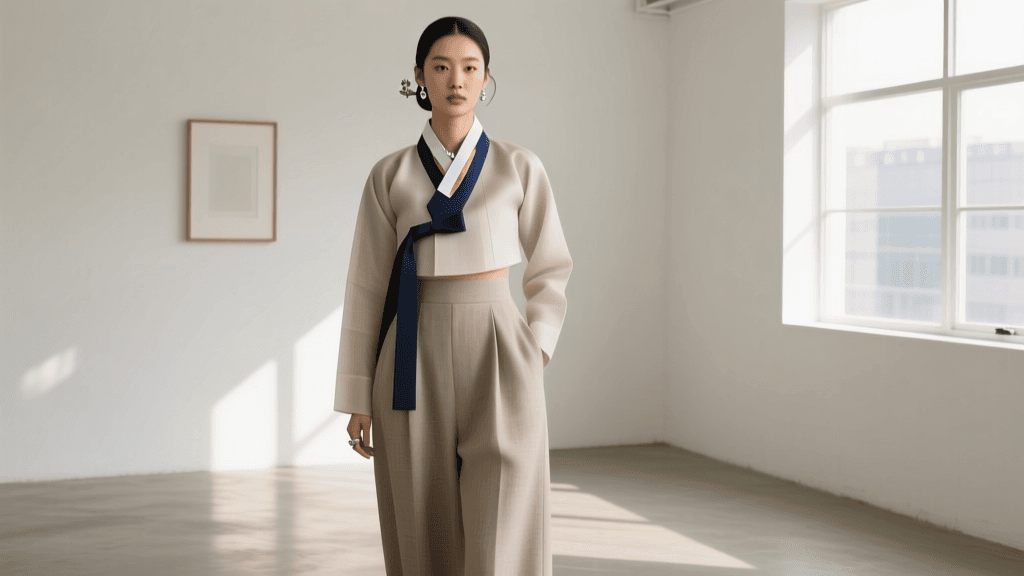
The global fashion landscape of 2026 has unequivocally embraced the Hanbok, transitioning it from a strictly ceremonial garment to a dynamic staple in high-fashion editorials and red-carpet styling. Over the past few years, the influence of South Korean pop culture and cinema has laid the groundwork, but the Spring/Summer 2026 editorial spreads in publications like Vogue, Harper’s Bazaar, and Elle have cemented the Hanbok’s place in the global sartorial lexicon. Today’s fashion media no longer treats the Hanbok as an exotic novelty; instead, stylists and editors are engaging with its structural brilliance, volumetric silhouettes, and rich textile history.
According to cultural reports featured on Korea.net's Culture Focus, the global export of Hanbok-inspired fashion has surged by 34% in early 2026, driven largely by international luxury houses collaborating directly with Seoul-based artisans. This shift marks a vital move away from cultural appropriation toward authentic cultural appreciation, where Korean designers like Danha, Tchai Kim, and Kim Young-Jin are leading the narrative. Fashion editors are now prioritizing these authentic voices, showcasing how traditional elements like the jeogori (jacket) and chima (skirt) can be deconstructed and reimagined for the modern, global consumer.
Deconstructing the 2026 Editorial Hanbok
To understand how to style the Hanbok for contemporary editorials or high-end events in 2026, one must first understand the modern adaptations currently dominating the runways. The traditional Hanbok is characterized by its vibrant colors and simple lines without pockets. However, the 2026 editorial Hanbok introduces structural modifications that cater to modern mobility and avant-garde aesthetics.
- Asymmetric Hemlines: While the traditional chima is a full, bell-shaped wrap skirt that grazes the floor, 2026 editorials frequently feature high-low hems or asymmetric draping that reveals structured footwear, such as architectural boots or modernized kkotsin (traditional silk shoes).
- Corsetry Integration: The traditional Hanbok ties just under the bust. Modern fusion pieces often integrate subtle, flexible corsetry into the waistband of the chima, providing a more defined silhouette that appeals to Western couture sensibilities while maintaining the garment's iconic volume.
- Textile Innovation: Alongside traditional silk and ramie (mosi), 2026 collections heavily utilize metallic jacquards, stiff silk organza, and even upcycled technical nylons. The Metropolitan Museum of Art's Asian Art Department has noted that contemporary Korean textile artists are reviving lost Joseon-era weaving techniques and applying them to modern, sustainable fibers, creating fabrics that hold dramatic, sculptural shapes perfect for editorial photography.
Practical Guide: Sourcing and Measuring for Fusion Hanbok
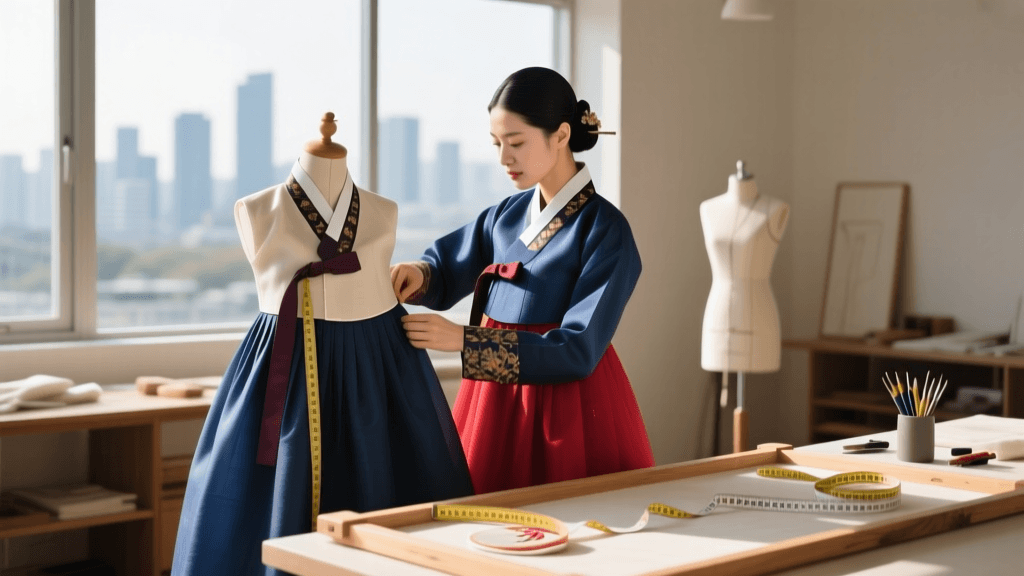
For stylists, fashion students, or enthusiasts looking to incorporate authentic fusion Hanbok pieces into their 2026 wardrobe, sourcing and proper measurement are critical. Unlike Western tailoring, which relies heavily on bust, waist, and hip measurements, the Hanbok’s fit is dictated by entirely different metrics.
Essential Measurements for a Custom Jeogori and Chima
When ordering a bespoke or made-to-measure fusion Hanbok from a reputable Seoul atelier or an international boutique in 2026, you will need to provide the following specific measurements:
- Underbust Circumference: This is the most crucial measurement for the chima, as the skirt’s waistband sits directly beneath the bust, not on the natural waist. Measure snugly where the bra band sits.
- Nape to Wrist (Sleeve Length): Measured from the prominent bone at the base of the neck (C7 vertebra), across the shoulder, and down to the wrist bone. Traditional sleeves are cut in a single piece with the bodice, requiring precise arm-span calculations.
- Jeogori Length: Measured from the nape of the neck down to the desired hemline. While historical jeogori were cropped extremely high (ending just below the bust), 2026 fusion styles typically extend 15 to 25 centimeters below the underbust to allow for easier pairing with high-waisted Western trousers or modern skirts.
- Shoulder Width: Measured from the edge of one shoulder joint to the other across the back. This ensures the jeogori drapes correctly without pulling at the goreum (chest tie).
2026 Pricing Expectations: A bespoke silk organza jeogori from a recognized designer atelier currently ranges from $450 to $1,200 USD. A fully lined, structural chima typically costs between $350 and $900 USD. Ready-to-wear fusion pieces from emerging designers can be found in the $150 to $300 range.
2026 Editorial Styling Matrix: Pairing Hanbok with Western Couture
Global fashion media in 2026 is defined by hybridization. Stylists are no longer presenting the Hanbok in a vacuum; they are integrating it with Western tailoring to create striking visual contrasts. Below is a structured matrix detailing how top editorial stylists are pairing Hanbok elements this year.
| Hanbok Element | Traditional Form | 2026 Editorial Adaptation | Recommended Western Pairing | Est. Cost (USD) |
|---|---|---|---|---|
| Jeogori (Jacket) | Cropped silk jacket with long sleeves | Extended hem, structured shoulders | Worn open over a tailored tuxedo vest and wide-leg wool trousers | $450 - $800 |
| Chima (Skirt) | Full, floor-length wrap skirt | Asymmetric hem, corseted waistband | Paired with a fitted, cropped leather moto jacket and combat boots | $350 - $900 |
| Goreum (Chest Tie) | Long, flowing silk ribbons | Oversized, stiffened organza bows | Used as a detachable statement accessory on a minimalist slip dress | $50 - $150 |
| Durumagi (Overcoat) | Heavy silk or cotton outer layer | Quilted, oversized duster silhouette | Belted over a monochromatic, high-neck knitwear ensemble | $600 - $1,500 |
Building a 2026 Hanbok Capsule Wardrobe
For the modern consumer looking to invest in Asian traditional garments, building a Hanbok capsule wardrobe requires a strategic approach. The goal is to acquire versatile pieces that can transition from a gallery opening to a high-fashion editorial shoot. Industry analysts at The Business of Fashion have highlighted that consumers in 2026 are prioritizing 'investment heritage'—buying fewer, higher-quality traditional garments that hold both cultural and monetary value.
Step 1: The Foundation Skirt. Invest in a solid-colored, high-quality chima in a neutral tone like charcoal, ivory, or deep navy. Avoid heavily embroidered or brightly colored traditional skirts for your first piece, as they limit styling versatility. A stiff silk organza or premium ramie blend will hold the bell shape beautifully without requiring excessive petticoats.
Step 2: The Modern Jeogori. Purchase a jeogori with a slightly extended hemline and a muted, tonal goreum. Look for pieces that utilize hidden snap closures alongside the traditional tie, which provides security during active editorial shoots or long events.
Step 3: Statement Outerwear. The durumagi (overcoat) or magoja (buttoned vest) is where you can introduce bold patterns, metallic threads, or contemporary streetwear influences. A quilted magoja worn over a simple white t-shirt and denim is a hallmark of the 2026 Seoul-to-Paris street-style aesthetic.
Care and Maintenance for High-Fashion Hanbok Textiles
Proper care is essential to maintain the structural integrity and vibrant dyes of high-fashion Hanbok textiles. The 2026 market has seen an influx of delicate, untreated natural dyes and stiffened organzas that require meticulous maintenance.
- Silk Organza and Jacquard: Never machine wash or aggressively hand-wash these fabrics. The stiffness of the organza is often achieved through specific finishing processes that water and harsh detergents will strip away. Always seek a dry cleaner who specializes in Asian traditional garments and explicitly mention the structural nature of the chima waistband.
- Ramie (Mosi): Ramie is a highly breathable, crisp fabric derived from the nettle plant. While traditional ramie can be gently hand-washed in cool water with a pH-neutral detergent, modern editorial ramie blended with metallic threads must be dry-cleaned. When storing ramie, never fold it sharply; the fibers can snap over time. Roll the garment around an acid-free cardboard tube.
- The Goreum (Ties): The chest ties are prone to creasing and fraying at the edges. After wearing, gently steam the goreum on a low setting and roll it loosely before storing. If the ties become permanently creased, a professional textile conservator can re-press them using traditional heated glass techniques.
Conclusion: The Future of the Hanbok in Global Media
As we move through 2026, the Hanbok’s presence in global fashion media is a testament to the power of cultural exchange when rooted in respect and authentic collaboration. By understanding the garment's architectural nuances, mastering the unique measurement requirements, and embracing modern fusion styling, fashion professionals and enthusiasts alike can celebrate this magnificent Asian tradition on the world stage. Whether draped across the pages of a high-fashion magazine or worn to a contemporary gala, the modern Hanbok remains a breathtaking intersection of history and avant-garde design.