Hanbok in Global Fashion Media: 2026 Red Carpet & Screen Trends
The Intersection of Heritage and High Fashion in 2026
In 2026, the global fashion media landscape has undergone a profound transformation, moving away from superficial cultural appropriation toward a deep, structural appreciation of traditional Asian garments. At the forefront of this movement is the hanbok, the traditional Korean dress, which has evolved from a regional ceremonial garment into a global sartorial powerhouse. High-fashion editorials in Vogue, Harper's Bazaar, and Elle are now routinely featuring modern hanbok silhouettes, while prestige streaming media and international red carpets have cemented its status as a symbol of avant-garde luxury and cultural pride.
Unlike the early 2010s, where traditional garments were often reduced to mere costume props, the 2026 media ecosystem treats the hanbok with rigorous historical respect and contemporary innovation. Designers are reinterpreting the structural geometry of the jeogori (traditional jacket) and the voluminous drape of the chima (wrap skirt) to create breathtaking red carpet moments and high-concept editorial spreads. This comprehensive guide explores how the hanbok is dominating global fashion media this year, the textiles driving this renaissance, and how you can source and style these media-inspired silhouettes for your own wardrobe.
Prestige Streaming Media: The New Runway for Traditional Textiles
The explosion of global streaming platforms has fundamentally altered how international audiences consume and subsequently purchase traditional fashion. In 2026, big-budget historical epics and fantasy dramas on platforms like Netflix, Apple TV+, and Disney+ are functioning as the ultimate runways for traditional Korean textiles. Costume designers for these prestige productions are no longer relying on synthetic approximations; instead, they are collaborating directly with master artisans to showcase authentic weaving techniques.
A prime example is the resurgence of interest in Hansan Mosi, a highly prized traditional ramie weaving technique. As documented by UNESCO's Intangible Cultural Heritage registry, this meticulous craft produces a fabric that is exceptionally crisp, breathable, and luminous. In 2026's top-rated historical dramas, lead characters are frequently adorned in premium ramie and gapsa silk, which catch the high-definition camera lighting beautifully. This on-screen visibility has triggered a massive spike in global consumer demand for authentic, naturally woven Asian textiles, shifting the market away from mass-produced polyester blends toward sustainable, heritage-crafted fabrics.
The 'screen-to-street' pipeline is faster than ever. When a lead actress in a globally streamed 2026 sageuk (historical drama) wears a modernized, high-collared durumagi (overcoat) in a muted celadon tone, fast-fashion and luxury boutiques alike see an immediate surge in searches for similar structural outerwear. Streaming media has effectively democratized access to traditional Asian aesthetics, proving that heritage garments can be both historically grounded and fiercely modern.
Red Carpet Couture: Structural Hanbok on the Global Stage
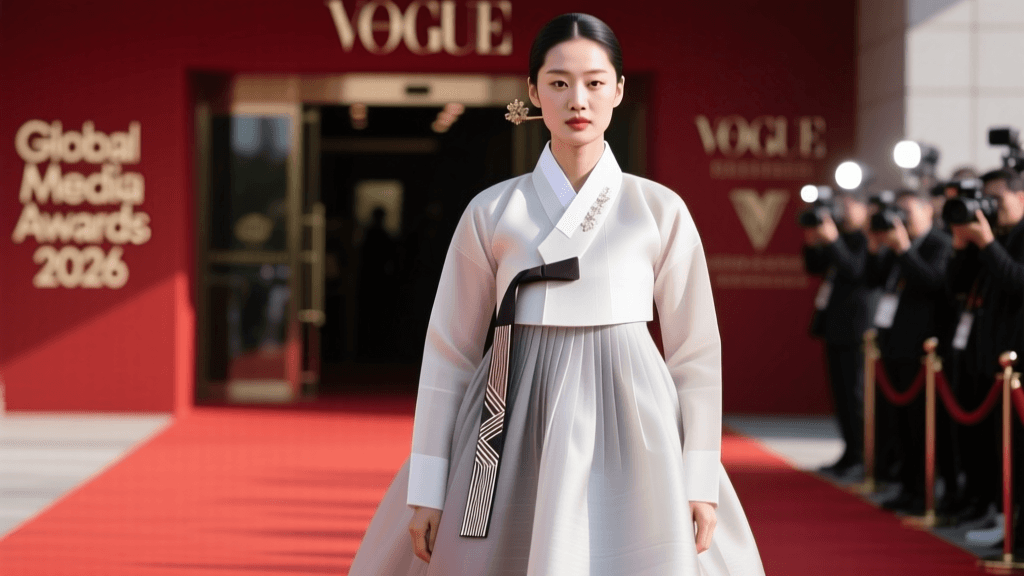
The 2026 award season—from the Cannes Film Festival to the Met Gala and the Venice International Film Festival—has been defined by architectural silhouettes, and the hanbok has provided the perfect blueprint. Global celebrities and high-profile stylists are increasingly turning to Korean heritage designers to craft bespoke red carpet looks that stand out in a sea of standard Western evening gowns.
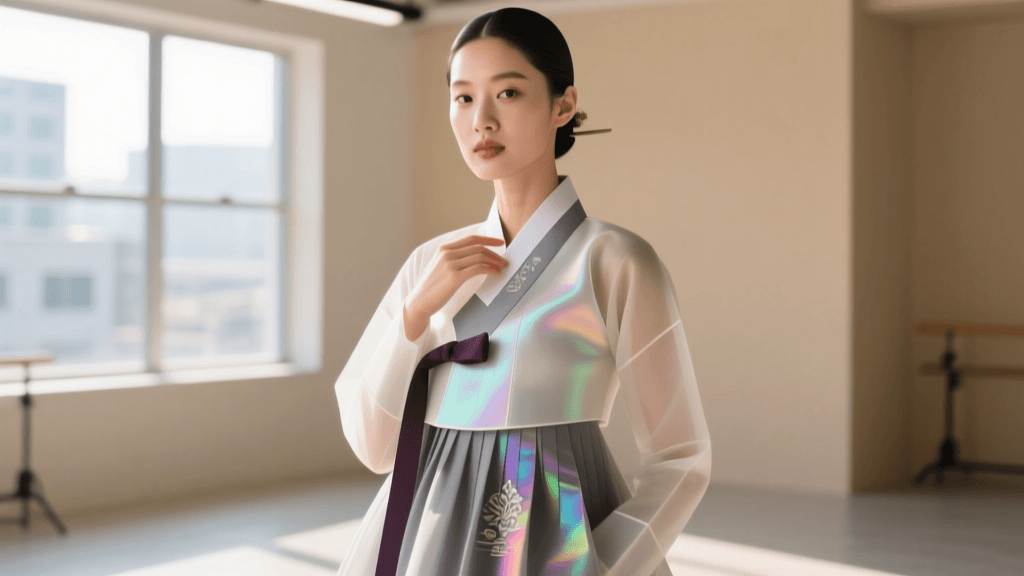
The genius of the hanbok lies in its structural contrast. The jeogori is traditionally short, fitted at the shoulders, and features a sharp, geometric V-neckline accentuated by the crisp white dongjeong (removable paper collar). This structured upper half is dramatically juxtaposed against the chima, which utilizes dozens of yards of fabric to create a sweeping, bell-shaped volume that moves fluidly with the wearer. In 2026, couture houses are amplifying this contrast by utilizing modern materials like silk organza, metallic-threaded geumseon brocades, and even structured neoprene to create gravity-defying red carpet moments.
To understand the historical foundations of these modern red carpet adaptations, fashion historians and stylists frequently reference the extensive archival collections at institutions like The Metropolitan Museum of Art. By studying the precise pleating techniques and natural dyeing methods of the Joseon dynasty, contemporary designers are able to infuse their 2026 couture creations with authentic historical resonance, ensuring that the garments are not just visually striking, but culturally significant.
The Global Media Impact: 2026 Traditional Garment Metrics
The influence of Asian traditional garments in global media is not limited to the hanbok, though its growth trajectory in 2026 is particularly noteworthy. The following table illustrates the estimated global media mentions, primary media drivers, and year-over-year search growth for four major traditional garments, based on Q1 and Q2 2026 fashion media analytics.
| Garment | 2026 Media Mentions (Est.) | Primary Media Driver | Search Growth (YoY) |
|---|---|---|---|
| Hanbok (Korea) | 14,500+ | Prestige Sageuk Dramas & K-Pop Met Gala Looks | +42% |
| Sari (South Asia) | 18,900+ | Bollywood Global Crossovers & Luxury Brand Campaigns | +35% |
| Cheongsam / Qipao (China) | 11,200+ | C-Drama Period Epics & High-Fashion Editorials | +28% |
| Kimono (Japan) | 9,800+ | Anime Live-Action Adaptations & Street Style Media | +15% |
As highlighted by the Victoria and Albert Museum's landmark Hallyu exhibition, the global spread of Korean culture has fundamentally rewired how international audiences engage with Korean aesthetics, moving from passive consumption to active integration into global fashion vocabularies. The hanbok's 42% search growth in 2026 reflects a consumer base that is actively seeking out modernized, wearable versions of the garments they see on screen and on the red carpet.
Actionable Guide: Sourcing and Styling Media-Inspired Hanbok
If you are inspired by the 2026 red carpet and streaming media trends and wish to incorporate the hanbok into your personal wardrobe, it is essential to understand the modern market. The contemporary hanbok industry offers a spectrum of options, from accessible ready-to-wear pieces to investment-grade bespoke couture.
1. Understanding 2026 Pricing and Tiers
- Ready-to-Wear Modern Hanbok ($120 - $350): Ideal for everyday wear, casual events, and street style. These pieces often utilize machine-washable polyester-blend fabrics, simplified goreum (ribbon ties), and elasticized chima waistbands for ease of wear. Brands like Leesle and Tchai Kim offer excellent entry points.
- Premium Designer Fusion ($400 - $1,200): Featured heavily in fashion editorials, these garments use high-quality silk organza, natural dyes, and traditional tailoring techniques adapted for modern silhouettes. They are perfect for gallery openings, weddings, and upscale dinners.
- Bespoke Couture ($1,500 - $4,500+): The red-carpet standard. This tier involves custom measurements, hand-woven textiles like authentic ramie or heavy silk brocade, and intricate hand-embroidery. Lead times for bespoke pieces in 2026 typically range from 8 to 14 weeks.
2. How to Measure for a Modern Jeogori
Ordering traditional garments online requires precise measurements, as the fit of the jeogori is distinctly different from Western tailoring. When ordering from international boutiques in 2026, provide the following:
- Shoulder Width: Measure from the edge of one shoulder bone to the other. The hanbok shoulder seam should sit exactly on the bone, not drop down the arm.
- Bust/Chest: Measure around the fullest part. The jeogori should not pull across the chest, as it relies on the goreum tie for closure rather than buttons or zippers.
- Arm Length: Measure from the shoulder edge to the base of the thumb. Traditional sleeves are long and often cover the hands, but modern media-inspired cuts usually end precisely at the wrist bone.
3. Fabric Care for Modern Silhouettes
The longevity of your garment depends on proper textile care. For modern silk organza chima, dry cleaning is strictly required to maintain the structural stiffness that gives the skirt its iconic bell shape. Never iron silk organza directly; use a steamer from a distance of at least six inches. For everyday cotton or linen blend jeogori, gentle hand-washing in cold water with a pH-neutral detergent is recommended. Always lay flat to dry to prevent the delicate dongjeong collar area from warping.
Conclusion: The Future of Heritage in Global Media
The year 2026 marks a definitive turning point for Asian traditional garments in global fashion media. The hanbok, with its brilliant architectural contrasts and rich textile history, has transcended its regional boundaries to become a vital part of the global fashion lexicon. Driven by the meticulous craftsmanship seen in prestige streaming dramas and the bold, structural statements made on international red carpets, the modern hanbok is a testament to the enduring power of cultural heritage. By understanding the history, sourcing authentic pieces, and styling them with contemporary confidence, fashion enthusiasts can participate in a global movement that honors the past while boldly designing the future.