Top Hanbok Sewing Workshops & Starter Toolkits 2026
The Renaissance of Traditional Hanbok Construction in 2026
The global fascination with traditional Asian garments has reached a remarkable zenith in 2026, with the Korean Hanbok leading a massive resurgence in both everyday fashion and dedicated craftsmanship. Unlike Western tailoring, which relies heavily on complex darts and three-dimensional draping, the Hanbok is a masterclass in two-dimensional flat-pattern cutting that transforms into a voluminous, elegant three-dimensional silhouette when worn. For sewing enthusiasts, fashion students, and cultural preservationists, learning to construct a Hanbok is no longer just a niche hobby; it is a highly sought-after skill. According to the Korea Craft & Design Foundation (KCDF), enrollment in traditional textile and garment-making seminars has surged, driven by a global desire to reconnect with sustainable, slow-fashion practices and intangible cultural heritage.
Whether you are looking to construct a traditional chima (wrap skirt) and jeogori (jacket) from luxurious myeongju (silk) or a modernized daily Hanbok from breathable cotton, participating in a structured workshop is essential. The geometric precision required for the curved sleeves and the meticulous hand-stitching techniques are incredibly difficult to master solely from written patterns. This comprehensive guide explores the top Hanbok construction workshops available in 2026, compares learning formats, and details the exact starter toolkit you need to begin your journey into traditional Korean garment making.
Top Hanbok Construction Workshops and Seminars
In 2026, the landscape of Hanbok education is divided into two primary categories: immersive in-person intensives and high-definition virtual masterclasses. Both offer unique advantages depending on your geographic location, budget, and learning style.
1. The Seoul Intensive: In-Person Masterclasses
For those who can travel, the in-person intensives hosted in Seoul's historic Jongno District remain the gold standard. These four-week seminars are often led by certified masters of traditional garment making. Students learn directly at the cutting table, receiving real-time corrections on their seam allowances, fabric grain alignment, and traditional ironing techniques. The tactile experience of handling authentic Dongdaemun-sourced silks under the guidance of a master is unparalleled. These workshops typically culminate in the creation of a fully lined, historically accurate ceremonial Hanbok.
2. Global Virtual Ateliers: Hybrid Learning
For international students, the 2026 virtual ateliers have revolutionized accessibility. Utilizing multi-angle 4K cameras and augmented reality (AR) pattern overlays, these online seminars allow instructors to demonstrate microscopic stitching details, such as the invisible hemming of the chima. Virtual kits are shipped globally prior to the seminar start date, ensuring every student is working with the exact same weight of ramie (mosi) and silk. The National Museum of Korea frequently partners with these digital platforms to provide historical context, ensuring that modern makers understand the dynastic roots of the garments they are constructing.
Workshop Comparison Chart: 2026 Offerings
Choosing the right seminar depends on your current skill level and commitment. Below is a comparison of the most prominent Hanbok workshop formats available this year.
| Workshop Format | Duration | 2026 Cost (USD) | Best For | Materials Included |
|---|---|---|---|---|
| Seoul In-Person Intensive | 4 Weeks (120 hrs) | $1,850 | Advanced sewers & professionals | Premium silk, lining, custom tools |
| Virtual Masterclass (Live) | 8 Weeks (40 hrs) | $650 | Intermediate global makers | Cotton/Ramie blend, pattern drafts |
| Weekend Goreum & Collar Seminar | 2 Days (12 hrs) | $180 | Beginners & hobbyists | Ribbon silks, collar papers, needles |
| Self-Paced Digital Archive | Lifetime Access | $299 | Independent learners | Digital patterns only (no physical kit) |
The 2026 Hanbok Starter Toolkit: Essential Gear
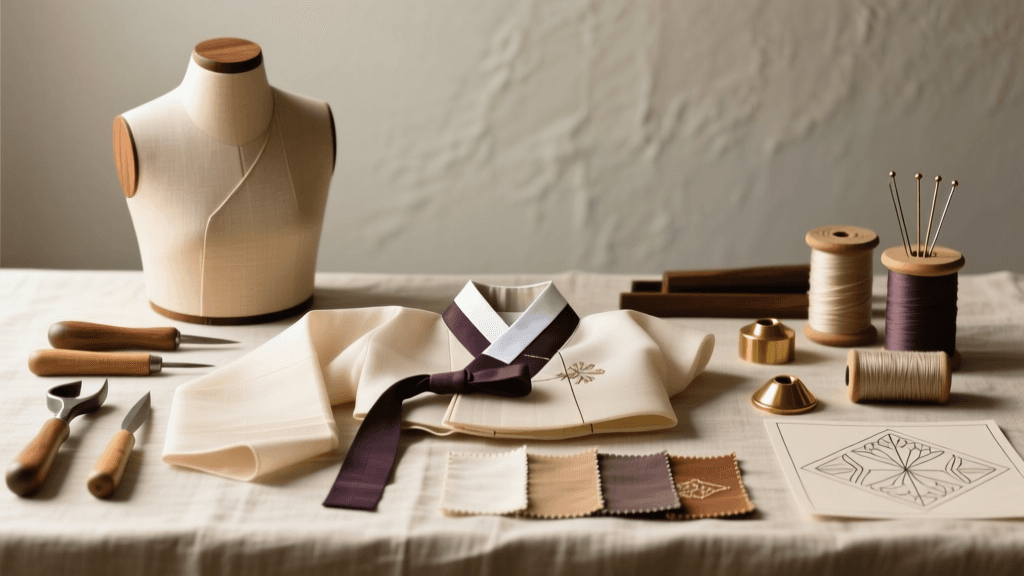
Constructing a Hanbok requires a specialized toolkit. Standard Western sewing supplies often fall short when dealing with the slippery nature of traditional silks and the crisp requirements of Hanbok collars. If you are enrolling in a workshop or starting independently, ensure you have the following 2026-recommended tools:
Cutting and Measuring
- Heavy-Disk Rotary Cutters (45mm): Essential for cutting slippery myeongju (silk) without shifting the fabric grain. Traditional shears can drag the delicate warp and weft threads.
- Weighted Pattern Holders: Instead of pinning paper patterns to delicate silk, which can leave permanent holes, use brass sewing weights to hold the flat-pattern drafts in place.
- Clear Acrylic Quilting Rulers: Hanbok construction relies heavily on straight lines and precise right angles for the main body panels. A 6x24 inch acrylic ruler ensures perfect alignment.
Stitching and Needles
- Fine Applique Needles (Size #9 or #10): Traditional Hanbok seams, particularly the gimjeong (fine topstitching), require incredibly thin, sharp needles to pass through tightly woven silk without causing puckering.
- Silk Pins with Glass Heads: Never use standard steel pins on Hanbok silk. Glass-headed silk pins are ultra-fine and will not melt if they accidentally come into contact with a hot iron.
- Beeswax Thread Conditioner: Running your silk thread through beeswax before hand-stitching prevents tangling and adds the necessary structural integrity to traditional seams.
Pressing and Finishing
- Teflon Pressing Sheets: Direct heat can scorch or shine traditional silks. A Teflon sheet acts as a protective barrier while allowing high heat to penetrate and set the seams.
- Wooden Tailor's Clapper: Hanbok seams must be pressed perfectly flat to maintain the garment's architectural lines. A wooden clapper traps the steam and forces the seam flat without over-pressing the delicate fabric.
- Traditional Rice Iron (Modern Electric Equivalent): While historical makers used heavy irons filled with hot sand or rice, 2026's heavy-duty ceramic steam irons with precise temperature controls replicate this heavy, flat-pressing effect safely.
Mastering Core Architectural Elements
When attending a Hanbok seminar, the curriculum will heavily focus on three distinct architectural elements that define the garment's silhouette. Understanding these before your workshop begins will give you a significant advantage.
The Baerae (Curved Sleeve)
Unlike Western sleeves that are cut to follow the bent angle of the human arm, the Hanbok sleeve (baerae) is cut in a sweeping, dramatic curve that creates a beautiful, rounded volume when the arms are lowered. The underarm seam is deeply curved, requiring meticulous clipping and easing to ensure it lays flat against the body without pulling. Mastering the baerae is often the primary focus of intermediate workshops.
The Dongjeong (White Collar)
The dongjeong is the crisp, white, removable collar that frames the face and contrasts sharply with the vibrant colors of the jeogori. It is constructed using a specialized stiff paper or modern non-woven interfacing encased in white silk or cotton. The challenge lies in attaching it to the neckline so that it stands perfectly upright and rigid, framing the wearer's jawline. Seminars dedicate entire sessions to the precise folding, gluing, and slip-stitching required to create a flawless dongjeong.
The Goreum (Chest Ribbon)
The goreum is the long, flowing ribbon used to tie the jacket closed. It is not merely a functional tie; its length, width, and the specific geometry of the knot are deeply tied to historical accuracy and aesthetic balance. In 2026 workshops, students learn the traditional knotting techniques that ensure the ribbon hangs asymmetrically but perfectly balanced, with the shorter loop and the long, sweeping tail falling at exact, culturally significant lengths.
Sourcing Authentic Materials in 2026
A major hurdle for international students has historically been sourcing authentic fabrics. In 2026, this barrier has been largely dismantled by specialized global proxy services that source directly from the Dongdaemun and Gwangjang markets in Seoul. When selecting fabric for your first workshop project, experts recommend starting with a high-quality cotton-linen blend or a mid-weight ramie. These fabrics hold a crease beautifully, mimicking the architectural stiffness of silk but offering a more forgiving learning curve for beginners managing seam allowances and pressing. Avoid synthetic polyesters at all costs; they lack the breathability and the natural drape required for traditional Hanbok movement.
Conclusion
Learning to construct a traditional Hanbok is a deeply rewarding journey that bridges the gap between historical preservation and modern sartorial art. Whether you choose the immersive environment of a Seoul-based intensive or the flexibility of a 2026 virtual masterclass, the key to success lies in respecting the geometry of the flat pattern and investing in the proper specialized toolkit. By mastering the sweeping curves of the baerae, the crisp precision of the dongjeong, and the elegant flow of the goreum, you are not just sewing a garment; you are actively participating in the living history of Asian textile traditions.