Japanese Kimono Types: Formal Wear & Styling 2026
The Living Heritage of Formal Japanese Kimono in 2026
As we navigate through 2026, the Japanese kimono remains a profound symbol of cultural heritage, artistic expression, and sartorial elegance. Far from being a static relic of the past, formal kimono culture has experienced a dynamic renaissance. Today, a new generation of artisans, vintage curators, and fashion enthusiasts are redefining how these garments are worn, sourced, and appreciated. Whether you are attending a traditional tea ceremony in Kyoto, a modern diplomatic gala in Tokyo, or an international cultural exhibition, understanding the nuanced hierarchy of formal Japanese garments is essential.
The foundation of kimono styling relies on the strict adherence to the TPO rule: Time, Place, and Occasion. In 2026, while personal expression is more celebrated than ever, the foundational rules regarding formality, crest placement, and sleeve length remain the bedrock of respectful and appropriate dressing. This comprehensive guide explores the primary types of formal kimono, their specific use cases, and the contemporary market trends shaping how we acquire and style them today.
Kurotomesode: The Pinnacle of Married Women's Formal Wear
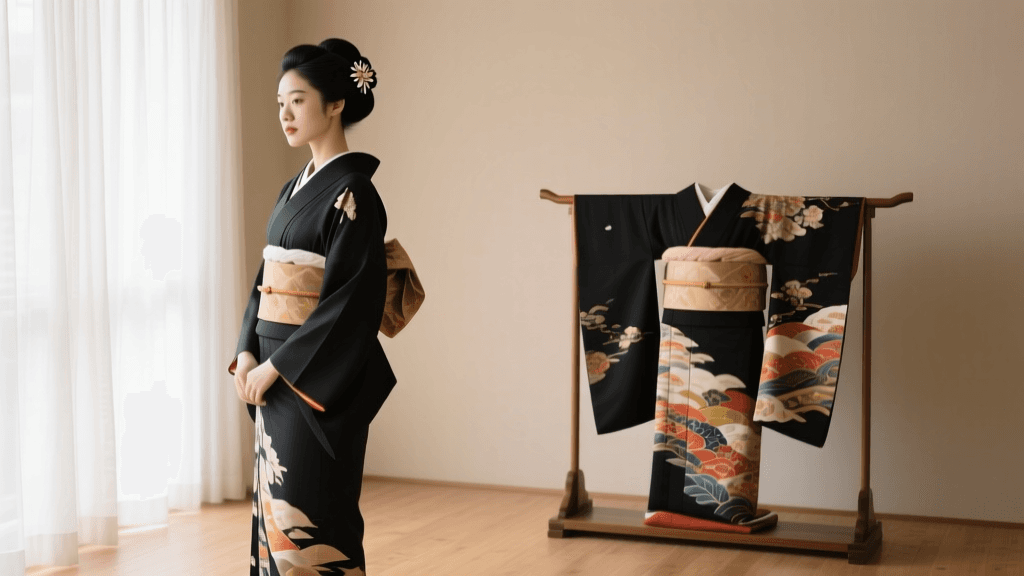
The Kurotomesode (black color with short sleeves) is the most formal kimono reserved exclusively for married women. It is the sartorial equivalent of a Western evening gown or a highly formal morning suit. The defining characteristics of the Kurotomesode include a solid black silk base, adorned with one to five family crests (kamon) dyed in white. The patterns, known as suso-moyo, are strictly confined to the lower half of the garment below the waist, often featuring exquisite gold and silver leaf embroidery, yuzen dyeing, and intricate weaving.
In 2026, the Kurotomesode is predominantly worn by the mother of the bride or groom at traditional Shinto weddings, as well as by high-ranking female relatives at imperial or state functions. A modern trend this year sees a surge in demand for restored Meiji and Taisho-era antique Kurotomesode, prized for their historical weaving techniques that are no longer practiced in the Nishijin district. When styling a Kurotomesode, a heavy, ornately woven Maru Obi or Fukuro Obi featuring auspicious motifs like cranes, pine trees, or gold clouds is mandatory.
Furisode: The Vibrant Canvas of Unmarried Women
Translated as 'swinging sleeves,' the Furisode is the most formal kimono for unmarried women. Its most striking feature is its exceptionally long sleeves, which historically served to ward off evil spirits and, more romantically, to signal availability to suitors. The sleeves are categorized by length: Oh-furisode (over 114 cm), Chu-furisode (around 100 cm), and Ko-furisode (around 75 cm). The garment is typically covered in vibrant, continuous patterns that span across the seams, utilizing the eba-moyo technique.
The Furisode is the standard attire for Seijin no Hi (Coming of Age Day), university graduation ceremonies, and formal weddings where the wearer is a guest or an unmarried sister of the bride. In 2026, Coming of Age fashion has seen a massive pivot toward 'neo-vintage' styling. Young women are pairing bold, high-contrast vintage Furisode from the 1980s and 1990s with modern, 3D-printed obidome (obi clasps) and contemporary lace han-eri (collar covers). This fusion of eras highlights the adaptability of the garment while maintaining its formal integrity.
Houmongi: The Versatile Visiting Kimono
The Houmongi (visiting wear) bridges the gap between strict ceremonial wear and high-end social attire. Unlike the Kurotomesode, the Houmongi can be worn by both married and unmarried women, making it the most versatile formal garment in a modern wardrobe. The defining feature of the Houmongi is the eba-moyo pattern—a continuous, unbroken design that flows seamlessly across the shoulders, sleeves, and hem, crossing the garment's seams as if it were a single painted canvas.
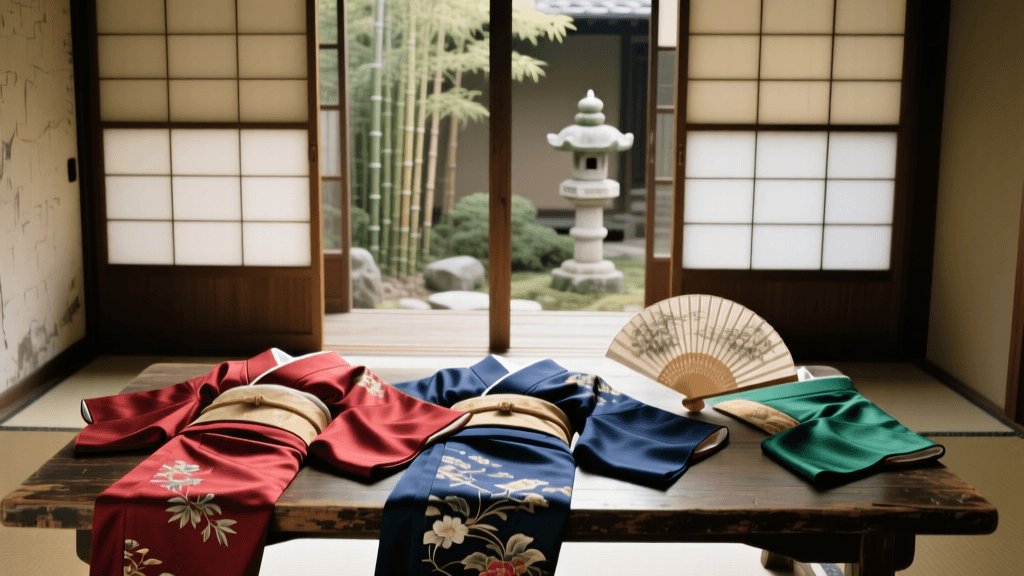
Houmongi are appropriate for a wide array of upscale events in 2026, including gallery openings, formal tea ceremonies, award banquets, and entering high-end traditional ryokan. The color palette for Houmongi has expanded significantly in recent years; while traditional pastels and seasonal motifs remain popular, deep jewel tones like emerald green, sapphire blue, and amethyst are highly sought after for winter and evening events. A Houmongi typically features one to three crests, though uncrested versions are increasingly accepted for semi-formal social gatherings.
Iromuji: Subtle Elegance for the Tea Ceremony
For events that demand profound respect and subdued elegance, the Iromuji is the garment of choice. The Iromuji is a solid-colored kimono, dyed in a single hue, devoid of any woven or dyed patterns on the fabric itself. The formality of the Iromuji is dictated entirely by the number of crests it bears. A five-crest Iromuji is considered equivalent in formality to a Houmongi, while a one-crest Iromuji is perfect for attending a formal tea ceremony or a traditional theater performance like Kabuki or Noh.
In 2026, the Iromuji is celebrated for its minimalist aesthetic, aligning perfectly with the modern global appreciation for quiet luxury and mindful consumption. Because the fabric lacks patterns, the texture of the silk becomes the focal point. Artisans are currently reviving heritage weaves, such as the highly prized Yuki-tsumugi silk, recognized on the UNESCO Intangible Cultural Heritage list for its unique hand-spun silk floss technique. Pairing an Iromuji with a subtly textured Nagoya Obi allows the wearer to project sophistication without overpowering the serene environment of a tea room.
2026 Market Trends: Bespoke, Vintage, and Rental
The acquisition of formal kimono in 2026 reflects a diverse market catering to different budgets, timelines, and sustainability preferences. The traditional route of commissioning a bespoke garment from a kimono dealer remains the gold standard for bridal trousseaus, but the vintage and rental markets have exploded in sophistication and quality.
| Acquisition Method | Average Cost (2026) | Lead Time | Best For |
|---|---|---|---|
| Bespoke (New Silk & Tailoring) | ¥800,000 - ¥3,000,000+ | 6 to 12 months | Brides, generational heirlooms, diplomats |
| Curated Vintage (Antique Shops) | ¥150,000 - ¥600,000 | Immediate | Collectors, eco-conscious fashion enthusiasts |
| Premium Rental (Full Dressing Service) | ¥40,000 - ¥120,000 | 2 to 4 weeks booking | Tourists, one-off gala attendees, students |
According to industry insights documented by institutions like the Victoria and Albert Museum's Kimono Collection, the historical preservation of these garments is increasingly intertwined with modern sustainable fashion movements. Vintage kimono recycling shops in Tokyo's Meguro and Kyoto's Higashiyama districts now offer professional restoration, re-dyeing, and modern resizing services, allowing garments from the 1950s and 60s to fit contemporary body types perfectly.
Essential Accessories for the Formal Ensemble
A formal kimono is never worn alone; it is the anchor of a complex, multi-layered ensemble. In 2026, mastering the accessories is just as critical as selecting the garment itself.
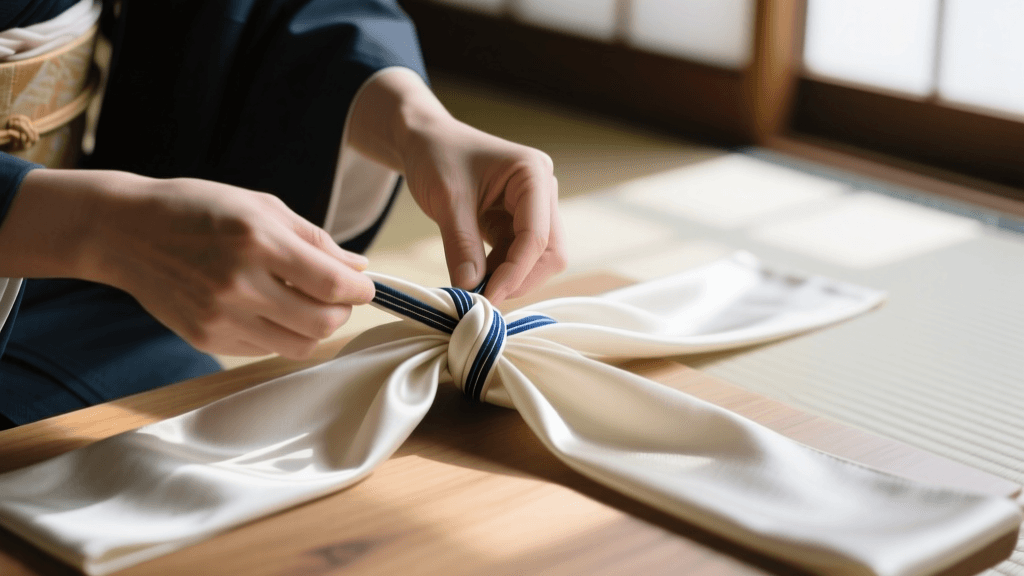
- Obi: The sash that secures the kimono. For formal wear, a Fukuro Obi (brocade sash) is standard. The tying style (musubi) must also reflect the formality of the event; the Niju-daiko (double drum) knot is standard for married women, while the Fukura-suzume (sparrow) knot is popular for Furisode.
- Obiage & Obijime: The Obiage is a silk scarf tied above the obi, while the Obijime is a braided cord tied over the center of the obi. For formal events, these must feature auspicious colors like gold, silver, or deep red, and the Obijime should include a decorative Obidome clasp.
- Nagajuban: The under-kimono. For formal wear, a pristine white or subtle pastel silk Nagajuban is required, topped with a crisp, detachable Han-eri (collar) that features delicate embroidery.
- Tabi & Zori: White split-toe Tabi socks are non-negotiable for formal events. They are paired with Zori sandals featuring brocade or vinyl-covered cork soles, elevated slightly to keep the kimono hem clean.
Kimoto Care and Preservation in the Modern Era
Owning a formal silk kimono requires a commitment to meticulous care. The traditional method of washing a kimono, known as Arai-hari, involves unsewing the garment into flat panels, washing the silk, stretching it on bamboo frames to dry and realign the fibers, and then re-sewing it. While this service is still available in 2026 from master artisans in Kanazawa and Kyoto, it is expensive and time-consuming.
For routine maintenance, modern dry-cleaning services specializing in silk are widely used. However, the most critical aspect of kimono preservation is storage. Garments must be folded precisely along their seams using acid-free tatou-shi paper and stored in tatou-bukuro (breathable cotton covers) inside drawers made of Paulownia wood (kiri). Paulownia wood naturally regulates humidity and repels insects, making it the ultimate storage solution for preserving heirloom silks for future generations.
'The kimono is not merely clothing; it is an architecture of silk that shapes the body, dictates movement, and connects the wearer to centuries of aesthetic philosophy.' — Traditional Arts Institute of Kyoto, 2026 Symposium on Garment Heritage.
Conclusion: Embracing the Formal Kimono Today
Whether you are investing in a bespoke Kurotomesode, renting a vibrant Furisode for a coming-of-age celebration, or carefully selecting a Houmongi for an evening cultural event, the formal Japanese kimono offers an unparalleled depth of beauty and tradition. In 2026, the boundaries of how we engage with these garments are expanding, allowing for sustainable vintage adoption and modern styling innovations. By respecting the foundational rules of TPO and understanding the distinct characteristics of each garment type, you can navigate the world of formal Japanese dress with confidence, grace, and profound cultural appreciation.