Top Hanbok Sewing Workshops 2026: Master Traditional Techniques
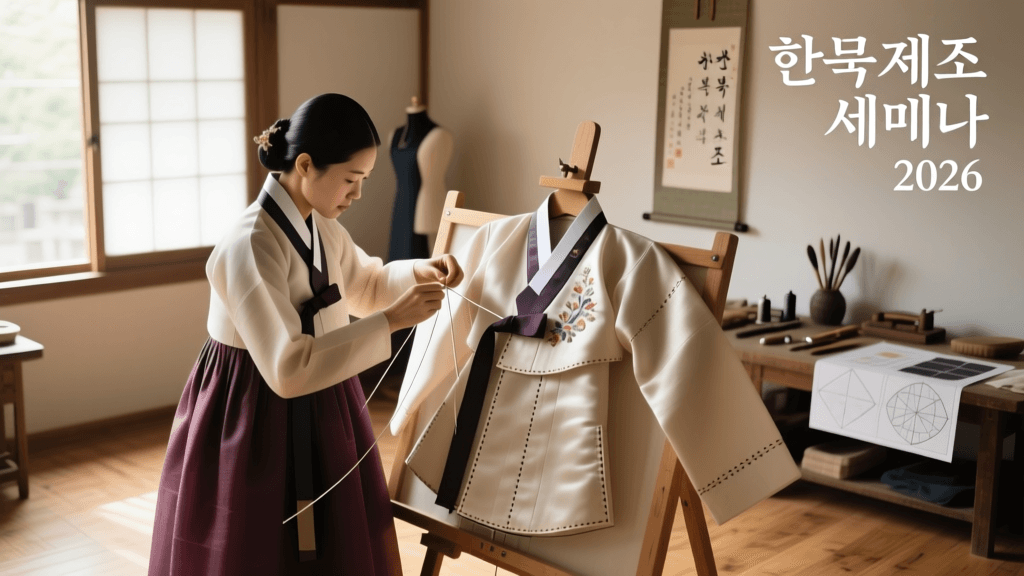
The Resurgence of Traditional Chimseon in 2026
In 2026, the global slow fashion movement has sparked an unprecedented renaissance in traditional Asian garment making. Among the most highly sought-after skills is Chimseon, the traditional Korean art of needlework and Hanbok construction. Unlike Western tailoring, which relies heavily on complex darts and curved seams to mold fabric to the body, traditional Hanbok construction utilizes straight lines, geometric patterning, and strategic gathering to create a silhouette that is both forgiving and profoundly elegant. For textile enthusiasts, fashion students, and cultural preservationists, learning these techniques offers a masterclass in sustainable, zero-waste garment creation.
According to the National Folk Museum of Korea, there has been a 40% increase in international enrollment for traditional textile seminars over the past two years. This surge is driven by a desire to understand the philosophical underpinnings of Asian dress, where the garment is not merely a covering, but a reflection of harmony, nature, and social philosophy. Whether you are looking to construct your first Jeogori (traditional jacket) or master the delicate handling of Mosi (ramie fabric), 2026 offers a diverse array of workshops tailored to every skill level.
In-Person vs. Virtual Hanbok Sewing Seminars
When selecting a Hanbok making seminar in 2026, the first decision is choosing between in-person intensives and virtual masterclasses. In-person workshops, primarily located in Seoul and Jeonju, offer the irreplaceable tactile experience of handling heritage fabrics under the watchful eye of a master artisan. You receive immediate feedback on your Banchim (hand-sewing stitches) and learn the physical rhythm of traditional ironing and pleating.
Conversely, virtual seminars have evolved dramatically. Utilizing multi-angle macro cameras, online instructors can now demonstrate the exact tension required for a Sullimjil (blind stitch) or the precise folding of a Dongjeong (white collar). Virtual classes also provide the advantage of lifetime access to digital pattern drafting libraries, allowing students to pause and re-watch complex geometric drafting sequences.
Top 3 Hanbok Construction Workshops for 2026
Based on curriculum depth, instructor pedigree, and student outcomes, here are the premier Hanbok sewing workshops available this year.
1. Seoul Immersive Chimseon Intensive (In-Person)
Hosted in the historic Bukchon Hanok Village, this four-week intensive is designed for intermediate sewists who want to master the authentic construction of the women's Jeogori and Chima (skirt). Students learn to draft patterns using the traditional Korean measuring system, cut fabric with specialized shears, and execute the invisible hemming techniques that define high-end Hanbok. The course culminates in a professional photoshoot of your finished garments. Cost: 1,450,000 KRW (approx. $1,050 USD). Duration: 4 weeks (120 hours).
2. Global Virtual Hanbok Masterclass: The Architecture of the Jeogori (Online)
For those unable to travel to South Korea, this 8-week virtual seminar breaks down the structural engineering of the Jeogori. The curriculum focuses heavily on the Git (collar band) and the Goreum (traditional ties), which are notoriously difficult to perfect. The course includes a mailed toolkit containing pre-cut practice muslin, traditional Korean thimbles (Dangkol), and authentic silk threads. Cost: $485 USD. Duration: 8 weeks (self-paced with weekly live Q&A).
3. Weekend Ramie (Mosi) Weaving & Sewing Retreat (Hybrid)
Held in Hansan, the historical epicenter of Korean ramie production, this hybrid seminar begins with three weeks of online theory regarding fiber preparation and loom weaving, followed by a three-day in-person retreat. Participants learn how to weave, bleach, and sew Mosi, a fabric prized for its translucent quality and breathability. Working with Mosi requires specialized fraying-prevention techniques that are exclusively taught in this masterclass supported by the Korea Craft & Design Foundation. Cost: $850 USD (excluding travel). Duration: 3 weeks online + 3 days on-site.
Workshop Comparison Chart
| Workshop Name | Format | Duration | Cost (USD) | Primary Focus | Skill Level |
|---|---|---|---|---|---|
| Seoul Immersive Chimseon | In-Person | 4 Weeks | $1,050 | Full Jeogori & Chima construction | Intermediate |
| Global Virtual Masterclass | Online | 8 Weeks | $485 | Jeogori architecture & Goreum ties | Beginner to Intermediate |
| Hansan Mosi Retreat | Hybrid | 3 Wks + 3 Days | $850 | Ramie weaving & specialized sewing | Advanced |
Essential Tools and Traditional Measurements
To succeed in any 2026 Hanbok seminar, you must familiarize yourself with the traditional tools and measurement systems. Western inches and centimeters are rarely used in authentic Chimseon. Instead, artisans rely on the Chok (척) and Chi (촌).
- The Chok (척): The primary unit of measurement, equivalent to approximately 30.3 centimeters. Pattern drafting is done in fractions of a Chok to maintain the traditional proportions of the Joseon-era silhouette.
- The Chi (촌): One-tenth of a Chok, measuring roughly 3.03 centimeters. This is used for micro-adjustments, particularly when setting the Git (collar) and calculating the ease of the Moo (underarm gusset).
- Baneul (바늘): Traditional Korean needles. Unlike Western sharps, Baneul are often slightly thicker and feature a longer eye to accommodate heavily twisted silk threads.
- Dangkol (당골): A traditional thimble worn on the middle finger, usually made of brass or silver, designed to push the needle through densely woven fabrics like Myeonju (cotton) without slipping.
- Chokja (척자): The traditional wooden ruler, often marked only in Chok and Chi, forcing the artisan to internalize the proportional mathematics of the garment.
Core Curriculum: Constructing the Jeogori
Regardless of the seminar you choose, the foundational curriculum will revolve around the Jeogori. Understanding the anatomy of this garment is crucial before you make your first stitch.
- Drafting the Gil (길): The Gil comprises the front and back body panels. Unlike Western bodices, the Gil is cut largely on the straight grain, relying on the natural drape of the fabric and the width of the panels to accommodate the body.
- Attaching the Somae (소매): The sleeves are attached via a straight seam. The hallmark of the Hanbok sleeve is the Baerae (배래), the curved underarm seam that mimics the shape of a roof eave, providing exceptional mobility and a beautiful volumetric drape when the arms are raised.
- Setting the Git (깃) and Dongjeong (동정): The Git is the fabric collar band that wraps around the neck. The Dongjeong is a removable, stiffened white paper or fabric strip inserted into the Git. Achieving a crisp, flawless Dongjeong is considered the ultimate test of a Hanbok maker's precision.
- Tying the Goreum (고름): The Goreum are the long, flowing ties that fasten the jacket. Sewing them requires a specific internal slip-stitch so that no thread is visible on the exterior, ensuring a clean, continuous line of color.
"The secret to a beautiful Hanbok does not lie in the sewing machine, but in the basting thread. If your temporary basting is flawless, your final silk stitches will follow naturally. Never rush the preparation." — Master Artisan Kim, Seoul Chimseon Intensive Instructor.
Sourcing Authentic Fabrics in 2026
A major component of the modern workshop experience is learning how to source authentic materials. In 2026, the supply chain for heritage textiles is more accessible than ever, though it requires knowing which mills to trust. For practice garments, seminars recommend purchasing Myeonju (traditional cotton) from the Dongdaemun textile markets or their verified online portals. Myeonju behaves similarly to silk but is forgiving and machine-washable, making it ideal for mastering the complex collar constructions.
For advanced students moving onto Sa (silk gauze) or Mosi (ramie), direct purchasing from regional agricultural cooperatives in South Korea is now facilitated by global shipping networks integrated into the workshop portals. When buying Mosi, always look for the Hansan geographic indication certification to ensure you are receiving authentic, hand-woven ramie rather than mass-produced linen blends.
How to Choose the Right Seminar
When selecting your 2026 workshop, assess your end goal. If you are a fashion design student looking to integrate Asian zero-waste patterning into your contemporary portfolio, the Global Virtual Masterclass offers the best theoretical foundation and digital pattern libraries. If you are a dedicated hobbyist or cultural historian seeking the meditative, tactile experience of hand-sewing a museum-quality replica, the Seoul Immersive Chimseon Intensive is unparalleled. Finally, for textile nerds fascinated by the journey from raw plant fiber to finished garment, the Hansan Mosi Retreat provides a holistic understanding of material science and traditional craftsmanship.
Conclusion
Learning traditional Hanbok construction is more than acquiring a sewing skill; it is an immersion into a centuries-old philosophy of space, form, and respect for materials. The workshops and seminars available in 2026 provide unprecedented access to master artisans who are dedicated to keeping Chimseon alive in the modern era. By investing the time to understand the Chok measurements, the geometry of the Baerae sleeve, and the discipline of the blind stitch, you join a global community of makers preserving the rich sartorial heritage of the Asian continent. Prepare your thimble, thread your Baneul, and step into the timeless world of traditional Korean tailoring.