Top Hanfu Styles for Tai Chi and Qigong Wellness in 2026
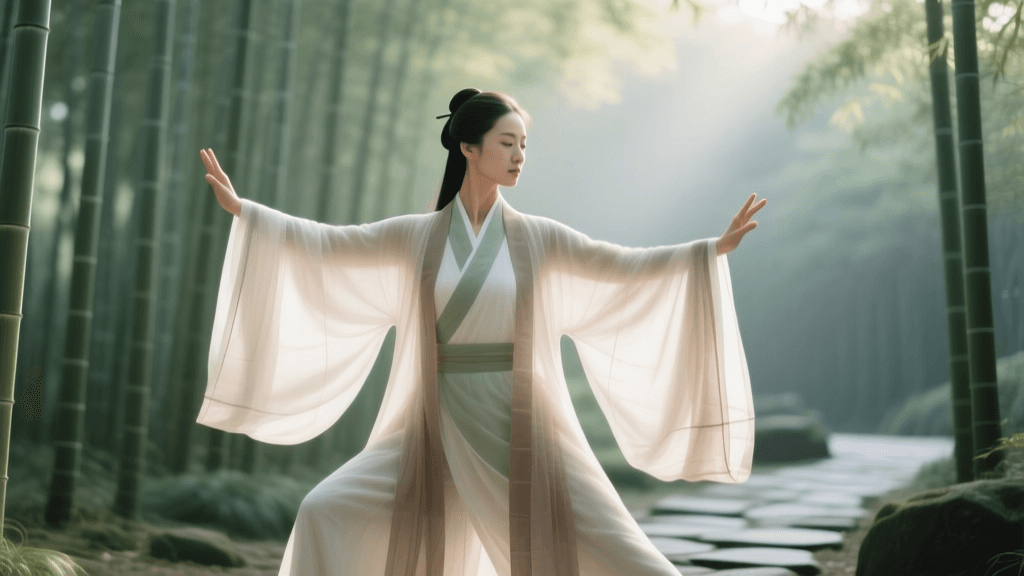
The Intersection of Hanfu and Internal Martial Arts
As we navigate the wellness trends of 2026, the Xin Zhongshi (New Chinese Style) movement has matured far beyond mere aesthetic fashion. Today, it deeply intersects with holistic health, specifically traditional Chinese wellness practices like Tai Chi and Qigong. Practitioners are increasingly recognizing that what you wear during internal martial arts and breathwork is not just a stylistic choice, but a functional tool that influences biomechanics, thermoregulation, and the flow of Qi (vital energy). According to the National Qigong Association, the physical environment and bodily comfort are foundational to achieving the deep meditative states required for effective Qigong practice.
In 2026, leading heritage brands and modern wellness labels have collaborated to produce "Wellness Hanfu" (养生汉服)—garments that honor historical silhouettes while utilizing advanced, breathable textiles. Whether you are practicing the slow, deliberate movements of Yang-style Tai Chi or the dynamic, grounding postures of the Ba Duan Jin (Eight Brocades), selecting the correct Hanfu silhouette is essential for unrestricted movement and meridian alignment.
Why Garment Drape and Fit Matter for Qi Flow
Traditional Chinese Medicine (TCM) emphasizes that clothing should never restrict the body's natural energy pathways, or meridians. Tight synthetic activewear, while popular in Western fitness, can compress the superficial fascia and restrict the micro-circulation necessary for the warming sensations often felt during deep Qigong sessions. The World Health Organization notes that traditional medicine practices rely heavily on the holistic integration of mind, body, and environment, which includes wearing garments that harmonize with the body's natural state.
Hanfu is inherently designed around the concept of "yielding" rather than "compressing." The flat-cutting technique (平面裁剪) of traditional Chinese garments means the fabric drapes naturally from the shoulders, creating a microclimate of air between the skin and the cloth. This allows for optimal thermoregulation during the sweating phases of intense Tai Chi forms, while the loose waistlines protect the Lower Dantian (the body's energetic center located below the navel) from constriction.
Top 3 Hanfu Silhouettes for Tai Chi and Qigong
Not all Hanfu is created equal when it comes to physical exertion. Highly formal garments with floor-length sleeves are impractical for the mat or the park. Here are the top three historically accurate silhouettes adapted for 2026 wellness practices.
1. The Modified Daopao (Daoist Robe) for Stillness and Qigong
The Daopao (道袍) is a classic Ming Dynasty scholar and Daoist robe characterized by its wide sleeves and side slits. For Qigong practitioners, the 2026 "Wellness Daopao" features slightly narrowed sleeves (Zhai Xiu) to prevent the fabric from dragging on the ground during forward folds. The defining feature of the Daopao is the an bai (暗摆), or hidden inner swing. This intricate pleating at the side seams allows the practitioner to drop into deep Ma Bu (Horse Stance) or Pu Bu (Crouch Stance) without the hemline pulling tight across the knees. The generous drape promotes a feeling of being "rooted" to the earth, a core psychological cue in standing meditation (Zhan Zhuang).
2. The Yesa (Martial Tunic) for Dynamic Chen Tai Chi
For practitioners of Chen-style Tai Chi, which incorporates explosive energy releases (Fa Jin), stomping, and rapid directional changes, the Yesa (曳撒) is the ultimate garment. Originally a Yuan and Ming dynasty martial tunic, the Yesa features a fitted upper bodice that crosses at the waist, with a heavily pleated lower skirt. In 2026, wellness-focused Yesa designs utilize stretch-woven silk-linen blends. The pleated skirt provides the same freedom of movement as the Daopao but with less excess fabric to catch the wind or obscure the instructor's view of your knee alignment. The waist tie sits perfectly at the natural waist, securing the garment during spins and jumps without compressing the abdomen.
3. The Song-Style Beizi for Breathwork and Layering
The Beizi (褙子) is an open-front, straight-collared jacket that became wildly popular during the Song Dynasty. For modern wellness, it serves as the perfect layering piece for outdoor Tai Chi in transitional weather. Worn over a simple cross-collar inner shirt (Zhongyi), the Beizi allows for complete, unencumbered rotation of the shoulder girdle. This is crucial for practices like the "Drawing the Bow" movement in the Ba Duan Jin, where scapular retraction and chest expansion are paramount. The open front also allows for easy ventilation, preventing the overheating that can disrupt the parasympathetic nervous system's relaxation response.
2026 Fabric Innovations: Xiangyunsha and Bamboo-Silk
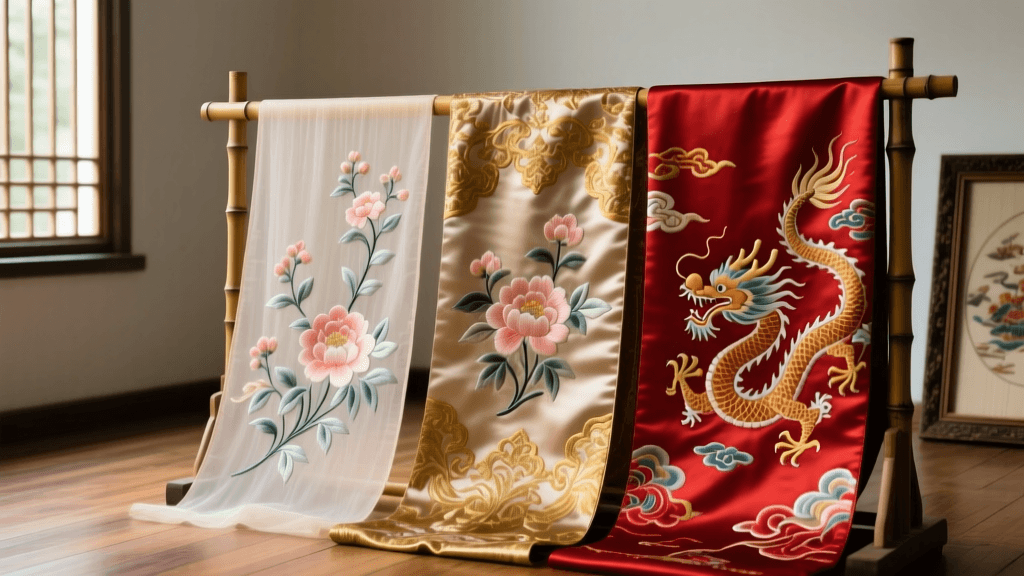
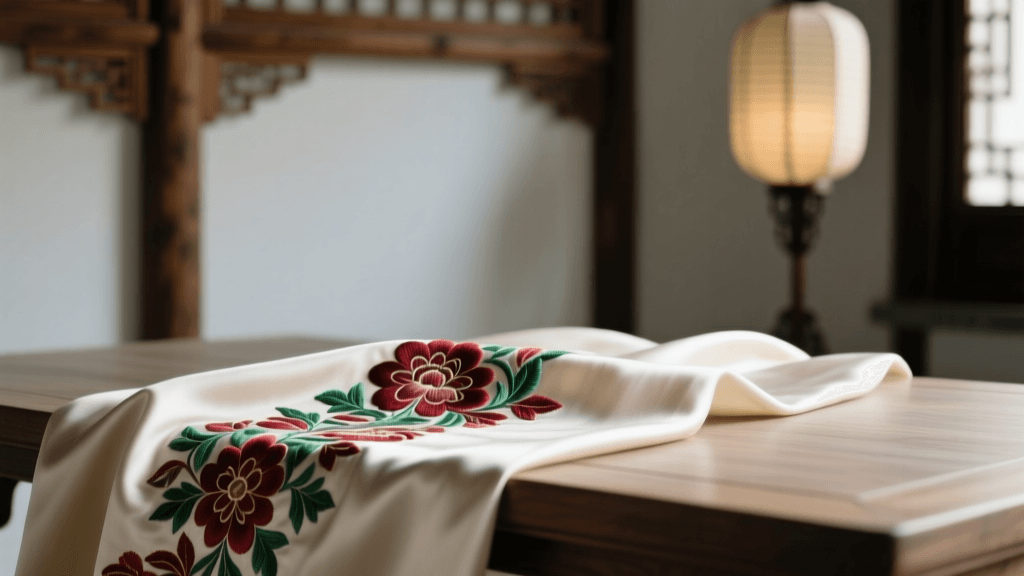
The textile landscape for traditional garments has seen remarkable innovations in 2026, specifically catering to the wellness demographic. The most highly sought-after fabric for summer Qigong is authentic Xiangyunsha (Gambiered Guangdong Silk). Dyed with the juice of the Dioscorea cirrhosa* plant and coated in iron-rich river mud, Xiangyunsha is naturally antimicrobial, incredibly lightweight, and produces a soothing, cooling sensation against the skin. While premium Xiangyunsha commands a higher price point (often exceeding $300 USD per yard in 2026), its durability and skin-nourishing properties make it a favorite among serious practitioners.
For those seeking more accessible options, 2026 has seen the mass adoption of Cupro-Bamboo and Silk-Linen blends in Xin Zhongshi wellness lines. These fabrics offer the elegant, fluid drape of traditional mulberry silk but with the moisture-wicking and structural resilience required for daily, high-movement practice.
Comparison Chart: Matching Hanfu to Your Practice
| Hanfu Silhouette | Best Practice Style | Key Functional Feature | Recommended 2026 Fabric |
|---|---|---|---|
| Daopao (Daoist Robe) | Zhan Zhuang (Standing Meditation), Slow Qigong | Hidden side-swings (An Bai) for deep stances | Heavyweight Linen or Xiangyunsha |
| Yesa (Martial Tunic) | Chen Tai Chi, Wushu, Dynamic Forms | Pleated skirt, secure waist, tapered cuffs | Stretch Silk-Linen Blend |
| Beizi (Open Jacket) | Ba Duan Jin, Outdoor Breathwork, Layering | Open front for shoulder mobility and ventilation | Cupro-Bamboo or Lightweight Cotton |
Sizing, Fit, and Meridian Alignment
When ordering a Hanfu for Tai Chi in 2026, standard fashion sizing rules do not apply. The relationship between the garment and the body's energy centers must be considered. First, pay close attention to the waistband or sash. In TCM, the Dai Mai (Belt Meridian) wraps horizontally around the waist. A rigid or overly tight belt can block the flow of Qi between the upper and lower body. Always opt for wide, soft cotton or silk sashes, and tie them two finger-widths below the navel to support, rather than compress, the Lower Dantian.
Sleeve length is another critical factor. While ceremonial Hanfu features sleeves that extend well past the fingertips, wellness Hanfu should utilize the Shou Xiu (tapered sleeve) or standard narrow sleeve. If you prefer the aesthetic of wider sleeves for the "flowing water" visual effect during forms, invest in a pair of Panbo (襻膊)—traditional woven sleeve ties. In 2026, Panbo have become a highly popular wellness accessory, allowing practitioners to elegantly hoist and secure their wide sleeves above the elbows before beginning their practice, combining historical authenticity with modern practicality.
Conclusion
The integration of Hanfu into Tai Chi and Qigong is more than a nod to cultural heritage; it is a profound enhancement of the mind-body connection. By choosing silhouettes that respect human biomechanics and fabrics that breathe with the skin, practitioners can deepen their focus and improve their physical alignment. As the Harvard Health Publishing institute frequently highlights, the meditative and physical benefits of Tai Chi are maximized when the practitioner is entirely comfortable and free from physical distraction. In 2026, the Xin Zhongshi wellness movement provides the perfect sartorial bridge between ancient wisdom and modern holistic health.