Mastering Chinese Embroidery: Su, Shu, and Cantonese Techniques
The Big Three: Understanding China's Embroidery Heritage
Chinese embroidery is a cornerstone of Asian textile history, representing centuries of cultural evolution, regional aesthetics, and unparalleled technical mastery. While China is famous for its "Four Great Embroideries" (Su, Shu, Xiang, and Yue), the techniques from Suzhou (Su), Sichuan (Shu), and the Cantonese region (Yue/Guang) offer the most striking contrasts in texture, color, and application. According to the Metropolitan Museum of Art's Heilbrunn Timeline of Art History, silk production and embroidery in China date back thousands of years, evolving from functional garment reinforcement to high art. The cultural significance of these crafts is globally recognized; in fact, UNESCO inscribed Sericulture and silk craftsmanship in China on the Representative List of the Intangible Cultural Heritage of Humanity to protect these vital traditions.
For modern hanfu enthusiasts, textile artists, and fashion designers, understanding the distinct differences between Su, Shu, and Cantonese embroidery is essential for authentic garment creation and restoration. This guide breaks down the technical specifications, material requirements, and actionable steps to master these regional styles.
Su Embroidery (Suzhou): The Art of Photorealistic Silk
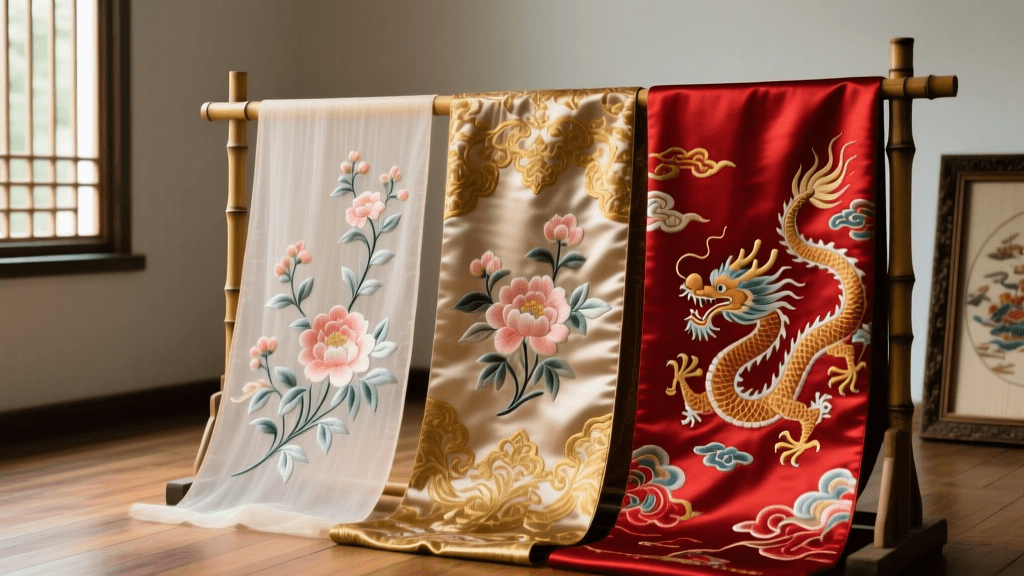
Originating from the Jiangsu province, Su embroidery (Su Xiu) is celebrated for its delicate, photorealistic quality. The hallmark of Su embroidery is its meticulous thread splitting and flat, even stitches that completely conceal the needlework's mechanics.
Technical Specifications
- Base Fabric: 16 to 19 momme silk organza, lightweight silk satin, or fine cotton.
- Thread: 100% mulberry silk floss. The defining technique is "thread splitting" (pi si), where a single 2mm thread is divided into 2, 4, 8, 16, 32, and sometimes up to 64 micro-strands.
- Signature Stitch: Pingxiu (flat stitch) for smooth gradients and Luanxiu (needle-painting stitch) for blending colors seamlessly without visible lines.
Su embroidery is ideal for delicate hanfu accessories, such as round fans (tuanshan), lightweight summer bishou (cloud shoulders), and subtle collar trims. Because the stitches are so fine, the fabric must be held under high tension in a wooden slate frame rather than a standard embroidery hoop to prevent puckering.
Shu Embroidery (Sichuan): Bold Colors and Textured Satin
Shu embroidery (Shu Xiu) from the Sichuan province is characterized by its vibrant colors, bold motifs, and rich, textured feel. Historically used to decorate heavy winter garments, official robes, and theatrical costumes, Shu embroidery embraces a more three-dimensional aesthetic than its Suzhou counterpart.
Technical Specifications
- Base Fabric: Heavy silk satin (22-30 momme), velvet, or tightly woven brocade.
- Thread: Thicker, tightly twisted silk threads that resist fraying and provide a raised, tactile surface.
- Signature Stitch: Yunzhen (halo stitch) and Chebian (car and horse stitch). The halo stitch uses concentric layers of varying thread thicknesses to create a glowing, three-dimensional gradient, often used for animal fur (especially tigers) and floral petals.
The historical trade routes that connected Sichuan to the rest of the world helped spread these vibrant techniques far and wide, as documented by the British Library's comprehensive Silk Road archives. Today, Shu embroidery is perfect for heavy winter cloaks (doupeng), structured jackets (bijia), and dramatic martial arts practice wear.
Cantonese Embroidery (Yue/Guang): Vibrant Gold and Drama
Cantonese embroidery (Guangxiu or Yuexiu) hails from the Guangdong region. Influenced by its status as a historic maritime trade hub, Cantonese embroidery is opulent, dramatic, and heavily reliant on metallic threads and high-contrast colors.
Technical Specifications
- Base Fabric: Heavy silk, velvet, or dark-colored satin (often red, black, or deep blue) to make metallic threads pop.
- Thread: Kou gold and silver threads (silk cores wrapped in metallic foil or paper), alongside brightly dyed silk floss.
- Signature Stitch: Panjin (gold couching). The metallic thread is laid on the surface of the fabric and stitched down with fine red or yellow silk thread in geometric or scale-like patterns. Another key stitch is the "peacock feather" stitch, using actual spun peacock feather filaments wrapped around silk cores.
Cantonese embroidery is the premier choice for ceremonial garments, traditional Chinese wedding dresses (qun kwa), and festival costumes. The heavy use of gold thread adds significant weight and stiffness to the garment, requiring structured tailoring.
Comparison Chart: Su vs. Shu vs. Cantonese
| Feature | Su (Suzhou) | Shu (Sichuan) | Cantonese (Yue/Guang) |
|---|---|---|---|
| Primary Aesthetic | Delicate, photorealistic, subtle | Bold, textured, vibrant | Opulent, metallic, high-contrast |
| Base Fabric | 16-19m Silk Organza, Light Satin | 22-30m Silk Satin, Velvet | Heavy Satin, Velvet, Dark Silks |
| Thread Type | Micro-split mulberry silk floss | Thick, tightly twisted silk | Gold/Silver couching thread, Peacock feather |
| Signature Motif | Koi fish, peonies, cats, landscapes | Tigers, pandas, lotus, bamboo | Dragons, phoenixes, lychee, peacocks |
| Garment Application | Summer hanfu, fans, light collars | Winter cloaks, jackets, theatrical wear | Wedding jackets, ceremonial robes, festival wear |
| Material Cost (Est.) | $25-$40 (High-quality split silk) | $20-$35 (Twisted silk & heavy satin) | $50-$80 (Authentic gold couching thread) |
Actionable Guide: Starting Your First Traditional Piece
If you are transitioning from modern cross-stitch or basic embroidery to traditional Chinese techniques, start with a Su-style floral motif. It teaches the fundamental skill of thread manipulation without the immediate frustration of managing heavy metallic threads.
Step 1: Sourcing Materials
- Fabric: Purchase half a yard of 16 momme silk organza (approx. $15-$20). Pre-wash it gently in cool water with a pH-neutral silk detergent to remove sizing.
- Thread: Avoid standard cotton embroidery floss. Source authentic Chinese silk floss (brands like Xianhe or custom dyed artisan skeins from specialty online shops, approx. $12 for a 20-color starter kit).
- Needles: Use size 9 or 10 crewel needles with a sharp point and a small eye to prevent snagging the silk organza.
Step 2: Thread Splitting and Preparation
Do not use the thread straight from the skein. A standard strand of Chinese silk floss is composed of multiple micro-filaments. For a beginner petal, gently peel the strand into two halves. For advanced shading, you will split it into quarters. Always stroke the thread with your thumb and forefinger to align the filaments before threading the needle.
Step 3: Executing the Flat Stitch (Pingxiu)
- Mount your silk organza tightly in a 20cm wooden embroidery hoop or a traditional slate frame. The fabric should sound like a drum when tapped.
- Outline your petal shape using a water-soluble fabric pen.
- Begin at the base of the petal. Bring the needle up, and lay the thread flat across the shape. Take the needle down exactly on the outline.
- For the next stitch, bring the needle up a fraction of a millimeter away from the first stitch. The goal is zero visible gap between threads, creating a solid block of color that mimics painting.
Preserving and Caring for Embroidered Garments
Traditional Chinese embroidery requires specific care to maintain its structural integrity and color vibrancy. Never machine wash embroidered silk garments. The agitation will cause the silk floss to fray and the heavy metallic threads in Cantonese pieces to tarnish or snap.
- Cleaning: Spot clean with distilled water and a microfiber cloth. For full cleaning, consult a textile conservator or a dry cleaner specializing in heritage garments.
- Storage: Store embroidered hanfu and robes flat in acid-free tissue paper. Never hang heavily embroidered Cantonese or Shu garments on standard hangers; the weight of the gold thread and thick satin will distort the fabric's warp and weft over time.
- Light Exposure: Keep dyed silk floss away from direct sunlight, as traditional plant-based and early synthetic dyes are highly susceptible to UV fading.
By mastering the distinct regional techniques of Su, Shu, and Cantonese embroidery, artisans and designers can create garments that are not only visually stunning but deeply rooted in the rich tapestry of Asian cultural heritage.