Hanbok & Cheongsam in 2026 Global Fashion Media: Editorial Styling
The 2026 Shift: From Exoticism to Authentic Sartorial Power
As we navigate the Spring/Summer and Fall/Winter 2026 fashion cycles, a profound transformation has taken root within the pages of global fashion media. The representation of Asian traditional garments—specifically the Korean hanbok and the Chinese cheongsam (qipao)—has evolved dramatically. No longer relegated to thematic costume spreads or exoticized red-carpet moments, these garments are now being treated with the rigorous sartorial respect they deserve. Top-tier publications like Vogue, Harper's Bazaar, and Elle are collaborating directly with heritage artisans and contemporary Asian designers to showcase these garments as living, breathing elements of the 2026 global wardrobe.
According to industry analyses tracked by the Business of Fashion Global Markets, the demand for authentic, non-appropriative traditional Asian fashion has surged by over 40% since 2024, driven by a new generation of consumers who value cultural provenance and artisanal craftsmanship. This shift is deeply reflected in how fashion editors are styling these pieces today. Instead of altering the fundamental architecture of the garments to fit Western silhouettes, 2026 editorials are leaning into the unique structural elements of the hanbok and cheongsam, using them as the focal point of avant-garde and everyday luxury styling.
For enthusiasts and collectors of Asian traditions, understanding how global fashion media is interpreting these garments in 2026 offers a masterclass in modern styling. By deconstructing these high-fashion editorial spreads, we can extract actionable, wearable techniques that honor the cultural integrity of the garments while seamlessly integrating them into a contemporary, global lifestyle.
Deconstructing the 2026 Neo-Hanbok Editorial Spreads
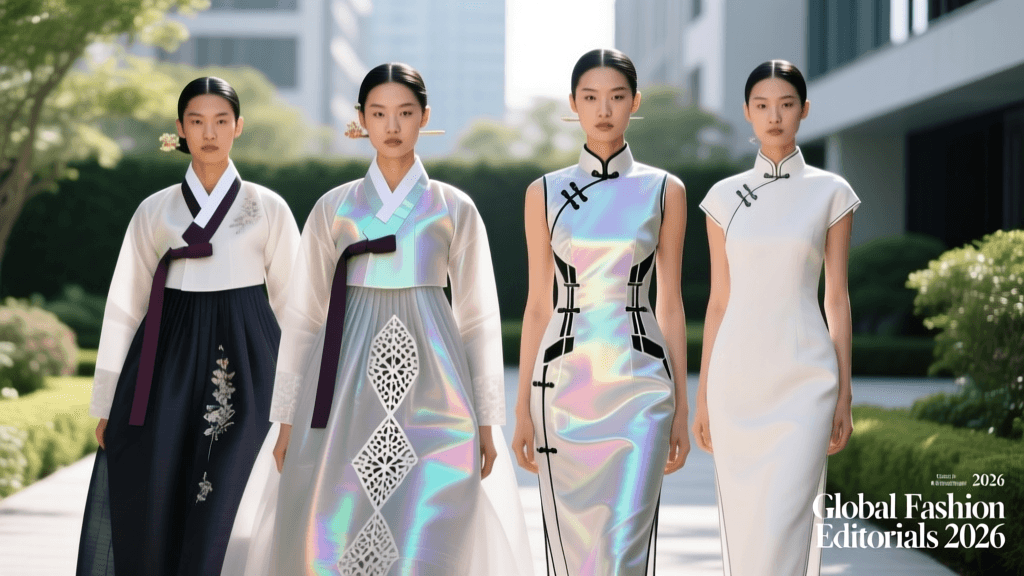
The hanbok, characterized by its vibrant colors, curved lines, and distinct division between the upper garment (jeogori) and the lower skirt (chima) or trousers (baji), has seen a massive editorial revival in 2026. Fashion directors are moving away from the heavily stylized, historically rigid reproductions of the past decade, favoring the fluid, architectural 'Neo-Hanbok' movement spearheaded by Seoul-based designers.
The Jeogori and Wide-Leg Trousers Silhouette
In the March 2026 issues of leading European fashion magazines, the traditional chima (wrap skirt) was frequently swapped for high-waisted, wide-leg baji (trousers) crafted from heavyweight matte silk and organic hemp blends. Editors are pairing cropped, structured jeogori jackets with these flowing trousers to create a silhouette that balances volume and restraint. The styling trick popularized in these spreads is the deliberate exposure of the midriff or the layering of a sheer, sustainable organza turtleneck beneath the jeogori. This layering technique not only provides warmth for transitional weather but also adds a textural depth that photographs beautifully in high-contrast editorial lighting.
Goreum Ties as Statement Hardware
Historically, the goreum (the long, flowing ribbons used to tie the jeogori) served a purely functional purpose. In 2026 fashion media, however, the goreum has been elevated to the status of statement hardware. Stylists are knotting them asymmetrically, weaving them through belt loops of tailored trousers, or allowing them to trail dramatically behind the model to mimic the movement of a cape. Some contemporary brands are even integrating subtle metallic threading into the goreum, catching the light and providing a modern, luxurious edge to the traditional silk ribbons.
The Modern Cheongsam: Structural Evolution in High Fashion
The cheongsam, renowned for its form-fitting silhouette, high mandarin collar, and intricate frog button closures (pankou), is experiencing a renaissance of structural experimentation in 2026. While the 1930s Shanghai silhouette remains a historical touchstone, modern fashion media is highlighting designers who are deconstructing and reimagining the garment for the modern, dynamic woman.
Asymmetry and Sustainable Silks
A prominent trend in 2026's Harper's Bazaar Asian fashion supplements is the asymmetric cheongsam. Designers are abandoning the traditional side-slits in favor of dramatic, diagonal hemlines that cascade from the mid-thigh to the ankle. This architectural shift allows for greater freedom of movement and creates a striking visual line when captured in motion by editorial photographers. Furthermore, there is a strict media emphasis on material sustainability. The Victoria and Albert Museum's Asian Collections have long documented the historical significance of silk in Chinese dress, and 2026's fashion media is echoing this reverence by exclusively featuring peace silk (ahimsa silk), recycled cupro, and plant-based velvet alternatives. Editors are noting that the slight, organic slubbing of peace silk adds a tactile, artisanal quality to the cheongsam that synthetic fabrics simply cannot replicate.
Oversized Fits and Streetwear Integration
Perhaps the most radical departure seen in 2026 global fashion media is the oversized, drop-shoulder cheongsam. By relaxing the traditional tailoring, designers are creating a garment that bridges the gap between high fashion and luxury streetwear. Editorials are styling these relaxed cheongsams over baggy denim or layered under oversized leather bomber jackets. The pankou knots are often scaled up to macro proportions, serving as bold, sculptural elements on the chest and shoulder, replacing traditional jewelry.
Actionable Guide: Adapting 2026 Runway & Editorial Looks
Translating high-fashion editorial concepts into a functional, everyday wardrobe requires a strategic approach. Below is a structured guide to adapting the most prominent 2026 Asian traditional garment trends for daily wear, complete with styling adjustments and current market pricing.
| Garment Element | 2026 Editorial Styling | Everyday Adaptation | Est. Cost (2026 USD) |
|---|---|---|---|
| Hanbok Jeogori (Jacket) | Cropped, sheer organza, layered over corsetry. | Pair a structured, opaque cotton-blend jeogori with high-waisted tailored trousers and a simple silk camisole. | $180 - $350 |
| Hanbok Goreum (Ties) | Trailing floor-length, metallic threading. | Opt for mid-length, matte silk ties. Tie in a clean, symmetrical bow at the chest, or wrap once around the waist as a subtle belt. | $40 - $90 |
| Cheongsam Silhouette | Asymmetrical hem, dramatic thigh-high slits. | Choose a midi-length cheongsam with a modest 4-inch side slit and an A-line skirt for office-appropriate comfort and mobility. | $250 - $600 |
| Cheongsam Pankou (Knots) | Macro-sculptural, oversized hardware. | Select traditional, hand-woven silk knots but limit them to the collar and diagonal chest closure for a clean, minimalist look. | $150 - $400 |
| Textile Choices | Heavyweight velvets, metallic brocades. | Invest in breathable peace silk, linen-cotton blends, or matte crepe for year-round versatility and ease of care. | $120 - $300 |
Sourcing Authentic 2026 Pieces: Brands to Watch
To replicate these editorial looks authentically, it is crucial to support brands that possess a deep understanding of traditional garment construction. In 2026, the market has matured, and consumers have access to an unprecedented array of authentic, high-quality options.
For the Neo-Hanbok, Seoul-based label Danha continues to dominate the global fashion conversation, offering exquisite, ready-to-wear jeogori that maintain traditional curved sleeve lines (baerae) while utilizing modern, durable textiles. Another exceptional brand is Kim Young Jin, whose 'Tibaeg' line focuses on everyday hanbok separates that are machine-washable without losing their structural integrity, making them perfect for the modern professional.
For the modern cheongsam, Maison Amah (operating out of Shanghai and Paris) is the go-to for bespoke and made-to-measure pieces that utilize the asymmetric hemlines and sustainable silks favored by 2026 fashion editors. For a more accessible, streetwear-leaning interpretation, New York-based Sandy Liang frequently incorporates cheongsam collars and pankou detailing into contemporary outerwear and knitwear, providing an excellent entry point for those looking to subtly integrate Asian traditions into their daily rotation.
Conclusion
The year 2026 marks a definitive turning point for Asian traditional garments in global fashion media. The hanbok and cheongsam are no longer viewed through a lens of novelty, but rather as sophisticated, architecturally brilliant garments that offer endless possibilities for modern styling. By understanding the editorial shifts—from the structural deconstruction of the cheongsam to the elevated hardware of the hanbok's goreum—sartorial enthusiasts can confidently integrate these cultural treasures into their everyday wardrobes. As global fashion continues to prioritize authenticity, cultural respect, and artisanal craftsmanship, the traditional garments of Asia will undoubtedly remain at the very forefront of the luxury fashion conversation. For further exploration of historical contexts and museum archives, resources like the Vogue Runway archives and international textile museums remain invaluable tools for the modern fashion scholar.