Kimono Textile Trade Routes: 2026 Antique Import Guide
The Global Canvas: Kimono Textiles and Historical Trade Routes
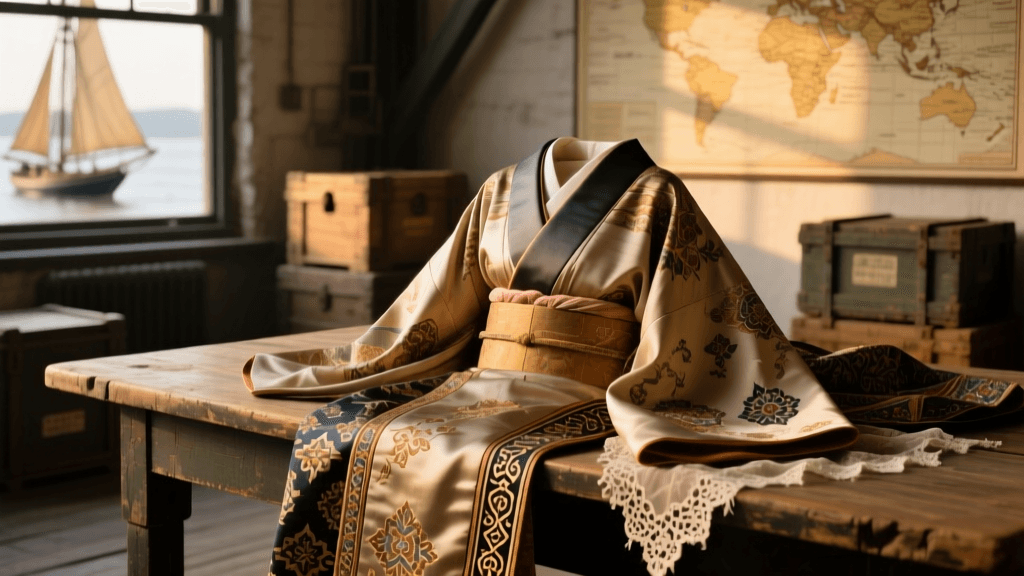
The kimono is globally celebrated as a masterpiece of Japanese aesthetic philosophy, often perceived as an isolated, purely domestic art form. However, to view the traditional Japanese garment in a vacuum is to ignore a rich, complex history of global exchange. The threads, dyes, and weaving techniques that define vintage and antique kimono were heavily influenced by centuries of international trade. In 2026, the antique textile market has seen a massive surge in collectors specifically seeking out 'trade route' kimonos—garments that physically embody the intersection of Japanese craftsmanship and foreign imports.
Whether it is the metallic threads of Chinese brocades, the block-printed cottons of the Indian Coromandel Coast, or the synthetic aniline dyes of 19th-century Europe, the materials imported into Japan fundamentally altered the trajectory of Japanese fashion. For modern collectors, historians, and enthusiasts navigating the 2026 vintage market, understanding these historical import routes is essential for accurate authentication, valuation, and preservation. This comprehensive guide explores the maritime and overland trade routes that shaped kimono textiles and provides actionable insights for identifying these historical imports today.
The Maritime Silk Road: Chinese Brocades and Kara-ori
Long before the opening of Japan to the West, the Maritime Silk Road facilitated a robust exchange of luxury goods between Japan, China, and Southeast Asia. The most profound early influence on Japanese formal wear came from Chinese silk brocades, known in Japan as kara-ori (literally 'Chinese weave'). During the Muromachi and Edo periods, imported Chinese silks were highly prized by the samurai elite and the imperial court.
These imported textiles were characterized by their heavy, stiff weaves and the extensive use of gold and silver metallic threads. Because the imported yardage was incredibly expensive and limited, it was rarely used for entire garments. Instead, kara-ori was strategically utilized for the most visually impactful parts of the wardrobe: the outer layers of uchikake (wedding overcoats), the panels of formal obi sashes, and the collars of high-ranking kosode. According to The Metropolitan Museum of Art's Heilbrunn Timeline of Art History, the Japanese demand for these luxurious Chinese imports eventually led domestic weavers in Kyoto’s Nishijin district to reverse-engineer the techniques, giving birth to the famous Nishijin-ori brocade tradition.
For the 2026 collector, authentic Edo-period kara-ori fragments or fully intact uchikake featuring imported Ming or Qing dynasty metallic threads are highly sought after. Identifying genuine imported Chinese silk from early domestic imitations requires examining the reverse side of the fabric; early imported brocades often feature a distinct 'float' technique where the metallic threads are less tightly bound than later Japanese domestic adaptations.
The Nanban Trade: Indian Chintz and European Wools
The arrival of Portuguese and Dutch traders in the 16th and 17th centuries initiated the Nanban (Southern Barbarian) trade period, radically expanding the Japanese textile palette. While European traders brought heavy wools, velvets, and leather, it was their role as middlemen for Indian textiles that left the most lasting mark on Japanese casual and theatrical wear.
Indian chintz and calico, known in Japan as sarasa, were imported via Dutch East India Company (VOC) ships. Sarasa featured vibrant, colorfast block-printed floral and geometric motifs that were entirely novel to Japanese consumers. Because Japanese silk dyeing techniques at the time struggled with the same level of colorfastness in cotton, imported Indian sarasa became a luxury commodity. It was predominantly used for haori linings, kosode undergarments, and the iconic shigoki sashes worn by young women and kabuki actors.
European imports also made their mark. Dutch woolens and tartans were repurposed into winter haori and hanten (padded jackets). The integration of these foreign materials demonstrates how Japanese fashion pragmatically adapted global imports to suit local climates and social structures. As noted by UNESCO's Silk Roads Programme, the flow of Indian cottons into East Asia via maritime routes was a critical driver of cross-cultural aesthetic exchange, blending South Asian motifs with Japanese tailoring.
Meiji Modernization: Imported Aniline Dyes and Meisen
The Meiji Restoration of 1868 opened Japan's borders to global industrial trade, resulting in the most dramatic shift in kimono textiles in the nation's history. The most significant import of this era was not a fabric, but a chemical: European synthetic aniline dyes. Prior to this, Japanese dyers relied on natural botanical dyes like indigo, safflower, and madder, which were prone to fading and required immense labor to produce.
The importation of cheap, vivid, and colorfast synthetic dyes from Germany and Britain revolutionized the textile industry. This chemical import directly enabled the explosion of Meisen silk in the early 20th century. Meisen utilized a technique called hogushi-gasuri (a form of ikat), where threads were loosely dyed before weaving. The new imported aniline dyes allowed for bold, high-contrast, and almost neon color palettes that defined the Taisho and early Showa era fashion.
In the 2026 vintage market, Taisho-era Meisen kimonos remain incredibly popular due to their striking, almost modernist Art Deco patterns. Collectors can identify early imported-dye Meisen by the characteristic 'halo' effect around the edges of the patterns and the distinct, slightly coarse texture of the spun silk. These garments represent a pivotal moment where Western industrial chemistry merged with traditional Japanese resist-dyeing artistry.
2026 Collector’s Table: Identifying Trade Route Textiles
Navigating the antique kimono market requires a keen eye for material origins. Below is a comparative guide to the most prominent trade-route textiles found in the 2026 market, including their historical origins, identifying features, and current average auction valuations.
| Textile Type | Historical Origin / Import Route | Key Identifiers | 2026 Avg. Auction Value (USD) |
|---|---|---|---|
| Kara-ori (Brocade) | Ming/Qing China via Maritime Silk Road | Heavy stiff weave, metallic gold/silver threads, complex floral motifs | $800 - $3,500 |
| Sarasa (Chintz) | Coromandel Coast, India via Dutch VOC | Block-printed cotton, colorfast floral patterns, often used as lining | $300 - $1,200 |
| Yofuku (Wool) | 19th C. Europe via Treaty Ports | Woven wool, tartan/check patterns, heavy drape, used for winter wear | $400 - $1,500 |
| Early Meisen | Japan (w/ European Aniline Dyes) | Ikat weave, vibrant synthetic hues, bold modernist patterns | $150 - $800 |
Authentication and Preservation Standards in 2026
As the demand for historically significant 'trade route' kimonos has peaked in 2026, so too has the sophistication of authentication methods. High-end auction houses and specialized vintage dealers now routinely employ non-invasive fiber spectroscopy to verify the origins of metallic threads in kara-ori and the chemical composition of dyes in Meisen. By analyzing the specific elemental makeup of a gold thread, authenticators can determine whether it is a traditional Japanese kinran (gold leaf applied to paper and sliced) or an imported Chinese metallic yarn wrapped around a silk core.
Preservation of these imported textiles requires tailored approaches, as the materials age differently than domestic Japanese silks. For instance, Indian sarasa cottons are highly susceptible to acidic degradation if stored in standard wooden drawers. In 2026, best practices dictate storing sarasa and imported wool hanten in acid-free, buffered archival tissue within climate-controlled smart cabinets that maintain a strict 50% relative humidity. Wool imports also require specialized pest management, as European wools are highly attractive to domestic textile moths. Utilizing pheromone traps and anoxic (oxygen-deprived) storage bags has become the industry standard for protecting these vulnerable historical imports.
'The kimono is not merely a Japanese artifact; it is a global archive. Every imported thread and synthetic dye tells a story of maritime routes, diplomatic exchanges, and the universal human desire for beauty and status.' — Curator's Note, The Victoria and Albert Museum's Asian Collections.
Conclusion: Wearing the World
The history of the kimono is inextricably linked to the broader history of global trade. From the luxurious Chinese brocades that adorned the samurai elite to the vibrant Indian cottons that lined the garments of merchants, and the European chemical dyes that sparked a modernist fashion revolution, imported materials have continuously pushed the boundaries of Japanese textile arts. For the modern collector in 2026, acquiring a trade-route kimono is an opportunity to own a tangible piece of global history. By understanding the origins, identifiers, and preservation needs of these historical imports, enthusiasts can ensure that these magnificent, cross-cultural garments survive for generations to come.