Styling Authentic Hanbok & Cheongsam for 2026 Fashion Media
The 2026 Editorial Shift: From Appropriation to Authentic Collaboration
As we navigate the Spring/Summer and Fall/Winter 2026 editorial seasons, the global fashion media landscape has undergone a profound and necessary transformation. The days of superficial 'orientalism' and loosely inspired costume pieces masquerading as high fashion are firmly behind us. Today, top-tier publications, luxury fashion houses, and celebrity stylists are embracing a new standard of cultural accuracy, prioritizing deep structural appreciation and direct collaboration with master artisans. Asian traditional garments, particularly the Korean Hanbok and the Chinese Cheongsam (Qipao), are no longer treated as mere exotic props; they are celebrated as complex feats of textile engineering and historical storytelling.
This shift is heavily informed by institutional guidance and a demand for sartorial literacy on set. Drawing upon the extensive historical frameworks provided by The Metropolitan Museum of Art's Asian Art archives, contemporary stylists are now expected to understand the lineage of the garments they feature. For fashion editors, photographers, and wardrobe departments working in 2026, mastering the authentic styling, sourcing, and lighting of these garments is no longer optional—it is the baseline for editorial integrity. This guide provides actionable, culturally respectful strategies for integrating authentic Hanbok and Cheongsam into modern high-fashion media.
Deconstructing the Cheongsam for the Modern Lens
Xiangyunsha Silk and Structural Integrity
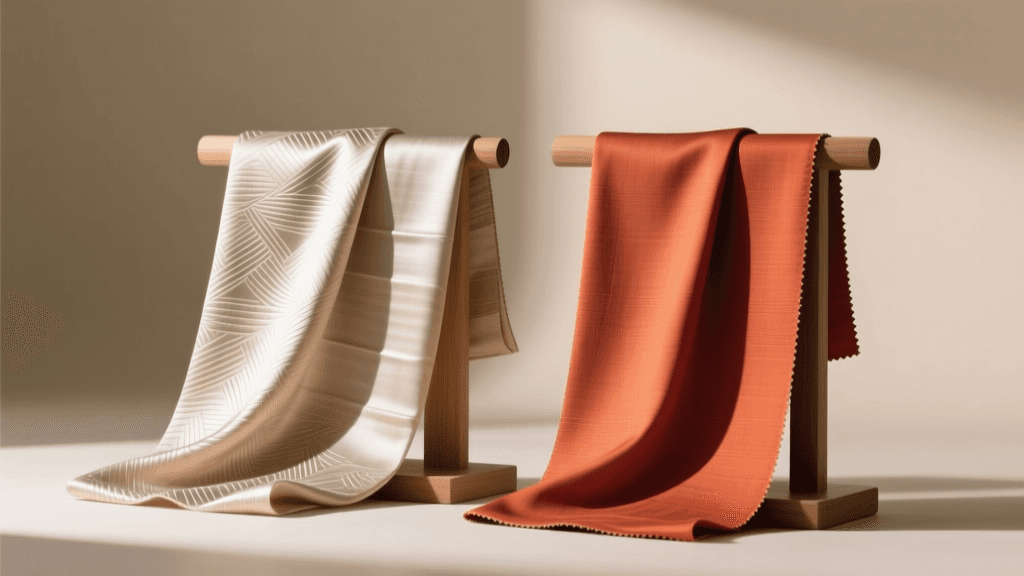
The Cheongsam has experienced a massive renaissance in 2026 global fashion media, but the focus has shifted away from the mass-produced, hyper-sexualized silhouettes of the late 20th century. Modern editorials now highlight the garment's architectural tailoring and heritage textiles. The most sought-after fabric for 2026 high-fashion spreads is Xiangyunsha (mud silk), a complex, dual-toned silk dyed with river mud and plant extracts, recognized for its rich, leathery texture and subtle sheen.
When styling a traditional Xiangyunsha Cheongsam for the camera, wardrobe departments must respect the structural integrity of the pankou (hand-knotted frog closures) and the precise bias cut that allows the garment to drape dynamically without restricting movement. In 2026, leading fashion houses are commissioning master tailors in Shanghai and Guangzhou with lead times of up to five months to ensure the collar (lingtou) sits perfectly flush against the jawline without buckling—a common flaw in fast-fashion replicas that high-definition editorial cameras instantly expose.
Song Brocade and the 1930s Silhouette
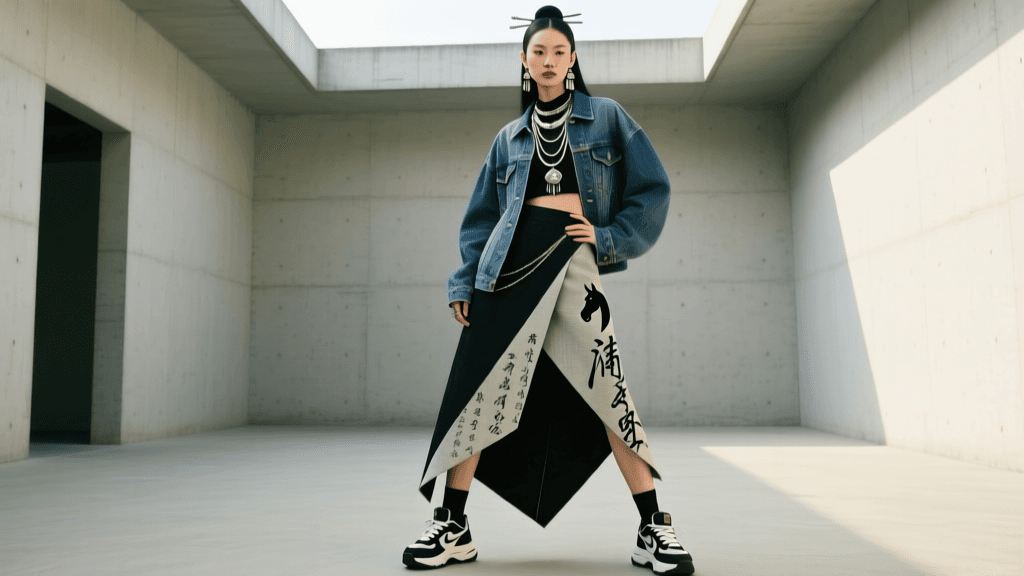
For winter editorials, Song brocade offers a heavy, structured alternative that photographs beautifully under studio lighting. Unlike the flat, printed silks of the past, authentic Song brocade features complex jacquard weaves that catch the light in multi-dimensional ways. Stylists in 2026 are pairing these heavy, historically accurate Cheongsams with minimalist, contemporary footwear and stark, brutalist set designs, creating a visual tension that respects the garment's heritage while firmly planting it in modern high fashion.
The Hanbok Silhouette: Honoring Historical Proportions
Foundational Layers and the Joseon Line
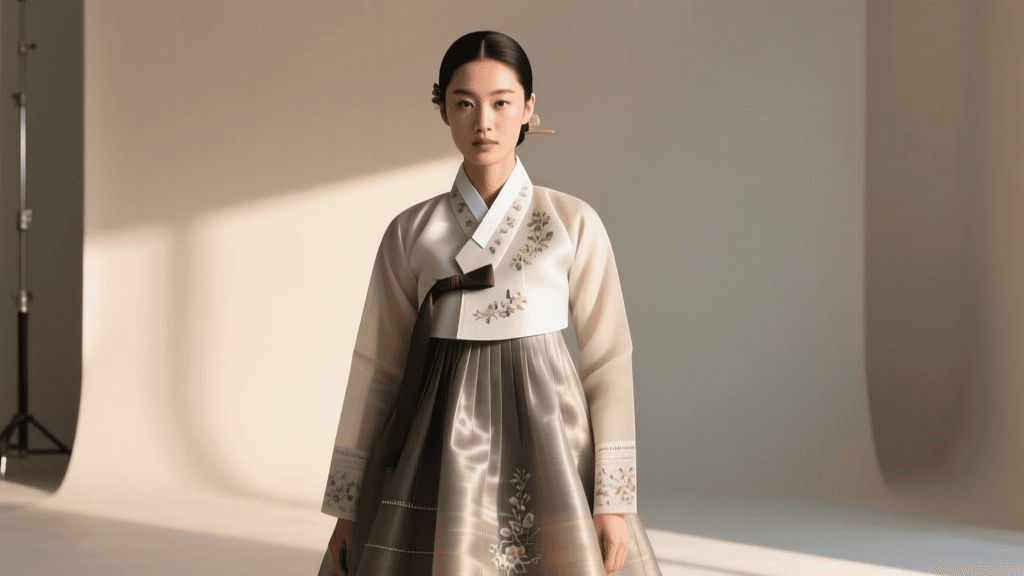
The global proliferation of K-culture has kept the Hanbok in the international spotlight, but 2026 marks the year fashion media has moved past the 'modernized, simplified' Hanbok and returned to the breathtaking, voluminous silhouettes of the Joseon dynasty. The secret to an authentic Hanbok editorial lies not in the visible layers, but in the foundational undergarments. A stylist cannot achieve the iconic, bell-like curve of the chima (skirt) without the proper sokchima (underskirt) and daesyumni (waist ties).
For a historically accurate late-Joseon silhouette, the jeogori (jacket) must be cropped precisely, sitting 2 to 3 inches above the natural waistline, with the curved sleeves (baerae) mimicking the gentle slope of traditional Korean roof eaves. When dressing a model, the goreum (chest bow) must be tied with the correct tension and asymmetry; the longer ribbon should fall gracefully past the waist, while the shorter loop remains structured. Fashion editors are increasingly consulting with historians and referencing UNESCO's Intangible Cultural Heritage lists to ensure that the specific weaving techniques, such as Hansan Mosi (fine ramie), are represented accurately in their credits and captions.
Translucency and the Summer Ramie
For Spring/Summer 2026 campaigns, the use of mosi (ramie) and sa (silk gauze) is highly favored. These breathable, semi-translucent fabrics require a delicate touch on set. Stylists must ensure that the under-layers are color-coordinated to provide a subtle, intentional contrast rather than accidental exposure. The natural stiffness of high-grade ramie creates sharp, geometric folds that translate into striking, sculptural imagery on the printed page.
Sourcing and Budgeting for 2026 Editorial Shoots
Ethical sourcing is the cornerstone of 2026 fashion media. Publications are now mandating that stylists source directly from certified heritage ateliers or established cultural foundations rather than third-party theatrical costume shops. This ensures fair compensation for artisans and guarantees the use of genuine, hand-loomed textiles.
Below is a comparative breakdown of the current market landscape for editorial styling, highlighting the stark differences between commercial 'inspired' garments and authentic artisanal commissions.
| Garment & Textile | Fast-Fashion 'Inspired' (2026 Market) | Authentic Artisanal Commission (2026 Market) | Editorial Suitability |
|---|---|---|---|
| Cheongsam (Xiangyunsha Mud Silk) | $150 - $300 USD; Machine-printed synthetic blends; stiff, unnatural drape; 2-week delivery. | $4,500 - $8,000 USD; Hand-dyed river mud silk; dynamic bias cut; 4-6 month lead time. | High: Essential for luxury macro-photography and dynamic movement shots. |
| Hanbok (Hansan Ramie / Mosi) | $100 - $250 USD; Polyester gauze; lacks structural stiffness; immediate availability. | $3,000 - $6,000 USD; Hand-woven fine ramie; authentic Joseon proportions; 3-5 month lead time. | High: Crucial for achieving the sculptural, semi-translucent summer silhouettes. |
| Cheongsam (Song Brocade) | $200 - $400 USD; Flat digital jacquard; heavy but lacks depth; 3-week delivery. | $5,000 - $9,500 USD; Traditional wooden loom brocade; multi-dimensional light reflection; 5+ months. | Medium-High: Ideal for structured, architectural winter editorials. |
When budgeting for a 2026 editorial spread, fashion directors must allocate funds not just for the garment, but for the artisan's time and the specialized shipping required for delicate heritage textiles. Many top-tier magazines now partner directly with institutions like the Victoria and Albert Museum's Asian collections or private heritage archives to loan museum-grade pieces for high-profile covers, bypassing the need for new commissions while still honoring historical accuracy.
On-Set Styling and Lighting Masterclass
Lighting Mud Silk and Ramie
Photographing heritage Asian textiles requires a departure from standard flat, high-key beauty lighting. Xiangyunsha mud silk, for instance, features a dark, matte exterior and a glossy, amber-toned interior. To capture this dual-nature, lighting directors in 2026 are utilizing large, diffused warm-light sources placed at oblique angles, allowing the camera to catch the amber sheen in the folds of the fabric while the matte black exterior absorbs the shadows. This technique highlights the organic, irregular texture of the mud-dyeing process, proving to the viewer that the garment is a handcrafted artifact.
Conversely, when shooting mosi (ramie) Hanbok, back-lighting is essential. By placing a soft, cool light source behind the model, the semi-translucent nature of the hand-woven ramie is illuminated, revealing the microscopic irregularities of the hand-spun fibers and creating an ethereal, glowing halo effect around the silhouette.
Accessorizing with Cultural Context
The accessories chosen for a 2026 editorial must complement, not overpower, the traditional garment. For the Cheongsam, stylists are moving away from generic jade bangles and instead sourcing vintage or contemporary enamelware, carved agate buttons, and subtle gold-cuff pankou extensions that speak to the 1920s Shanghai art-deco influence. For the Hanbok, the inclusion of a traditional norigae (ornamental pendant) tied to the goreum or waistband adds a vital focal point of color and movement. However, stylists must ensure the norigae is appropriate for the season and the status implied by the garment's color palette, avoiding the mixing of royal court motifs with commoner-class silhouettes unless done as a deliberate, credited conceptual subversion.
Conclusion: The New Standard for Fashion Media
The integration of Asian traditional garments into global fashion media in 2026 is defined by a rigorous commitment to authenticity, ethical sourcing, and technical mastery. By understanding the architectural nuances of the Cheongsam and the foundational complexities of the Hanbok, stylists and photographers can create imagery that is not only visually arresting but culturally resonant. As the industry continues to evolve, the garments that have survived centuries of history will undoubtedly remain at the forefront of high fashion, provided they are treated with the profound respect and expertise they deserve.