Hanbok & Cheongsam in 2026 Global Fashion Media: Editorial Styling
The Renaissance of Asian Heritage in 2026 High Fashion
In 2026, the intersection of Asian traditional garments and global high-fashion media has evolved from mere aesthetic borrowing to profound structural innovation and cultural reverence. Leading publications such as Vogue Italia, Harper's Bazaar UK, and Numéro Tokyo are actively dismantling outdated orientalist tropes. Instead, they are championing the architectural brilliance of the Cheongsam (Qipao) and the volumetric drama of the Neo-Hanbok. For fashion editors, stylists, and culturally conscious consumers, understanding how these garments are being reinterpreted on the editorial pages of 2026 is essential. This guide explores the specific styling techniques, textile innovations, and photographic considerations driving the Asian heritage renaissance in global fashion media this year.
The Cheongsam: Architectural Deconstruction in 2026 Editorials
The Cheongsam has long been a staple in fashion editorials, but the 2026 approach focuses on architectural deconstruction and sustainable modernization. Rather than relying on the form-fitting, mid-century silk silhouettes that dominated early 2000s media, contemporary stylists are collaborating with avant-garde designers to manipulate the garment's foundational geometry. The high collar, once a symbol of modesty, is now being exaggerated or entirely deconstructed to frame the face in striking, sculptural ways.
Key Silhouette Shifts and Measurements
- The Asymmetrical Mandarin Collar: Traditional collars sit uniformly at 4-5 cm. In 2026 editorials, stylists are favoring asymmetrical collars that peak at 9 cm on the left side and taper to 2 cm on the right, creating a sharp, futuristic neckline that photographs beautifully in profile.
- Bioplastic Pankou Fasteners: The traditional knotted pankou buttons are being replaced or augmented by 3D-printed, biodegradable bioplastic clasps. These offer a high-gloss, structural finish that catches studio lighting without the fragility of hand-woven silk knots.
- Boned Slits and Hemlines: To prevent the fabric from clinging awkwardly during dynamic editorial poses, 2026 styling incorporates hidden micro-boning along the thigh-high slits. This maintains a crisp, A-line drape even when the model is in motion.
The Neo-Hanbok: Volumetric Drama on Global Pages
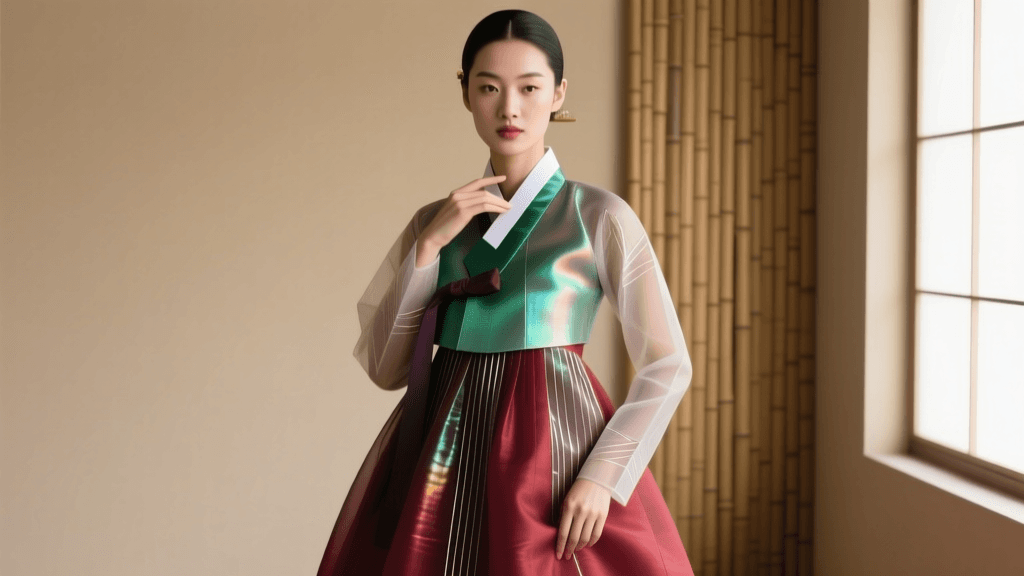
The Hanbok has experienced a meteoric rise in Western fashion media, heavily influenced by the global dominance of South Korean pop culture and the sophisticated output of Seoul's avant-garde design houses. In 2026, global fashion editors are focusing on the interplay between the abbreviated jeogori (jacket) and the expansive chima (skirt). The challenge for editorial stylists is managing the sheer volume of the Hanbok on camera without losing the intricate details of the upper garment.
Styling the Jeogori and Chima for the Camera
According to cultural guidelines highlighted by the Korean Culture and Information Service (KOCIS), the modernization of the Hanbok must respect its foundational proportions while allowing for contemporary expression. In 2026 high-fashion spreads, this translates to specific styling maneuvers:
- The Structural Goreum: The traditional goreum (the long, trailing bow tie) is often elongated in editorials, sometimes measuring up to 150 cm in length. Stylists are using weighted metallic cords or stiffened vegan leather ribbons to ensure the goreum holds its dramatic arc against wind machines and studio fans.
- Memory-Organza Chima: To achieve the iconic bell shape without the burden of heavy, traditional petticoats, 2026 stylists rely on memory-organza. This heat-set textile retains its voluminous pleats permanently, allowing for crisp, high-definition photography that captures the garment's architectural folds.
- Layered Dongjeong: The white collar lining (dongjeong) is being stylized with layered, detachable collars of varying widths, providing a stark, graphic contrast against deeply saturated, jewel-toned jeogori fabrics.
2026 Editorial Styling Matrix: Cheongsam vs. Hanbok
To assist fashion editors and independent stylists in planning their 2026 editorial calendars, the following matrix breaks down the core styling differences, fabric recommendations, and budgetary considerations for both garments.
| Garment | Traditional Element | 2026 Editorial Adaptation | Recommended Fabric | Avg. Custom Styling Cost |
|---|---|---|---|---|
| Cheongsam | Pankou Knots | 3D-Printed Bioplastic Clasps | 30-Momme Heavy Crepe | $850 - $1,200 |
| Cheongsam | Mandarin Collar | Asymmetrical Boned Neckline | Structural Ramie Blend | $600 - $900 |
| Hanbok | Goreum Bow | Weighted Metallic Cord | Matte Peace Silk | $450 - $750 |
| Hanbok | Chima Volume | Heat-Set Memory Pleats | Coated Memory-Organza | $700 - $1,100 |
Textile Innovations: What Photographs Best in 2026?
The transition from print to ultra-high-definition digital and video editorials in 2026 demands textiles that respond dynamically to complex lighting setups. The historical context of Asian textiles, as preserved by institutions like the Victoria and Albert Museum Asian Collections, provides a foundation for understanding how natural fibers behave. However, modern editorial styling requires specific fabric weights and finishes.
Sourcing and Pricing for Editorial Stylists
- 30-Momme Heavy Silk Crepe: While standard 19-momme silk is beautiful for daily wear, it wrinkles under the heat of studio lights and clings to the body. For 2026 editorials, stylists exclusively source 30-momme heavy crepe. Priced at approximately $85 to $120 per yard, it provides a liquid, heavy drape that absorbs light richly and resists wrinkling during long shoot days.
- Structural Ramie (Mosi): Ramie is highly breathable and holds stiff, origami-like folds. When used for deconstructed Cheongsam collars or Hanbok sleeves, it creates sharp shadows under directional lighting. Sourced from specialized sustainable mills, it costs around $60 per yard.
- Metallic Lurex Blends: For evening and high-glamour editorials, subtle metallic threads woven into organic cotton or peace silk provide a micro-shimmer that digital sensors capture beautifully without causing the lens flare associated with heavy sequins.
Actionable Guide: Replicating High-Fashion Asian Editorials
For aspiring fashion editors, photography students, and boutique brand owners looking to produce their own heritage-inspired editorials in 2026, mastering the technical execution is just as important as the garment sourcing. The Metropolitan Museum of Art's Asian Art Department frequently showcases how historical garments were meant to be viewed in space; translating this to a 2D digital medium requires precise technical choices.
Lens Selection and Camera Angles
- For the Cheongsam: Utilize an 85mm or 105mm prime lens (f/2.8 or f/4). The compression of a telephoto lens flattens the background and emphasizes the intricate, linear details of the pankou fasteners and the sharp geometry of the collar. Avoid wide-angle lenses, which will distort the garment's vertical lines and ruin the architectural silhouette.
- For the Hanbok: Switch to a 35mm or 50mm lens. The Hanbok is defined by its negative space and the relationship between the body and the voluminous chima. A wider focal length allows you to capture the full bell-shape of the skirt within the environment, emphasizing the garment's kinetic energy when the model moves.
Lighting and Post-Production Considerations
Lighting Asian traditional garments requires a nuanced approach to preserve texture and color fidelity. In 2026, the industry standard for high-fashion heritage editorials involves a modified clamshell lighting setup.
- Key Light: A large octabox (minimum 120cm) positioned slightly above the subject. This wraps the light around the curved surfaces of the Hanbok's chima and highlights the sheen of heavy silk crepe without creating harsh, blown-out highlights.
- Edge/Rim Light: Use a snoot or a strip box with a grid positioned behind the subject to carve out the edges of the garments. This is crucial for separating dark, richly dyed fabrics (like indigo or deep crimson) from dark studio backdrops, ensuring the silhouette remains legible.
- Color Grading: Avoid heavy, stylized color grading that shifts the hue of the garments. Traditional dyes—such as gardenia yellow, indigo, and madder root—carry deep cultural significance. In 2026, editorial integrity demands accurate color calibration using a physical color checker passport on set before every lighting change.
Conclusion
The representation of the Hanbok and Cheongsam in 2026 global fashion media marks a triumphant shift toward authentic, structurally innovative, and culturally respectful styling. By understanding the architectural nuances of these garments, investing in the correct high-definition textiles, and applying precise photographic techniques, stylists and editors can create compelling narratives that honor Asian heritage while pushing the boundaries of contemporary high fashion. As the industry continues to look toward Asia for both aesthetic and sustainable inspiration, mastering the editorial styling of these iconic garments is no longer optional—it is a fundamental requirement for the modern fashion professional.