Vintage Kimono Storage and Preservation Guide for 2026
For collectors, curators, and heritage enthusiasts, a vintage kimono is far more than a garment; it is a masterclass in Japanese textile artistry. From the intricate, hand-painted Yuzen dyes to the delicate gold-leaf embroidery and the natural luster of pure silk, these garments represent centuries of cultural tradition. However, as of 2026, the increasing frequency of extreme global weather patterns and fluctuating indoor humidity levels pose unprecedented threats to organic textiles. Proper kimono storage preservation and collection management are no longer just about keeping garments clean—they require a rigorous, science-backed approach to prevent irreversible degradation.
Whether you are managing a private collection of Taisho-era silk haori or preserving a family heirloom Meiji-era uchikake (wedding kimono), understanding the intersection of traditional Japanese wisdom and modern conservation science is critical. This comprehensive guide outlines the definitive 2026 standards for archival storage, climate control, and handling techniques to ensure your silk textiles survive for generations to come.
The Science of Silk Degradation
To preserve a kimono, one must first understand the vulnerabilities of its primary material. Silk is a natural protein fiber composed of fibroin and sericin. While incredibly strong by weight, silk is highly susceptible to three primary enemies: photo-oxidation (light damage), hydrolysis (moisture-induced chemical breakdown), and biological pests.
When exposed to ultraviolet (UV) and even high-intensity visible light, the amino acid chains in silk begin to break down, leading to yellowing, brittleness, and eventual shattering of the fabric. Furthermore, silk is hygroscopic, meaning it readily absorbs and releases moisture from the surrounding air. If the relative humidity (RH) is too high, the moisture catalyzes hydrolysis and encourages mold growth. If the RH is too low, the fibers desiccate and snap under their own weight. According to the Canadian Conservation Institute, maintaining a stable microclimate is the single most effective preventive measure for protein-based textiles.
Traditional vs. Modern Archival Storage Materials
Historically, kimono were stored in tansu (wooden chests) or wrapped in paper. Today, collectors must choose between authentic traditional materials and modern museum-grade synthetics. Both have distinct advantages in a 2026 collection management strategy.
Kiribako (Paulownia Wood Boxes)
The gold standard for traditional kimono storage is the Kiribako, a box crafted from Paulownia wood. Paulownia is naturally lightweight, fire-resistant, and possesses unique hygroscopic properties that allow it to act as a passive humidity buffer. When the ambient humidity rises, the wood swells, creating an airtight seal that protects the interior from moisture and pests. In 2026, a high-quality, domestically sourced Kiribako typically ranges from $250 to $600 USD, representing a significant but necessary investment for heirloom pieces.
Unbuffered Acid-Free Tissue Paper
While traditional tatou-shi (mulberry paper) is culturally authentic, modern conservationists strongly recommend unbuffered, acid-free tissue paper for direct contact with silk. Buffered tissues contain an alkaline reserve (usually calcium carbonate) designed to neutralize acids in plant-based fibers like cotton or linen. However, this alkalinity can damage protein fibers like silk and wool over time. Unbuffered tissue provides a safe, pH-neutral barrier that prevents dye transfer and cushions folds.
2026 Storage Material Comparison
| Material | Primary Function | Pros | Cons | 2026 Est. Cost |
|---|---|---|---|---|
| Kiribako (Paulownia Box) | Primary Enclosure | Passive humidity buffering, pest-resistant, culturally authentic | Heavy, expensive, requires periodic airing | $250 - $600 |
| Unbuffered Acid-Free Tissue | Wrapping & Cushioning | pH-neutral, safe for protein fibers, prevents hard creases | Single-use, must be replaced annually | $25 per pack |
| Museum-Grade PP Bin | Alternative Enclosure | Airtight, pest-proof, affordable, stackable | Traps moisture if not monitored, lacks humidity buffering | $40 - $85 |
| Washed Cotton Sheet (Muslin) | Dust Cover | Breathable, washable, reusable | Offers no pest or light protection on its own | $15 - $30 |
Climate Control Standards for 2026
The environment in which your Kiribako or storage bins are kept is just as important as the materials inside them. The American Institute for Conservation (AIC) Textile Wiki outlines strict parameters for organic artifact preservation. For 2026 collection management, adhere to the following environmental baselines:
- Temperature: Maintain a stable temperature between 18°C and 20°C (64°F to 68°F). Fluctuations in temperature cause the silk fibers to expand and contract, leading to structural fatigue.
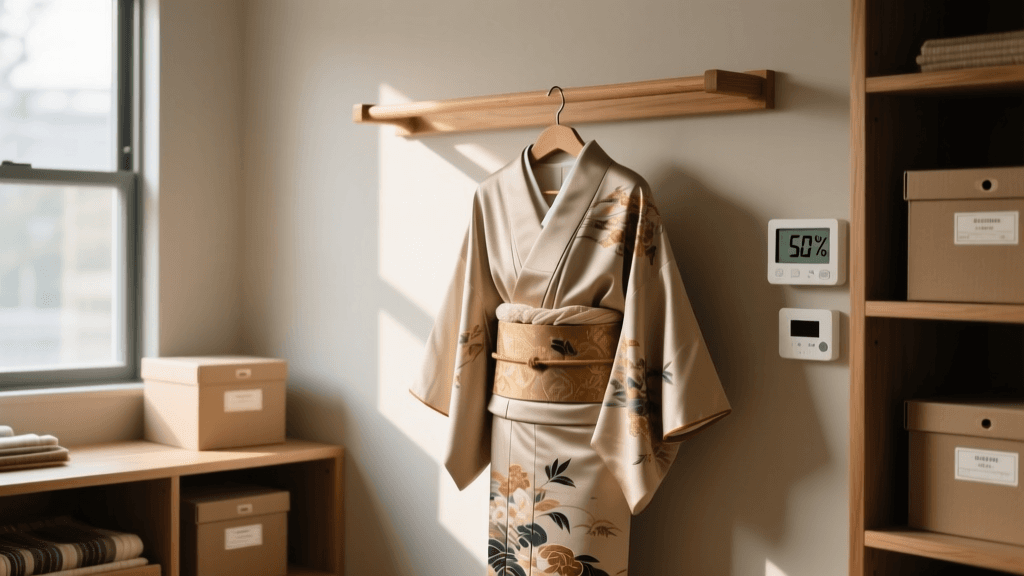
- Relative Humidity (RH): The ideal RH for silk is 45% to 55%. Crucially, the RH must not fluctuate by more than ±5% within a 24-hour period.
- Light Exposure: Store garments in total darkness. If displaying a kimono, limit light exposure to 50 lux and strictly eliminate all UV radiation using UV-filtering acrylic glazing or LED lighting with zero UV output.
To achieve this, modern collectors are increasingly relying on IoT (Internet of Things) environmental sensors. In 2026, wireless Bluetooth Low Energy (BLE) data loggers can be placed directly inside the Kiribako. These sensors push real-time temperature and humidity data to a smartphone app, alerting the collector immediately if the microclimate breaches the safe thresholds, allowing for proactive intervention before mold or desiccation can occur.
The Hon-Datami Folding Method and Crease Prevention
How a kimono is folded dictates its structural longevity. The traditional Japanese folding method, known as hon-datami, is designed to align the seams and distribute the fabric's weight evenly. However, even with proper folding, leaving sharp, hard creases in the same location for years will cause the silk fibers to fracture along the fold lines.
Step-by-Step Archival Folding
- Preparation: Lay the kimono face down on a clean, flat surface covered with a washed cotton sheet. Ensure your hands are clean and free of lotions or oils; nitrile gloves are recommended for handling metallic threads or fragile vintage silks.
- The Collar and Sleeves: Fold the left side of the kimono over to the right, aligning the seams. Fold the sleeves back so they do not extend past the body of the garment.
- Cushioning the Folds: This is the most critical archival step. Take unbuffered acid-free tissue paper and gently roll it into loose 'snakes' or cylinders. Place these tissue rolls inside every major fold (such as the collar, the waist fold, and the sleeve attachments). This creates a soft, rounded curve rather than a hard, sharp crease, drastically reducing tension on the silk fibers.
- Final Wrapping: Once folded, wrap the entire garment loosely in a large sheet of acid-free tissue or a clean cotton muslin cloth. Never use plastic bags, as they trap moisture and emit harmful volatile organic compounds (VOCs) as they degrade.
Pest Management Without Chemicals
Webbing clothes moths (Tineola bisselliella) and carpet beetles are the most destructive pests for silk collections. In the past, collectors relied on chemical mothballs (naphthalene or paradichlorobenzene), which are now known to be highly toxic to humans and can cause yellowing and chemical burns to silk textiles.
In 2026, integrated pest management (IPM) relies on prevention and non-toxic eradication. Cedar wood blocks and dried lavender sachets can be placed in the storage room as mild deterrents, but they do not kill active infestations. If you suspect an active infestation, the safest eradication method is controlled freezing. Seal the affected kimono in a polyethylene bag, remove as much air as possible, and place it in a deep freezer at -20°C (-4°F) for a minimum of 72 hours. Afterward, allow the garment to thaw slowly at room temperature while still sealed in the bag to prevent condensation from forming on the cold silk. Once thawed, carefully vacuum the garment using a HEPA-filtered vacuum on the lowest suction setting, using a fiberglass screen to protect the fabric.
Digital Collection Management
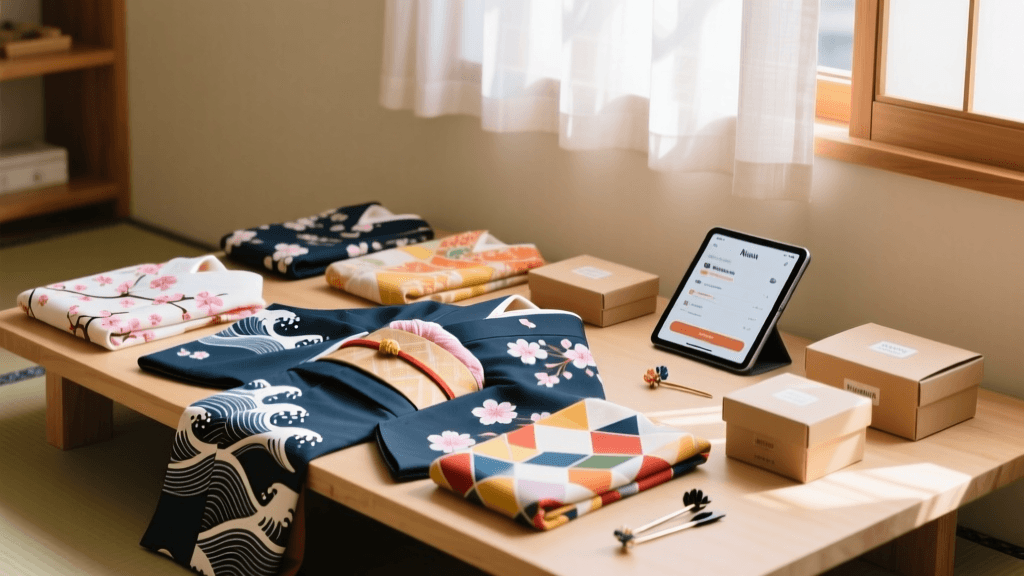
As collections grow, physically handling garments to identify them increases the risk of accidental damage. Modern collection management in 2026 embraces digital cataloging. Assign a unique accession number to each kimono and attach an NFC (Near Field Communication) tag or a printed QR code to the exterior of the Kiribako or storage bin—never directly to the textile.
Using a cloud-based collection management database, you can link the NFC tag to high-resolution photographs, provenance records, condition reports, and specific storage instructions. This allows you to scan the outside of the box with a smartphone to instantly view the contents and the garment's condition history without ever opening the box or exposing the silk to unnecessary light and handling.
Conclusion
Preserving a vintage kimono collection is an act of cultural stewardship. By combining the time-tested protection of Paulownia wood with modern climate monitoring, unbuffered archival tissues, and meticulous folding techniques, collectors can halt the march of time. As we navigate the environmental challenges of 2026, adhering to these rigorous conservation standards ensures that the vibrant dyes, intricate weaves, and rich histories woven into these magnificent garments will remain intact for future generations to study and admire.