Hanbok & Cheongsam in 2026 Fashion Media: Sourcing Guide
The 2026 Renaissance of Asian Silhouettes in Global Media
Global fashion media in 2026 has undergone a profound paradigm shift, moving away from superficial exoticism and toward a deep, structural appreciation of Asian traditional garments. On the red carpets of Cannes, the avant-garde editorials of Vogue, and the haute couture runways of Paris, the Hanbok and the Cheongsam (Qipao) are no longer treated as mere costumes. Instead, they are celebrated for their sophisticated engineering, sustainable textile histories, and unparalleled elegance. For collectors, stylists, and cultural enthusiasts, understanding how to source these garments authentically is paramount in 2026.
The modern fashion landscape demands a meticulous approach to traditional dress. Understanding the historical gravity of these garments is crucial for anyone looking to invest in them. As noted by the Victoria and Albert Museum's Asian collections, the structural integrity and textile heritage of traditional Asian dress represent centuries of refined craftsmanship that modern fast-fashion simply cannot replicate. This guide will break down the 2026 editorial trends for both the Hanbok and the Cheongsam, providing actionable advice on sourcing, pricing, and styling these iconic garments with the respect they command.
Deconstructing the 2026 Editorial Hanbok
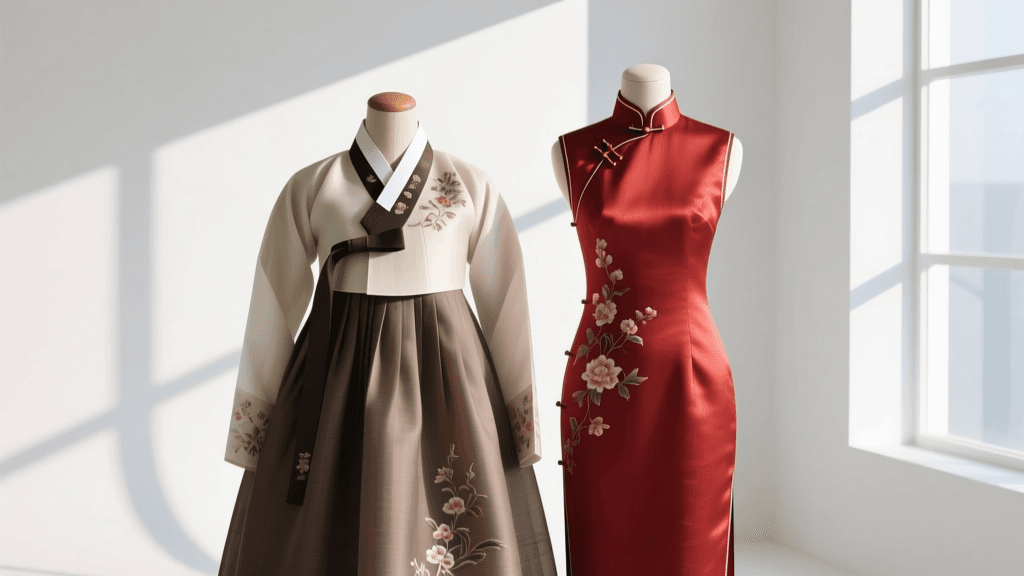
In 2026, the Hanbok has taken center stage in high-fashion editorials that emphasize volume, architectural silhouettes, and eco-conscious textiles. The traditional jeogori (cropped jacket) and chima (wrap-around skirt) are being reimagined by contemporary designers who maintain the integrity of the otgoreum (the asymmetrical front bow) while experimenting with modern proportions.
Textile Innovations: Ramie and Sustainable Silk
A major trend in 2026 fashion media is the use of mosi (fine ramie fabric) and peace silk. Ramie, known for its crisp, translucent quality and natural cooling properties, is heavily featured in summer editorials. When sourcing an editorial-grade Hanbok in 2026, look for artisans who utilize traditional bleaching techniques for ramie, which yield a luminous, ivory-white finish that photographs beautifully under studio lighting.
Sourcing and Pricing the Modern Hanbok
To acquire a Hanbok that meets the standards of a 2026 fashion editorial, you must bypass mass-produced tourist shops. Authentic, bespoke pieces are typically sourced from master tailors in Seoul's Bukchon Hanok Village or verified digital ateliers specializing in modern heritage wear.
- Entry-Level Bespoke (2026 Pricing): $600 - $900 USD. This tier includes machine-assisted stitching with hand-finished otgoreum knots and high-quality polyester-silk blends.
- Editorial-Grade Bespoke (2026 Pricing): $1,200 - $2,500 USD. This tier guarantees 100% natural fibers (pure silk or authentic mosi), entirely hand-stitched seams, and custom-dyed fabrics utilizing natural indigo or persimmon tannin processes.
- Measurement Note: When ordering remotely, the chima length must be measured precisely from the under-bust to the desired ankle point, as the 2026 editorial trend favors a dramatic, floor-sweeping hemline that pools slightly at the feet.
The Modern Cheongsam: Haute Couture and Red Carpet Ready
The Cheongsam, or Qipao, continues to dominate 2026 global fashion media as the ultimate symbol of sleek, body-conscious elegance. However, the 2026 iteration of the Cheongsam is defined by its textile rarity and the microscopic precision of its construction. The evolution of this garment from its historical roots to modern haute couture is extensively documented by the Metropolitan Museum of Art's Heilbrunn Timeline, highlighting how the silhouette has continuously adapted to the modern form while retaining its cultural essence.
The Return of Xiangyunsha (Mud-Dyed Silk)
The most sought-after fabric for luxury Cheongsams in 2026 is xiangyunsha, a rare silk dyed with the juice of the薯莨 (shoulang) yam and sealed with iron-rich river mud from the Pearl River Delta. This labor-intensive process creates a fabric that is water-resistant, deeply lustrous, and features a distinctive crackling sound when worn. Fashion editors in 2026 prize xiangyunsha for its rich, dark, earthy tones that provide a striking contrast against modern jewelry.
The Art of Pankou (Knot Buttons)
The pankou (hand-knotted buttons) are the crown jewels of any Cheongsam. In 2026, media stylists are requesting highly intricate, thematic knot designs—such as the plum blossom, the butterfly, or the geometric labyrinth knot—crafted from the same silk as the dress. A single master-crafted pankou knot can take an artisan up to four hours to complete. When sourcing, ensure the knots are stuffed with cotton or silk thread to maintain their three-dimensional structure over time.
- Standard Tailoring (2026 Pricing): $800 - $1,200 USD. Features standard floral pankou, machine-rolled hems, and high-grade mulberry silk.
- Haute Couture / Red Carpet (2026 Pricing): $2,000 - $4,500+ USD. Includes rare xiangyunsha silk, hand-rolled invisible hems, and bespoke thematic pankou knots tailored to the wearer's exact collarbone and wrist measurements.
2026 Sourcing & Comparison Guide
When planning an editorial shoot, a red carpet appearance, or a high-end personal collection in 2026, it is essential to understand the functional and aesthetic differences between these two iconic garments. Below is a structured comparison to aid in your sourcing decisions.
| Feature | Modern Editorial Hanbok | Contemporary Cheongsam (Qipao) |
|---|---|---|
| Primary 2026 Fabric | Sustainable Ramie (Mosi) & Heavy Silk Brocade | Xiangyunsha (Mud-Dyed Silk) & 3D Woven Jacquard |
| Silhouette Focus | Volumetric, A-line, architectural concealment of the body | Columnar, body-conscious, emphasizing natural curves |
| Key Construction | Otgoreum (asymmetrical bow) & flat-felled seams | Pankou (knot buttons) & high mandarin collar |
| Avg. Bespoke Cost | $1,200 - $2,500 USD | $2,000 - $4,500 USD |
| Best Media Use | Avant-garde editorials, outdoor fashion campaigns | Red carpet events, high-society galas, studio portraits |
| 2026 Care Protocol | Specialized dry-clean only; store flat to avoid creasing ramie | Hang on padded hangers; avoid direct sunlight to preserve mud-dye |
Navigating the 2026 Supply Chain for Traditional Textiles
Sourcing authentic garments internationally in 2026 requires an understanding of the global textile supply chain and customs regulations regarding organic dyes. Many natural dyes used in high-end Hanbok and Cheongsam production, such as indigo and persimmon tannin, are subject to strict agricultural export checks.
Actionable Sourcing Steps for 2026
- Verify Artisan Certifications: In 2026, legitimate heritage artisans in South Korea and China are registered with their respective national cultural heritage administrations. Always request a digital certificate of authenticity and artisan registration number before commissioning a piece over $1,000.
- Account for Dye-Setting Times: Natural dyes require multiple oxidation and setting cycles. When commissioning a bespoke piece for a specific editorial deadline, add a minimum of 45 days to the standard production timeline to allow for proper textile curing.
- Customs Declarations: Ensure your shipping agent correctly declares the garments as "Finished Apparel - Natural Dyes" to prevent delays at international borders, as raw organic materials can sometimes trigger agricultural inspections.
Styling for Cultural Appreciation in 2026
As Asian traditional garments become more prominent in global media, the line between appreciation and appropriation must be navigated with extreme care. The 2026 fashion industry operates under strict cultural sensitivity guidelines, and stylists must adhere to best practices to honor the origins of these garments.
"True appreciation in fashion media requires acknowledging the garment's lineage, supporting the artisans who keep the craft alive, and refusing to alter the fundamental cultural markers of the dress for the sake of a fleeting trend." — 2026 Global Fashion Ethics Coalition Guidelines.
The 2026 Do's and Don'ts of Editorial Styling
- DO collaborate with cultural consultants and Asian heritage stylists when featuring Hanbok or Cheongsam in major editorial spreads.
- DO credit the specific region, artisan, and historical technique (e.g., "Gyeonggi-do Mosi weaving") in all media captions and publication credits.
- DON'T mix traditional ceremonial garments with overly revealing or contradictory modern styling that undermines the garment's historical dignity.
- DON'T purchase from fast-fashion conglomerates that mass-produce culturally significant patterns without compensating the originating communities.
Conclusion
The presence of the Hanbok and Cheongsam in 2026 global fashion media is a testament to their timeless architectural beauty and the enduring skill of Asian textile artisans. By prioritizing authentic sourcing, understanding the intricate construction of pieces like the otgoreum and pankou, and adhering to strict cultural appreciation standards, collectors and media professionals can ensure these magnificent garments are celebrated exactly as they deserve to be. Whether you are commissioning a mud-dyed silk Cheongsam for a gala or a structural ramie Hanbok for an avant-garde cover shoot, the investment in true heritage craftsmanship will always transcend the temporary nature of fashion trends.