Hakama and Samue: Traditional Uniforms for Martial Arts & Tea
The Philosophy of Japanese Disciplinary Garments
In the realms of Japanese traditional arts, clothing is never merely functional; it is an extension of the practitioner's mindset. Whether stepping onto the tatami mats of a dojo for martial arts (Budo) or entering the serene confines of a tea room for the tea ceremony (Chado), the garments worn dictate the posture, movement, and spiritual readiness of the individual. The concept of 'Rei' (respect and etiquette) is deeply woven into the fabric of these uniforms. Understanding the nuances of traditional Japanese workwear and formal attire is essential for any serious practitioner or collector of Asian traditional garments.
This comprehensive guide explores the intersection of martial arts and tea ceremony wardrobes, focusing on the iconic hakama and the versatile samue. We will cover sizing, fabric selections, cost expectations, and the meticulous care required to maintain these culturally significant garments.
The Hakama: Bridging Martial Arts and Formal Tea Attire
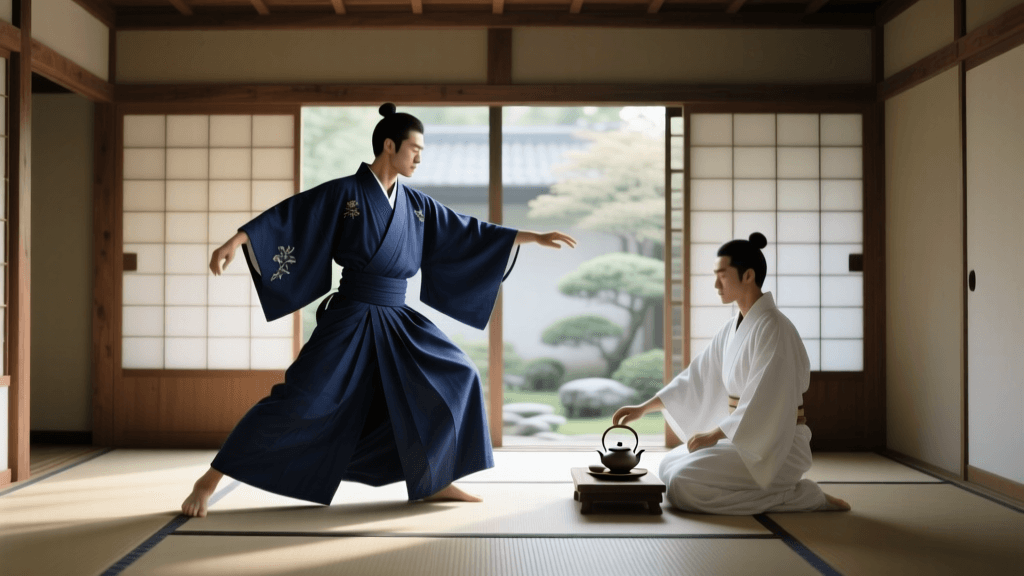
The hakama is a pleated, wide-legged trouser worn over a kimono. Historically worn by samurai to protect their legs while riding horses and to hide their footwork from opponents, it has evolved into the standard uniform for martial arts like Aikido, Kendo, and Iaido, as well as formal attire for tea ceremony hosts and guests.
Umanori vs. Andon: Choosing the Right Silhouette
There are two primary types of hakama, each serving a distinct purpose:
- Umanori (Horse-Riding Hakama): This style features divided legs, resembling wide trousers. It is the mandatory choice for martial arts practitioners, as the division allows for deep stances, rapid footwork, and safe kneeling (seiza) without tangling the fabric.
- Andon (Lantern Hakama): This style is undivided, resembling a long pleated skirt. It is typically worn by women for formal tea ceremonies or by men in highly specific, non-martial ceremonial contexts. The undivided nature makes it unsuitable for the dynamic movements of Budo.
Sizing and Measurements: A Practical Guide
Unlike Western trousers measured by waist and inseam, hakama are sized primarily by the wearer's height and the desired back length (measured from the waist to the ankle bone). Proper length is critical; a hakama that is too long will cause tripping hazards in the dojo, while one that is too short disrupts the formal aesthetic required in the tea room.
| Practitioner Height | Hakama Size | Back Length (cm) | Primary Use Case |
|---|---|---|---|
| 150 - 155 cm | Size 1 | 87 cm | Youth / Petite Adults |
| 155 - 160 cm | Size 2 | 91 cm | Standard Adult Female |
| 160 - 165 cm | Size 3 | 95 cm | Standard Adult Female / Short Male |
| 165 - 170 cm | Size 4 | 99 cm | Average Adult Male |
| 170 - 175 cm | Size 4.5 | 102 cm | Tall Adult Male |
| 175 - 180 cm | Size 5 | 105 cm | Tall Adult Male |
| 180+ cm | Size 6 | 109 cm | Very Tall Practitioners |
Fabric Choices, Costs, and Durability
Selecting the right fabric depends heavily on your discipline, budget, and maintenance willingness.
- Tetron (Polyester/Rayon Blend): The standard for beginners in Kendo and Aikido. It is machine washable, resists wrinkling, and holds its pleats exceptionally well. Cost: $45 - $65 USD.
- Aizome (Natural Indigo-Dyed Cotton): Preferred by advanced martial artists and Iaido practitioners. The heavy cotton provides a beautiful drape and the natural indigo dye is believed to have antibacterial properties. However, it bleeds dye for the first several washes and requires careful hand-washing. Cost: $150 - $300+ USD.
- Silk and Kenzan-ori: Reserved strictly for formal tea ceremonies and high-level Shinto or martial arts grading ceremonies. Silk hakama feature a stiff, ornate koshita (backboard) and require professional dry cleaning. Cost: $400 - $800+ USD.
Samue and Kimono: The Tea Ceremony Wardrobe
While the hakama commands presence, the tea ceremony relies heavily on garments that facilitate quiet, deliberate movement. According to The Metropolitan Museum of Art, the Japanese tea ceremony is a syncretic art form deeply tied to Zen Buddhism, where every gesture and object, including the host's attire, is curated to foster harmony and tranquility.
Samue for the Mizuya (Preparation Room)
The samue is traditional Japanese work clothing, consisting of a cross-body jacket and loose-fitting, ankle-tied trousers. In the context of the tea ceremony, the samue is worn in the mizuya (the preparation room behind the tea space) or during the cleaning and setup of the garden path (roji). It allows the host to perform physical labor without the restrictive sleeves of a kimono.
Modern practitioners also favor high-quality linen or cotton samue for casual tea gatherings (chakai) or summer practice, as the breathable fabric and loose cut provide comfort in humid weather. A well-made cotton samue from regions like Kurume or Kyoto will cost between $80 and $150 USD and can last for decades with proper care.
Formal Kimono for Chaji (Tea Gatherings)
For a formal chaji (a full-length tea gathering lasting up to four hours), hosts and guests transition into formal kimono. The Victoria and Albert Museum notes that the kimono is a highly structured garment where the formality is dictated by the pattern, dyeing technique, and the presence of family crests (mon).
- Male Hosts: Typically wear a solid-colored kimono (often subdued greys, navy, or brown) paired with a hakama featuring one to five family crests.
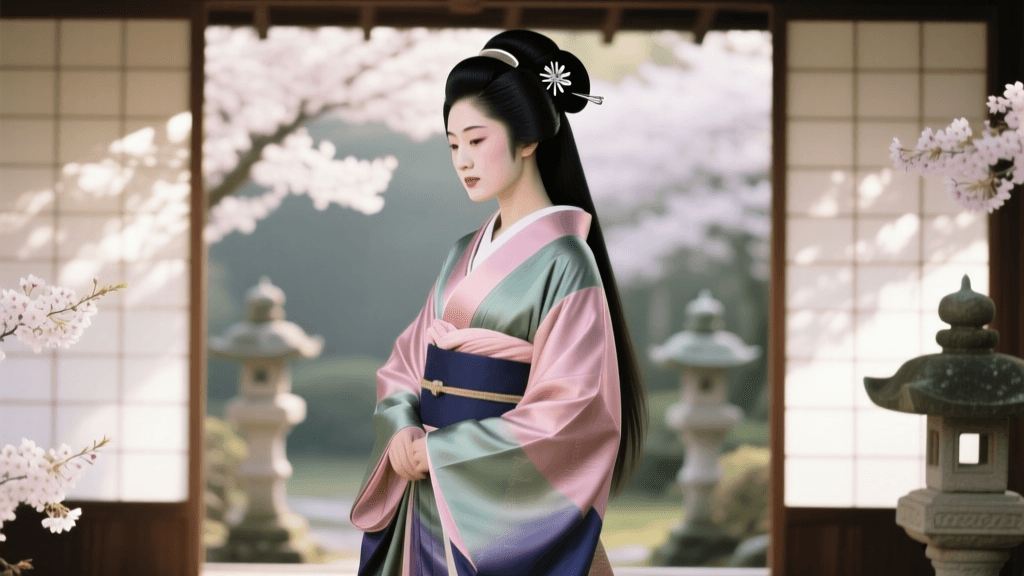
- Female Hosts: Wear a Houmongi (visiting kimono) or Tsukesage, featuring elegant, seasonally appropriate motifs. The sleeves must be managed carefully when handling the delicate tea bowls (chawan) to avoid brushing against the matcha or the tatami mats.
Care, Maintenance, and the Art of Folding
Owning traditional Japanese garments requires a commitment to their maintenance. The physical act of caring for these garments is considered an extension of the discipline itself.
Washing Guidelines
- Tetron Hakama: Can be machine washed on a gentle cycle using cold water and a mild detergent. Remove immediately and hang to dry. Never use a tumble dryer, as the heat will melt the synthetic fibers and destroy the pleats.
- Cotton Samue: Machine washable, but expect slight shrinkage. Wash in cold water and hang dry. Iron on a medium setting if the cotton wrinkles.
- Aizome (Indigo) Hakama: Must be hand-washed in cold water separately from all other garments. Use a pH-neutral detergent. Do not wring the fabric; gently press out the water and dry in the shade, as direct sunlight will fade the natural indigo.
Folding the Hakama and the Seven Virtues
Folding a hakama is a meditative practice. A standard martial arts hakama features seven pleats: five in the front and two in the back. These are widely interpreted to represent the seven virtues of the samurai code (Bushido): Jin (Benevolence), Gi (Justice), Rei (Etiquette), Chi (Wisdom), Shin (Sincerity), Chu (Loyalty), and Ko (Filial Piety).
To fold a hakama properly:
- Lay the hakama flat on a clean surface, smoothing out the front five pleats.
- Fold the outer edges inward to align with the center crease.
- Fold the garment in thirds vertically.
- Fold the koshita (stiff backboard) down over the pleats.
- Wrap the long front himo (ties) around the back, cross them, and bring them to the front to tie a specific, flat square knot.
'The way you fold your hakama reflects the state of your mind. If your mind is chaotic, your pleats will be misaligned. Treat the folding process as the final technique of your training session.'
Essential Accessories: Tabi, Zori, and Obi
No traditional uniform is complete without its accompanying accessories. For both martial arts and tea ceremony, practitioners wear tabi (split-toe socks). In the dojo, white cotton tabi are standard for Iaido, while bare feet are common in Aikido and Kendo. In the tea room, clean white tabi are an absolute requirement to protect the pristine tatami mats from oils and dirt.
When traveling to the dojo or tea house, practitioners wear zori (traditional sandals) or setta (leather-soled sandals). The obi (belt) worn under the hakama should be a sturdy, woven cotton or silk belt, approximately 4 to 5 centimeters wide, providing a secure anchor for the hakama's ties without digging into the abdomen during deep breathing exercises.
Conclusion
Whether you are executing a flawless sword draw in the dojo or whisking matcha in a quiet tea pavilion, the garments you wear anchor you in centuries of Asian tradition. By understanding the distinct roles of the hakama and samue, selecting the appropriate fabrics, and dedicating time to their meticulous care, you honor the profound cultural heritage of Japan. As noted by the All Japan Kendo Federation, the uniform is not just clothing; it is the armor of your discipline and the outward manifestation of your inner respect for the art.