Hakama & Keikogi: Traditional Uniforms for Budo and Tea Ceremony
The Intersection of Motion and Stillness
Japanese traditional arts, whether the dynamic, explosive strikes of Kendo or the serene, deliberate whisking of matcha in the Tea Ceremony (Chado), share a profound philosophical root: Michi, or 'The Way.' This pursuit of perfection extends far beyond the physical practice and deeply into the very garments worn by the practitioner. The hakama (pleated trousers) and keikogi (training jacket) are not mere uniforms; they are tools of discipline, mindfulness, and respect. Understanding how to select, wear, and care for these garments is essential for anyone studying the All Japan Kendo Federation standards or the etiquette prescribed by the Urasenke Foundation for tea practitioners.
The Hakama: Bridging the Dojo and the Tea Room
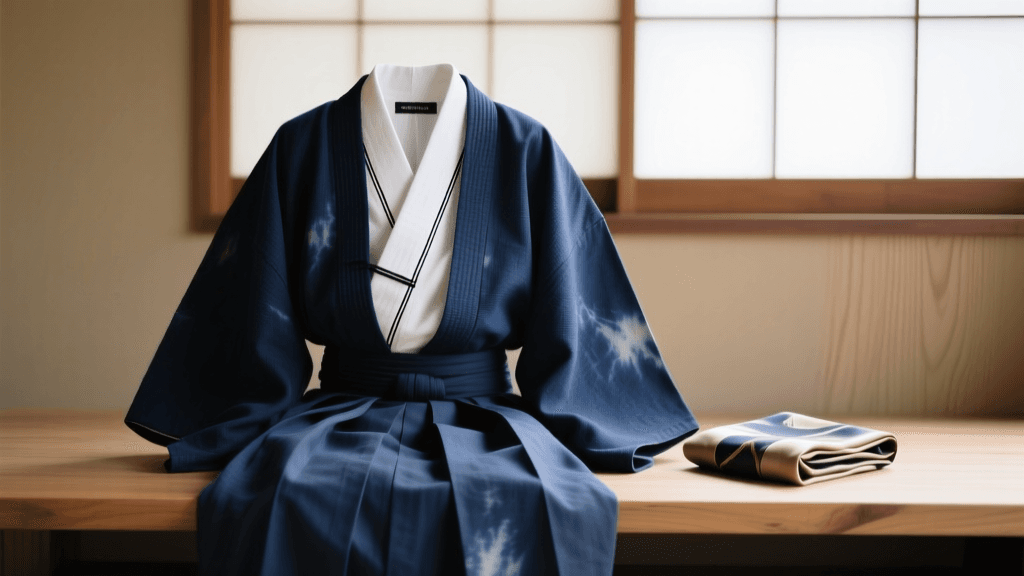
The umamori (horse-riding) style hakama, characterized by its divided legs and rigid back board (koshiita), is the most iconic garment shared by both martial artists and tea masters. However, the way it is worn and the materials chosen differ significantly based on the demands of the practice.
Martial Arts (Budo) Application
In martial arts like Aikido, Kendo, and Iaido, the hakama is worn high on the waist, just above the navel. The himo (cords) are tied tightly to ensure the garment does not shift during rapid footwork (suriashi) or falls (ukemi). The fabric must be durable enough to withstand friction from kneeling and the rigors of grappling. Practitioners often prefer heavy cotton or a stiff polyester-rayon blend to maintain the garment's structural integrity during motion.
Tea Ceremony (Chado) Application
Conversely, in the tea room, the hakama is worn slightly lower, resting comfortably on the hips. The tying of the himo is more subdued, with the knot placed discreetly at the back or side to avoid interfering with the seated seiza position. Male tea practitioners frequently wear the sendaihira, a highly formal, stiff silk hakama, for important tea gatherings (chaji). Female practitioners may wear a standard hakama or the andon-bakama, a skirt-like variation lacking a crotch gusset, which provides a softer drape and greater comfort during prolonged periods of kneeling. As noted by the Victoria and Albert Museum's extensive archives on Asian textiles, the evolution of these garments reflects a shift from samurai battlefield utility to refined indoor ceremonial wear.
The Seven Virtues of the Pleats
The traditional hakama features seven deep pleats—five in the front and two in the back. These are widely considered to represent the seven virtues of Bushido (the way of the warrior), which are equally applicable to the spiritual discipline of the tea ceremony:
- Jin (Benevolence): Compassion and empathy toward others.
- Gi (Justice): Moral integrity and doing what is right.
- Rei (Etiquette): Respect, courtesy, and proper conduct.
- Chi (Wisdom): Intelligence and the pursuit of knowledge.
- Shin (Sincerity): Honesty and authenticity in all actions.
- Chu (Loyalty): Devotion to one's teacher, school, and principles.
- Koh (Piety): Respect for ancestors and the lineage of the art.
Keikogi and Samue: Functionality in Training and Preparation
While the hakama covers the lower body, the upper body and preparatory work require specialized garments.
The Keikogi (Training Jacket)
Used primarily in martial arts, the keikogi (often mistakenly called a 'gi' in the West) is constructed to absorb sweat and withstand pulling. Aikido and Kendo practitioners favor the sashiko (rice-grain) weave or hishizashi (diamond) weave. These heavy cotton weaves (often weighing between 800g and 1000g per square meter) provide a thick barrier against friction burns from the tatami mats. For tea ceremony, the keikogi is rarely worn; instead, practitioners opt for a formal silk kimono (montsuki) or a subdued, high-quality cotton kimono.
The Samue (Work Clothes)
The samue is the unsung hero of the tea ceremony. Originally the work clothes of Zen monks, the samue consists of a loose-fitting jacket and matching trousers. Tea masters wear the samue while performing roji-baki (sweeping the tea garden), moving heavy charcoal for the hearth, and preparing the tea room before guests arrive. Actionable Tip: When purchasing a samue for tea garden work, look for one made of a cotton-linen blend (tetsukon or navy dyed) and ensure it includes a jinbaori (sleeveless vest) for layered temperature control during chilly morning preparations.
Fabric Comparison and Sizing Guide
Choosing the right fabric is critical for both comfort and adherence to tradition. Below is a comparison of the most common materials used for hakama and training garments.
| Fabric Type | Composition | Best Used For | Maintenance Level | Average Cost (USD) |
|---|---|---|---|---|
| Tetron | 65% Polyester, 35% Rayon | Daily Budo practice, Beginners | Low (Machine washable) | $60 - $90 |
| Heavy Cotton | 100% Cotton (Sashiko weave) | Aikido, Kendo, Advanced Budo | Medium (Hand wash, reshape) | $150 - $250 |
| Sendaihira Silk | 100% Silk (Stiff weave) | Formal Tea Ceremony, Grading | High (Dry clean only) | $400 - $800+ |
| Linen Blend | Cotton/Linen mix | Samue for Tea Garden, Summer | Medium (Gentle wash) | $80 - $130 |
How to Measure for a Hakama
Unlike Western trousers, hakama are sized by length, typically ranging from size 22 to 30. To find your correct size:
- Stand straight and locate your navel (heso).
- Measure straight down from your navel to the prominent bone on the outside of your ankle.
- For Martial Arts: Subtract 2-3 cm from this measurement so the hem clears the floor during dynamic movement.
- For Tea Ceremony: Use the exact measurement so the hem gently rests on the tatami mat when standing.
Example: If your navel-to-ankle measurement is 95cm, a Size 27 (approx. 94cm) is ideal for tea, while a Size 26 (approx. 91cm) is better for Kendo.
The Discipline of Folding (Tatamu)
In both Budo and Chado, how you treat your uniform is a reflection of your state of mind. Folding the hakama is a meditative practice that signals the end of your training or gathering. A beginner may take 10 minutes to achieve crisp pleats, while a master can complete the process in under two minutes.
Step-by-Step Hakama Folding
- Step 1: Lay the hakama flat on a clean surface, front side down. Smooth out the back panel and ensure the two back pleats are perfectly aligned.
- Step 2: Flip the garment over. Align the five front pleats, starting from the center and working outward. Use your hands to press the creases sharply.
- Step 3: Fold the left and right sides inward, overlapping them slightly to match the width of the koshiita (the rigid back board).
- Step 4: Fold the bottom hem up to meet the koshiita. Depending on the length, you may need to fold it in thirds.
- Step 5: Wrap the long front himo around the folded bundle, crossing them at the back, and tie them securely with the short back himo using a flat, horizontal knot.
'The folding of the hakama is not a chore to be rushed. It is the final technique of the day, a moment to smooth out the wrinkles in the fabric and the mind simultaneously.' — Traditional Aikido Adage
Care, Washing, and Maintenance Costs
Proper maintenance extends the life of your garments and preserves their formal appearance.
- Tetron Hakama: Machine wash on a cold, gentle cycle inside a mesh laundry bag. Hang dry immediately to prevent wrinkles. Do not use a tumble dryer, as high heat will melt the synthetic fibers and ruin the pleats. Cost: $0 (Home care).
- Cotton Keikogi and Hakama: Hand wash in cold water with a mild, bleach-free detergent. Cotton will shrink and bleed indigo dye during the first few washes. After washing, use specialized wooden clips to pinch the pleats together and hang them to dry in the shade. Iron on a high setting with steam while slightly damp. Cost: Time-intensive; professional pressing costs ~$25.
- Silk Sendaihira: Never wash silk at home. The stiffening agents (norizuke) applied to the silk will dissolve in water, turning the garment limp and unusable for formal tea ceremonies. Take it to a dry cleaner experienced in handling traditional Japanese garments. Cost: $40 - $60 per cleaning.
Sourcing Authentic Uniforms
When investing in traditional uniforms, avoid generic costume shops. Seek out specialized retailers that cater to actual practitioners. Brands like Iwata and Tozando offer authentic, Japan-made garments tailored to the exacting standards of martial arts federations and tea schools. For the tea ceremony practitioner, purchasing a custom-fitted sendaihira from a Kyoto-based tailor ensures the correct stiffness and drape required for the highest levels of chaji. Expect to invest between $150 and $300 for a high-quality, entry-to-mid-level practitioner's wardrobe, recognizing that these garments, when cared for properly, will last a lifetime of dedicated practice.