The Ultimate Hakama And Haori Anime Cosplay Styling Guide
The Intersection of Traditional Garments and Anime Culture
Anime and manga have long served as global ambassadors for Japanese culture, with traditional garments playing a pivotal role in character design, world-building, and visual storytelling. From the iconic black shozoku and white hakama of the Soul Reapers in Bleach to the Taisho-era military uniforms and checkered haori seen in Demon Slayer: Kimetsu no Yaiba, these garments are not merely costumes; they are narrative devices that convey rank, historical setting, and personality. According to the Anime News Network, the visual identity of characters like Tanjiro Kamado relies heavily on the historical accuracy of Taisho-era clothing, blending Western influences with traditional Japanese silhouettes.
For cosplayers and streetwear enthusiasts, translating these 2D designs into 3D reality requires a deep understanding of traditional Japanese tailoring, fabric behavior, and modern styling techniques. This guide bridges the gap between historical authenticity and convention-ready practicality, offering actionable advice for crafting, buying, and styling hakama and haori for anime-inspired fashion.
Choosing the Right Hakama for Cosplay and Streetwear
The hakama is a pleated, wide-legged trouser traditionally worn over a kimono. In anime, it is the quintessential garment for samurai, martial artists, and spiritual warriors. When selecting or sewing a hakama for cosplay, you must first choose between the two primary structural types:
- Umanori (Horse-riding Hakama): These are split down the middle like trousers. They are essential for action-oriented cosplays (e.g., Rurouni Kenshin or Bleach) as they allow for high kicks, wide stances, and dynamic photography.
- Andon (Lantern Hakama): These are unsplit and resemble a wide skirt. They are easier to sew and manage for casual streetwear or characters who do not engage in combat choreography, but they can restrict leg movement.
Fabric Selection: The Key to the Perfect Drape
The silhouette of a hakama relies entirely on the stiffness and drape of the fabric. Anime artists often draw hakama with sharp, rigid pleats that flow dramatically in the wind. To achieve this, you must choose the right material. Below is a comparison chart of the most common fabrics used in cosplay and modern Japanese streetwear.
| Fabric Type | Drape & Pleat Retention | Durability & Care | Estimated Cost | Best Anime Use Case |
|---|---|---|---|---|
| Tetron (Poly/Rayon) | Excellent. Holds sharp pleats and flows heavily. | High. Machine washable, wrinkle-resistant. | $40 - $80 | Shinigami (Bleach), Martial Arts Cosplay |
| Cotton / Linen | Moderate. Pleats soften over time, more casual. | Medium. Wrinkles easily, requires ironing. | $50 - $100 | Meiji/Taisho era casual wear (Rurouni Kenshin) |
| Silk | Superior. Luxurious drape, authentic movement. | Low. Dry clean only, stains easily, fragile. | $150 - $300+ | High-budget screen-accurate replicas, Nobility |
| Tech-Nylon | Stiff. Creates angular, cyberpunk silhouettes. | High. Water-resistant, easy to wipe clean. | $80 - $150 | Techwear crossovers, Cyberpunk anime AUs |
Mastering the Haori: Layering for Dynamic Silhouettes
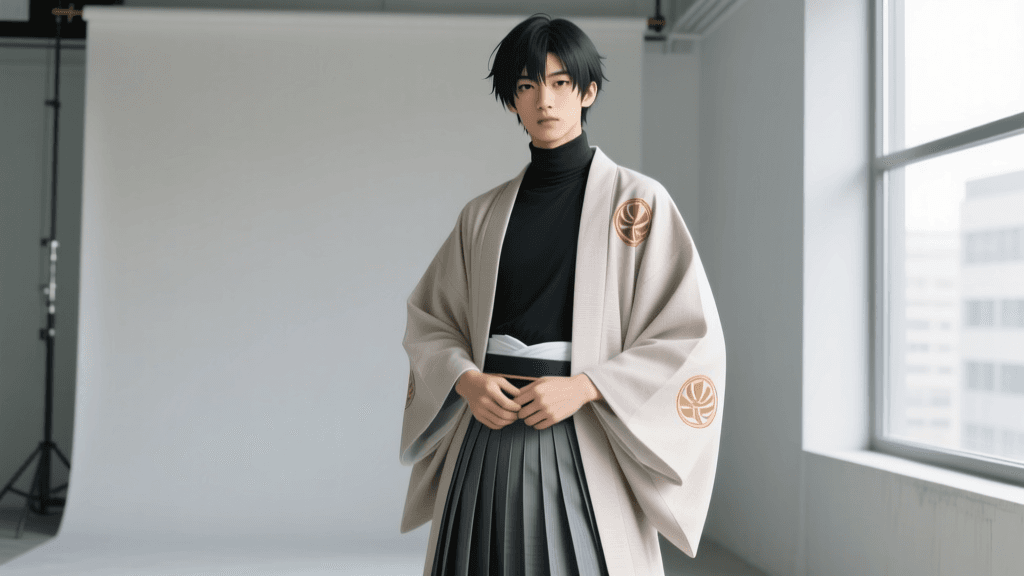
The haori is a hip- or thigh-length jacket worn over a kosode (the precursor to the modern kimono). Historically, it was used for warmth, but in the Edo period, it became a canvas for displaying family crests (mon) and wealth. The Victoria and Albert Museum notes that the haori's structure allows it to be worn open, creating a dynamic, layered silhouette that is incredibly popular in manga character design.
Styling the Haori for Modern Streetwear and Cosplay
In anime, the haori often denotes a specific faction or rank. Think of the white Captain's haori in Bleach or the geometric patterns in Demon Slayer. To adapt this for modern anime-inspired streetwear or convention wear, consider the following styling techniques:
- The Tech-Ninja Crossover: Pair a solid black, unlined cotton haori with a fitted black turtleneck, tactical cargo pants, and chunky sneakers. This bridges the gap between traditional samurai aesthetics and modern techwear.
- The Haori Himo (Ties): Traditional haori are secured at the front with woven cords called himo. For cosplayers, these ties can be color-coded to match a character's elemental affinity or used to subtly secure lightweight props (like fans or scrolls) to the waist.
- Crocodile Clips for Conventions: If you are wearing a haori open for a photoshoot and the wind isn't cooperating, use small, matte-black binder clips on the inside seams to weigh the garment down or pin it to your inner layer, ensuring the camera catches the dramatic flare of the sleeves.
Pro-Tip for Cosplayers: The sleeves of a traditional haori are open at the back, creating a pocket-like space (furi). In anime, characters often dramatically pull weapons or scrolls from these sleeves. You can reinforce the inside of the furi with canvas and add hidden snap buttons to securely hold lightweight foam props for convention photos.
Practical Sizing and Measurements
Unlike Western clothing, traditional Japanese garments do not use standard S/M/L sizing. They are measured based on the wearer's height and the length of the back seam. When ordering a hakama online from Japanese martial arts suppliers (which is highly recommended for cosplay due to the superior pleat quality), you will need specific measurements.
How to Measure for a Hakama
- Wear Your Base Layer: Put on the kosode or shirt you plan to wear underneath, as well as the belt (obi) you will use to tie the hakama.
- Find the Navel: The front of the hakama sits just below the navel, while the back sits slightly higher on the waist.
- Measure the Drop: Have a friend measure from your navel down to the desired hemline. For traditional wear, the hem should rest just above the ankle bone. For anime cosplay, you may want it 1-2 inches longer to hide modern footwear or create a more dramatic, sweeping floor-grazing effect during action poses.
- The Koshita (Back Plate): Ensure the rigid trapezoidal board at the back of the hakama sits comfortably in the small of your back. If buying off-the-rack, you may need to gently heat and bend the plastic koshita to match the curvature of your spine.
Convention Survival: Footwear, Mobility, and Safety
Wearing a hakama and haori at a multi-day anime convention presents unique logistical challenges. The Japan Guide emphasizes that traditional footwear requires specific posture and walking techniques to avoid tripping, which can be difficult on crowded convention floors.
Footwear Options for the Anime Cosplayer
- Tabi and Zori (Traditional): Split-toe socks with straw or foam sandals. Verdict: Highly screen-accurate for historical anime, but offers zero arch support. Limit wear to photoshoots only.
- Waraji (Straw Sandals): Often worn by traveling monks or samurai in anime. Verdict: Visually striking, but the hemp ropes can cause severe blisters. Line the inside of the ropes with medical tape or moleskin before stepping onto the convention floor.
- Modern Split-Toe Sneakers: Shoes like the Nike ISPA or Vibram FiveFingers. Verdict: The ultimate convention hack. They maintain the visual illusion of tabi from a distance while providing the athletic support needed for 10,000+ steps a day.
Mobility and Stair Safety
The front pleats of a hakama can easily catch on escalators or stairs. When ascending stairs, use your left hand to gracefully sweep the front pleats upward and to the side. When kneeling (a common requirement for Japanese-style photoshoots), sweep the back pleats outward before dropping your knees to avoid crushing the rigid koshita board.
Caring for Your Cosplay Garments
Proper maintenance ensures your garments last through multiple convention seasons. Tetron hakama can be machine washed on a gentle cycle, but they must be folded correctly while damp to retain their pleats. Folding a hakama is a meditative, precise process involving overlapping the side seams, smoothing the front and back pleats, and folding the long himo (ties) into specific geometric patterns. Never use a clothes dryer, as the heat will melt the synthetic fibers and permanently ruin the pleat lines.
For cotton or silk haori, spot cleaning is preferred. Store your haori on wide, padded hangers to prevent the shoulders from stretching, and keep them in a breathable cotton garment bag away from direct sunlight, which will rapidly fade the vibrant dyes used in anime-inspired patterns. By respecting the traditional construction of these garments while adapting them for the rigors of modern cosplay, you elevate your craft from a simple costume to a wearable tribute to Japanese textile history and anime artistry.