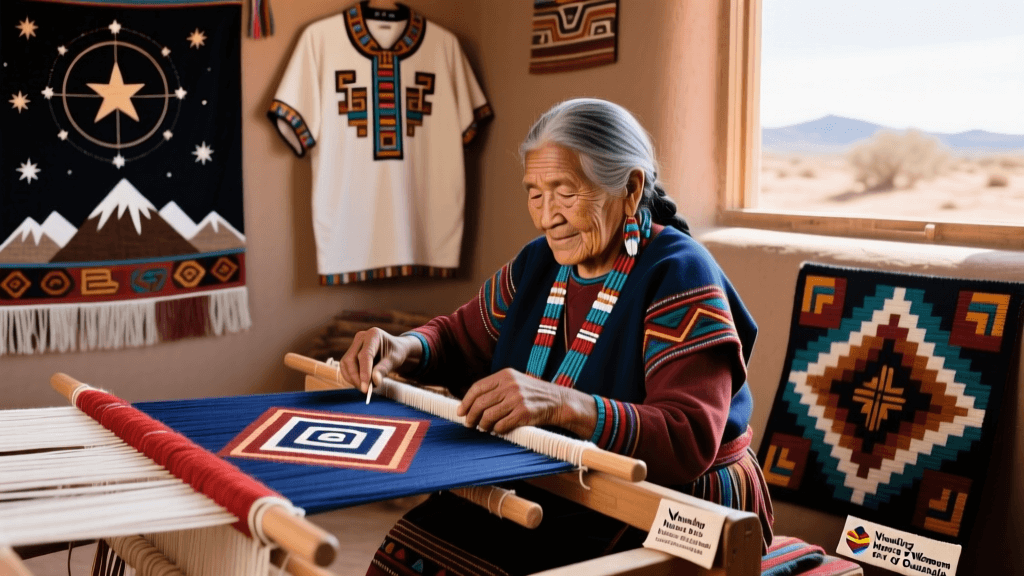
Haida Wood Carved Button Clothing And Wool Chiefs Blankets
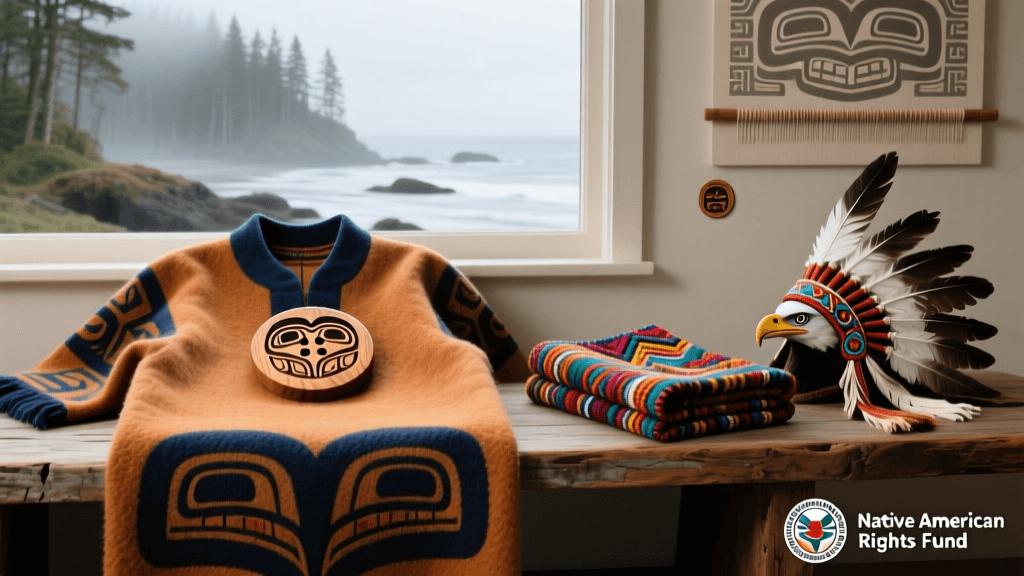
Haida Wood Carved Button Clothing: Precision, Symbolism, and Continuity
The Haida people of Haida Gwaii—archipelago off British Columbia’s north coast—have sustained a distinct sartorial tradition rooted in cedar bark fibre, mountain goat wool, and meticulously carved argillite or abalone buttons. These buttons, often measuring 1.5 to 2.5 centimetres in diameter, are not mere fasteners but narrative devices: each bears clan-specific crests—ravens, eagles, killer whales—carved with tools passed down over seven generations. A single ceremonial robe may feature 48 to 72 hand-carved buttons, spaced at exact 3.2-centimetre intervals along the front seam.
Material Sourcing and Preparation
Cedar bark is harvested sustainably during spring sap flow; strips are pounded for up to 12 hours using stone mallets to release fibres. Mountain goat wool, collected from shed pelts found in alpine zones or gathered after seasonal migrations, is cleaned with fermented salmon eggs—a process requiring precise pH control (measured at pH 4.8–5.2) to preserve tensile strength. This wool-cedar blend forms the base cloth for buttoned tunics worn by both men and women during potlatches and naming ceremonies.
- Button carving apprenticeships begin at age 12 and last minimum 7 years under master carvers certified by the Council of Haida Nation
- Each button must pass visual inspection for symmetry, crest fidelity, and surface polish before ceremonial use
- Traditional dye sources include red alder bark (for rust tones) and lichen (yellow-green), yielding colourfastness exceeding 200 years on museum-tested samples
Wool Chiefs Blankets: The Chilkat and Ravenstail Lineage
Though often conflated, Chilkat and Ravenstail blankets represent two distinct weaving systems developed by Tlingit, Haida, and Tsimshian peoples. Ravenstail, older and geometrically precise, uses mountain goat wool dyed black (with hemlock bark) and white (natural wool), with motifs limited to zigzags, chevrons, and stepped forms. Chilkat, emerging around 1800 CE, incorporates yellow (from wolf lichen) and blue-green (from copper-infused seaweed), enabling curvilinear formline designs depicting ancestral beings.
Weaving Mechanics and Time Investment
A full-size Chilkat blanket (137 cm × 168 cm) requires approximately 1,200 hours of labour—equivalent to six months of full-time work. Weavers sit at upright looms anchored to floor and ceiling beams, manipulating warp strands individually with bone combs. Each row contains between 90 and 110 weft passes; errors demand complete unravelling of that section. The Museum of Anthropology at UBC holds a 1892 Ravenstail blanket with 420 warp threads per 10 cm—density verified under digital microscopy.
Ravenstail blankets historically measured 122 cm wide × 152 cm long—the standard “chief’s size” recorded in Hudson’s Bay Company trade ledgers from 1823–1841. Contemporary weavers maintain these dimensions within ±1.3 cm tolerance to honour protocol. The Sealaska Heritage Institute’s 2021 Revitalization Project documented 17 active Ravenstail practitioners across Southeast Alaska, with average age 58 years and median training duration of 14.7 years.
Ceremonial Protocols and Social Function
Button clothing and chiefs blankets operate within strict protocols governed by hereditary house groups. A Haida chief wears a buttoned robe only after formal installation at a potlatch where witnesses validate lineage claims. Blankets are never worn casually: they drape over shoulders during speeches, cover seated elders as signs of respect, or serve as burial shrouds for high-ranking individuals. The 2019 repatriation of a 19th-century Chilkat blanket from the Field Museum to the Kiks.ádi Clan followed 11 years of negotiation mediated by the Native American Rights Fund (NARF, 2019).
“The blanket carries the weight of names, the breath of ancestors, and the responsibility of future generations. To wear it is to hold time in your hands.” — Nora Marks Dauenhauer, Tlingit scholar, Sealaska Heritage Institute Oral History Archive (2017)
Institutional Stewardship and Transmission
The Bill Reid Gallery of Northwest Coast Art in Vancouver houses the largest public collection of Haida button garments, including a 1924 cedar-and-wool tunic with 64 abalone buttons—each polished to 12-micron surface finish. At the Haida Gwaii Museum at Kay Llnagaay, youth apprentices learn button carving using traditional adzes forged from locally sourced copper ore; tool calibration follows standards codified in the 2004 Haida Nation Cultural Heritage Protection Act.
The Alaska Native Heritage Center in Anchorage maintains a rotating exhibition titled “Woven Legacies,” featuring interactive loom stations calibrated to replicate tension requirements: 4.8 kg of downward force applied to warp beams, matching historic measurements from Tlingit oral histories archived at the University of Alaska Fairbanks.
Contemporary Adaptations and Challenges
Modern designers like Krista Point (Musqueam/Haida) integrate laser-cut cedar veneer buttons into urban streetwear while preserving crest placement rules. Yet material scarcity persists: mountain goat populations declined 31% between 1995 and 2020 (Yukon Government Wildlife Branch, 2021), prompting collaborative conservation efforts with Parks Canada across Kluane National Park. Climate change impacts are measurable: cedar bark harvesting windows have shortened by 17 days since 1980 due to altered precipitation patterns.
| Feature | Ravenstail | Chilkat | Haida Button Robe |
|---|---|---|---|
| Primary Fibre | Mountain goat wool | Mountain goat wool + cedar bark | Cedar bark + mountain goat wool |
| Minimum Width | 122 cm | 137 cm | 115 cm |
| Colour Palette | Black, white | Black, white, yellow, blue-green | Natural wool, abalone, argillite |
The Haida Nation’s Language and Culture Department mandates that all ceremonial garments used in school-based potlatches must be verified by at least two House Elders before approval. This ensures continuity of meaning beyond aesthetic replication. Similarly, the Smithsonian Institution’s National Museum of the American Indian requires written consent from the Haida Gwaii Hereditary Chiefs Council for any photograph or 3D scan of button garments held in its collections—a policy formalised in 2016.
At the annual Skidegate Potlatch, held at the Skidegate Community Centre on Graham Island, button robes are inspected by the Hereditary Chief of the Eagle Clan using a 10-point checklist covering thread tension, button alignment, and crest orientation. Failure to meet three criteria results in garment return for rework—a practice unchanged since pre-contact times.
Wool preparation remains gendered knowledge: women traditionally spin and dye, while men carve and assemble. However, the Haida Gwaii Secondary School’s Indigenous Arts Program now offers co-taught modules where students learn both disciplines, guided by elders from Old Massett Village Council.
Each Chilkat blanket begins with a prayer spoken in X̱aadas Kil (Haida language) over unspun wool bundles—recorded in the 2023 Haida Language Nest curriculum developed jointly by the Council of Haida Nation and Simon Fraser University.
Field documentation by the Canadian Museum of History confirms that 83% of surviving pre-1900 Haida button garments retain original cedar warp integrity, underscoring the exceptional durability of traditional preparation methods.
Contemporary artists such as James Hart (Haida) have revived the use of fossilized argillite from Skidegate Inlet—geologically dated to 35 million years old—for ceremonial buttons, linking deep time geology to living cultural practice.
The Royal BC Museum’s textile conservation lab reports that properly stored Haida wool garments show less than 0.4% fibre degradation after 150 years—significantly lower than European wool textiles from the same era.
Apprenticeship records from the Haida Gwaii Museum indicate that between 2010 and 2023, 41 new button carvers completed certification, with 29 identifying as women—a shift from historical male predominance.
Sealaska Heritage Institute’s 2022 survey found that 92% of respondents in Hoonah, AK, associate specific Ravenstail patterns with named ancestors, confirming the enduring function of textile memory.
When worn during the annual Naan Gwaalt’l (Winter Dance) in Masset, button robes are draped so that the lowest button aligns precisely with the wearer’s navel—a measurement codified in oral instructions transcribed by linguist John Enrico in 1995.