Habutai vs Chirimen vs Tsumugi: Choosing Kimono Silk in 2026
The 2026 Kimono Renaissance: Why Fabric Choice Matters
As we navigate the fashion landscape of 2026, the global appreciation for slow fashion and heritage textiles has sparked a massive resurgence in traditional Asian garments. The Japanese kimono, in particular, has transcended its ceremonial boundaries, becoming a staple in contemporary, sustainable wardrobes worldwide. However, the true essence of a kimono lies not just in its silhouette, but in the intricate textile choices that dictate its drape, formality, and seasonal appropriateness. For collectors, modern stylists, and cultural enthusiasts, understanding the nuanced differences between primary silk weaves is essential. Among the most prominent are Habutai, Chirimen, and Tsumugi. Each fabric tells a different story of Japanese artisanship, offering unique tactile experiences and visual aesthetics that define the garment's ultimate purpose.
Understanding the "Tan": The Foundation of Kimono Textiles
Before diving into specific weaves, it is crucial to understand how kimono silk is sold and measured. Unlike Western tailoring, which cuts fabric from wide bolts, traditional kimono silk is woven in a narrow, continuous bolt known as a tan. A standard tan measures approximately 36 centimeters (14 inches) in width and 12 meters (13 yards) in length. This specific dimension is not arbitrary; it is precisely calculated to yield one complete kimono with zero fabric waste, utilizing straight-line cutting techniques that have remained unchanged for centuries. When sourcing authentic silk in 2026, purchasing by the tan remains the gold standard for bespoke commissions and high-end restorations.
Habutai: The Smooth, Luminous Foundation
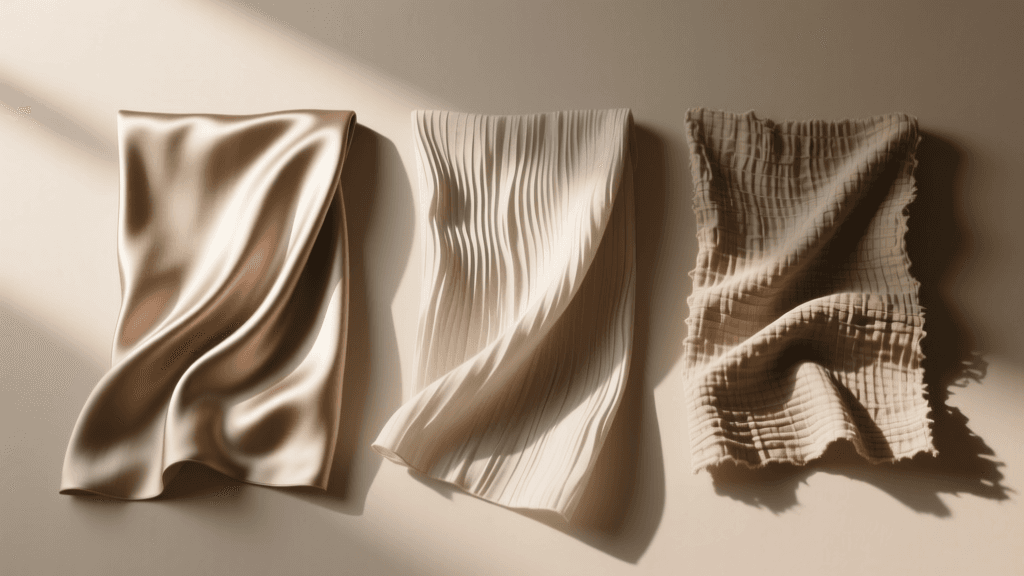
Habutai, often translated as "feather silk," is a plain-weave silk characterized by its smooth, lustrous surface and lightweight feel. Woven with untwisted warp and weft threads, Habutai lacks the textured grip of crepe silks, resulting in a fabric that glides effortlessly against the skin. Historically, Habutai was the premier export silk of Japan, fueling the global silk trade in the early 20th century. Today, in 2026, it remains highly prized for its breathability and delicate sheen.
Primary Uses and Formality
Because of its fluid drape and lightweight nature, Habutai is rarely used for the outer layer of highly formal winter kimonos. Instead, it is the undisputed king of the nagajuban (the under-kimono worn beneath the main garment) and haori linings. Its smooth texture prevents friction against the more delicate, heavily embroidered outer silks. In modern 2026 styling, Habutai is also frequently utilized for yukata-adjacent summer silks and casual indoor lounging wear, offering a luxurious alternative to cotton or linen during humid months.
Chirimen: The Crepe of Formal Elegance
If Habutai is the quiet foundation, Chirimen is the showstopper. Chirimen is a silk crepe fabric created by using untwisted warp threads and highly twisted weft threads. During the weaving process, the weft threads are alternately twisted to the left and right. When the fabric is washed and finished, the tension releases, creating a distinctive, pebbled surface texture known as shibo. This microscopic texture not only gives Chirimen a rich, matte depth that absorbs light beautifully but also provides a structural resilience that resists wrinkling.
Dyeing and Artistic Expression
The pebbled surface of Chirimen makes it the absolute best canvas for Yuzen dyeing, the traditional resist-dyeing technique used to paint elaborate pictorial scenes on silk. The texture catches the dyes and metallic leaf applications, giving the artwork a three-dimensional quality. According to the Metropolitan Museum of Art's Heilbrunn Timeline of Art History, the evolution of Japanese silk weaving and dyeing techniques reached unprecedented artistic heights through the manipulation of crepe textiles, allowing artisans to create wearable masterpieces. In 2026, authentic Kyo-Chirimen (Chirimen woven in the Kyoto region) remains the mandatory fabric choice for formal garments like kurotomesode (black formal kimono) and furisode (long-sleeved kimono for unmarried women).
Tsumugi: The Slubbed Silk of Rustic Charm
Tsumugi, or pongee, represents the wabi-sabi aesthetic of Japanese textiles. Unlike the uniform, flawless threads used in Habutai and Chirimen, Tsumugi is woven from silk floss, broken cocoons, or pre-dyed spun silk threads. This results in a fabric with a nubby, slubbed texture that resembles raw linen or coarse cotton, despite being 100% silk. Tsumugi is incredibly labor-intensive to produce, often requiring the artisan to hand-spin the silk floss before weaving.
The Pinnacle of Artisanal Luxury
Paradoxically, while Tsumugi looks rustic and was historically worn by commoners who were forbidden from wearing shiny silks, it is today one of the most expensive and coveted textiles in Japan. The Japanese Ministry of Economy, Trade and Industry (METI) continues to designate specific regional Tsumugi weaves, such as Yuki Tsumugi and Oshima Tsumugi, as protected Traditional Craft Products. In 2026, due to a severe shortage of master weavers and the immense time required to hand-tie the kasuri (ikat) patterns before dyeing, a single tan of authentic Yuki Tsumugi can easily command prices exceeding 500,000 JPY. It is strictly classified as casual or everyday wear, yet it is worn by connoisseurs who appreciate its profound understated luxury.
2026 Fabric Comparison Chart
| Fabric Type | Weave Structure | Surface Texture | Formality Level | Primary Use | 2026 Avg. Price per Tan (JPY) |
|---|---|---|---|---|---|
| Habutai | Plain Weave | Smooth, Lustrous | Low / Functional | Nagajuban, Linings, Summer Wear | 40,000 - 80,000 |
| Chirimen | Crepe Weave | Pebbled (Shibo), Matte | High / Formal | Tomesode, Furisode, Formal Obi | 100,000 - 300,000 |
| Tsumugi | Pongee / Slub | Nubby, Slubbed, Rustic | Casual / Connoisseur | Everyday Kimono, Haori, Tea Ceremony | 250,000 - 800,000+ |
Environmental Impact and Sustainable Silk in 2026
The textile industry in 2026 is heavily focused on sustainability, and Japanese sericulture is no exception. Traditional silk production has faced scrutiny regarding the boiling of silkworm cocoons. In response, the market has seen a rise in Ahimsa (peace) silk alternatives and highly regulated, eco-conscious sericulture farms in the Gunma and Yamagata prefectures. These farms utilize closed-loop water systems for dyeing and ensure that the mulberry trees fed to the silkworms are grown without synthetic pesticides. When purchasing Chirimen or Habutai in 2026, discerning buyers increasingly look for the newly established "Eco-Sericulture" certification tags, ensuring their garment supports both cultural preservation and environmental stewardship.
Sourcing and Verifying Authentic Silk
The 2026 e-commerce market is saturated with advanced polyester mimics. AI-generated Yuzen prints on polyester Chirimen are virtually indistinguishable from the real thing on a screen. To verify authenticity, collectors must rely on tactile and visual cues. Real Chirimen has a distinct "crunch" or resistance when rubbed between the fingers, a byproduct of the high-twist weft threads, whereas polyester crepe feels uniformly slippery. Tsumugi should feel warm to the touch and exhibit irregular slubs that cannot be perfectly replicated by synthetic extrusion machines. For high-value purchases, requesting a burn test sample or purchasing directly from METI-certified cooperatives remains the safest route to guarantee provenance.
Modern Care and Maintenance
Caring for these distinct weaves requires tailored approaches. Habutai, being delicate, is highly susceptible to water spotting and must be professionally dry-cleaned using modern, eco-friendly liquid silicone solvents that have replaced harsh perc chemicals in 2026. Chirimen is remarkably resilient but can lose its shibo texture if subjected to high heat or improper pressing; it requires specialized steam blocking by a kakeya (traditional kimono presser). Tsumugi, while robust, should never be machine washed, as the spun silk fibers can felt and shrink irreversibly. Proper storage in tatou (traditional paper wrappers) within a cedar chest, alongside natural camphor, ensures these exquisite textiles survive for generations, maintaining their structural integrity and cultural legacy.