Traditional Guizhou Miao Silver And Batik Dress Guide
The Living Textiles of Guizhou Province
Deep within the mountainous terrain of southwestern China's Guizhou province lies a treasure trove of regional folk dress that serves as much more than mere adornment. For the Miao people—one of China's largest and most culturally diverse ethnic minority groups—traditional clothing is a wearable archive of history, migration, and spiritual belief. Because the Miao historically lacked a formalized written language, they encoded their epic tales, ancestral migrations, and cosmological views directly into the fabrics they wove and the silver they forged.
According to Britannica's overview of the Hmong/Miao people, the Miao have undergone centuries of migration, moving from the Yellow River basin down into the rugged highlands of the southwest. This arduous journey is immortalized in their provincial dress, particularly through the intricate indigo batik and heavy silverwork that define their regional folk aesthetics. Today, Guizhou remains the epicenter of Miao textile and silversmithing traditions, offering a fascinating study for textile enthusiasts, cultural historians, and conscious collectors alike.
'To wear Miao silver and batik is to wear the memory of a thousand rivers and ten thousand mountains. The cloth is our book, and the silver is our seal.'
— Traditional Miao Proverb
The Art of Miao Indigo Batik (Laba)
Miao indigo batik, known locally as laba, is a resist-dyeing technique that has been practiced for over a millennium. The process begins with harvesting fresh indigo plants (Isatis tinctoria or Persicaria tinctoria), which are fermented in large wooden vats with rice wine, ash, and mountain spring water. This fermentation process, which can take weeks, creates a rich, living dye vat that requires daily tending.
Artisans use a specialized brass tool called a huajian (wax knife) to draw intricate geometric and natural motifs onto white cotton or hemp cloth using melted beeswax. Once the wax hardens, the fabric is submerged repeatedly into the indigo vat. The magic of Miao batik lies in the 'ice crack' effect: as the wax cools and flexes, it fractures. The indigo dye seeps into these microscopic fissures, creating a web of delicate, unpredictable blue veins that guarantee no two pieces are ever identical.
As documented in UNESCO's Intangible Cultural Heritage registry for China, traditional craftsmanship like Miao batik is vital to preserving regional identities. The deep, earthy scent of authentic fermented indigo is a hallmark of genuine provincial folk dress, contrasting sharply with the sharp, chemical odor of synthetic commercial dyes.
Miao Silverwork: Forging Ancestral Armor
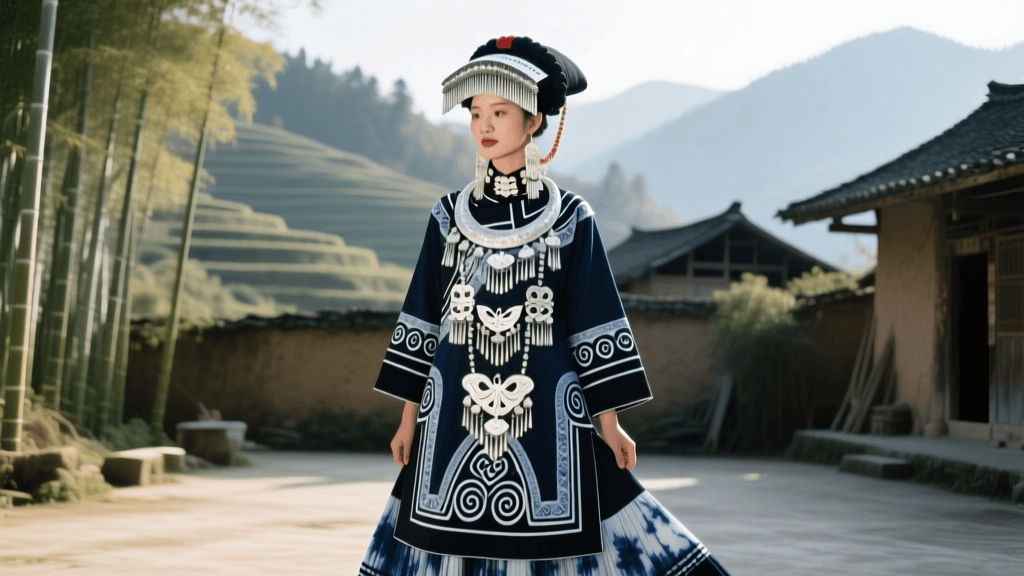
If batik is the canvas of Miao history, silver is its armor and crown. Miao silver jewelry is renowned globally for its sheer scale, weight, and breathtaking filigree work. A full festival ensemble for a Miao woman can include a massive horned headdress, layered neck rings, chest plates, and hairpins, weighing anywhere from 5 to 15 kilograms (11 to 33 pounds).
The silversmithing process involves over thirty distinct techniques, including repoussé, wire drawing, and braiding. Silversmiths, who are traditionally male, work in small village forges, melting silver ingots and hammering them into paper-thin sheets. They then use fine tweezers and pine resin to solder microscopic silver grains into elaborate 3D motifs. The sound of the silver—specifically the melodic chiming of the silver pendants and bells attached to the garments—is considered just as important as the visual aesthetic, believed to ward off evil spirits and announce the wearer's presence to the ancestors.
Sacred Motifs and Symbolism
When examining regional folk dress from Guizhou, understanding the iconography is essential for collectors and enthusiasts. The motifs are not merely decorative; they are deeply spiritual.
- The Butterfly Mother (Mai Bang): The most sacred motif in Miao cosmology. According to legend, the Butterfly Mother emerged from the heart of a maple tree and laid twelve eggs, which hatched into the first humans, dragons, and beasts. She is a symbol of fertility, creation, and maternal protection.
- The Buffalo Dragon: Unlike the imperial Chinese dragon, the Miao dragon is often depicted with the horns of a water buffalo and the body of a fish or centipede. It represents agricultural prosperity, rain, and a harmonious relationship with nature.
- The Maple Tree: Representing the origin of life and the connection between the earthly realm and the spiritual world.
Regional Variations: Xijiang vs. Danzhai
Guizhou is not a monolith; the Miao are divided into numerous subgroups, often categorized by the style of their regional folk dress. Museums such as The Metropolitan Museum of Art's collection of Chinese regional textiles showcase the vast differences between villages separated by only a few mountain ranges. Below is a comparison of two prominent regional styles:
| Feature | Xijiang Miao (Leishan County) | Danzhai Miao (Danzhai County) |
|---|---|---|
| Skirt Style | Long, heavily pleated skirts requiring 15-20 meters of indigo-dyed fabric. | Short, 'hundred-bird' skirts heavily embroidered with colorful silk thread. |
| Silver Headdress | Massive, wide silver horns spanning up to a meter across, symbolizing the water buffalo. | Smaller, highly intricate floral and bird combs, often paired with silver hairpins. |
| Primary Craft Focus | Heavy silversmithing and dense, dark indigo pleating. | Masterful indigo batik and vibrant, multi-colored bird-motif embroidery. |
| Festival Highlight | Lusheng Festival (harvest and courtship). | Jinji Festival (honoring the ancestral spirits and batik origins). |
Practical Guide: Buying Authentic Miao Folk Dress
For collectors, textile designers, and cultural enthusiasts looking to acquire authentic pieces of Guizhou provincial dress, navigating the market requires specific knowledge. The rise of cultural tourism has flooded the market with mass-produced, synthetic imitations. Here is your actionable guide to sourcing authentic Miao garments and silver.
Sourcing Authentic Indigo Batik
- The Smell and Touch Test: Authentic fermented indigo has a distinct, earthy, slightly fermented odor that never fully washes out. The fabric should feel substantial; traditional Miao hemp-cotton blends have a slight slub and texture, unlike perfectly smooth commercial cotton.
- Examine the 'Ice Cracks': Look closely at the white lines in the batik pattern. Hand-drawn wax cracks are organic, irregular, and vary in thickness. Screen-printed imitations feature perfectly uniform, repetitive 'crack' patterns.
- Pricing Benchmarks: A genuine, hand-batiked cotton scarf (approx. 180cm x 50cm) from a village cooperative in Danzhai will typically cost between 250 and 500 RMB ($35 - $70 USD). Fully embroidered and batiked jackets can range from 2,000 to 8,000 RMB depending on the age and density of the embroidery.
Purchasing Miao Silverwork
- Purity Standards: Traditional Miao silver was often mixed with copper for durability, but modern artisan pieces meant for sale are usually crafted from S990 or S999 pure silver. Always ask for the purity stamp and a certificate of authenticity from the village cooperative.
- Cost Calculation: Artisan Miao silver is priced by weight plus a craftsmanship premium. Expect to pay the daily market rate for silver plus an artisan fee of 15 to 35 RMB per gram. A moderately sized silver necklace (approx. 150 grams) should cost roughly 1,500 to 2,500 RMB ($210 - $350 USD).
- Custom Orders: If commissioning a piece, allow a minimum of 3 to 6 months. Master silversmiths in villages like Kongbai (known as the 'Silver Village') often have long waiting lists, especially leading up to major harvest festivals.
Festival Timing and Garment Care
To witness these regional folk garments in their intended context, timing your visit to Guizhou is crucial. The Sisters' Meal Festival (usually falling in April or May, based on the lunar calendar) in Taijiang County is the premier event for viewing Miao silver and batik. During this time, young women don their full ancestral silver sets and finest batiked jackets to parade through the villages.
Once you have acquired authentic pieces, proper care is essential to preserve the organic materials:
- Caring for Indigo: Never use harsh detergents or bleach. Hand wash batik garments in cold water with a pH-neutral soap. The indigo will bleed slightly during the first few washes—this is normal. Dry in the shade, as direct UV sunlight will rapidly degrade the natural indigo pigment.
- Caring for Silver: Miao silver is meant to be worn; the natural oils from your skin help prevent tarnishing. If storing, wrap pieces in anti-tarnish cloth and keep them in a low-humidity environment. Avoid chemical silver dips, which can strip the intentional oxidation (blackening) that artisans use to highlight the intricate filigree details.
Conclusion
The regional folk dress of Guizhou's Miao people is a masterclass in wearable anthropology. From the deep, living blues of fermented indigo batik to the deafening, beautiful chime of hand-forged silver horns, these garments represent a profound connection to the natural world and ancestral memory. By understanding the craftsmanship, regional variations, and proper sourcing methods, collectors and enthusiasts can help support the village artisans who are working tirelessly to ensure that the Miao's 'wearable books' continue to be written for generations to come.