Guizhou Miao Dress: Pleated Skirts & Silver Ornaments
The Living Archives of Guizhou's Miao People
The mountainous terrain of Guizhou Province in southwestern China has long served as a natural fortress, preserving some of the most intricate and visually stunning regional folk dress in Asia. Among the diverse ethnic groups residing here, the Miao (internationally recognized as the Hmong) possess a sartorial tradition that functions as far more than mere clothing. Because the Miao people historically lacked a formal written language, their garments became living archives. Every stitch, dye bath, and silver ornament encodes centuries of migration myths, spiritual beliefs, and clan identities.
Unlike the standardized silhouettes of Han dynasty hanfu or the tailored lines of the Manchu qipao, Miao provincial dress is hyper-localized. Anthropologists and textile experts often categorize Miao subgroups by their most distinct garment features, leading to names like the 'Black Miao,' 'Long Skirt Miao,' and 'Short Skirt Miao.' According to the UNESCO World Heritage Centre, the Miao villages in Southeast Guizhou represent a vital cultural landscape where these ancient textile traditions continue to thrive in daily life and during seasonal festivals.
For collectors, textile enthusiasts, and cultural historians, understanding the mechanics, sourcing, and care of Guizhou Miao dress requires a deep dive into the region's specific craftsmanship. This guide explores the anatomy of the iconic Miao pleated skirt, the spiritual weight of their silverwork, and provides actionable advice for sourcing authentic pieces.
Anatomy of the Miao Pleated Skirt (Baiqun)
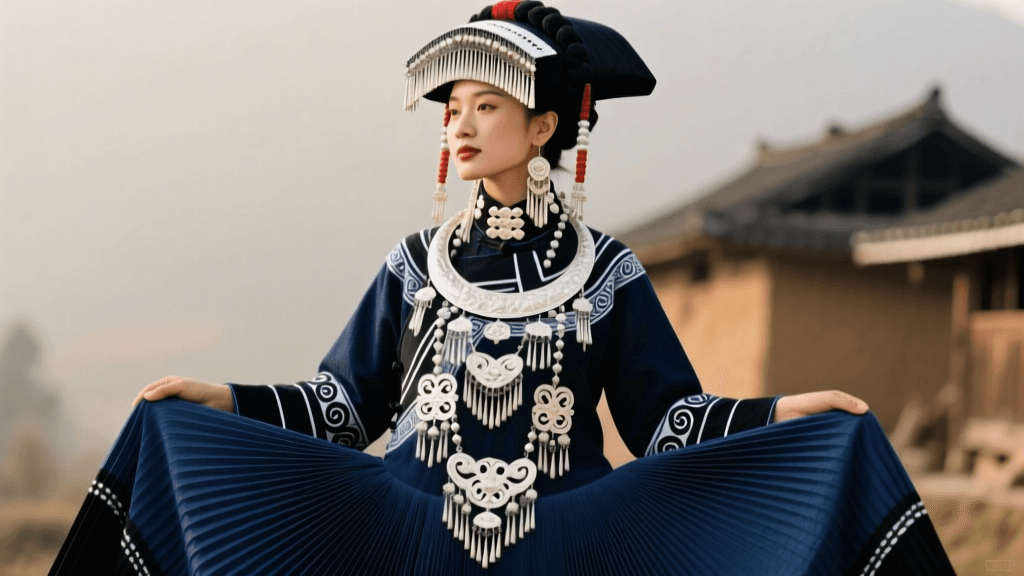
The centerpiece of Miao women's folk dress is the baiqun, or 'hundred-pleat skirt.' Creating a single authentic skirt is a monumental task that can take several months of continuous labor. The process begins with weaving raw cotton or hemp on a traditional backstrap loom. Once the fabric is prepared, it undergoes a rigorous dyeing process using natural indigo (Polygonum tinctorium).
The indigo dyeing is not a simple one-step dip. Artisans ferment the indigo leaves in wooden vats with rice wine and ash water. The cloth is dipped, oxidized in the air, and dipped again—often up to thirty times—to achieve a deep, lustrous midnight blue. To give the skirt its characteristic stiff, glossy finish, the dyed fabric is brushed with a mixture of ox blood and egg white, then pounded with wooden mallets. This glazing process makes the fabric water-resistant and gives it a metallic sheen that catches the light beautifully during festival dances.
Pleating and Regional Variations
The pleating process requires immense precision. The artisan folds the stiffened cloth into hundreds of microscopic pleats, sometimes using bamboo splints to ensure uniformity. The pleats are then tightly bound with thread and steamed to set the shape. The number of pleats can range from 500 to over 1,000 per skirt.
- The Long Skirt Miao (Danxiang & Rongjiang): Skirts in these regions typically measure between 70 to 90 centimeters in length, reaching down to the calves. They are often layered with heavily embroidered aprons and wrapped leg bindings.
- The Short Skirt Miao (Leishan County): Famous for their 'miniskirts,' these skirts measure a mere 15 to 20 centimeters in length. They are worn over thick, embroidered leggings and multiple layers of woven sashes, creating a striking, bell-shaped silhouette that allows for agile movement in the steep mountain terraces.
The Weight of Heritage: Miao Embroidery and Silver
While the indigo skirt provides the foundation, the upper garments and accessories tell the specific story of the wearer's village. Miao embroidery is renowned for its complex techniques, including cross-stitch, couching, and the highly specialized 'silk-thread wrapping' method. Motifs are deeply symbolic. The 'Butterfly Mother' (Mais Bangx Mais Lief) is a ubiquitous motif, representing the mythical ancestor of the Miao people who hatched from a maple tree. Another common motif is the water buffalo dragon, a benevolent creature associated with agriculture and rain, distinct from the imperial dragons of Han Chinese tradition.
As noted by the Victoria and Albert Museum's Asian Collections, Miao textiles are celebrated globally for their vibrant color palettes and structural complexity, often contrasting the deep indigo base with shocking pinks, vivid greens, and bright yellows.
Miao Silver Ornaments: Armor for the Soul
No Miao festival outfit is complete without silver. In Miao cosmology, silver is believed to possess the power to ward off evil spirits, illuminate the path to the afterlife, and display the family's wealth and social standing. The village of Shidong in Taijiang County is famous across Asia for its master silversmiths, who use traditional repoussé, chasing, and filigree techniques to craft elaborate headdresses, combs, horns, and heavy necklaces.
A full festival silver ensemble can weigh anywhere from 5 to 15 kilograms. The sound of the silver bangles and bells chiming together during the Lusheng (bamboo pipe) dances is considered essential to the spiritual efficacy of the ritual.
| Ornament Type | Average Weight | Estimated Cost (USD) | Primary Occasion |
|---|---|---|---|
| Silver Horn Headdress | 1.5 - 3.0 kg | $400 - $1,200 | Lusheng Festival, Weddings |
| Dragon Torc Necklace | 0.8 - 1.5 kg | $250 - $600 | Coming-of-age Ceremonies |
| Butterfly Chest Plate | 0.5 - 1.0 kg | $150 - $400 | Sisters' Meal Festival |
| Hairpins & Combs (Set) | 0.2 - 0.5 kg | $80 - $200 | Daily Wear & Minor Festivals |
Practical Guide: Sourcing and Pricing Miao Folk Dress
For collectors and designers looking to source authentic Guizhou Miao garments, understanding the market landscape is crucial to avoid mass-produced tourist replicas. China Highlights notes that while commercialization has reached many ethnic villages, the deep rural markets still hold genuine, handmade treasures.
Where to Buy
- Kaili Sunday Market: The capital of the Qiandongnan Miao and Dong Autonomous Prefecture hosts a massive Sunday market. Here, you can find raw indigo cloth, vintage embroidered jacket panels, and loose silver ornaments. This is the best place for textile collectors.
- Xijiang Thousand Household Miao Village: While highly commercialized, Xijiang is excellent for purchasing newly crafted, high-quality silver directly from Shidong-trained artisans. You can watch the silversmiths at work and request custom measurements.
- Shidong Village: For serious silver buyers, traveling directly to Shidong allows you to commission bespoke pieces. Artisans charge by the gram for the silver, plus a labor fee.
Pricing and Authenticity Checks
When sourcing vintage or newly made Miao jackets, expect to pay between $150 and $500 for a fully embroidered, handmade jacket. Antique pieces from the early 20th century can exceed $2,000. To verify authenticity, examine the reverse side of the embroidery. Handmade Miao stitching is nearly as neat on the back as it is on the front, with no loose, chaotic threads or machine-locked serger edges. For silver, authentic pieces are typically made of pure or 99% silver, which is relatively soft; if a piece is highly rigid and springy, it likely contains a high copper or alloy mix.
Caring for Provincial Textiles and Silver
Proper maintenance of Miao provincial dress requires specific handling, as the materials are entirely organic and highly reactive.
Textile Care
- Storage: Never hang a pleated baiqun on a hanger, as the weight of the stiffened fabric will eventually pull the pleats out of alignment. Instead, roll the skirt gently around a padded, acid-free cardboard tube and store it in a breathable cotton bag in a cool, dry place.
- Cleaning: Do not wash indigo-dyed, ox-blood-glazed skirts in water. Water will strip the glaze and cause the indigo to bleed. Spot clean only with a dry, soft brush. For embroidered jackets, professional dry cleaning with a specialist who understands natural dyes is highly recommended.
Silver Maintenance
Miao silver is prone to tarnishing due to its high purity and the humid climate of Guizhou. Store silver pieces in anti-tarnish cloth bags with silica gel packets. Avoid using harsh chemical silver dips, which can strip the intentional dark oxidation used in the repoussé detailing to highlight the patterns. Instead, use a soft jeweler's polishing cloth to gently buff only the raised, high-relief areas of the silver, leaving the dark crevices intact to preserve the visual depth of the dragons and butterflies.
Conclusion
The regional folk dress of Guizhou's Miao people is a masterclass in wearable art, blending rigorous structural engineering with profound mythological storytelling. Whether you are studying the geometry of a hundred-pleat indigo skirt or the metallurgical mastery of a Shidong silver horn, these garments offer a tangible connection to a resilient and vibrant culture. By approaching the sourcing and care of these pieces with respect and practical knowledge, collectors and enthusiasts can help preserve the legacy of Asia's most remarkable provincial dress traditions.