Guizhou Miao Folk Dress: Silver Headdresses & Pleated Skirts
The Living Archives of Guizhou: An Introduction to Miao Dress
Nestled in the misty, karst mountains of southwestern China’s Guizhou province lies one of the most visually arresting textile traditions in Asia. The Miao people (known globally as the Hmong) possess a profound sartorial heritage that functions as far more than mere adornment. Historically lacking a widely used written script, the Miao encoded their mythology, migration history, and clan identities directly into their garments. According to ethnographic records from the Encyclopædia Britannica, the Miao’s intricate embroidery and metallurgy serve as wearable archives, preserving centuries of folklore and ancestral reverence.
For collectors, cultural historians, and travelers, understanding Miao provincial dress requires moving beyond the generic ‘ethnic minority’ souvenirs found in tourist traps. True Miao folk dress is defined by two monumental pillars of craftsmanship: the deeply fermented indigo pleated skirt (baizhequn) and the staggering, heavy silver jewelry worn during festivals. This guide breaks down the anatomy, regional variations, and actionable sourcing advice for these extraordinary garments.
The Baizhequn: Anatomy of the Indigo Pleated Skirt
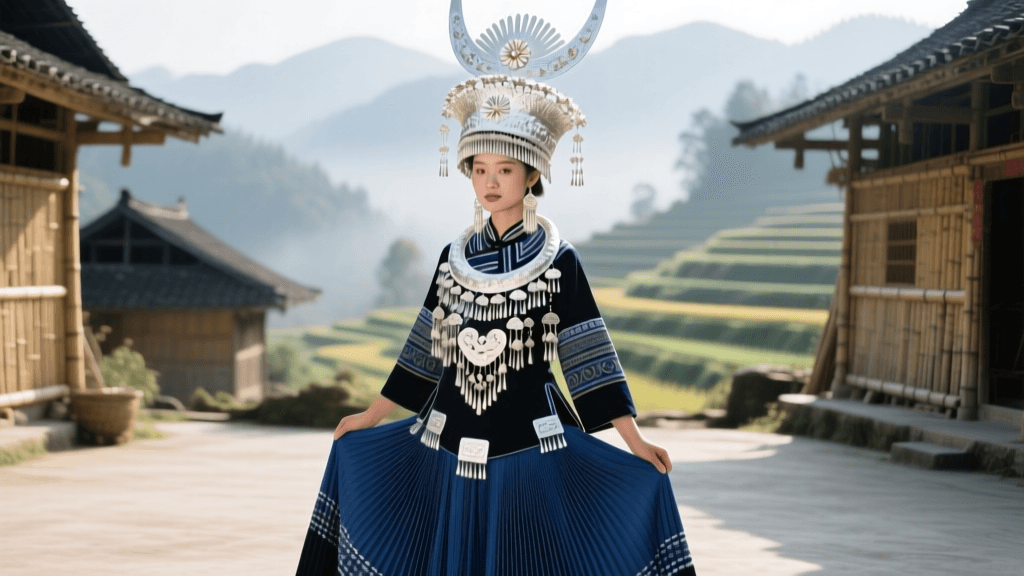
The hallmark of Miao women’s provincial dress is the baizhequn, or hundred-pleat skirt. Creating a single, authentic skirt is a monumental task that can take up to a year of intermittent labor. The process begins with spinning raw cotton into yarn, weaving it on a backstrap loom, and then subjecting it to a rigorous dyeing process.
The Indigo and Ox Blood Dyeing Process
Miao indigo dyeing is an art of fermentation. Artisans use the leaves of the Indigofera tinctoria plant, fermenting them in wooden vats with rice wine and ash water. The fabric is dipped daily for up to a month to achieve a deep, midnight-blue hue. However, the true secret to the skirt’s structural integrity and distinct sheen lies in the finishing. The dyed cotton is repeatedly brushed with a mixture of egg white and ox blood, then pounded with heavy wooden mallets. This process, known as calendering, seals the fibers, giving the skirt a lacquer-like, water-resistant shine and the stiffness required to hold hundreds of microscopic pleats.
Measurements and Construction
A traditional ceremonial skirt requires between 15 to 20 meters of hand-woven cotton. Artisans fold the fabric by hand, using their fingernails to crease each pleat, resulting in 500 to 1,000 micro-pleats per skirt. The skirts are bound tightly with cotton thread for several weeks to set the pleats permanently. Because of the intense labor, an authentic, handmade baizhequn from a master artisan typically costs between 3,000 and 8,000 RMB ($420 to $1,100 USD), depending on the density of the pleats and the quality of the indigo.
The Weight of Ancestry: Miao Silverwork
No Miao festival ensemble is complete without silver. The Miao believe that silver wards off evil spirits and symbolizes the moon, light, and purity. During major festivals like the Lusheng Festival or the Sisters’ Meal Festival, women wear staggering amounts of silver, including horned headdresses, multi-tiered necklaces, and heavy chest plates.
Sourcing and Authenticity: A Buyer’s Guide
For collectors looking to acquire authentic Miao silver, navigating the markets of Guizhou requires a keen eye. Modern tourist hubs often sell ‘Miao silver’ that is actually a copper-zinc alloy (often called Tibetan silver or alpaca). Here is how to ensure you are purchasing genuine pieces:
- The Weight Test: Genuine Miao silver is heavy. A full ceremonial headdress can weigh between 5 to 10 kilograms. Even a single thick torque necklace should feel substantially heavy for its size.
- The Sound Test: When gently tapped or dropped on a wooden surface, pure silver emits a dull, soft thud or a low chime, whereas alloys produce a high-pitched, ringing clink.
- The Magnet Test: Silver is non-magnetic. Carry a small neodymium magnet; if the piece sticks, it contains iron or steel and is a fake.
- Hallmarks and Craftsmanship: Look for the uneven, organic marks of hand-hammering. Mass-produced cast pieces will have perfectly uniform patterns and lack the slight asymmetries of traditional silversmithing.
Cost Breakdown: Authentic Miao silver is priced based on the daily market rate of raw silver plus a craftsmanship fee. As of recent market rates, raw silver hovers around 5 to 6 RMB per gram. Master silversmiths in villages like Xijiang charge an additional 10 to 25 RMB per gram for their labor. Therefore, a 500-gram handmade silver chest plate will cost roughly 7,500 to 15,500 RMB ($1,050 to $2,170 USD). Museums such as the Metropolitan Museum of Art preserve historical examples of these garments, highlighting the incredible continuity of Miao silversmithing techniques over the centuries.
Regional Variations: A Comparative Guide
Guizhou is a mountainous province where deep valleys historically isolated communities, leading to hyper-localized variations in folk dress. The three most prominent regional styles for collectors to know are Xijiang, Shidong, and Danan.
| Region | Skirt Style & Length | Silver Headdress Style | Primary Embroidery Motif | Best Time to Visit |
|---|---|---|---|---|
| Xijiang | Midi-calf length; deep indigo with bright woven apron. | Massive, towering silver horns and multi-tiered combs. | The Butterfly Mother (Mais Bangx). | Lusheng Festival (Oct/Nov). |
| Shidong | Mini-skirt (25-30 cm); heavily layered with woven sashes. | Flat, fan-shaped silver crowns and silver hairpins. | Water buffalo horns and geometric crosses. | Sisters’ Meal Festival (April). |
| Danan | Maxi-length; floor-sweeping, less pleated, heavy batik. | Subtle silver flowers woven directly into the hair bun. | Dragons, birds, and pomegranate seeds. | Miao New Year (Nov/Dec). |
A Collector’s Guide to Sourcing, Costs, and Care
If you are serious about acquiring provincial Miao garments, avoid the highly commercialized main streets of Xijiang Miao Village. Instead, head to the Kaili Sunday Market or the smaller, less-touristed villages of Langde Shangzhai and Shidong. At rural markets, you will find elderly women selling their own hand-embroidered jacket panels and vintage indigo skirts.
Bargaining and Etiquette
When purchasing vintage textiles at rural markets, bargaining is expected but must be done respectfully. A good rule of thumb is to offer 40% to 50% of the initial asking price and meet in the middle. However, if you are commissioning a new piece directly from a recognized master artisan or a cooperative, prices are generally fixed, as the labor cost is immense. As noted by cultural journalists at Sixth Tone, many Miao villages are now forming cooperatives to ensure fair wages for female artisans, making direct-to-cooperative purchases a highly ethical sourcing method.
Care and Maintenance
Proper care is essential to preserve these organic garments:
- Indigo Textiles: Never wash authentic indigo-dyed cotton in a machine or use harsh chemical detergents, which will strip the ox-blood finish and fade the dye. Hand wash in cold water with a mild, pH-neutral soap and a drop of white vinegar to set the color. Dry in the shade; direct sunlight will bleach the indigo.
- Silver Jewelry: Miao silver is often high-purity (999 fine silver), making it softer and more prone to scratching than sterling (925). Store pieces individually in anti-tarnish flannel bags. If the silver oxidizes and turns black, do not use harsh chemical dips. Instead, gently polish with a soft jeweler’s cloth or use a traditional paste of baking soda and water applied with a soft-bristled toothbrush.
- Embroidered Panels: Vintage silk-thread embroidery should be stored flat, interleaved with acid-free tissue paper, to prevent the heavy metallic threads from crushing the silk fibers over time.
Conclusion
The regional folk dress of the Guizhou Miao is a masterclass in human ingenuity, transforming raw cotton, plant leaves, and metal ore into profound expressions of identity and cosmology. Whether you are a textile collector seeking the perfect vintage baizhequn, a jewelry enthusiast drawn to the heavy, hammered silver horns, or a traveler looking to understand the cultural fabric of southwestern China, approaching these garments with an understanding of their regional nuances and craftsmanship ensures a deeper, more respectful appreciation of Asia’s diverse sartorial atlas.