The Ultimate Guide to Children's Traditional Chinese Clothing
Embracing Heritage: The Rise of Traditional Kids' Fashion
In recent years, the Guochao (national trend) movement has swept across Asia, transforming how families approach children's fashion. No longer reserved solely for theatrical performances or once-a-year holiday photos, traditional Chinese clothing has become a vibrant part of everyday wardrobes, festival celebrations, and cultural education. According to industry analyses of the Guochao movement, younger parents are increasingly seeking out garments that connect their children to their ancestral roots while maintaining modern standards of comfort and playability.
Dressing children in traditional attire is not just about aesthetics; it is a tactile way to teach them about history, symbolism, and cultural pride. Whether you are preparing for the Lunar New Year, the Mid-Autumn Festival, or simply want to incorporate the elegant "New Chinese Style" (Xin Zhongshi) into your child's daily rotation, this comprehensive guide will help you navigate the beautiful world of children's traditional Chinese clothing.
Essential Garments for Every Occasion
1. Tang Suits (Tangzhuang) for Lunar New Year
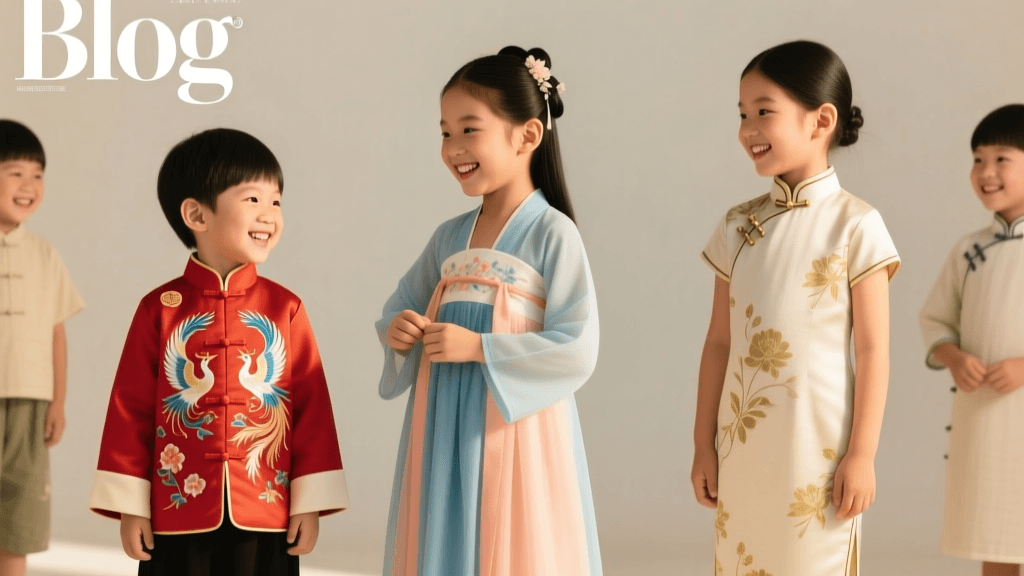
The Tang suit is the quintessential garment for the Lunar New Year. Characterized by its mandarin collar and distinctive frog button closures (pankou), the modern Tang suit is actually a hybrid design that emerged in the late 20th century, blending traditional Manchu jackets with Western tailoring. For children, Tang suits are typically made from soft, breathable cotton or plush velvet for winter warmth. They are often adorned with auspicious motifs like gold coins, koi fish, or the zodiac animal of the incoming year. Because they feature a relaxed, boxy fit, Tang suits are incredibly forgiving for active toddlers and allow for easy layering over thermal wear during chilly spring festivals.
2. Children's Hanfu for Festivals and Play
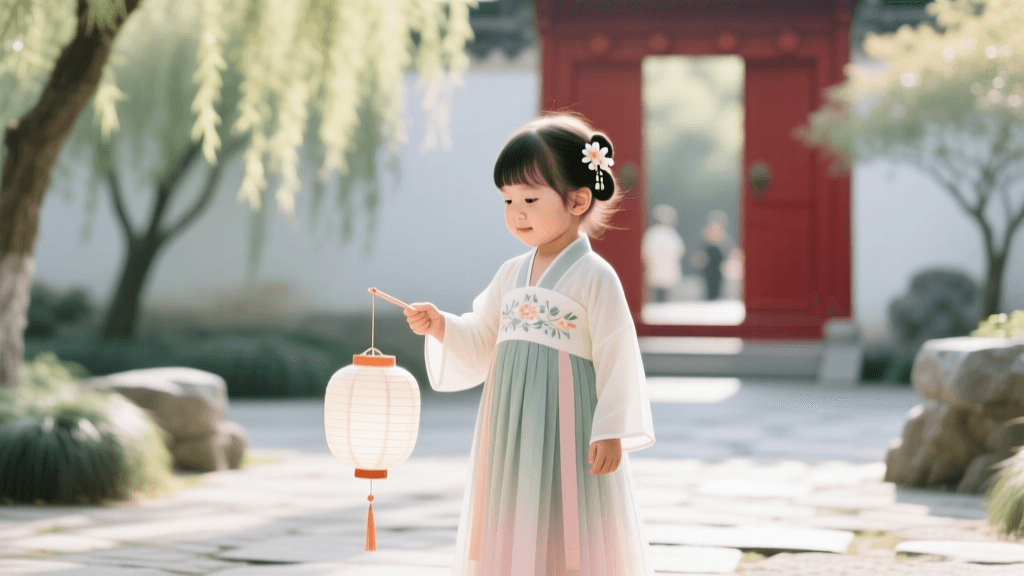
The broader Hanfu revival has heavily influenced children's fashion, offering a glimpse into the clothing of the Han dynasty through the Ming dynasty. For kids, the most practical Hanfu styles include the Ruqun (a cross-collared top paired with a high-waisted skirt) for girls, and the Shenyi or Beizi (a long, open-front overcoat) for boys and girls alike. Modern children's Hanfu is designed with play in mind: skirts are often shortened to the calf or ankle to prevent tripping, and sleeves are tailored to be narrower than the sweeping historical counterparts to keep little hands free for eating and crafting.
3. Modern Qipao (Cheongsam) for Formal Events
The Qipao is a masterpiece of tailored elegance. While traditional silk Qipaos can be restrictive, modern children's versions are adapted for mobility. Designers now use stretch-blend fabrics, add hidden side zippers, and incorporate playful elements like ruffled hems or detachable capes. A cotton or linen Qipao is perfect for the Mid-Autumn Festival, family weddings, or formal cultural ceremonies. Look for styles with slightly flared A-line skirts, which allow children to sit, run, and play without the constraint of a narrow pencil skirt.
Sizing and Measurements: Getting the Perfect Fit
One of the most common challenges for international buyers is understanding Chinese children's sizing. Unlike Western sizing, which often relies on age ranges (e.g., 4T, 5-6), Chinese traditional clothing is almost exclusively sized by the child's height in centimeters. It is always recommended to measure your child's height, chest, and shoulder width before purchasing, as traditional garments like the Qipao and Tang suit require precise shoulder and chest measurements to ensure the frog buttons lay flat.
| Size Label | Child's Height (cm) | Approx. Age | Chest (cm) | Garment Length (cm) |
|---|---|---|---|---|
| 90 | 85 - 95 | 2 - 3 Years | 56 | 38 |
| 100 | 95 - 105 | 3 - 4 Years | 58 | 41 |
| 110 | 105 - 115 | 4 - 5 Years | 60 | 44 |
| 120 | 115 - 125 | 6 - 7 Years | 64 | 48 |
| 130 | 125 - 135 | 8 - 9 Years | 68 | 52 |
| 140 | 135 - 145 | 10 - 11 Years | 72 | 56 |
Pro Tip: If your child is between sizes or has a broader chest, always size up. Traditional garments can be easily tailored at the hem, but expanding the chest or shoulders is difficult.
Fabric Selection: Balancing Tradition and Comfort
Children have sensitive skin and high energy levels, making fabric choice paramount. While heavy brocades and pure silks look stunning in photographs, they are rarely practical for a full day of festival activities.
- Cotton and Linen Blends: The gold standard for daily wear and summer festivals. These natural fibers are breathable, hypoallergenic, and machine-washable. They drape beautifully and mimic the look of historical garments without the high maintenance.
- Bamboo Viscose: Increasingly popular in modern "New Chinese Style" kids' wear, bamboo fabric offers a silky sheen, incredible softness, and natural temperature-regulating properties.
- Jacquard and Poly-Brocade: Best reserved for outerwear, winter Tang suits, or brief photo sessions. Modern poly-brocades offer the raised, textured look of traditional woven silk but are far more durable and resistant to snagging from children's jewelry or surroundings.
- Velvet and Fleece-Lined Cotton: Essential for winter Lunar New Year celebrations. Many traditional jackets now come with hidden quilted or fleece linings to provide warmth without sacrificing the traditional exterior silhouette.
Symbolism and Motifs: Dressing for Luck
Traditional Chinese children's clothing is a canvas of well-wishes. The motifs embroidered or woven into the fabric are carefully chosen to bestow blessings upon the child. Understanding these symbols adds a layer of cultural appreciation to the garments:
- The Tiger: Considered a protector against evil spirits and disease. Tiger motifs are especially common on clothing for infants and toddlers to ensure their safe growth.
- Bats (Fu): The Chinese word for bat sounds identical to the word for "good fortune." Five bats often represent the Five Blessings: longevity, wealth, health, virtue, and a natural death.
- Peonies: Known as the "king of flowers," peonies symbolize wealth, honor, and prosperity.
- Koi Fish: Represent perseverance, strength, and success, particularly in academic endeavors.
Traditional Accessories: The Finishing Touches
No traditional outfit is complete without the proper accessories. For footwear, Hutou Xie (tiger-head shoes) are a beloved staple. As noted in reports on cultural heritage preservation, these brightly colored, hand-embroidered shoes feature a stylized tiger face on the toe, meant to protect the child's steps. Modern iterations feature rubber anti-slip soles, making them safe for indoor and outdoor wear.
For hair accessories, girls often wear silk scrunchies adorned with jade beads, velvet flowers, or miniature tassel hairpins (buyao). Boys might wear a simple embroidered cotton beanie or a soft fabric belt with a jade-inspired resin buckle to cinch a Hanfu robe. Keep accessories lightweight and avoid sharp metal pins for younger children; opt for clip-on or tie-on variations instead.
Where to Buy and Budgeting Guide
Sourcing authentic and high-quality children's traditional clothing has never been easier, though it requires knowing where to look.
- Taobao and Tmall: The most extensive source for children's Hanfu and Tang suits. Brands like "Shisanyu" and "Zhongzheng" offer dedicated children's lines. Budget: $20 - $60 USD. (Requires a shopping agent like Superbuy or Pandabuy for international shipping).
- Etsy: Excellent for handmade, custom-sized Qipaos and tiger-head shoes crafted by independent artisans in the diaspora. Budget: $45 - $120 USD.
- Specialized Online Boutiques: Websites dedicated to Asian formal wear often carry seasonal children's collections, particularly around the Lunar New Year. These offer easier shipping and customer service for Western buyers. Budget: $35 - $80 USD.
Caring for Traditional Garments
To ensure these meaningful garments can be passed down to younger siblings or kept as keepsakes, proper care is essential. Cotton and linen pieces can generally be machine washed on a gentle, cold cycle inside a mesh laundry bag to protect the delicate pankou knots and embroidery. Never wring out brocade or silk; instead, roll the garment in a clean towel to press out excess water and lay it flat to dry away from direct sunlight, which can fade the vibrant natural dyes. Store out-of-season traditional wear in breathable cotton garment bags with cedar blocks to deter moths and maintain the fabric's structural integrity.
By thoughtfully selecting traditional garments that prioritize both cultural authenticity and childhood comfort, parents can give their children the gift of wearing their heritage with pride, joy, and boundless energy.