Children's Traditional Chinese Clothing: A Parent's Guide
Embracing Heritage: A Guide to Children's Traditional Chinese Clothing
Dressing children in traditional Chinese clothing is a beautiful, tangible way to connect them with their cultural heritage. In recent years, there has been a massive resurgence in traditional garments, driven by a desire among younger parents to pass down cultural aesthetics to the next generation. From the flowing sleeves of Hanfu to the structured elegance of the Qipao, children's traditional Chinese clothing offers a vibrant array of options for festivals, family gatherings, and cultural celebrations. However, shopping for kids requires a careful balance between historical authenticity, modern comfort, and strict safety standards. This comprehensive guide will help parents navigate the world of children's heritage fashion, ensuring your little ones look adorable while staying safe and comfortable.
Top Traditional Garments for Children
When exploring traditional Chinese fashion for kids, three main categories dominate the market. Each serves a different purpose and carries its own unique historical significance.
1. Hanfu: The Historical Elegance
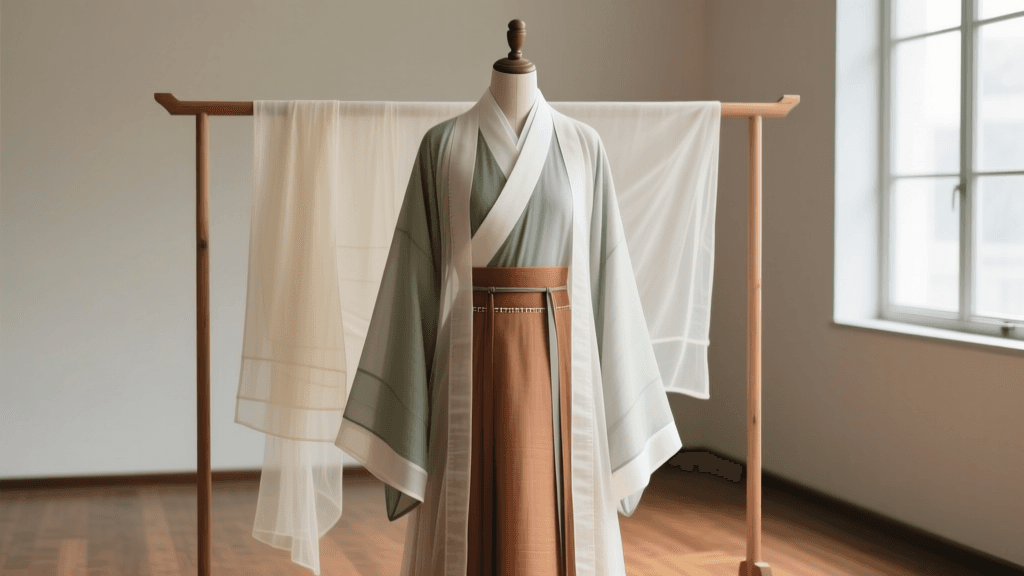
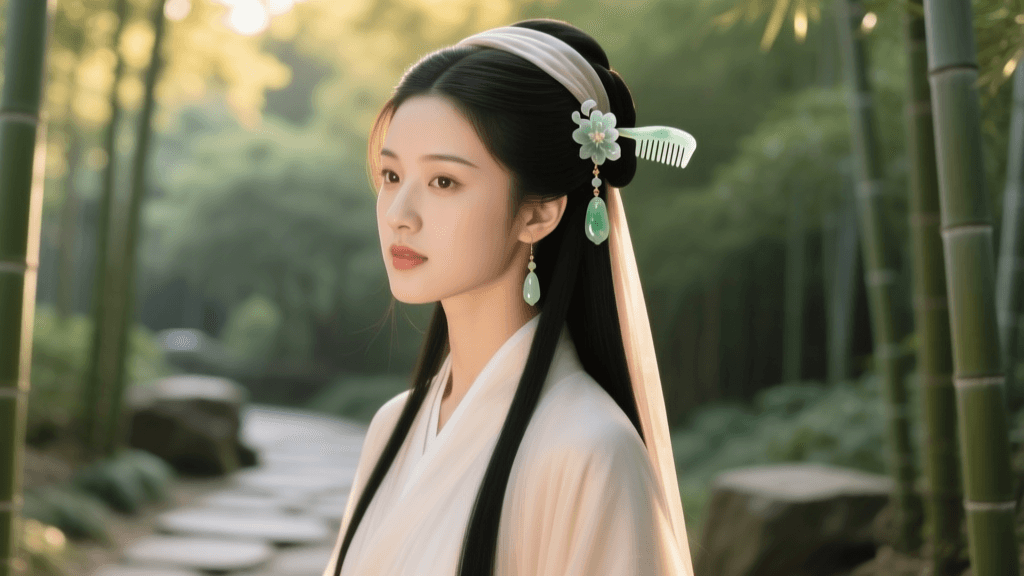
Hanfu refers to the historical clothing of the Han Chinese people, spanning several dynasties. For children, the most popular styles are the Ruqun (a blouse paired with a high-waisted skirt) for girls, and the Duanhe (a short jacket with trousers) or round-collar robes for boys. Hanfu is characterized by its cross-collars (always wrapping left over right), wide sleeves, and sash ties. According to a cultural revival report by China Daily, the Hanfu movement has increasingly expanded into the children's market, with parents eager to capture cinematic, historically inspired portraits of their kids during spring outings and flower festivals.
2. Tangzhuang: The Festive Classic
The Tangzhuang, or Tang Suit, is a modern adaptation of the Qing Dynasty's Magua (riding jacket). It is the undisputed champion of Lunar New Year fashion. Recognizable by its stiff mandarin collar and intricate Pankou (frog buttons), the Tangzhuang is typically made from woven brocade featuring auspicious motifs like dragons, phoenixes, or peonies. It is highly practical for winter festivals as it layers easily over modern thermal wear and allows for unrestricted play.
3. Qipao and Cheongsam: Refined Elegance
Originating in the 1920s, the Qipao (or Cheongsam) is a form-fitting dress that exudes sophistication. For children, modern Qipaos are tailored with a looser, A-line fit to accommodate growth and active movement. They are perfect for formal events, weddings, or the Mid-Autumn Festival. Cotton and linen blends have replaced heavy silks in kids' lines, making them breathable for late-summer and early-autumn celebrations.
Fabric Selection and Child Safety
While traditional garments are visually stunning, children's safety and skin sensitivity must always be the priority. Traditional Chinese clothing often relies on long silk sashes, waist ties, and small, knotted frog buttons.
Strangulation and Choking Hazards: The U.S. Consumer Product Safety Commission (CPSC) strictly warns against drawstrings and long ties in children's upper outerwear due to severe strangulation risks. When buying Hanfu for toddlers and young children, parents should look for modernized versions that replace long waist sashes with velcro, snap buttons, or short, secure belts. Additionally, traditional Pankou (frog buttons) can be a choking hazard for children under three. For toddlers, ensure these buttons are securely double-stitched or opt for garments that use hidden snaps with decorative faux-buttons on the outside.
Skin-Friendly Textiles: Cheap, mass-produced festival costumes often use stiff polyester brocades that can cause contact dermatitis or overheating. Always check the inner lining. Look for garments with 100% cotton or bamboo linings. If the outer shell is synthetic, a natural inner layer will protect your child's sensitive skin while maintaining the garment's structural beauty.
Sizing Guide and Measurement Chart
Children grow rapidly, and traditional Asian sizing can be confusing for international buyers. Unlike Western sizing (which often uses age or S/M/L), Chinese children's clothing is typically sized by height in centimeters. It is always recommended to measure your child's height, chest, and shoulder width before purchasing.
| Age Range | Height (cm) | Chest (cm) | Recommended Hanfu Size | Recommended Tangzhuang Size |
|---|---|---|---|---|
| 2-3 Years | 90-100 | 52-54 | 90 / 100 | 90 |
| 4-5 Years | 100-110 | 54-58 | 110 | 100 / 110 |
| 6-7 Years | 110-120 | 58-62 | 120 | 120 |
| 8-9 Years | 120-135 | 62-66 | 130 | 130 |
| 10-12 Years | 135-150 | 66-72 | 140 / 150 | 140 / 150 |
Pro Tip: For Hanfu skirts, buy the exact height size to prevent tripping. For Tangzhuang jackets, sizing up by one increment (e.g., buying size 110 for a 100cm child) allows for layering thick sweaters underneath during winter festivals.
Styling for Key Cultural Festivals
Matching the garment to the specific holiday enhances the cultural experience and makes for incredible family photographs.
- Lunar New Year (Spring Festival): Red and gold are mandatory. Dress kids in a padded Tangzhuang featuring tiger or zodiac animal embroidery. Pair it with traditional tiger-head shoes (Hutou Xie), which are believed to ward off evil spirits and protect the child's health in the coming year.
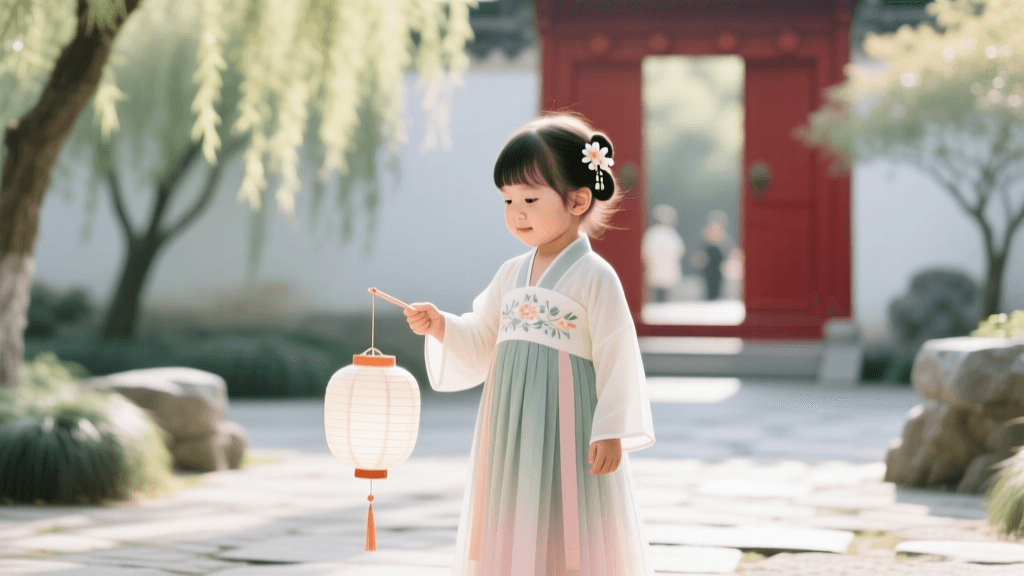
- Mid-Autumn Festival: This harvest moon festival calls for softer, ethereal aesthetics. Pastel blues, jade greens, and soft pinks are ideal. Girls can wear a lightweight, layered Hanfu with rabbit or moon motifs, while boys can wear a scholarly round-collar robe. Carry a glowing paper lantern to complete the look.
- Dragon Boat Festival: Celebrated in early summer, this festival is about warding off disease and bad luck. Children traditionally wear outfits adorned with the 'Five Poisons' (scorpion, snake, centipede, house lizard, and toad) to build immunity. Tying five-color silk threads around their wrists and ankles is a must-do styling and protective tradition.
Where to Buy: Brands and Budgeting
The market for kids' heritage wear has exploded. As noted by Sixth Tone, the broader Hanfu industry has seen exponential growth, prompting specialized brands to launch dedicated children's lines that prioritize historical accuracy alongside modern child-friendly tailoring.
Top Brands to Explore:
- Shisanyu (十三余): Known for high-quality, licensed collaboration Hanfu (including Disney and anime crossovers). Their kids' line is premium, ranging from $60 to $150 USD, but offers exceptional embroidery and safe, soft fabrics.
- Zhongling (钟灵记): Offers beautiful, historically grounded Hanfu with excellent children's sizing. Prices range from $50 to $120 USD.
- Local Chinatown Boutiques & Etsy: For Tangzhuang and Qipaos, local boutiques or Etsy sellers provide accessible options ranging from $30 to $70 USD. These are great for one-off festival wear.
Garment Care and Maintenance
Traditional garments require specific care to maintain their vibrant colors and structural integrity. Brocade and silk-blend Tangzhuang should never be machine washed, as the agitation can destroy the frog buttons and warp the stiff collar. Instead, spot clean minor stains with a damp cloth and mild baby detergent. For deeper cleaning, hand wash in cold water and lay flat to dry away from direct sunlight to prevent the red dyes from fading. Hanfu made of cotton or chiffon can usually be machine washed on a delicate cycle inside a mesh laundry bag, but always air dry to prevent shrinkage. Ironing should be done on a low-heat setting with a pressing cloth to protect delicate embroidery threads from melting or scorching.
By thoughtfully selecting traditional Chinese clothing, parents can gift their children a profound sense of identity and belonging. Whether they are chasing friends in a flowing Hanfu skirt or receiving red envelopes in a crisp Tangzhuang, these garments transform cultural traditions into cherished, lifelong memories.