Guide to Japanese Fashion Schools & Kimono Apprenticeships 2026
The Renaissance of Japanese Garment Education in 2026
The preservation and evolution of traditional Japanese garments have reached a critical and exciting inflection point in 2026. As global luxury markets increasingly prioritize sustainability, artisanal craftsmanship, and cultural heritage, the demand for authentic Japanese textile skills has surged. However, the domestic artisan population continues to age, creating an urgent need for a new generation of creators. For international and domestic students alike, mastering the intricate arts of kimono construction, Nishijin weaving, and Kyo-Yuzen dyeing requires navigating a complex educational landscape. Prospective designers must choose between formalized institutional education at premier fashion academies and the rigorous, deeply immersive traditional apprenticeship systems in Kyoto and Kanazawa.
This comprehensive guide explores the current state of Japanese fashion education and traditional apprenticeships in 2026. Whether you are aiming to integrate ancient techniques into contemporary avant-garde silhouettes or dedicate your life to preserving heritage weaving methods, understanding the distinct pathways, costs, and cultural expectations is essential for your journey into the world of Asian traditional garments.
The 2026 Landscape of Japanese Garment Education
In 2026, the Japanese Ministry of Economy, Trade and Industry (METI) has expanded its subsidies for traditional craft preservation, directly impacting how fashion schools and artisan studios recruit and train new talent. The educational ecosystem is currently divided into two primary routes: modern fashion institutions with dedicated heritage modules, and the centuries-old deshi (apprentice) system. According to the Japan Traditional Crafts Aoyama Square, government-backed initiatives this year have successfully paired over 300 young designers with master artisans, bridging the gap between historical techniques and modern commercial viability.
Students entering this field today are not merely learning to sew; they are studying the chemistry of natural indigo fermentation, the structural geometry of the T-shaped kimono, and the cultural semiotics of seasonal motifs. The sensory experience of these educational environments is profound—from the earthy, metallic scent of mordanted silk in a dye house to the rhythmic, deafening clatter of wooden jacquard looms in a Nishijin workshop.
Formal Education: Bunka Fashion College and Institutional Mastery
For those seeking a structured academic environment, Bunka Fashion College in Tokyo remains the undisputed pinnacle of Japanese fashion education. In 2026, Bunka’s specialized tracks in Traditional Japanese Garment Design offer a unique synthesis of historical preservation and modern technological application. The curriculum spans two to three years, covering everything from the precise mathematics of kimono pattern drafting (wasai) to the business of global luxury heritage brands.
The 2026 incoming class at Bunka benefits from newly integrated digital archiving tools. Students use high-resolution 3D scanning to study Edo-period kosode garments, analyzing the drape and tension of historical silks before attempting physical reproduction. Tuition for the 2026 academic year averages around 1,450,000 JPY, excluding materials. While expensive, the institutional route provides international students with robust visa sponsorship (typically the "Student" visa) and access to extensive industry networking, allowing graduates to launch contemporary labels that utilize traditional Japanese textile methods.
Traditional Apprenticeships: Nishijin Weaving and Kyo-Yuzen Dyeing
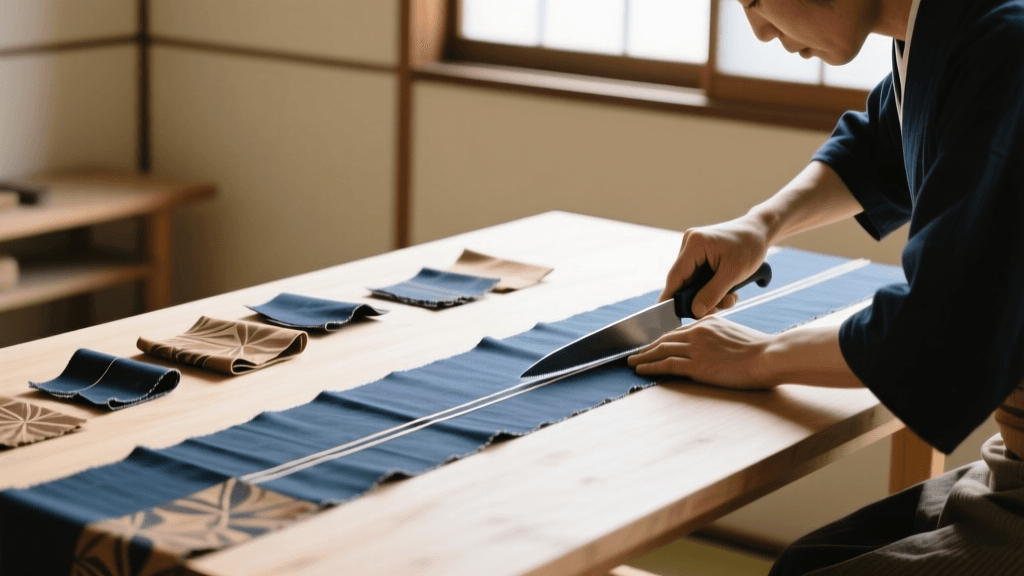
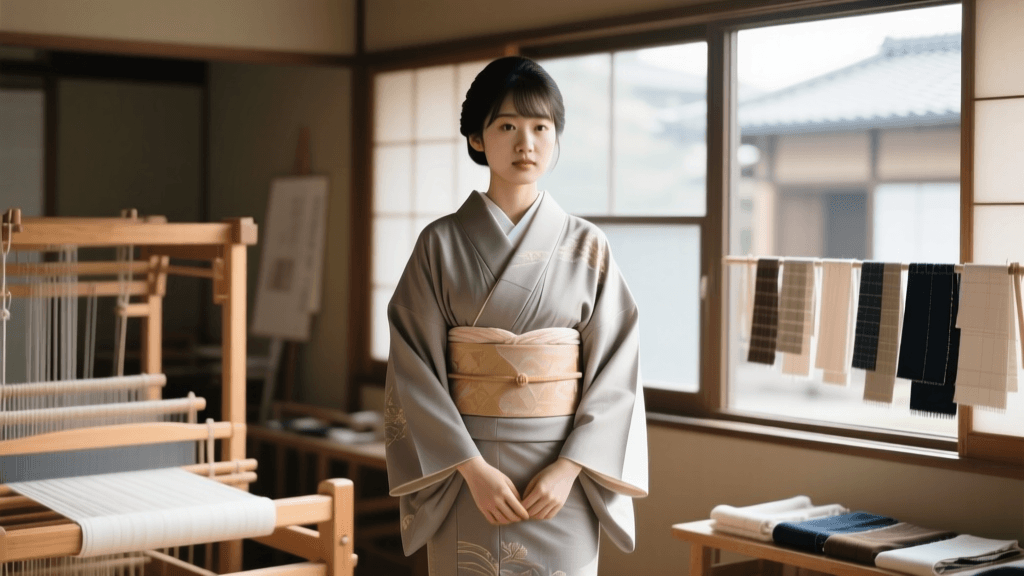
For purists and those dedicated to mastering a single, highly specialized craft, the traditional apprenticeship route in Kyoto offers an unparalleled depth of knowledge. The Nishijin Textile Industry Association oversees the training of weavers in Kyoto’s historic Nishijin district. Unlike a classroom setting, a Nishijin apprenticeship is a full-time, immersive commitment. Apprentices, known as deshi, live and work in or near the studio, dedicating themselves to a master weaver (shokunin).
The sensory reality of a Nishijin apprenticeship is intense. The air in the weaving studios is kept at a precise humidity level to prevent silk threads from snapping, creating a warm, damp environment. Apprentices spend their first year simply learning itomaki (thread winding) and warping the loom, mastering the tension of thousands of individual silk filaments. Only after demonstrating absolute patience and precision are they allowed to operate the complex jacquard looms that produce the iconic, heavy brocades used in luxury obi sashes.
Similarly, Kyo-Yuzen dyeing apprenticeships focus on the meticulous application of rice-paste resist (itome-nori) and hand-painting. The apprentice must learn to read the silk’s reaction to humidity and temperature, adjusting the dye mixtures daily. This path is less about fashion design and more about achieving a state of moving meditation and material mastery.
2026 Comparison: Fashion School vs. Traditional Apprenticeship
Choosing between a formal school and a traditional studio apprenticeship depends heavily on your career goals, language proficiency, and financial situation. Below is a detailed comparison of the two primary pathways as they stand in 2026.
| Feature | Bunka Fashion College (Tokyo) | Kyoto Nishijin / Yuzen Apprenticeship |
|---|---|---|
| Duration | 2 to 3 Years (Full-time Academic) | 3 to 5+ Years (Studio Immersion) |
| Primary Focus | Garment Construction, Design, Fashion Business | Textile Creation, Dyeing, Loom Operation |
| 2026 Estimated Cost | ~1,450,000 JPY / year (Tuition) | Low/No Tuition; Modest Monthly Stipend (~150,000 JPY) |
| Language Requirement | JLPT N3 (English support available) | JLPT N1 or Native (Highly technical dialects) |
| Visa Pathway | Standard Student Visa | Designated Activities or Cultural Activities Visa |
| Career Outcome | Fashion Designer, Brand Director, Patternmaker | Master Artisan, Textile Supplier, Heritage Conservator |
Step-by-Step Guide to Securing a Kyoto Textile Apprenticeship
Securing a position as a deshi in a Kyoto textile studio in 2026 requires immense preparation, cultural respect, and linguistic capability. The traditional masters are highly selective, seeking individuals who demonstrate not just artistic talent, but profound resilience and humility. Follow these actionable steps to navigate the application process:
- Achieve JLPT N2 or N1 Fluency: While some modern studios accept N2, traditional Nishijin and Yuzen masters communicate using highly specialized, archaic terminology and regional dialects. N1 fluency is virtually mandatory to understand the nuanced corrections of a master artisan.
- Build a Traditional Portfolio: Do not submit digital fashion illustrations. Masters want to see physical evidence of your patience. Include samples of hand-stitching (sashiko), natural dyeing experiments, and detailed sketches of traditional motifs. Show that you understand the physical properties of silk and hemp.
- Attend the Kyoto Traditional Crafts Exhibition: Networking is entirely relationship-based. Attend the annual exhibitions at the Kyoto Municipal Museum of Art or the Nishijin Textile Center. Introduce yourself to studio owners, express your desire to learn, and ask if they are accepting deshi for the upcoming spring season.
- Navigate the Visa Bureaucracy: Unlike student visas, apprenticeships often fall under the "Cultural Activities" or "Designated Activities" visa categories. You will need a formal letter of sponsorship from the studio head (oyakata) proving that you are studying an intangible cultural asset that cannot be learned in a standard university setting.
- Prepare for the Trial Period (Minarai): Before formal acceptance, expect a 30-day unpaid trial period. You will be tasked with cleaning the studio, preparing tools, and observing. Your attitude, punctuality, and respect for the workspace will be evaluated far more strictly than your actual weaving or dyeing skills during this phase.
The Integration of 2026 Technology in Ancient Crafts
One of the most fascinating developments in 2026 is how traditional Japanese fashion education is embracing technology not to replace the artisan, but to protect and archive their knowledge. At both Bunka College and forward-thinking Nishijin studios, AI-assisted pattern drafting and 3D weaving simulation are now standard tools.
For example, modern apprentices use digital tensiometers to measure the exact tension of silk threads on a loom, creating a digital twin of the master weaver’s physical technique. If a master artisan passes away, their unique weaving rhythm and tension data are preserved in the studio’s database, allowing future generations to calibrate their looms to the master's exact specifications. Furthermore, 3D printing is being used to create custom, ergonomic shuttles and bobbins that reduce the physical strain on aging artisans, ensuring they can continue to weave complex brocades well into their later years.
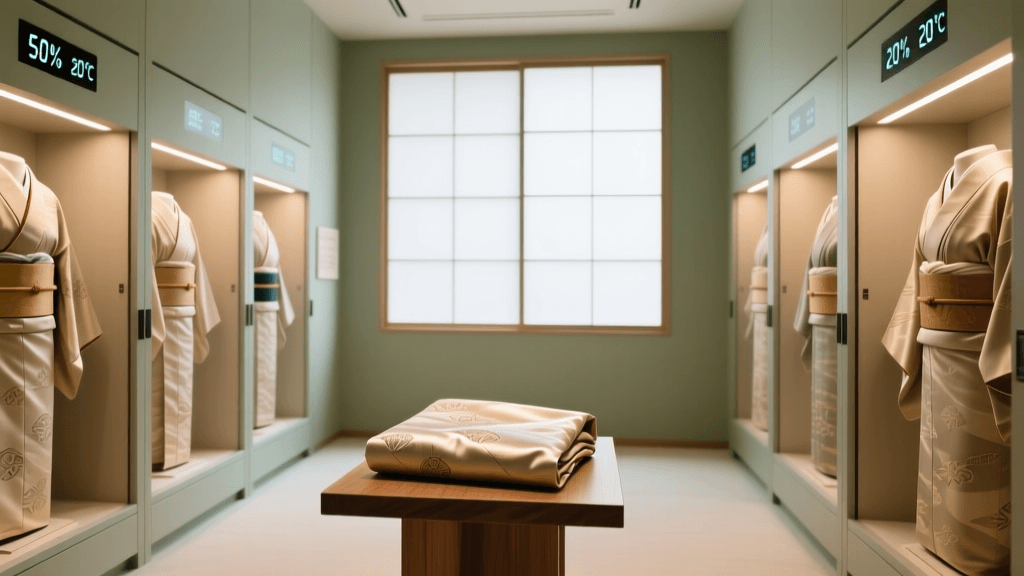
In the dye houses, spectrophotometers are used alongside the artisan’s eye. While the master still judges the final color of the indigo vat by eye and smell, the digital tools ensure that the exact chemical composition of the dye bath is recorded, guaranteeing color consistency across multiple batches of luxury kimono silk. This harmonious blend of 2026 technology and Edo-period philosophy represents the cutting edge of Asian traditional garment preservation.
Conclusion: Forging Your Path in Heritage Fashion
The year 2026 offers unprecedented opportunities for those willing to dedicate themselves to the mastery of Japanese traditional garments. Whether you choose the structured, globally connected halls of Bunka Fashion College or the humid, rhythmic intensity of a Kyoto Nishijin weaving studio, the path requires immense dedication. The global fashion industry is looking toward Asia not just for manufacturing, but for profound, sustainable wisdom embedded in traditional textiles. By immersing yourself in these educational and apprenticeship pathways, you do more than learn a trade; you become a vital custodian of a living, breathing cultural heritage, ensuring that the art of the kimono and its foundational textiles continue to inspire the world for generations to come.