2026 Kimono Storage Guide: Archival Preservation & Care Tactics
The Intersection of Heritage and Modern Conservation
The kimono is far more than a traditional Japanese garment; it is a woven canvas of cultural history, seasonal poetry, and masterful textile engineering. Whether you are managing a private collection of vintage Meiji-era silk or preserving a contemporary hand-painted shibori piece, proper storage is the only defense against the relentless forces of time, light, and biology. As we navigate 2026, the field of textile conservation has evolved significantly. Today's collectors and museum curators blend centuries-old Japanese wrapping techniques with cutting-edge environmental monitoring to ensure these delicate garments survive for future generations.
Unlike Western historical garments that were often tailored to rigid three-dimensional forms, the kimono is constructed from straight, uncut bolts of fabric. This unique geometry makes it highly susceptible to specific types of stress, creasing, and dye migration if stored improperly. In this comprehensive 2026 guide, we will explore the definitive protocols for kimono storage preservation, collection management, and the science of silk degradation.
The Science of Silk Degradation and 2026 Climate Standards
Silk is a protein fiber composed primarily of fibroin and sericin. While remarkably strong by weight, it is highly vulnerable to environmental fluctuations. According to the Library of Congress Preservation Guidelines for Textiles, improper humidity and temperature are the primary catalysts for the hydrolysis of silk fibers, leading to irreversible shattering and embrittlement.
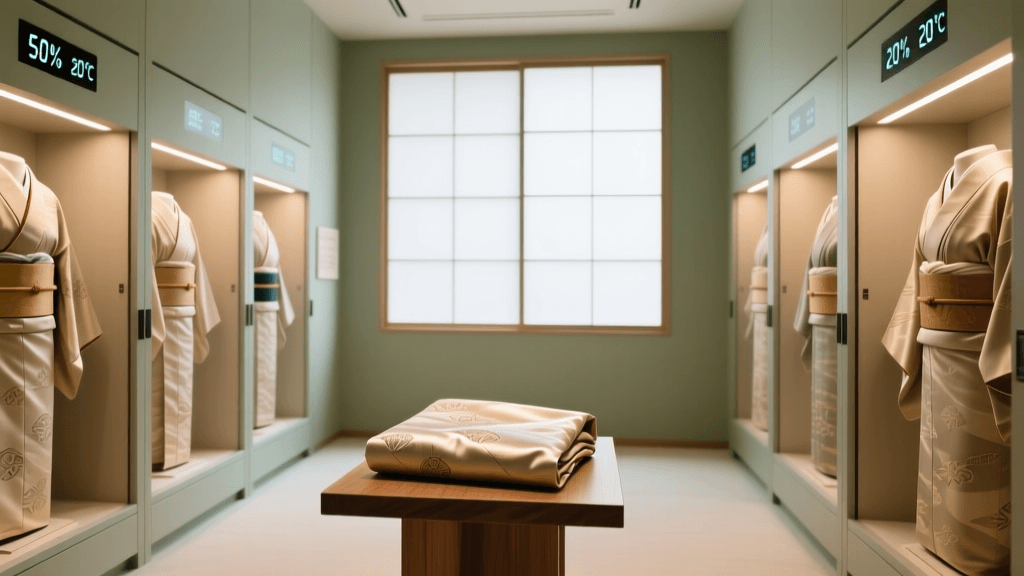
In 2026, the standard for archival textile storage relies on strict climate control, heavily augmented by Internet of Things (IoT) micro-sensors. The universally accepted baseline for silk preservation remains a stable temperature of 68°F (20°C) and a Relative Humidity (RH) of 50%. However, modern preservation emphasizes stability over exact numbers. A room that fluctuates between 45% and 55% RH daily is far more damaging than a room held constantly at 60% RH.
Modern collectors now utilize wireless Bluetooth dataloggers placed directly inside storage cabinetry to monitor micro-climates. These 2026-era sensors alert curators via smartphone applications the moment RH deviates by more than 3%, allowing for immediate intervention before moisture can trigger mold spores or desiccate the silk fibers.
Archival Wrapping: Traditional Tatou vs. Modern Alternatives
In Japan, the traditional method of storing kimono involves wrapping the folded garment in a specialized paper called tatou (or tato). Historically, this paper was made from kozo (mulberry) fibers, prized for their long, interlocking strands that resist tearing and naturally buffer against moisture fluctuations. However, not all modern commercial "tatou" paper is created equal; many mass-produced variants contain acidic wood pulp and optical brighteners that will yellow and degrade silk over time.
When building or upgrading a collection in 2026, it is vital to select materials that pass the Oddy test for archival safety. Below is a comparison of the most common wrapping and storage materials used by contemporary textile conservators.
| Material | Breathability | Archival Safety | Best Use Case | Est. 2026 Cost |
|---|---|---|---|---|
| Pure Kozo Tatou Paper | High | Excellent (Acid-free, buffered) | Direct contact wrapping for antique silk | $8.00 - $12.00 per sheet |
| Tyvek 1443R | Moderate | Excellent (Inert polyethylene) | Dust covers, interleaving heavy metallic embroidery | $4.50 per yard |
| Unbleached Cotton Muslin | Very High | Good (Requires pre-washing) | Outer dust covers, padding folds | $12.00 per yard |
| Polypropylene Bins | None | Excellent (Chemically stable) | Secondary outer storage, pest barrier | $25.00 - $40.00 per unit |
| Traditional Paulownia Wood (Kiri) | High | Good (Naturally pest resistant) | Long-term traditional display and storage | $150.00+ per box |
Note: Never use standard cardboard boxes, PVC plastics, or cedar wood for direct kimono storage. Cedar emits acidic vapors and volatile oils that will permanently stain and weaken silk protein.
The Art of Hondatami: Proper Folding Techniques
How a kimono is folded is just as critical as what it is wrapped in. The standard folding method, known as hondatami (standard fold), is designed to align the seams and distribute the weight of the fabric evenly, preventing sharp, permanent creases that can cause the silk to split over decades.
- Preparation: Lay the kimono face down on a clean, acid-free tissue or Tyvek-covered surface. Ensure your hands are clean, dry, and free of lotions. Cotton gloves are recommended, though bare, freshly washed hands are preferred by some conservators to avoid snagging delicate metallic threads.
- The Collar and Panels: Fold the right front panel back along its natural seam line. Bring the left front panel over to meet the right edge, aligning the center back seam perfectly.
- Sleeve Management: Fold the sleeves inward. The delicate underarm curve should be padded with a small roll of acid-free tissue paper to prevent a hard crease from forming at the stress point.
- Length Folding: Fold the bottom hem up to meet the collar. Again, place a cushion of acid-free tissue inside the fold. Sharp, compressed folds are the enemy of historic textiles.
- Wrapping: Place the folded kimono diagonally on a large sheet of pure kozo tatou paper. Fold the paper over the garment like a traditional envelope, securing it with a cotton tie or a strip of Tyvek. Never use tape, rubber bands, or adhesive stickers.
Integrated Pest Management for Silk Collections
Silk is a protein, making it a highly attractive food source for pests like webbing clothes moths, carpet beetles, and silverfish. The MuseumPests.net Integrated Pest Management Working Group emphasizes that prevention is vastly superior to chemical eradication, which can leave toxic residues on historic garments.
In 2026, chemical mothballs (naphthalene and paradichlorobenzene) are strictly forbidden in professional textile conservation due to their toxicity and the chemical reactions they cause with metallic gold and silver threads. Instead, modern collections rely on strict IPM protocols:
- Quarantine: Any new acquisition is isolated in a sealed polypropylene bin for 30 days and monitored with pheromone traps before joining the main collection.
- Anoxic Treatment: If an infestation is suspected, conservators use oxygen deprivation. The garment is sealed in an oxygen-barrier film (such as Escal) along with oxygen scavengers (like Ageless Z-1000 packets) for 21 days, safely suffocating all life stages of the pest without chemical exposure.
- Environmental Deterrence: Maintaining RH below 55% naturally inhibits silverfish and mold, while ensuring storage rooms are kept meticulously clean of dust and human hair, which attract carpet beetles.
Digital Collection Management and Cataloging
As collections grow, physical memory is no longer sufficient. The Smithsonian Museum Conservation Institute advocates for rigorous digital documentation to minimize the physical handling of fragile garments. Every time a kimono is unfolded for inspection, it undergoes mechanical stress.
Modern collection management in 2026 utilizes non-invasive RFID (Radio Frequency Identification) tags. These micro-tags are sewn into the outer cotton tie or the storage envelope—not the garment itself. When a collector or curator scans the shelf with a handheld reader, the database instantly retrieves the garment's metadata: provenance, era, weave type (e.g., rinzu satin, chirimen crepe), condition reports, and high-resolution macro photography of the lining and family crests (mon).
Cloud-based collection management systems allow private collectors to share their archives with global textile researchers, fostering a deeper understanding of regional dyeing techniques like Kaga-yuzen or Kyoto Nishijin weaving, while keeping the physical artifacts safely sealed in their climate-controlled micro-environments.
Preserving the Legacy
Preserving a kimono collection is an act of cultural stewardship. By respecting the traditional Japanese wisdom of the tatou wrap and the hondatami fold, and augmenting them with 2026's advanced climate monitoring and digital cataloging tools, collectors ensure that these masterpieces of Asian textile art remain vibrant, intact, and ready to be studied by the generations yet to come. Whether you are safeguarding a single family heirloom or curating a museum-grade archive, the principles of archival preservation remain your most vital tools in the fight against time.