Authenticating Guatemalan Huipil Textiles: 2026 Sourcing Guide
The Enduring Legacy of the Guatemalan Huipil in 2026
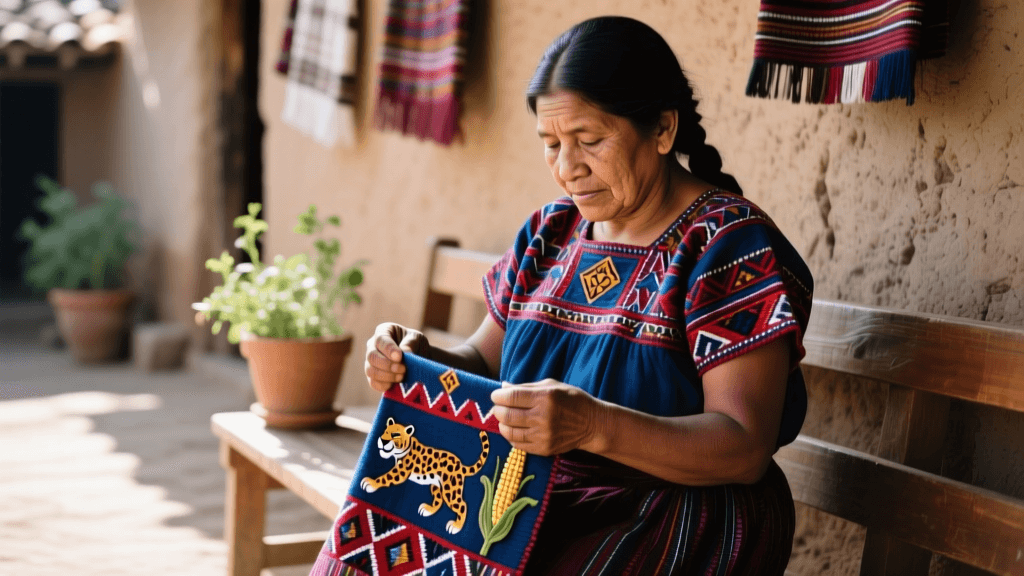
In 2026, the global appreciation for Latin American traditional garments has reached an unprecedented peak, driving both a renaissance in indigenous artisanship and a troubling rise in mass-produced imitations. At the heart of this textile revolution is the Guatemalan huipil, a traditional garment that serves as far more than a simple tunic. For the Maya women who weave them, the huipil is a codified language of identity, a map of the cosmos, and a deeply personal expression of community belonging. As collectors, designers, and cultural historians increasingly seek out authentic pieces, understanding the nuances of regional styles, weaving techniques, and ethical sourcing has never been more critical. According to the Museo Ixchel del Traje Indígena, the preservation of these ancestral techniques is vital to maintaining the cultural continuity of Guatemala's diverse indigenous populations.
Decoding the Backstrap Loom: Anatomy of a Traditional Garment
To authenticate a huipil, one must first understand the technology used to create it. The traditional backstrap loom has been utilized in Mesoamerica for millennia. Unlike a rigid wooden floor loom, the backstrap loom is intimately connected to the weaver's body. One end of the warp is tied to a sturdy post or tree, while the other is secured around the weaver's lower back via a leather or woven strap. The weaver controls the tension of the warp threads simply by leaning forward or backward. Because the width of the loom is limited by the weaver's arm span and body width, a single panel of handwoven fabric typically measures between 12 and 18 inches across. Consequently, a standard huipil is constructed by stitching two or three of these narrow panels together side-by-side. If you encounter a huipil made from a single, wide piece of fabric exceeding 20 inches in width without a central seam, it was almost certainly woven on a modern mechanized treadle loom, drastically reducing its cultural and monetary value.
How to Authenticate a Genuine Handwoven Huipil
As the market for indigenous textiles expands in 2026, so does the sophistication of commercial knock-offs. Distinguishing a genuine, handwoven ceremonial or daily-use huipil from a machine-made replica requires a trained eye and a tactile approach.
The Selvedge and Tension Test
Examine the edges (selvedges) of the fabric. On a backstrap loom, the weaver meticulously turns the weft thread at the edge of each row, creating a perfectly finished, self-bound selvedge that requires no hemming. Furthermore, because human tension is naturally imperfect, running your hand across a genuine handwoven textile will reveal microscopic variations in thread density. Machine-woven fabrics feel uniformly stiff and perfectly even, lacking the organic 'pulse' of a human-weaved garment.
Supplementary Weft vs. Machine Embroidery
The most common shortcut in modern counterfeit textiles is the use of machine embroidery to mimic traditional brocade. Authentic Maya brocade is created using a 'supplementary weft' technique, where additional colored threads are woven directly into the fabric during the weaving process, not stitched on afterward. To verify this, turn the huipil inside out. In genuine supplementary weft weaving, the geometric or floral motifs will be visible on the reverse side, often with floating threads that are carefully managed by the weaver. In regions like San Antonio Aguas Caliente, weavers use a complex double-faced brocade technique where the pattern is perfectly identical on both sides. If the reverse side shows a chaotic web of stitching or a white backing fabric, the design has been machine-embroidered onto a plain base cloth.
The 2026 Revival of Ancestral Natural Dyes
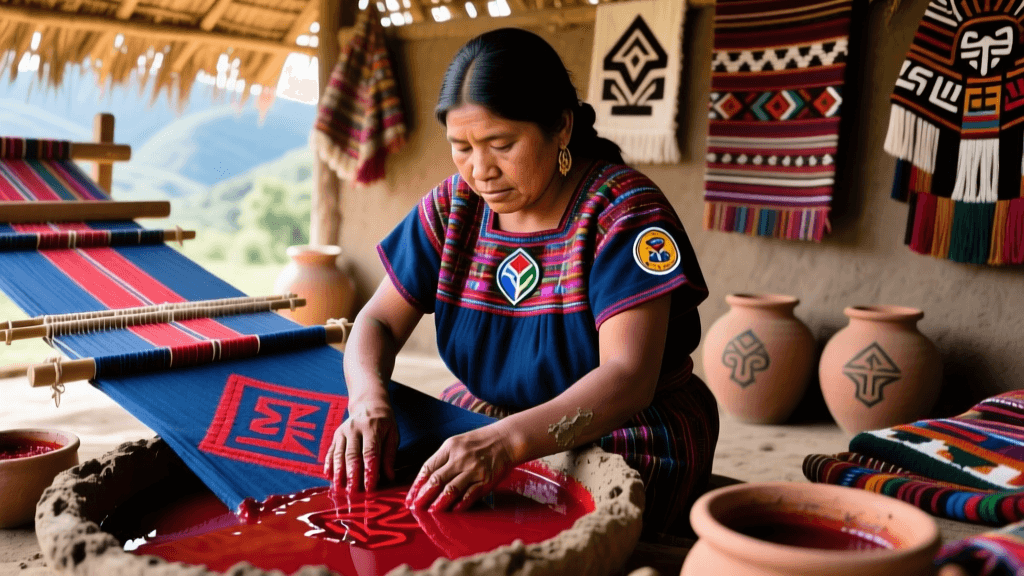
A major trend defining the Latin American textile market in 2026 is the aggressive revival of natural, botanical dyes. For decades, the introduction of cheap, synthetic aniline dyes threatened the ancestral knowledge of color extraction. Today, master dyers are reclaiming their heritage, and collectors are willing to pay a premium for naturally dyed threads. Cochineal, a parasitic insect native to the nopal cactus, yields brilliant crimsons, purples, and oranges depending on the mordant used. Indigo, extracted from the añil plant, provides deep, colorfast blues that age beautifully over decades. Another regional favorite is sacatinta, a plant-based dye that produces rich, earthy blacks. When sourcing textiles, ask the artisan cooperative for a 'certificado de tintes naturales' (natural dye certificate), a practice that has become standard among reputable weaving guilds in Oaxaca and the Guatemalan highlands to guarantee authenticity and justify the higher price point.
Regional Variations and 2026 Fair-Trade Pricing Guide
Every Maya municipality possesses a distinct visual vocabulary. The motifs woven into a huipil can pinpoint a weaver's exact village of origin. The diamond motif, for example, represents the four corners of the universe and the daily path of the sun, while the double-headed bird (k'ot) symbolizes the duality of human nature and the cosmos. Recognizing these regional markers is essential for accurate valuation. Below is a structured guide to the most sought-after regional styles and their estimated 2026 fair-trade market values. These prices reflect direct-to-artisan cooperative purchases, ensuring that the weavers receive equitable compensation for their labor, a core tenet championed by organizations like the Fair Trade Federation.
| Village / Region | Key Motifs & Style | Dye Profile | 2026 Fair-Trade Price Range (USD) |
|---|---|---|---|
| San Juan La Laguna | Ikat (jaspe) patterns, geometric animals, minimalist bands | Heavy use of natural indigo and sacatinta | $220 - $380 |
| Nahualá | Bold, oversized geometric stars, double-headed birds | Synthetic and natural blends, heavy reds/blues | $180 - $300 |
| Chichicastenango | Dense floral brocade, sun motifs radiating from the neckline | Vibrant synthetic threads, occasional cochineal | $250 - $450 |
| San Antonio Aguas Caliente | Fine, double-faced brocade, identical on both sides | Traditionally natural, now high-quality cotton | $400 - $850+ |
| Todas Santos Cuchumatán | Heavy, thick cotton, bold purple and red vertical stripes | Mostly colorfast synthetics for daily wear | $150 - $250 |
Ethical Sourcing: Bypassing the Middlemen
The most critical aspect of collecting indigenous garments in 2026 is ensuring ethical provenance. Historically, middlemen known as 'coyotes' have exploited rural weavers, purchasing intricate huipiles for pennies and flipping them in tourist hubs like Antigua or Guatemala City for massive markups. Today, the most responsible way to source these textiles is by partnering directly with women-led weaving cooperatives or utilizing verified fair-trade importers. When you buy directly from a cooperative, you are not only acquiring a genuine artifact but also funding community initiatives, children's education, and the preservation of intangible cultural heritage, a concept deeply protected under UNESCO's Intangible Cultural Heritage frameworks. Always request the name of the specific weaver and her village; reputable sellers will proudly provide this provenance.
Archival Care for Your Textile Collection
Once you have authenticated and ethically sourced a handwoven huipil, proper preservation is paramount. Never machine wash or dry clean a traditional textile, as the harsh chemicals and agitation will destroy the natural dyes and distort the delicate warp tension. Instead, hand wash the garment in cold water using a pH-neutral, non-enzymatic textile soap. Avoid soaking for extended periods to prevent color bleeding, especially in pieces dyed with cochineal, which can be sensitive to pH shifts. Dry the huipil flat in the shade; direct sunlight will rapidly fade botanical dyes and weaken the cotton fibers over time. For long-term archival storage, fold the garment with acid-free tissue paper to prevent hard creases from breaking the threads, and store it in a breathable cotton pillowcase in a climate-controlled environment. By treating these garments with the respect they deserve, collectors ensure that the woven codices of the Maya continue to tell their stories for generations to come.