Hanfu Coming-of-Age Ceremonies 2026: Guan Li & Ji Li Guide
The Cultural Renaissance of Milestone Rites in 2026
As we navigate through 2026, the global appreciation for traditional Asian garments has evolved from a niche interest into a profound cultural renaissance. The Hanfu movement, which began as a grassroots effort to reclaim historical dress, has now matured into a structured revival of ancient life milestone ceremonies. Among the most significant of these rites are the Guan Li (Capping Ceremony) for men and the Ji Li (Hair-Pinning Ceremony) for women. These coming-of-age rituals, historically performed at the ages of 20 and 15 respectively, symbolize the transition from youth to adulthood, carrying deep familial and societal responsibilities.
Today, young adults and their families are investing heavily in authentic, historically accurate Hanfu to honor these milestones. According to cultural analysts, the demand for ceremonial-grade Hanfu has surged by 40% in the 2026 market, driven by a desire for meaningful, heritage-based alternatives to Western-style graduations and proms. As noted in a comprehensive overview by BBC Travel, the movement has successfully transitioned from street fashion to deeply rooted ceremonial practices, allowing a new generation to physically embody their ancestral heritage during pivotal life transitions.
Guan Li: The Traditional Capping Ceremony for Men
The Guan Li is a solemn and highly choreographed rite of passage. The core of the ceremony revolves around the San Jia (Three Additions), where the young man changes his garments and headwear three times, each representing a new layer of adult responsibility. In 2026, families often host these ceremonies in ancestral halls, botanical gardens, or dedicated cultural pavilions, guided by a Zan Li (ritual master).
The First Addition: The Zhongyi and Shenyi
The ceremony begins with the youth wearing a simple Zhongyi (inner garment) and a child's twin-tuft hairstyle. The first addition involves donning a Shenyi (deep robe), typically in a modest, unadorned fabric like raw linen or light cotton, paired with a Zi Bu Guan (a simple black cloth cap). This stage represents the purity of youth, the dedication to study, and the foundational virtues of filial piety. In 2026, modern tailors often recommend a Ming-dynasty style cross-collared Shenyi for this stage, prioritizing comfort and historical accuracy over flashy embellishments.
The Second Addition: The Xuan Duan
The second addition marks the embrace of societal duty. The young man changes into the Xuan Duan, a formal, dark-colored robe with a square cut, symbolizing rectitude and moral uprightness. He is presented with a Pi Bian, a cap made of white deer hide or high-grade modern vegan alternatives that mimic historical textures. This garment signifies the individual's readiness to participate in community affairs, defend their family, and uphold societal ethics. The 2026 market offers exquisite Xuan Duan replicas woven with subtle, tone-on-tone Song brocade patterns, pricing between $450 and $800 USD for custom fittings.
The Third Addition: The Formal Court Attire
The final addition is the most majestic. The young man dons a formal court-style garment, often a Gongfu or a high-ranking official's robe, accompanied by a Jue Bian (a formal ceremonial cap adorned with jade or polished stones). This represents the pinnacle of adult responsibility: the capacity to serve the greater good, engage in state or community leadership, and honor the ancestors. The heavy, flowing sleeves and structured collars of this third garment demand a dignified, measured walking pace, naturally enforcing the solemnity of the rite.
Ji Li: The Hair-Pinning Ceremony for Women
The Ji Li is the female equivalent of the Guan Li, celebrating a young woman's transition into adulthood, elegance, and readiness for her future societal roles. Like the men's ceremony, it features three distinct garment changes, each accompanied by a new, increasingly elaborate hairstyle and hairpin (Ji).
First Addition: The Simple Ruqun
The young woman begins in simple, youthful attire. The first addition features a Ruqun (a blouse and skirt combination), often in pastel or light colors, representing the innocence and vitality of childhood. Her hair is styled in a simple double bun or left partially down. A modest, unadorned wooden or bone hairpin is placed in her hair by a respected female elder, symbolizing the retention of her pure heart and childhood virtues.
Second Addition: The Beizi and Pleated Skirt
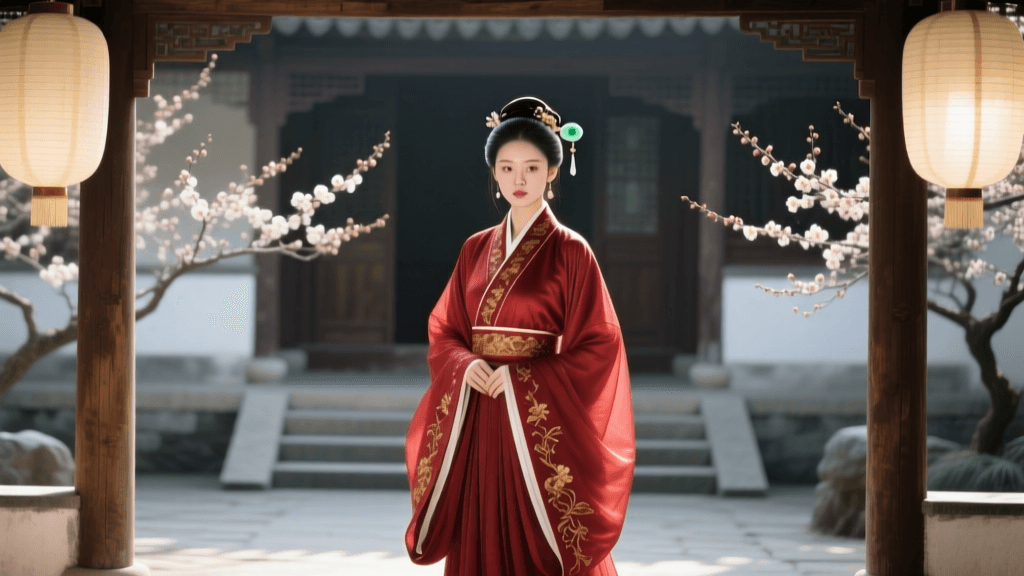
The second addition introduces a more mature silhouette. She changes into a Beizi (a long, elegant outer coat) worn over a pleated Mamianqun (horse-face skirt) or a Song-style pleated skirt. This outfit represents grace, refinement, and the cultivation of domestic and intellectual arts. The hair is gathered into a more structured updo, secured with a silver or jade hairpin. In 2026, the Mamianqun remains the undisputed favorite for this stage, with custom-woven Xiangyunsha (gambiered Canton gauze) being the most sought-after textile due to its breathable, water-resistant properties and rich, dark luster.
Third Addition: The Da Shan or Formal Aoqun
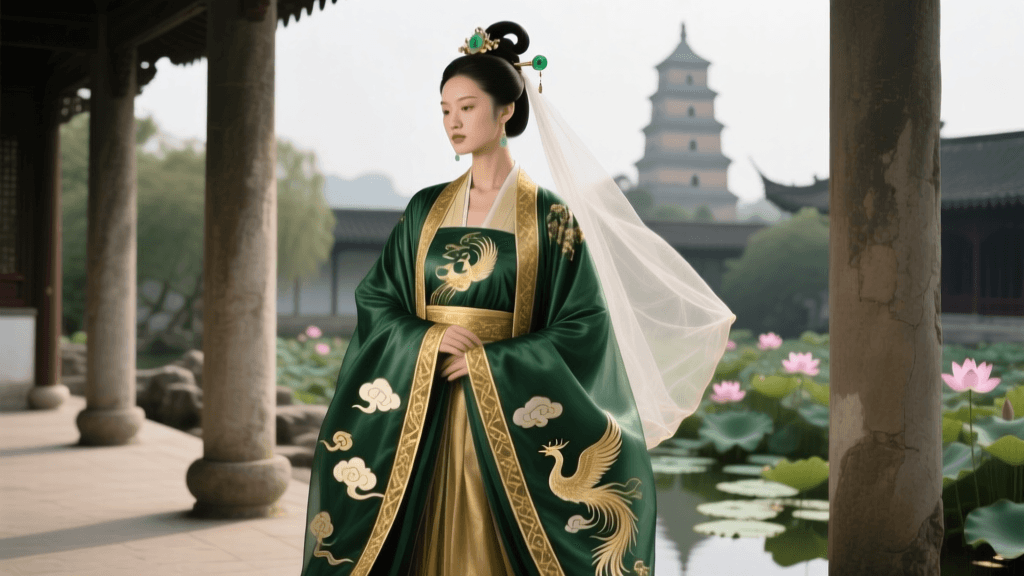
The climax of the Ji Li involves the most formal and regal attire. The young woman dons a Da Shan (a grand, wide-sleeved formal robe) or a heavily embroidered Ming-style Aoqun (jacket and skirt). This garment, often featuring intricate phoenix, peony, or cloud motifs woven in gold or silver threads, signifies her full maturity, her capacity to manage a household, and her esteemed place in society. The final hairpin is an elaborate Buyao (step-shake) or a jade-encrusted crown, completing her transformation into a dignified adult woman.
2026 Sourcing Guide: Fabrics, Tailors, and Budgets
Sourcing authentic, ceremonial-grade Hanfu in 2026 requires an understanding of both historical textiles and modern weaving innovations. The integration of AI-assisted body scanning has revolutionized custom tailoring, allowing overseas buyers to receive perfectly fitted ceremonial garments without traveling to specialized ateliers in Hangzhou or Suzhou. Furthermore, the preservation of ancient weaving techniques is paramount; as highlighted by the UNESCO Intangible Cultural Heritage registry, traditional Chinese sericulture and silk craftsmanship remain vital to producing the authentic textiles required for these sacred rites.
| Garment Stage | Recommended 2026 Fabric | Est. Custom Price (USD) | Styling Notes |
|---|---|---|---|
| First Addition (Youth) | Raw Linen / Light Cotton | $150 - $300 | Focus on breathability and modest, unadorned weaves. |
| Second Addition (Maturity) | Song Brocade / Xiangyunsha | $450 - $900 | Xiangyunsha offers a unique crinkled texture and deep, earthy tones. |
| Third Addition (Formal) | Heavy Silk Damask / Zhuanghua | $1,200 - $3,500+ | Requires structured interfacing; gold-leaf weaving adds ceremonial weight. |
| Accessories (Caps/Pins) | Carved Jade / Sandalwood | $200 - $1,500 | Ensure hairpins have reinforced structural cores for heavy updos. |
Choreography, Venues, and Modern Logistics
Executing a flawless Guan Li or Ji Li in 2026 requires meticulous planning. The ceremony is not merely a photoshoot; it is a solemn ritual that demands specific choreography. Families typically hire a professional Zan Li (ritual master) who guides the participants through the bowing sequences, the washing of hands (symbolizing purification), and the listening to the elders' admonitions (Xun Ci).
Venue selection has also evolved. While traditional ancestral halls remain popular, many urban families in 2026 are booking private wings of botanical gardens, historical museums, or high-end tea houses that offer the necessary architectural backdrop—such as curved eaves, wooden lattices, and stone courtyards—without the logistical hurdles of remote rural locations. It is crucial to ensure the venue has a private, climate-controlled changing area, as the layering of three full Hanfu sets, complete with inner garments, sashes, and heavy outer robes, requires significant time and assistance to don correctly.
Hair, Makeup, and Accessory Styling
The visual impact of the Ji Li and Guan Li relies heavily on historically accurate hair and makeup. In 2026, the trend has shifted away from heavy, modern theatrical makeup toward the San Bai (three whites) and subtle pearl-adorned aesthetics popularized by the Song and Ming dynasties. Makeup artists specializing in historical recreation use natural, crushed-mineral pigments to create a soft, dignified look that honors the solemnity of the occasion.
For women, the structural integrity of the updo is paramount. Modern stylists use hidden, period-appropriate wooden combs and reinforced wire frames disguised within the hair to support the weight of heavy jade and metal hairpins. For men, the proper tying of the topknot and the secure fitting of the Guan (cap) require specialized silk ribbons and hidden pins to ensure the headwear remains perfectly level throughout the rigorous bowing sequences.
Conclusion
The revival of the Guan Li and Ji Li in 2026 represents a profound reconnection with Asian heritage. By carefully selecting historically accurate garments, respecting the intricate choreography of the rites, and understanding the deep symbolism woven into every layer of silk and linen, young adults are not just wearing traditional clothing—they are actively participating in a living, breathing cultural continuum that honors the past while stepping confidently into the future.