Authentic Greek Chiton & Roman Stola Drape Guide 2026
The 2026 Revival of Classical Antiquity Dress
The landscape of historical reenactment, theatrical costuming, and living history has evolved dramatically by 2026. Today, enthusiasts and professionals alike demand rigorous archaeological accuracy, moving far beyond the synthetic, mass-produced costumes of the early 2020s. At the forefront of this Mediterranean revival is the meticulous reconstruction of ancient Greek and Roman garments. Whether you are preparing for a university-sponsored classical symposium, a high-end theater production, or a living history festival, understanding the precise geometry, textile weights, and draping mechanics of the Greek chiton and the Roman stola is essential. This comprehensive guide provides the exact measurements, material sourcing advice, and step-by-step draping techniques required to achieve historical authenticity in 2026.
The Greek Doric Chiton: Mathematics and Measurements
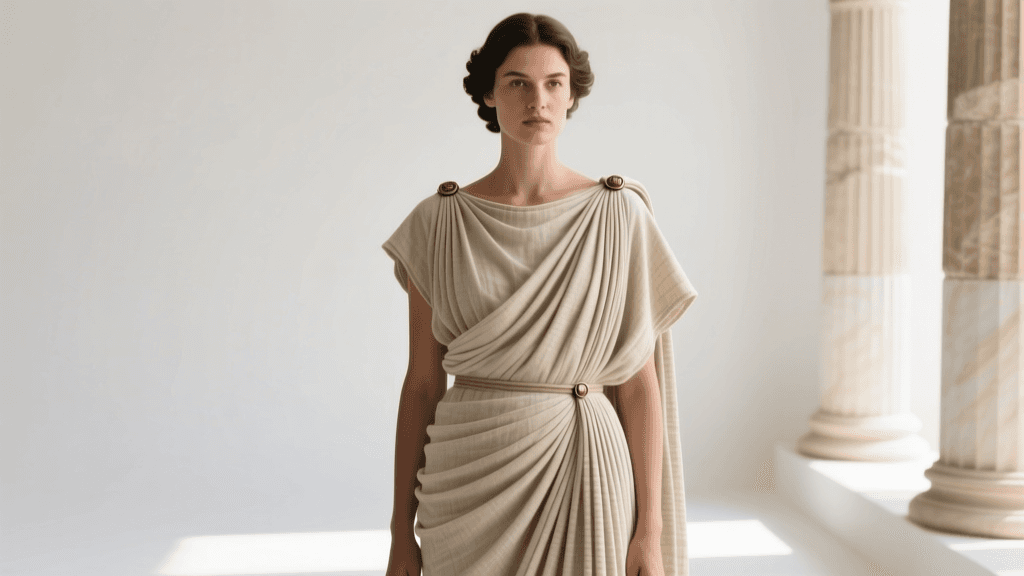
The Doric chiton is the quintessential garment of ancient Greece, characterized by its heavy, structured folds and utilitarian elegance. Unlike tailored clothing, the chiton was a single, massive rectangle of fabric that relied entirely on the wearer's body and strategic pinning to create its silhouette. According to The Metropolitan Museum of Art, the beauty of the chiton lay in its dynamic relationship with the human form, allowing for a range of motion while maintaining a dignified, statuesque drape.
To construct an authentic Doric chiton, you must first calculate the correct dimensions based on the wearer's specific proportions. The standard formula used by master costumers in 2026 is as follows:
- Width: Measure the wearer's full arm span (fingertip to fingertip) and add 12 to 18 inches. This excess creates the necessary volume for the side seams and the characteristic deep folds.
- Height: Measure from the highest point of the shoulder down to the floor, then add 12 to 15 inches. This crucial extra length allows for the creation of the kolpos—the bloused overhang that drapes elegantly over the belt.
- The Apoptygma (Overfold): Before any pinning occurs, the top edge of the fabric is folded outward and downward by 12 to 18 inches. This creates a deep chest panel that mimics the appearance of a secondary garment and adds structural weight to the shoulder pins.
Sourcing Authentic Linens and Wools in 2026
The most common mistake modern recreators make is choosing fabrics that are too light or woven with synthetic blends. The ancient Greeks primarily used wool and linen. For a summer-weight Doric chiton, you must source 100% European flax linen with a weight of at least 180 to 220 GSM (grams per square meter). Lightweight, sheer linens will not hold the rigid, architectural folds required for the Doric style. In 2026, the most historically accurate textiles are sourced from heritage mills in Ireland and Belgium, which produce unbleached, slubby linens that mimic the hand-loomed irregularities of antiquity. For winter garments or Spartan-inspired recreations, a lightweight, fulled wool twill in the range of 250 GSM provides the necessary drape without causing the wearer to overheat during active reenactment.
Step-by-Step Draping of the Doric Chiton
Draping the chiton is an exercise in classical geometry. Follow these steps to achieve the perfect historical silhouette:
- Prepare the Fold: Lay the fabric flat and fold the top edge down to create the apoptygma. The folded edge should now face outward, away from the body.
- Wrap the Body: Wrap the fabric around the wearer's body, ensuring the folded overhang sits at the top. The width should overlap slightly at the side or back.
- Pin the Shoulders: Gather the front and back layers of the fabric at the shoulders. Using historically accurate bronze or iron fibulae (brooches), pin the layers together at intervals from the neck to the edge of the shoulder. Typically, two to four pins per shoulder are used, depending on the width of the fabric.
- Belt and Blouse: Tie a woven wool or leather cord around the waist. Pull the fabric up and over the belt to create the kolpos. The hem of the kolpos should fall to about the hip or upper thigh, while the bottom hem of the garment grazes the floor or ankles.
- Secure the Side Seam (Optional): While some chitons were left open on the right side for ease of movement, many were loosely stitched or pinned shut from the armpit to the hem to preserve modesty.
The Ionic Chiton: A Brief Contrast
While the Doric chiton relies on heavy fabrics and large overfolds, the Ionic chiton utilizes much wider, lighter fabrics—often fine, saffron-dyed linen or silk blends imported from the East. The Ionic style features numerous small pins or sewn tucks along the entire length of the arm, creating a sleeve-like effect. As noted by the World History Encyclopedia, the Ionic chiton was often associated with the Ionian Greeks and later adopted by Athenian women, representing a softer, more luxurious aesthetic compared to the austere Doric tradition.
The Roman Stola: Matronly Elegance and Structure
Transitioning from Greece to Rome, we encounter the stola—the defining garment of the respectable Roman matron. While the Greeks celebrated the natural form, Roman dress was heavily codified to communicate social status, marital standing, and moral virtue. The stola was worn over a base layer called the tunica intima and beneath the palla (a large mantle used for outerwear and veiling).
The defining feature of the stola was the instia—a broad, woven border or flounce attached to the lower hem. This border was often dyed with expensive madder root or imported indigo, signaling the wearer's wealth and citizenship. Furthermore, the stola was suspended from the shoulders not by simple pins, but by segmenta—decorative shoulder straps or bands that were often embroidered with gold thread or intricate geometric patterns.
Constructing the Stola's Silhouette
To recreate a Roman stola for a 2026 production, begin with a rectangular piece of medium-weight linen or fine wool, measuring roughly the wearer's height plus 10 inches, and a width equal to the wearer's hip circumference plus 20 inches. Unlike the chiton, the stola was often partially sewn. The side seams were stitched shut from the hem up to the armpit, leaving only the shoulder and neckline open. The garment was belted high, just beneath the bust, creating a dense cascade of vertical folds that elongated the figure. The vittae (woolen bands) were often tied around the waist or integrated into the belt, serving as a visual marker of a woman's chastity and dedication to the Roman household gods.
The Toga: Masculine Citizenship and Complex Drapery
No guide to Roman garments is complete without addressing the toga, the ultimate symbol of Roman male citizenship. The toga was a massive, semi-circular piece of heavy white wool, measuring up to 18 feet in length and 7 feet in width. Draping the toga required the assistance of a slave or a specialized servant known as a vestiplicus. The complexity of the folds—specifically the sinus (the deep pouch-like fold across the chest) and the umbo (the decorative knot of fabric resting on the chest)—was a status symbol in itself, proving that the wearer was a man of leisure who did not engage in manual labor. For modern reenactors, creating a stable toga drape that will not unravel during a parade or public speaking event requires hidden internal ties and careful use of modern, discreet tailoring techniques disguised beneath the heavy wool folds.
Comparative Garment Analysis
To help costumers and historians select the appropriate garment for their specific 2026 projects, the following table outlines the primary differences between the foundational garments of classical antiquity.
| Garment | Cultural Origin | Primary Fabric & Weight | Fastening Method | Social Significance |
|---|---|---|---|---|
| Doric Chiton | Ancient Greece | Heavy Linen / Wool (200+ GSM) | Bronze/Iron Fibulae (Brooches) | Everyday wear for citizens, emphasizing austerity and physical form. |
| Ionic Chiton | Ionia / Athens | Fine Linen / Silk (120 GSM) | Multiple small pins or sewn tucks | Associated with luxury, eastern influence, and festival wear. |
| Stola | Ancient Rome | Medium Linen / Wool (180 GSM) | Sewn side seams, decorative segmenta | Exclusive to married female citizens (matrons); signaled moral virtue. |
| Toga | Ancient Rome | Heavy Fulled Wool (300+ GSM) | Friction, complex folding, hidden ties | Strictly for male citizens; required for legal and political life. |
Natural Dyeing and Accessories: The 2026 Standard
In 2026, the use of synthetic dyes in high-level historical interpretation is considered obsolete. To achieve the rich, nuanced colors of the ancient Mediterranean, reconstructors must utilize botanical dyes. Madder root (Rubia tinctorum) produces the iconic brick-reds and deep terracottas seen on Roman stolae borders. Weld (Reseda luteola) combined with an alum mordant yields the brilliant, sun-fast yellows favored by Greek priestesses. For the deep purples reserved for Roman senators and magistrates, authentic Tyrian purple is prohibitively expensive and legally restricted in some regions due to the protected status of the Murex snail; therefore, a historically acceptable substitute is a double-dye process using woad (indigo) and madder, which closely mimics the imperial hue.
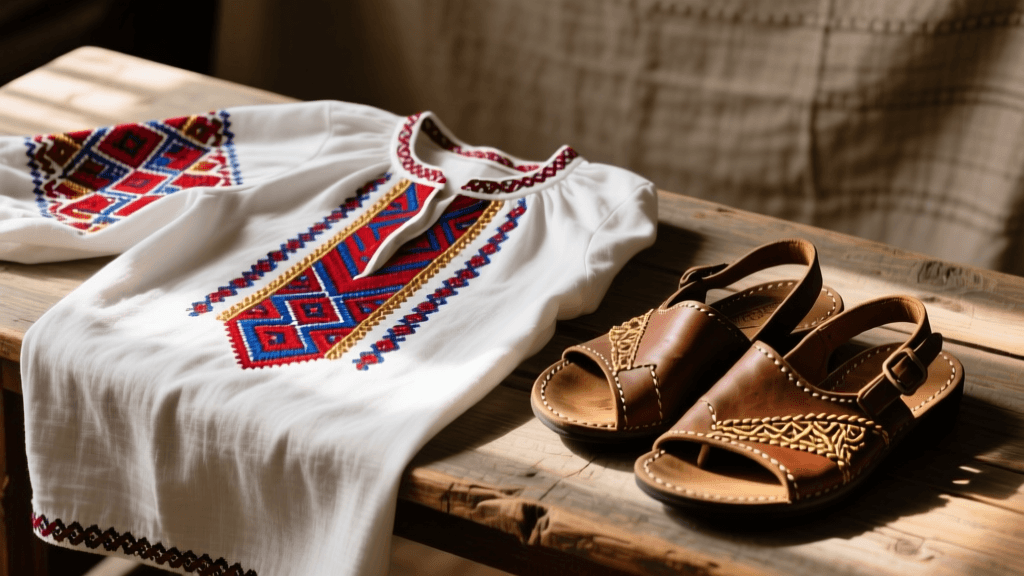
Accessories must also be carefully curated. Footwear should consist of leather soleae (sandals) for indoor or Greek settings, and calcei (enclosed leather shoes) for Roman outdoor civic duties. Jewelry should be cast in bronze or silver, featuring granulation or repoussé techniques, avoiding modern machine-stamped replicas.
Conclusion
Reconstructing the garments of ancient Greece and Rome is a profound exercise in experimental archaeology. By adhering to the precise mathematical ratios of the Doric chiton, respecting the social codification of the Roman stola, and sourcing historically accurate, heavyweight natural textiles, modern creators can breathe authentic life into the classical world. As the standards for historical accuracy continue to rise in 2026, mastering these ancient draping techniques ensures that the legacy of Mediterranean folk and civic dress is preserved with the dignity and precision it deserves. For further reading on the sociopolitical implications of Roman dress, consult the World History Encyclopedia's Roman Clothing archive, which provides excellent primary source translations regarding sumptuary laws and textile trade routes.